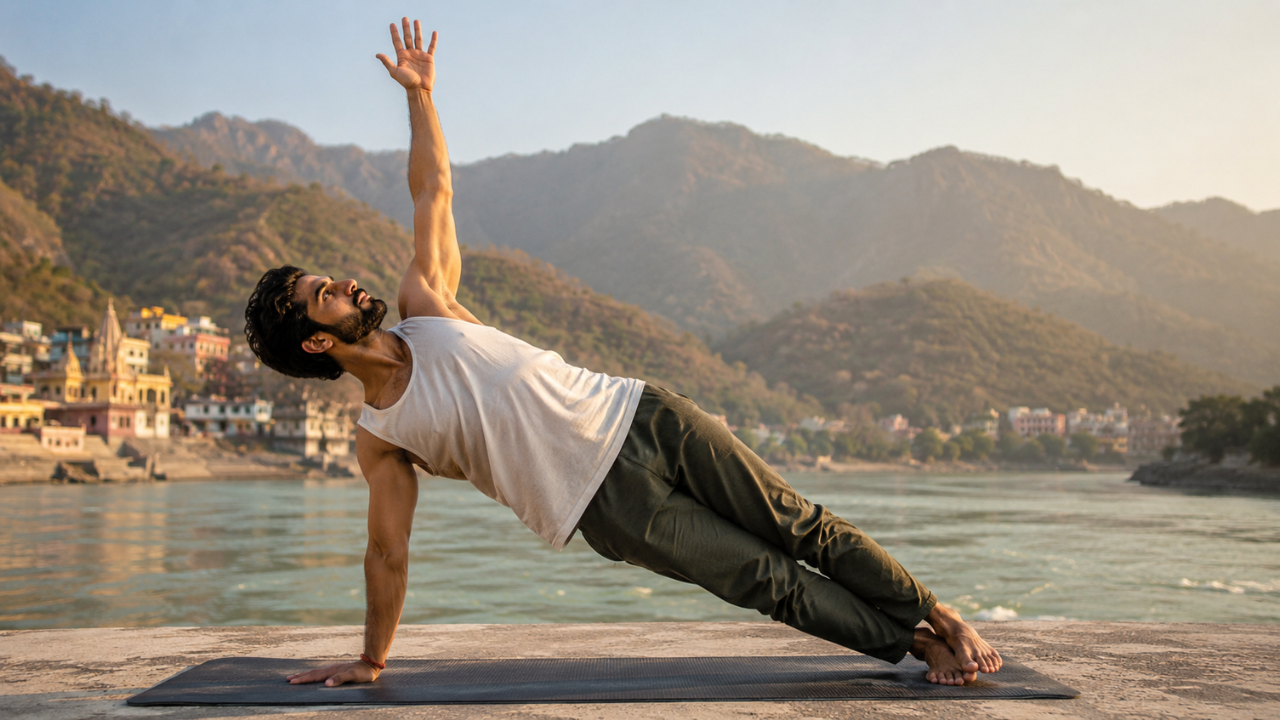
Side Plank Pose looks simple. But when you try it — you feel every muscle in your body working at once. It is one of those poses that is short in time but big in results.
One arm. One foot. Your whole body in a straight line. That is all it takes to build real core strength, strong arms, and steady balance — all in one shape.
What Is Side Plank Pose?
Side Plank Pose is called Vasisthasana in Sanskrit. It is named after the great sage Vasistha — one of the wisest teachers in ancient Indian tradition. The name itself means "most excellent" or "best."
In this pose, you balance on one hand and the outer edge of one foot. Your body forms one long, straight line — from your head down to your heels. The top arm reaches straight up. Your hips lift off the floor. Your core holds everything together.
- Sanskrit name: Vasisthasana
- Meaning: Side Plank Pose
- Pose type: Arm balance and core pose
- Level: Beginner to intermediate
- Hold time: 3 to 8 breaths per side
- Part of: Hatha yoga, Vinyasa yoga, Ashtanga yoga sequences
This pose usually comes after Plank Pose or Downward Dog in a sequence. If you can hold a regular plank for 20 to 30 seconds, you are ready to try Side Plank.
Benefits of Side Plank Pose
This pose does a lot of work in a short time. Here is what you gain from regular practice.
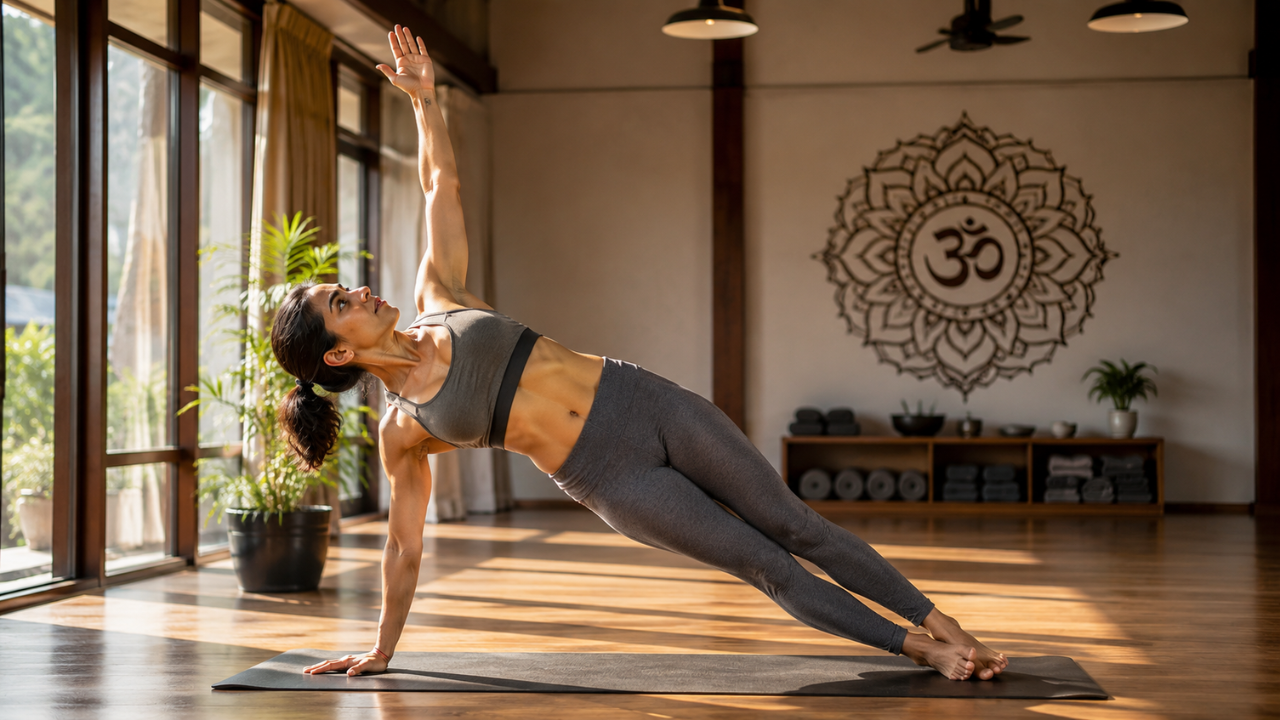
- Strong core: The obliques and deep belly muscles work hard to keep the body in one line.
- Arm and wrist strength: The supporting arm builds real strength — useful for all arm balance poses.
- Better balance: Holding the whole body on one hand trains coordination and body awareness fast.
- Open chest: The chest and shoulders spread wide. This helps with posture and breathing.
- Stronger legs: The outer thighs and glutes stay active to hold the hips up and the legs together.
- Side body stretch: The whole side of the body — from hip to fingertip — gets a long, good stretch.
- Mental focus: Balancing on one hand trains the mind to stay calm and sharp under pressure.
- Better posture: A strong core and open chest naturally help you stand and sit taller every day.
People who do Side Plank regularly often notice their regular plank, push-ups, and other core work getting much easier within a few weeks.
How to Do Side Plank Pose — Step by Step
Take it one step at a time. Read through fully once — then try it on your mat.
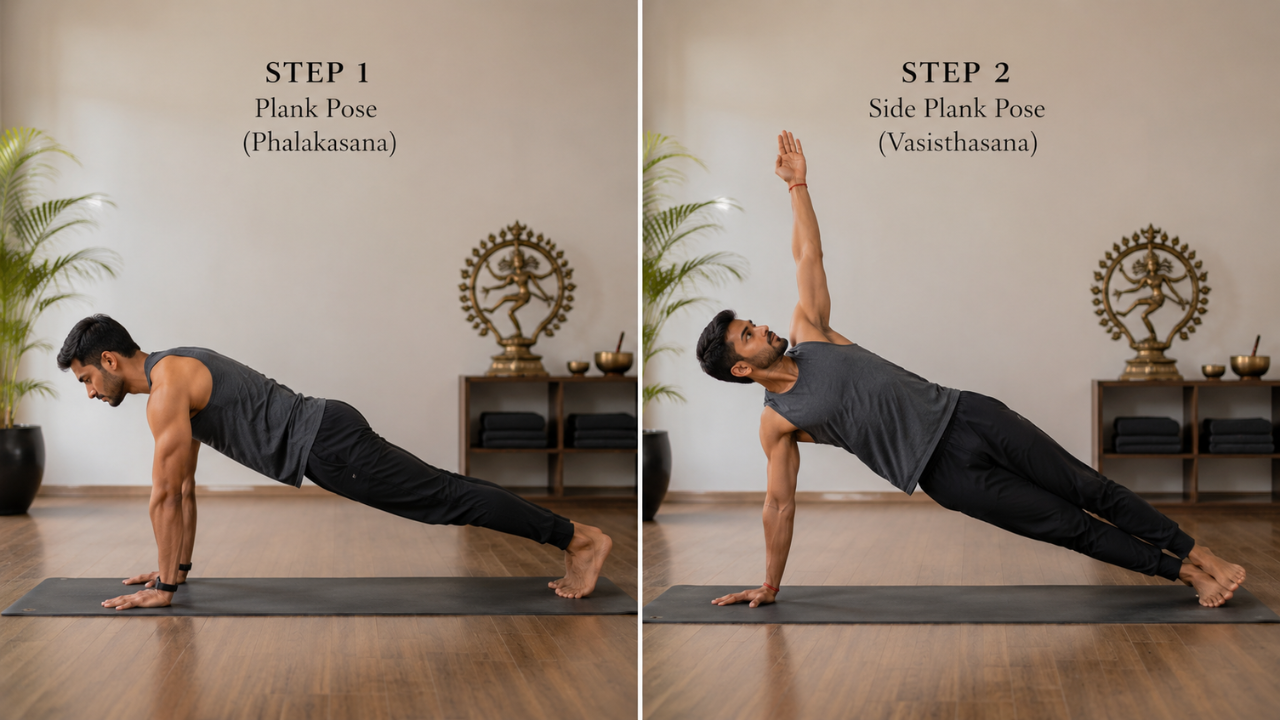
- Step 1: Start in a regular Plank Pose. Wrists under shoulders. Body in one straight line. Take a few steady breaths.
- Step 2: Shift the weight onto your right hand. Press all fingers firmly into the mat.
- Step 3: On an exhale, roll the body to the right side. Stack the left foot on top of the right foot.
- Step 4: Press the outer edge of the right foot into the mat. Lift the hips up — do not let them sag down.
- Step 5: Keep the right arm straight. The wrist, elbow, and shoulder should form one line.
- Step 6: On an inhale, lift the left arm straight up toward the ceiling. Spread the fingers wide.
- Step 7: Keep the whole body in one strong, straight line — head, hips, heels all aligned.
- Step 8: Look forward or up toward the raised hand — whatever feels steady for you.
- Step 9: Hold for 3 to 5 slow breaths. Keep breathing steady and the core firm.
- Step 10: Come back to Plank on an exhale. Rest for a breath — then repeat the whole pose on the left side.
Always do both sides equally. If the hips drop or the arm shakes — that is okay. Come down, breathe, and try again. Strength builds with every attempt.
Key Alignment Tips for Side Plank Pose
Good alignment keeps your body safe and makes the pose feel more stable. Keep these points in mind every time you practice.
- Supporting hand: Press all four corners of the palm into the mat — especially the index finger and thumb base. Avoid dumping weight into the wrist only.
- Supporting arm: Keep it straight but not locked hard at the elbow. Engage the shoulder — press the floor away.
- Hips: Lift them up actively — do not let them sink toward the floor. Squeeze the glutes to help hold them high.
- Feet: Stack one foot on the other or place the top foot in front for more stability. Press the outer edge of the bottom foot firmly down.
- Top arm: Reach it straight up — not forward. Feel the stretch from the bottom hand all the way to the top fingertips.
- Core: Keep the belly gently pulled in. This is what stops the hips from dropping.
- Head and neck: Keep the head in line with the spine — do not drop the chin or tilt the head back.
- Gaze: Look forward or upward toward the raised hand. Whichever feels steadiest for you.
Pick one alignment point to focus on per practice. Small improvements add up fast. You do not need to fix everything in one session.
Common Mistakes to Avoid
These are the most common mistakes in Side Plank. Knowing them helps you stay safe and get better results faster.
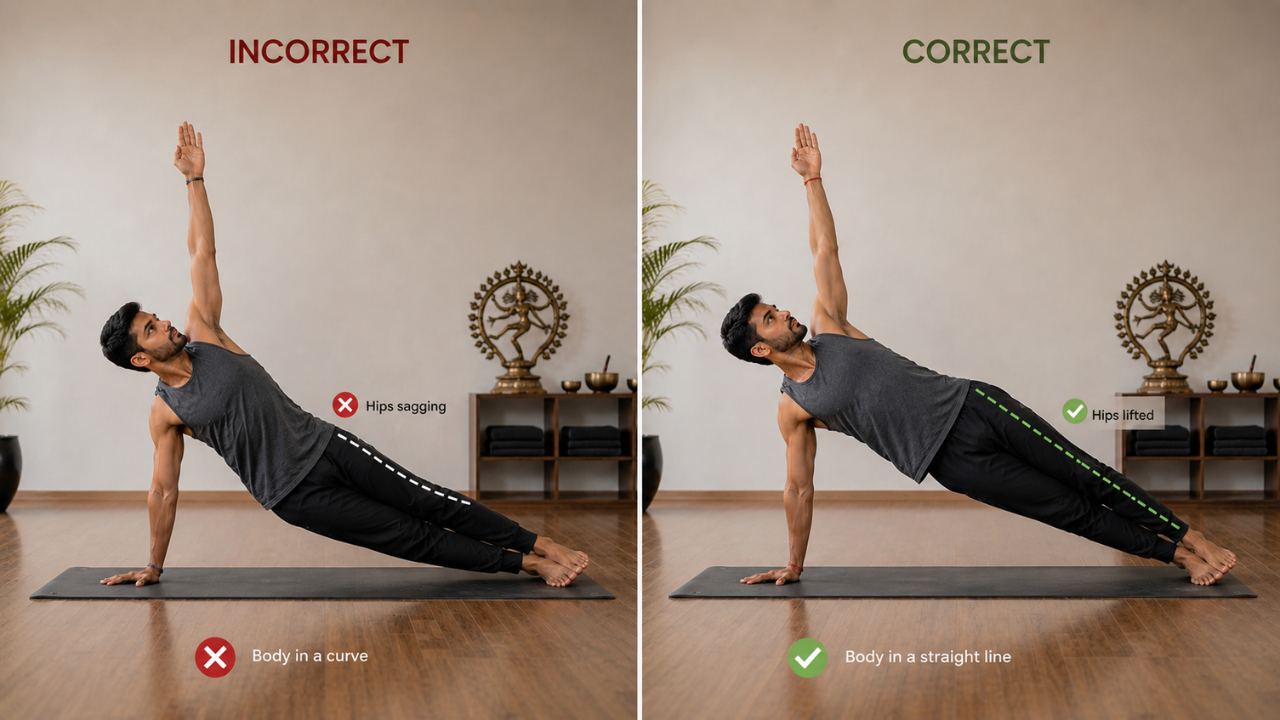
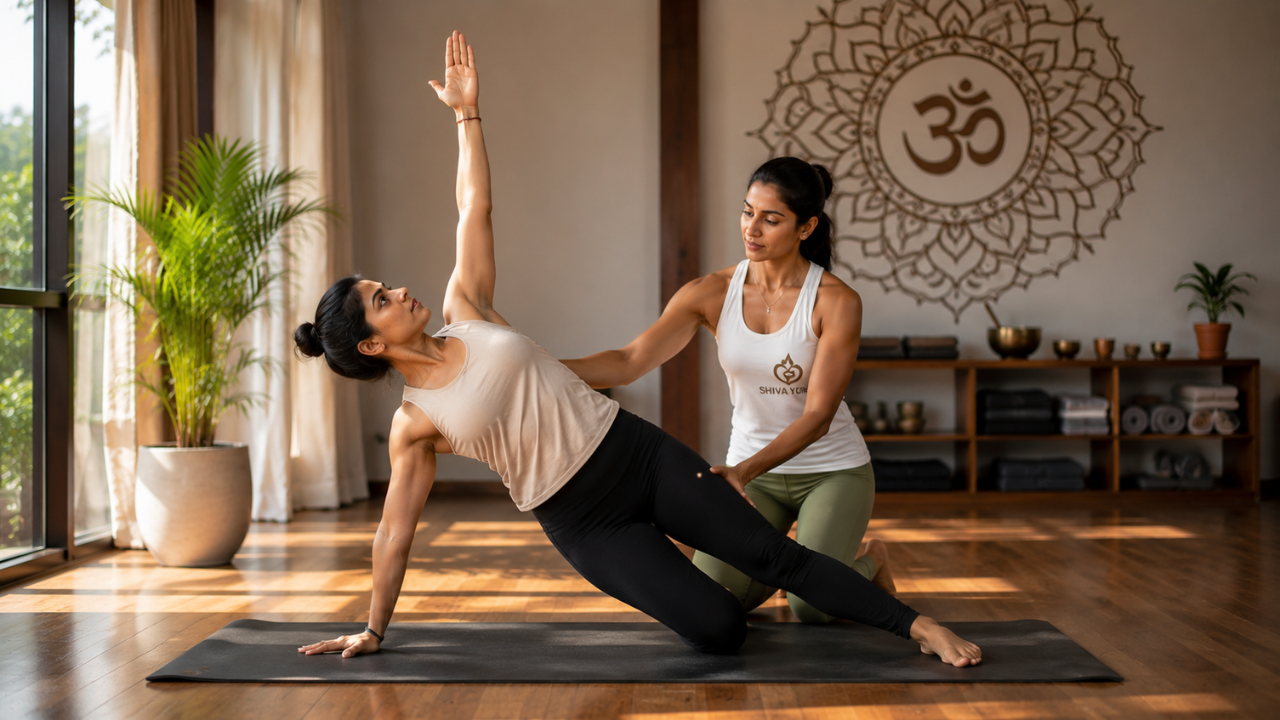
- Hips sagging down: This is the most common mistake. The hips must stay high. Engage the core and glutes actively to keep them lifted.
- Wrist pain from bad hand placement: Spread the fingers wide and press the whole palm down. Avoid putting all the weight on the wrist bone alone.
- Elbow locked too hard: Keep a micro-bend in the elbow. Hard locking strains the joint over time.
- Head dropping: Keep the head in line with the whole spine. A dropped head shifts the body out of the straight line.
- Top shoulder rolling forward: Reach the top arm straight up and pull the shoulder blade back. Keep the chest open.
- Holding the breath: Many people stop breathing when they try to balance hard. Keep breathing slowly — it actually helps stability.
- Rushing the entry: Coming into the pose too fast causes wobbling and poor form. Transition slowly from Plank to Side Plank with control.
Side Plank Pose Variations for All Levels
Side Plank has many versions — from very easy to very hard. Pick the one that works for where you are today.
- Knee-Down Side Plank (Beginner): Drop the bottom knee to the floor. This removes half the body weight and makes the pose much more manageable. Great starting point for beginners.
- Forearm Side Plank (Beginner–Intermediate): Rest on the forearm instead of the hand. The elbow is under the shoulder. This takes pressure off the wrist completely.
- Classic Side Plank (Intermediate): The standard full version — balancing on one hand and the outer edge of the foot. Both legs straight, hips high, top arm reaching up.
- Top Foot Raised (Intermediate–Advanced): In the full pose, lift the top leg up — hold the big toe with the top hand. This adds a deep hip flexor stretch and extra balance challenge.
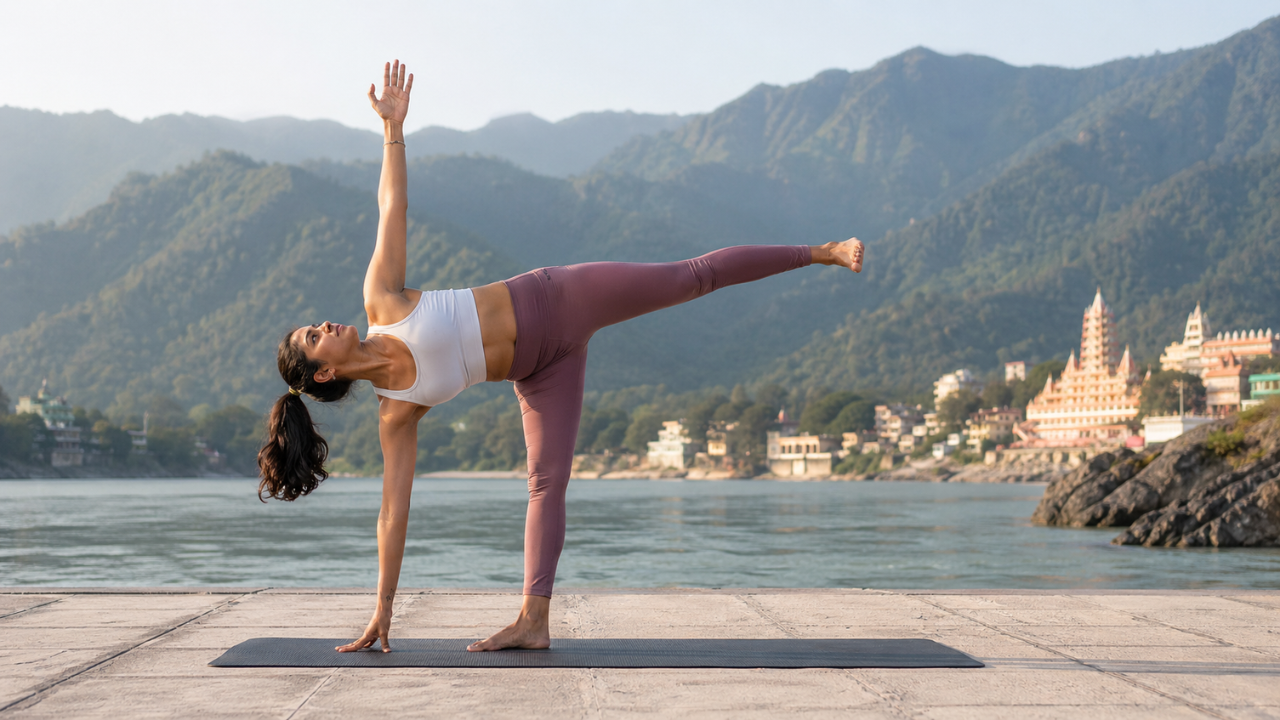
- Wild Thing Variation (Advanced): From Side Plank, drop the top foot behind you and arch the back, reaching the top arm overhead. Opens the whole front body dramatically.
- Side Plank with Tree Legs (Intermediate): In the full pose, bend the top knee and place the top foot on the inner thigh of the bottom leg — like Tree Pose on its side.
Start with the beginner version. Build up slowly. There is no rush — each variation gives you strong, real benefits.
Tips to Make This Pose Feel Better
Small things make a big difference here. Try these the next time you practice.
- Warm up the wrists first: Roll the wrists in circles. Do a few Cat-Cow movements. Warm wrists hold the pose much better and hurt less.
- Start with Plank: Always enter Side Plank from a regular Plank Pose. This warms the shoulders and core perfectly before the balance challenge.
- Press the floor away: Imagine pushing the mat away with the supporting hand. This activates the whole arm and lifts the shoulder away from the ear.
- Fix your gaze: Pick one still spot on the wall or floor. Keep the eyes there without moving. This drishti point helps balance more than most people expect.
- Breathe into the side body: On each inhale, feel the ribs expand on the top side. Let the breath help you lift and open the whole side.
- Squeeze the legs together: Press the feet and inner thighs toward each other. This small action stabilizes the whole lower body.
- Practice daily — even for 30 seconds: A short hold on each side every day builds arm and core strength fast. Consistency matters more than duration.
Who Should Be Careful with This Pose?
Side Plank is safe for most people. But a few things need extra attention.
- Wrist injury or pain: Use the forearm version instead — elbow on the mat, forearm down. This removes all wrist pressure.
- Shoulder injury: Go slowly and do not push the shoulder into pain. Use the knee-down beginner version to reduce the load.
- Elbow problems: Keep a soft micro-bend in the elbow. Never lock it hard. The forearm version is a safe option too.
- Lower back pain: Keep the core engaged and the hips lifted at all times. A sagging hip puts stress on the lower back. Start with the knee-down version.
- Ankle weakness: Place the top foot in front of the bottom foot on the floor instead of stacking them. This gives a wider base of support.
If anything feels sharp or wrong — stop and rest. A yoga teacher can show you the right version for your body. Never push through pain in any pose.
Quick Checklist — Is Your Pose Correct?
Run through this list while you are in the pose. If all these feel right — your Side Plank is solid.
- Supporting hand is pressing the mat with all fingers spread
- Supporting arm is straight with a soft bend — not locked hard
- Hips are lifted high — not sagging toward the floor
- The whole body is in one straight line from head to heel
- Outer edge of the bottom foot is pressing firmly into the mat
- Top arm is reaching straight up toward the ceiling
- Chest is open — not collapsing forward
- Core is gently engaged and steady throughout
- Head is in line with the spine — not dropping or tilting
- Breath is slow and even from start to finish
- Face and jaw are relaxed and soft
Learn Side Plank Pose at Adishesh Yoga, Rishikesh
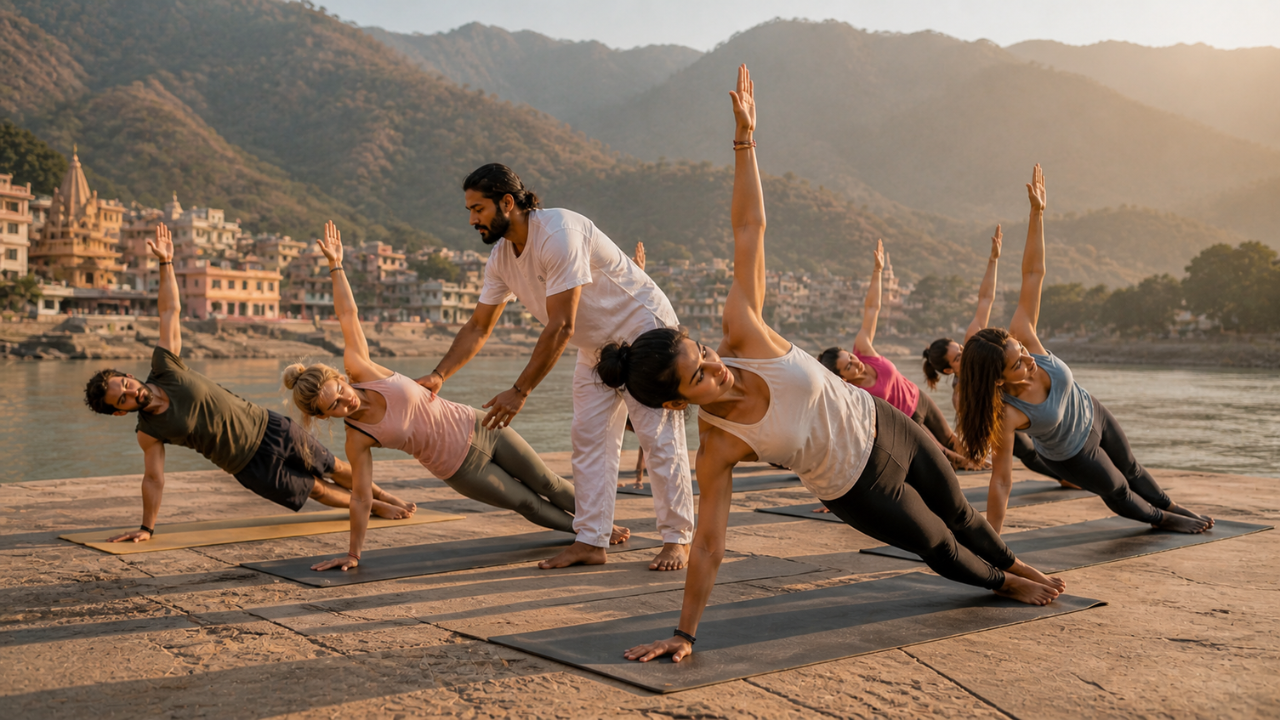
Want to really feel this pose from the inside out? Come practice at Adishesh Yoga in Rishikesh. Our teachers guide every student with hands-on corrections and clear, simple instructions. You will not just try the pose — you will understand it in your whole body.
We teach traditional Hatha yoga in small, focused groups. Every class is calm, personal, and well-paced. Whether you are new to yoga or deepening a long practice — there is a class here that is right for you.
- Daily asana classes: Morning and evening sessions covering core poses, arm balances, and full sequences with alignment guidance
- Arm and core sequences: Side Plank, Plank, Boat Pose — all taught in the right order with breath and steady focus
- Pranayama and meditation: Included in every class and retreat to deepen the mind-body connection
- Small group sizes: Personal attention, real corrections, and a calm and supportive learning space
- Experienced teachers: Trained in classical yoga with real depth, genuine care, and years of teaching experience
Come to Rishikesh. Press your hand into the earth. Feel what real strength means.
Frequently Asked Questions
Conclusion
Side Plank Pose is not just about looking strong. It actually makes you strong — in the arms, in the core, in the mind. Every time you hold it for a few breaths, something in the body gets better.
Start with the knee-down version. Use the forearm if the wrist hurts. Keep the top arm on the hip at first. None of that is giving up — it is smart practice. The full pose will come when the body is ready.
If you want a teacher to guide your form and help you progress safely — come practice at Adishesh Yoga in Rishikesh. We will help you find your strength — in Side Plank and beyond.