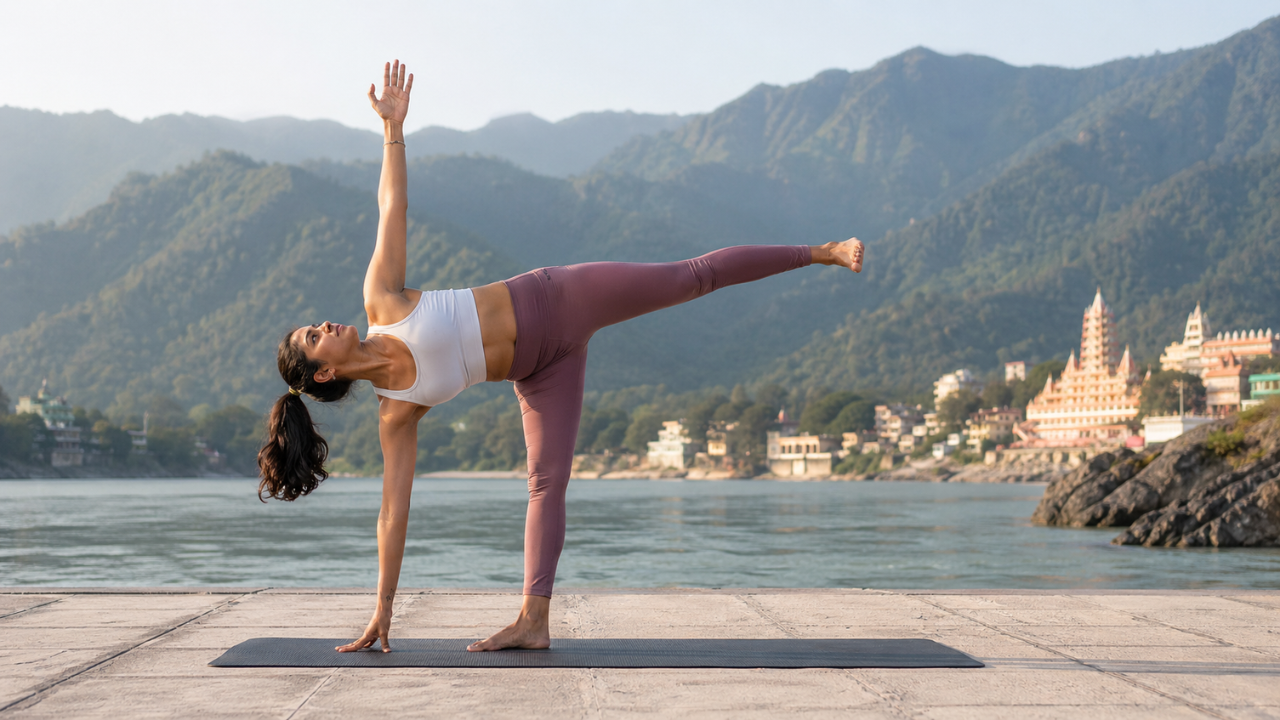
Half Moon Pose is one of those yoga poses that looks hard - but feels amazing once you get into it. You balance on one leg, open your whole body to the side, and feel light and strong at the same time.
It builds real strength in your legs and core. It trains your mind to stay calm and focused. And it opens your chest in a way that just feels good.
What Is Half Moon Pose?
Half Moon Pose is called Ardha Chandrasana in Sanskrit. "Ardha" means half. "Chandra" means moon. So this pose is named after the half moon - that soft, glowing curve in the night sky.
In this pose, you stand on one leg. Your other leg lifts up parallel to the floor. One hand reaches down to the ground. The other arm stretches up to the ceiling. Your chest and hips open wide to the side. Your whole body forms one long, open line - just like a half moon.
- Sanskrit name: Ardha Chandrasana
- Meaning: Half Moon Pose
- Pose type: Standing balance pose
- Level: Beginner to intermediate
- Hold time: 3 to 8 breaths per side
- Part of: Hatha yoga, Vinyasa yoga, Iyengar yoga sequences
This pose usually comes after Triangle Pose or Warrior II in a yoga sequence. If you already know those poses, Half Moon Pose is a natural next step forward.
Benefits of Half Moon Pose
This pose works your whole body - legs, core, hips, chest, and mind. Here is what you get from regular practice.
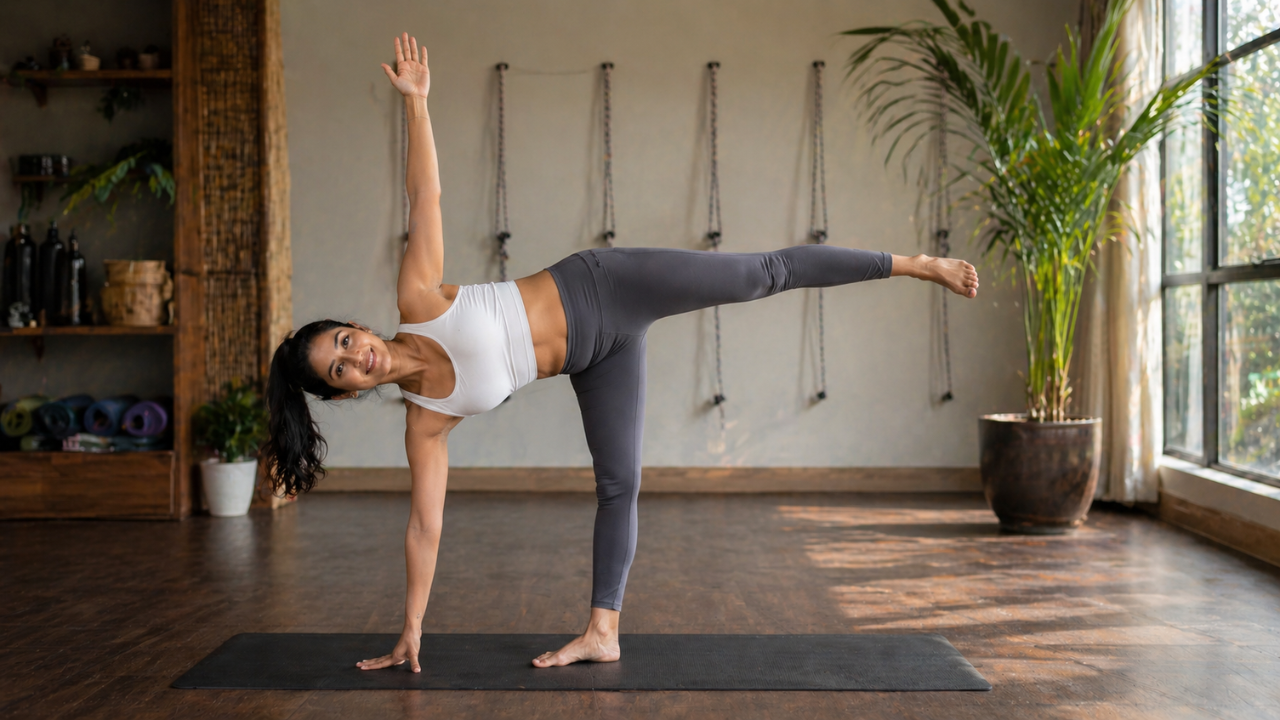
- Stronger legs: Works the standing leg deeply - thighs, knees, and ankles all get stronger.
- Better balance: Training on one leg improves balance and body coordination fast.
- Core strength: Your belly and side muscles work hard to keep you steady.
- Hip flexibility: Opens the hip of the lifted leg and stretches the groin.
- Open chest: The chest and shoulders spread wide, making breathing easier and deeper.
- Hamstring stretch: The back of the standing leg gets a long, deep stretch.
- Mental focus: Balancing on one leg clears the mind and trains concentration.
- Better posture: Strengthens the spine and trains your body to stand tall.
People who practice Half Moon Pose regularly often notice better balance in daily life - walking, climbing stairs, and even standing still feels easier.
How to Do Half Moon Pose - Step by Step
Go slow. Each step builds on the last one. Read it fully once, then try it on your mat.
- Step 1: Start in Triangle Pose with your right leg forward. Take a few steady breaths here.
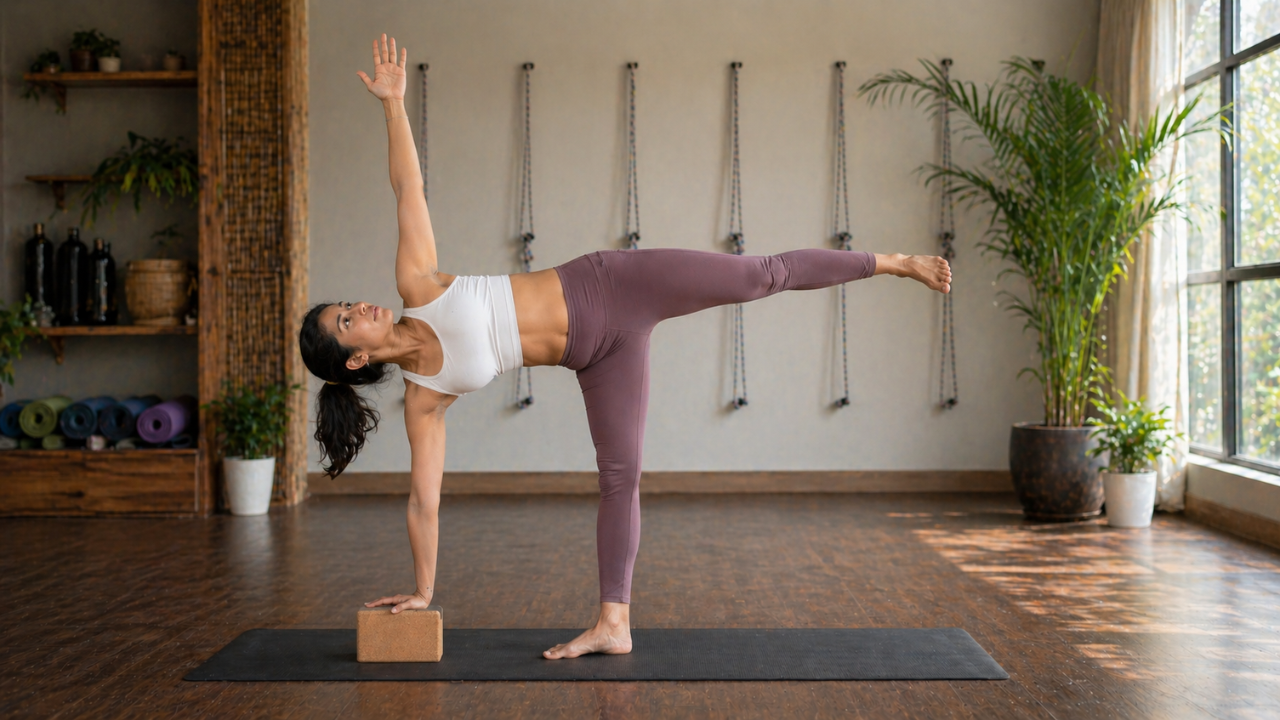
- Step 2: Bend the right knee slightly. Place your right hand (or a block) on the floor about 30 cm ahead of the right foot.
- Step 3: Shift your weight fully onto the right foot and right hand.
- Step 4: On an inhale, slowly lift the left leg up. Bring it parallel to the floor - or as high as it goes comfortably.
- Step 5: Straighten the right leg. Keep a soft bend - never lock the knee hard.
- Step 6: Stack the left hip on top of the right hip. Open both hips to the left side.
- Step 7: Raise the left arm straight up toward the ceiling. Spread the fingers wide.
- Step 8: Look forward, up at the left hand, or down - wherever feels steady for you.
- Step 9: Hold for 3 to 5 slow breaths. Keep the body long and the chest open.
- Step 10: Come down slowly on an exhale. Then repeat the whole pose on the left side.
Always do both sides equally. If you fall - just smile and try again. Balance comes with practice, not perfection.
Key Alignment Tips for Half Moon Pose
Good alignment keeps you safe and makes the pose feel much better. Keep these points in mind every time you practice.
- Standing foot: Press all four corners of the foot firmly into the mat - big toe, little toe, both sides of the heel.
- Standing knee: Keep it straight but soft - no hard locking. Kneecap faces forward or slightly out.
- Lifted leg: Flex the foot of the raised leg. Reach through the heel as if pushing a wall behind you.
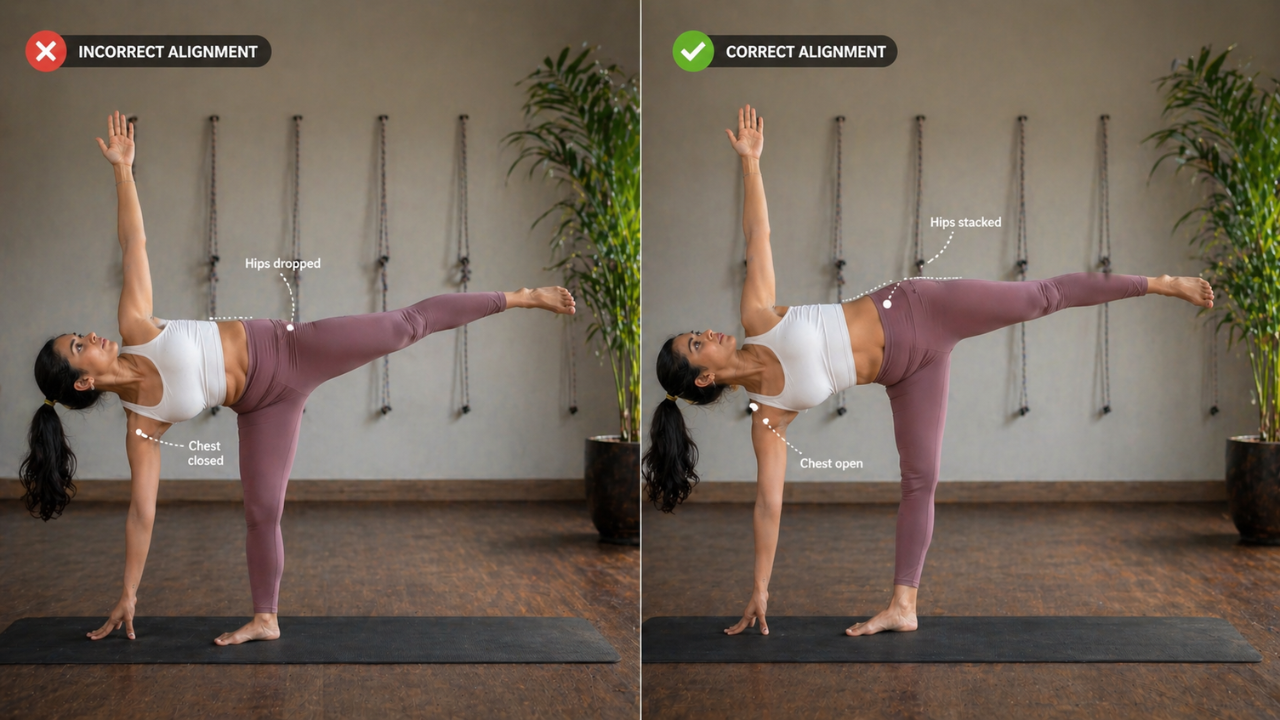
- Hips: Stack the top hip directly over the bottom hip. Both hips face the side - not the floor.
- Bottom hand: Fingertips on the floor or a block - use only light touch, not full body weight.
- Top arm: Reach straight up from the shoulder. Feel the stretch from fingertip to fingertip.
- Chest: Stay open and wide. Do not let the top shoulder roll forward.
- Gaze: Look wherever feels steady - down, forward, or up toward the raised hand.
Check one alignment point at a time. You do not need to fix everything at once. Each practice, pick one thing to focus on and improve.
Common Mistakes to Avoid
These are the mistakes most beginners make. Avoiding them will save your joints and help the pose feel much easier.
- Leaning too much on the hand: The bottom hand is just a light guide - not a crutch. Most of the work comes from the standing leg and core.
- Hips not stacking: If the top hip drops forward or down, the pose loses its opening. Lift and rotate the hip up actively.
- Lifted leg too low: The leg does not need to be very high - but try to bring it at least parallel to the floor for the full benefit.
- Knee of standing leg locked hard: A micro-bend in the knee protects the joint. Hard locking creates strain over time.
- Core goes soft: The moment the belly relaxes, the whole pose shakes. Keep a gentle engagement in the core always.
- Top shoulder rolling in: Reach the top arm firmly upward. Let the shoulder blade press back and down.
- Rushed entry: Jumping into the pose too fast leads to wobbling and poor alignment. Always enter slowly and with control.
Easy Modifications for Beginners
If the full pose feels shaky or hard right now - that is totally normal. These simple changes will help you build up safely.
- Use a yoga block: Place a block under your bottom hand. It raises the floor closer to you and makes balance much easier.
- Practice near a wall: Stand close to a wall. Rest the back of the lifted leg lightly against it for support while you build strength.
- Lower gaze: Looking at the floor instead of up makes balancing easier. Start here, then slowly work toward looking up.
- Lift leg lower: Even a small leg lift - just 30 or 45 degrees - gives you the strength and balance training benefits.
- Keep top arm on hip: Instead of reaching the top arm up, just rest the hand on the hip. This reduces wobble and lets you focus on the legs and hips first.
Using props is smart yoga - not easy yoga. A block or a wall helps you feel the correct alignment so your body learns the pose the right way.
Tips to Make This Pose Feel Better
Small things make a big difference in this pose. Try these during your next practice.
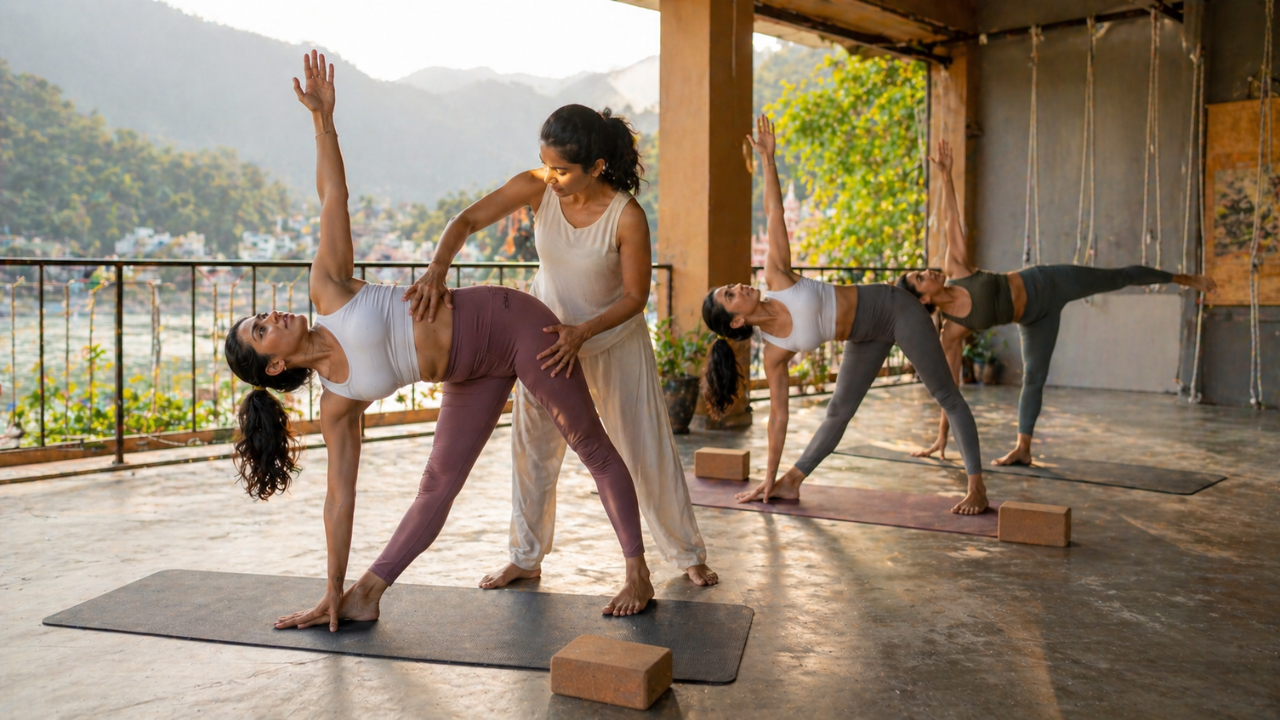
- Warm up the hips first: Do Warrior II and Triangle Pose before Half Moon. These poses open the hips and prepare the legs perfectly.
- Fix your gaze point: Pick one still spot on the floor or wall and look at it without moving. This is called drishti - your balance point. It helps enormously.
- Press the floor away: Imagine pushing the mat down with your standing foot. This activates the whole leg and makes you feel lighter.
- Breathe into the chest: Each inhale - feel the chest expand and lift. Let the breath help you open wider and stay tall.
- Engage the lifted leg: Do not just let the leg hang. Reach through the heel and squeeze the muscles. This creates balance from both sides.
- Relax the face: Jaw, eyes, and forehead should be soft. Tension in the face travels to the whole body and makes balance harder.
- Practice daily: Even 2 to 3 minutes of Half Moon every day builds real balance and strength within a few weeks.
Who Should Be Careful with This Pose?
Half Moon Pose is safe for most people. But a few conditions need extra attention.
- Knee injury: Keep a soft bend in the standing knee at all times. Do not lock or overextend it.
- Ankle weakness: Use a block and go slowly. Build ankle strength before attempting the full balance.
- Lower back pain: Keep the core engaged and do not let the lower back sag. Use a block if needed to stay long and supported.
- Neck pain: Keep the gaze forward or down - do not force the head to look up if the neck feels sore.
- High blood pressure or vertigo: Look down or forward instead of up. Avoid sudden head movements when coming in and out of the pose.
If you are unsure - practice with a yoga teacher. They can watch your body and give you changes that suit you perfectly. Never push through pain in any yoga pose.
Quick Checklist - Is Your Pose Correct?
Run through this list while you are in the pose. If all of these feel right - your Half Moon is solid.
- Standing foot is pressing firmly and evenly into the mat
- Standing knee has a soft bend - not locked hard
- Lifted leg is parallel to the floor with the foot flexed
- Top hip is stacked over the bottom hip - not dropping forward
- Both hips are rotating open to the side
- Bottom hand is lightly touching the floor or a block
- Top arm is reaching straight up toward the ceiling
- Chest is open - not collapsed toward the floor
- Core is gently engaged and steady
- Breath is slow and even throughout
- Face and jaw are relaxed and soft
Learn Half Moon Pose at Adishesh Yoga, Rishikesh
Want to really nail Half Moon Pose? Come practice at Adishesh Yoga in Rishikesh. Our teachers guide every student with hands-on adjustments and clear, simple cues. You will not just try the pose - you will understand it fully from the inside out.
We teach traditional Hatha yoga in small groups. Every class is calm, focused, and personal. Whether you are stepping on a mat for the first time or deepening an existing practice - there is a class here that is right for you.
- Daily asana classes: Morning and evening sessions covering standing poses, balance poses, and full sequences with alignment guidance
- Balance pose sequences: Half Moon, Triangle, Warrior III - all taught in the right order with breath and focus
- Pranayama and meditation: Included in every class and retreat program to deepen your mind-body connection
- Small group sizes: Personal attention, real corrections, and a calm and supportive learning space
- Experienced teachers: Trained in classical yoga with real depth, genuine care, and years of teaching experience
Come to Rishikesh. Stand on one leg under the open sky. Feel what yoga really means.
Frequently Asked Questions
Conclusion
Half Moon Pose is more than a balance challenge. It is a full-body experience - one that trains your legs, opens your hips, lifts your chest, and sharpens your mind all in one shape.
Start with a block. Practice near a wall. Look down first. None of that is cheating - it is how every great pose is learned. Bit by bit, the balance comes. The strength follows.
If you want a teacher to watch your form and guide you safely - come practice at Adishesh Yoga in Rishikesh. We will help you find your balance - in Half Moon Pose and in life.
Explore Authentic Yoga in Rishikesh with Adishesh Yoga
Ready to refine your alignment, anatomy, and sequencing under traditional masters? Join our Yoga Alliance certified courses or unwind with restorative retreats in the Himalayan foothills.