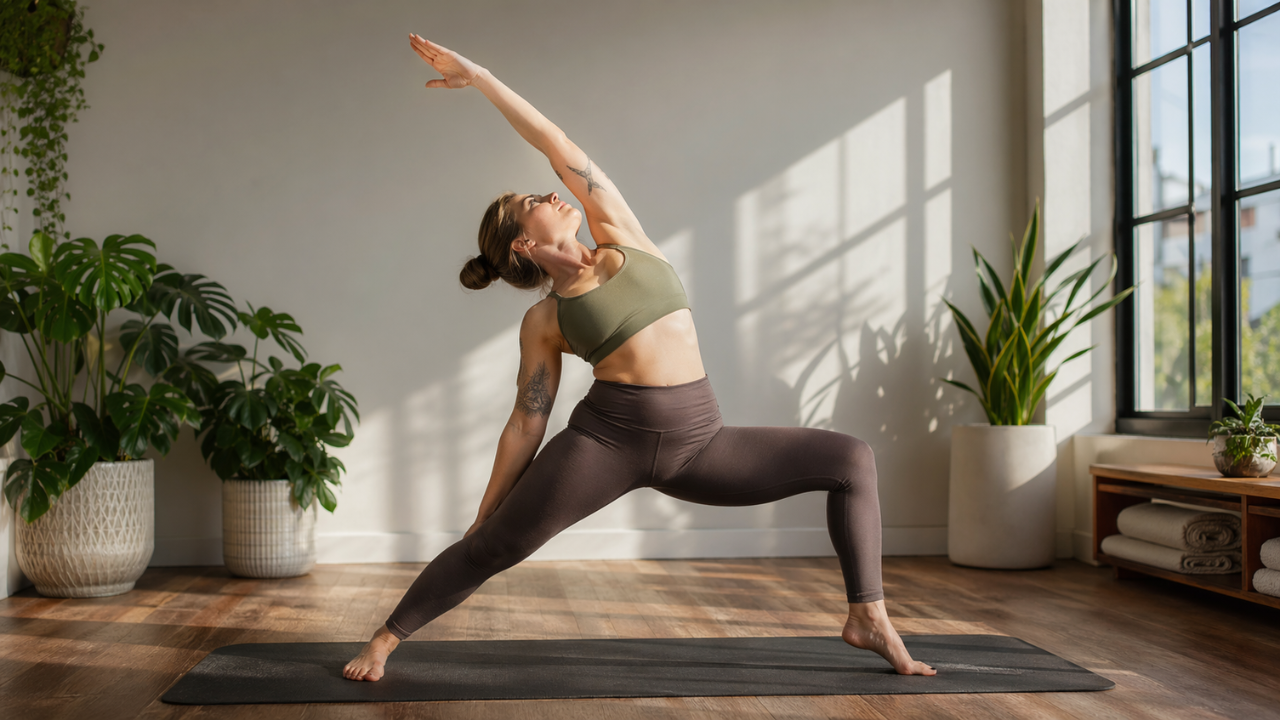
Reverse Warrior Pose is one of the most beautiful poses in yoga. It opens your chest, stretches your whole side body, and builds strong legs — all at once.
It feels like a big open-hearted stretch. Once you try it, your body will want it every single day.
What Is Reverse Warrior Pose?
Reverse Warrior Pose is called Viparita Virabhadrasana in Sanskrit. "Viparita" means reversed or opposite. "Virabhadra" is the name of a warrior from Hindu mythology. So this pose means — the warrior going backwards.
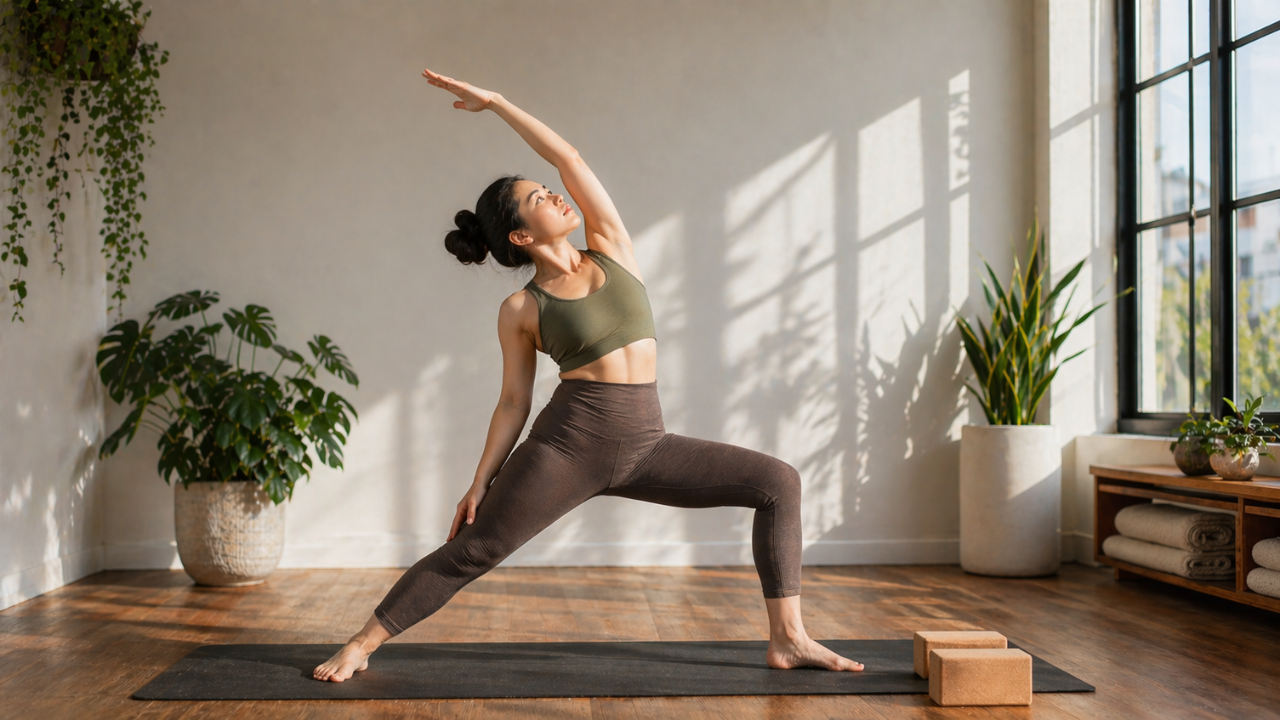
You start in Warrior II. Then you flip your front palm up toward the sky. Your front arm sweeps up and reaches back behind your head. Your back hand rests gently on the back leg. The whole front of your body opens up like a crescent moon.
- Sanskrit name: Viparita Virabhadrasana
- Also called: Peaceful Warrior Pose
- Pose type: Standing side stretch pose
- Level: Beginner to intermediate
- Hold time: 3 to 8 breaths per side
- Part of: Hatha yoga, Vinyasa yoga, Power yoga sequences
This pose comes naturally after Warrior II. If you already know Warrior II, you are just one movement away from Reverse Warrior.
Benefits of Reverse Warrior Pose
This one pose does a lot for your body and your mind. Here is what you get from regular practice.
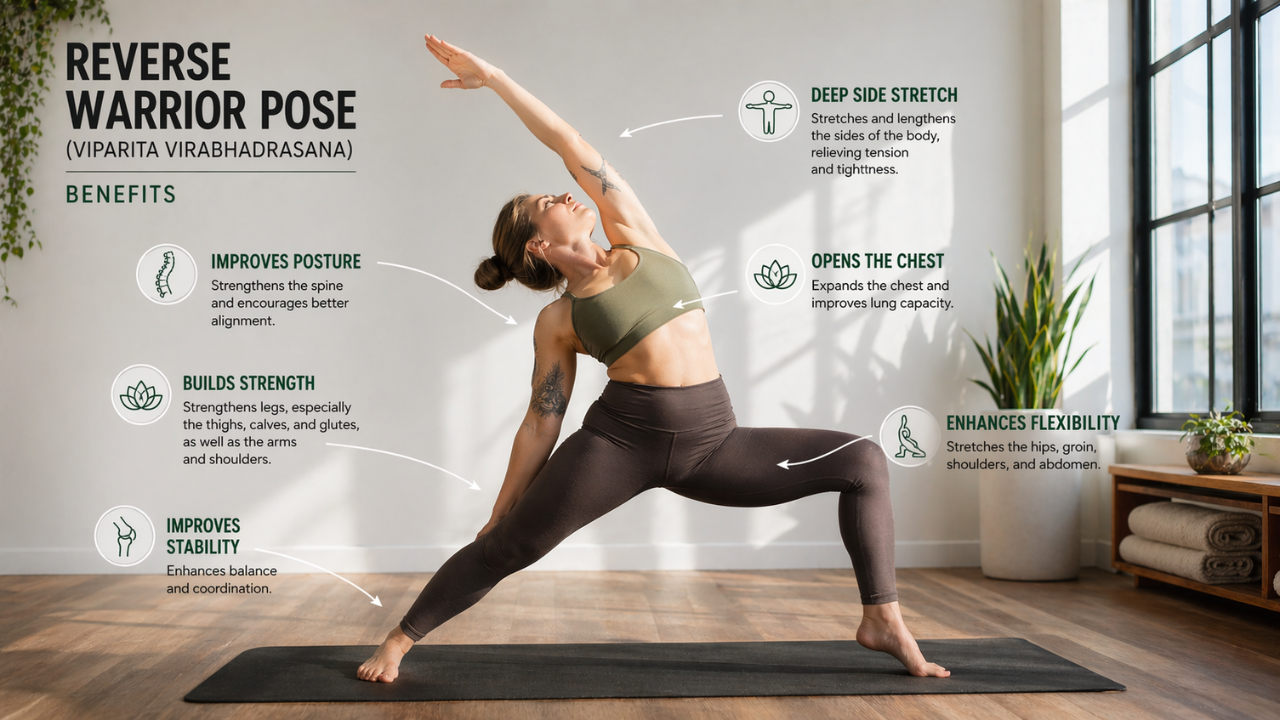
- Strong legs: Works thighs, calves, and knees.
- Deep side stretch: Opens ribs, waist, and obliques.
- Opens the chest: Expands lungs for deeper breathing.
- Flexible hips: Stretches groin and inner thighs.
- Better posture: Strengthens spine and back muscles.
- Releases back tension: Gentle backbend eases lower back stiffness.
- Builds stamina: Holding the pose builds endurance slowly.
- Calms the mind: Big chest opening lifts your mood and reduces stress.
Consistent practice brings real changes in your flexibility, strength, and how you feel every day.
How to Do Reverse Warrior Pose — Step by Step
Take it slow. Every step matters here. Focus on your breath and how your body feels.
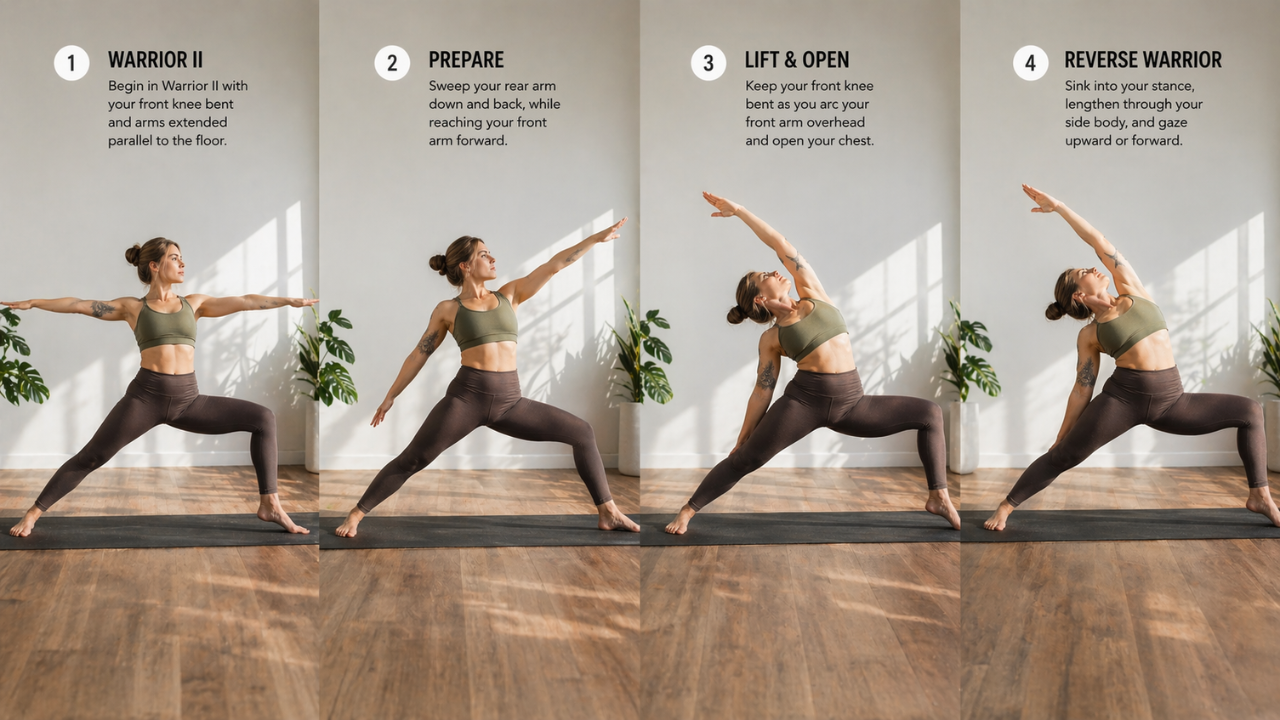
- Step 1: Start in Warrior II. Front knee bent, arms open wide, gaze forward.
- Step 2: Flip your front palm up toward the ceiling.
- Step 3: Inhale slowly and sweep the front arm up and back behind your head.
- Step 4: Let your back hand slide gently down the back leg — no pressure.
- Step 5: Keep the front knee bent and strong over the ankle.
- Step 6: Open your chest and let your upper body arc back slightly.
- Step 7: Reach long through the front fingertips. Feel the stretch in your side body.
- Step 8: Hold for 3 to 5 slow breaths. Keep hips low and strong.
- Step 9: Come back to Warrior II on an inhale. Then do the other side.
Do both sides equally. Never rush the stretch. Let your breath guide the movement.
Common Mistakes to Avoid
Small mistakes can reduce the benefits and even cause pain. Watch out for these.
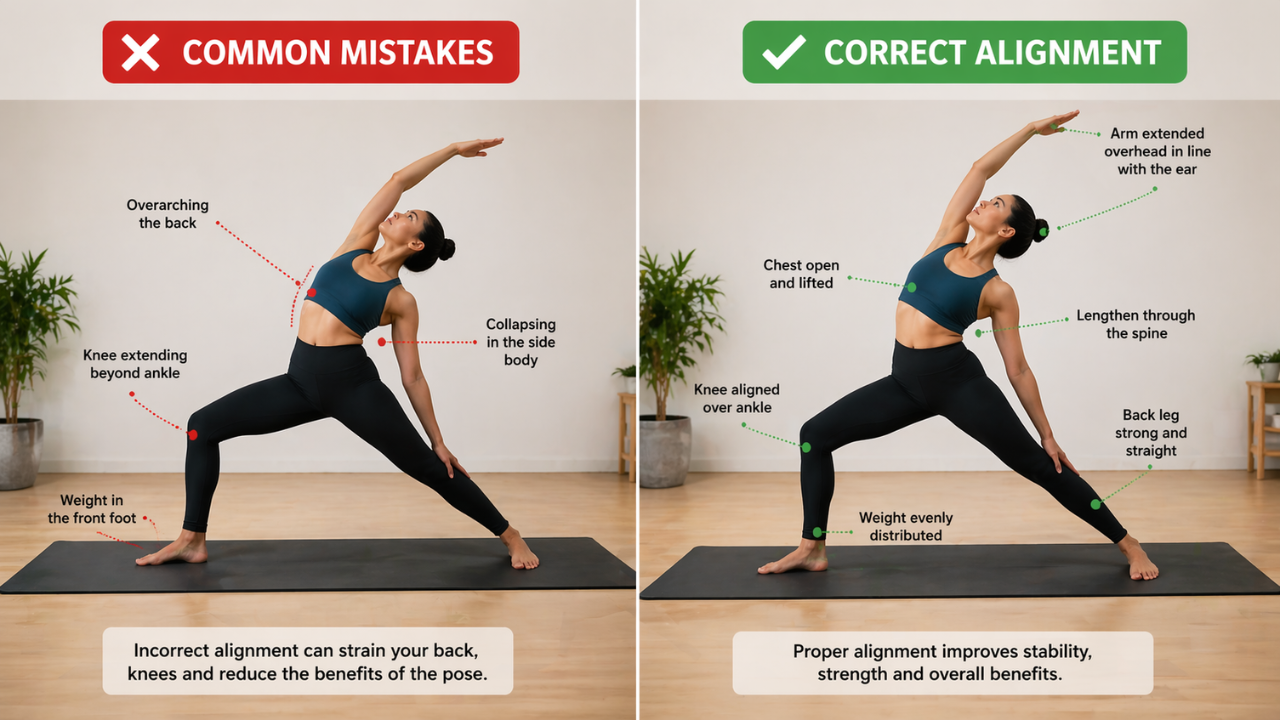
- Front knee falling in: Keep knee tracking over the middle toe.
- Leaning too far back: Keep a gentle arc — not a deep backbend.
- Back hand pushing on leg: Just let it rest — use no pressure at all.
- Hips rising up: Keep hips low and level through the whole pose.
- Side body crunching: Reach long through the fingertips to stay open.
- Holding the breath: Keep breathing slowly and steadily throughout.
- Weak back leg: Keep the back leg straight and active at all times.
Easy Modifications for Beginners
If the full pose feels too much right now, these simple changes will help you practice safely and comfortably.
- Less knee bend: Keep the front knee slightly bent if legs feel tired.
- Hand on hip: Place front hand on hip instead of reaching overhead.
- Shorter stance: Bring feet closer for better balance.
- Back hand on thigh: Let the back hand rest on the thigh, not all the way down the leg.
- Small arm reach: Raise the front arm only halfway if shoulder feels tight.
Modifications are not weakness. They are how you build a safe and strong practice over time.
Tips to Make This Pose Feel Better
These small tips will help you get more out of every breath in this pose.
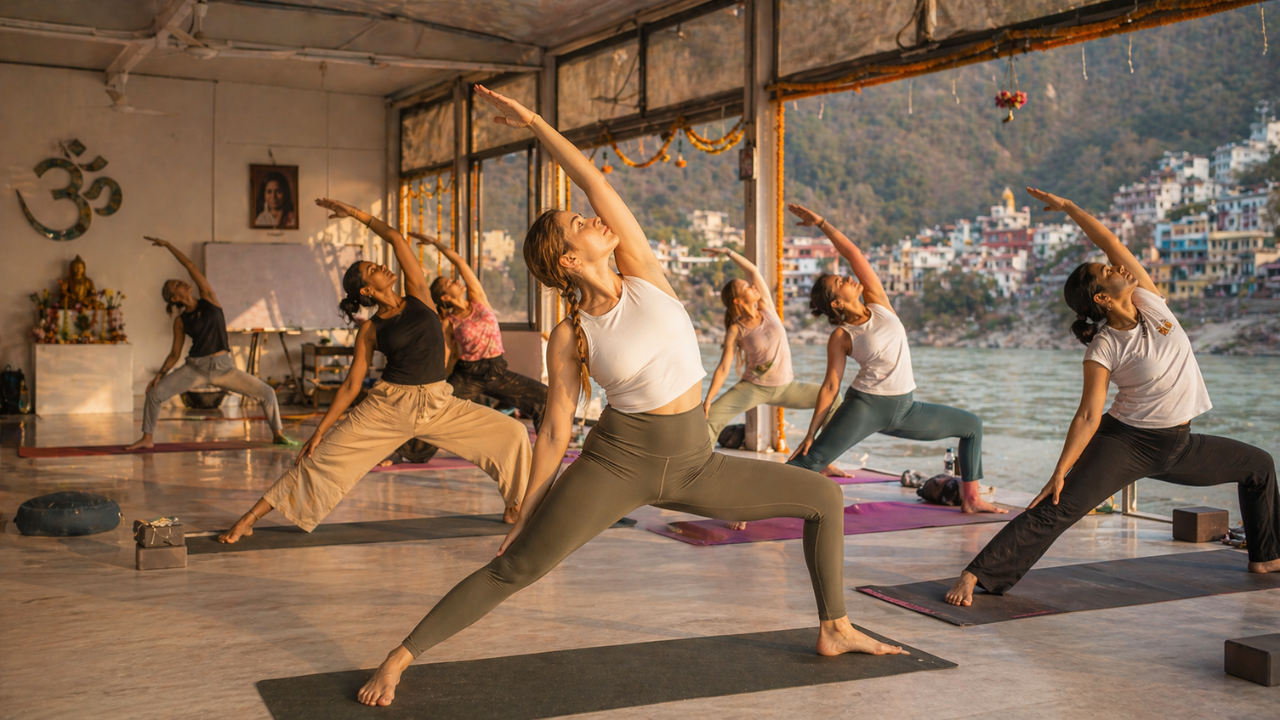
- Warm up first: Do Warrior II for a few breaths before moving into Reverse Warrior.
- Breathe into the side: Inhale and imagine your ribs expanding outward like a fan.
- Root the back foot: Press the outer edge of the back foot into the mat firmly.
- Reach from the heart: Let the stretch come from your chest — not just the arm.
- Keep the front knee steady: Check it is not wobbling left or right.
- Relax your face: Let the jaw, eyes, and forehead stay soft.
- Practice every day: Even a few breaths daily make a big difference.
Who Should Be Careful with This Pose?
This pose is gentle for most people. But some conditions need extra care.
- Knee injury: Do not bend the front knee too deep. Keep it comfortable.
- Neck pain: Keep your gaze forward or straight up — do not look back.
- Lower back issues: Keep the backbend very small and gentle.
- High blood pressure: Avoid raising the arm fully overhead — keep it lower.
- Shoulder pain: Bend the elbow slightly instead of keeping the arm straight.
Always listen to your body. If something hurts — stop and adjust. Practice with a qualified yoga teacher if you are unsure.
Quick Checklist — Is Your Pose Correct?
Go through this list while you are in the pose. If all of these feel right — you are doing great.
- Front knee is bent and aligned over the ankle
- Back leg is straight, strong, and active
- Outer edge of back foot is pressing into the mat
- Front arm is reaching long behind the head
- Back hand is resting on the back leg — no pressure
- Chest is open and lifted — not collapsed
- Side body is long and stretching — not crunched
- Hips are staying low and level
- Breath is slow and steady through the nose
- Face and jaw are relaxed and soft
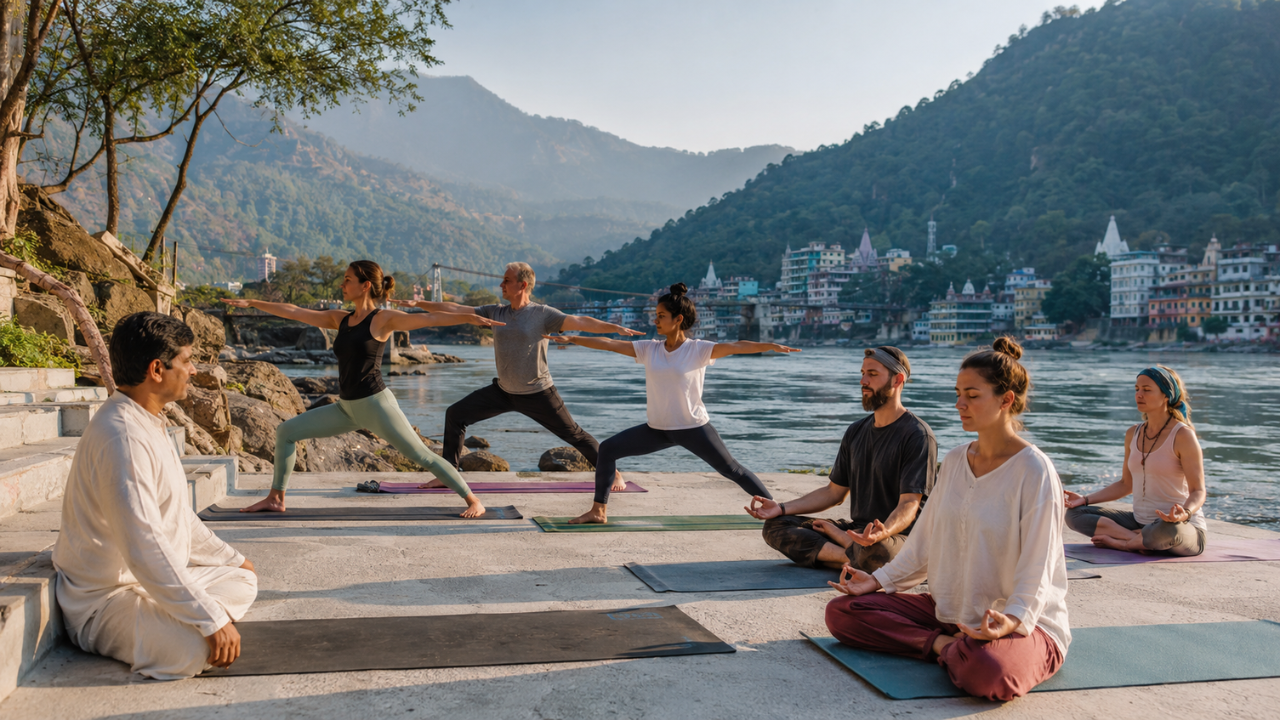
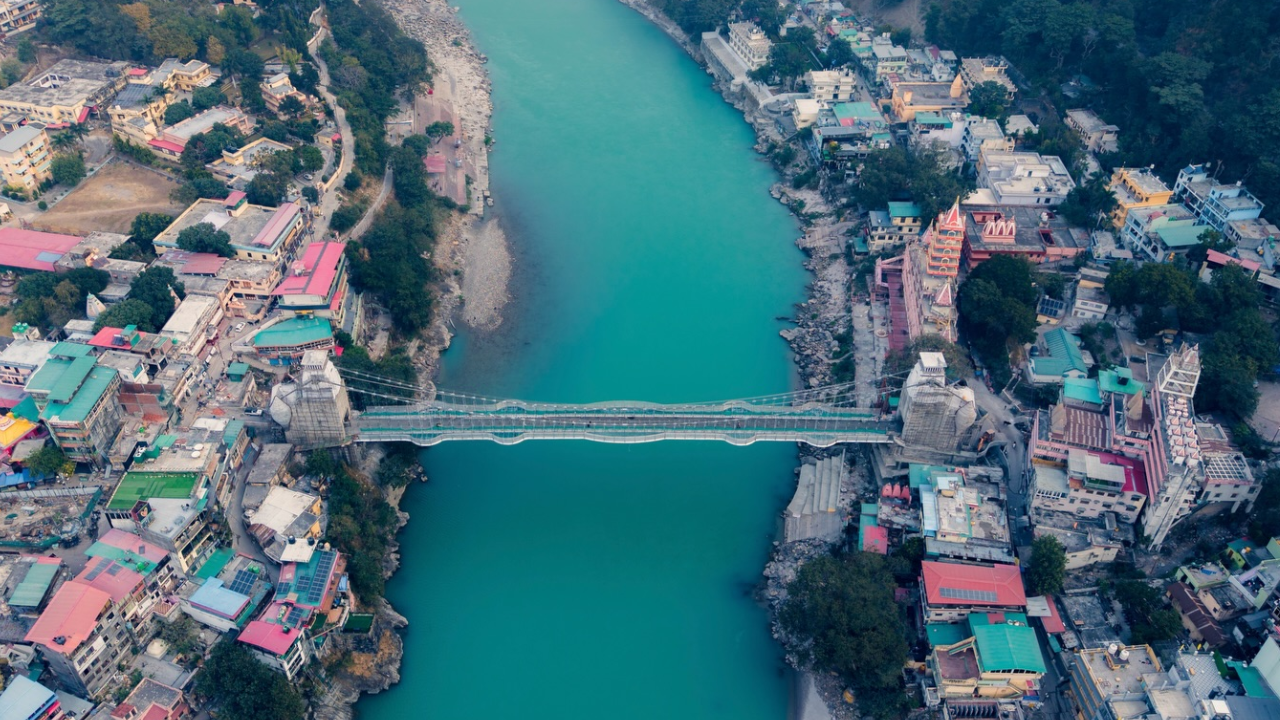
Learn Reverse Warrior Pose at Adishesh Yoga, Rishikesh
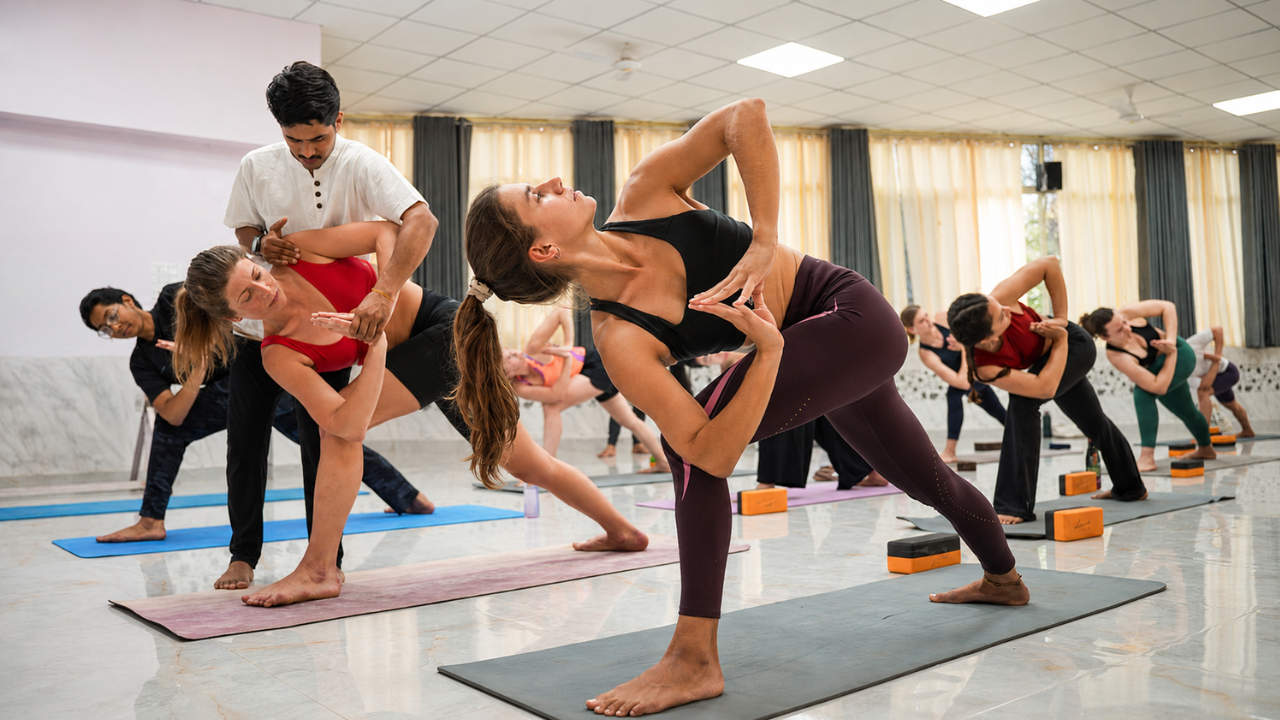
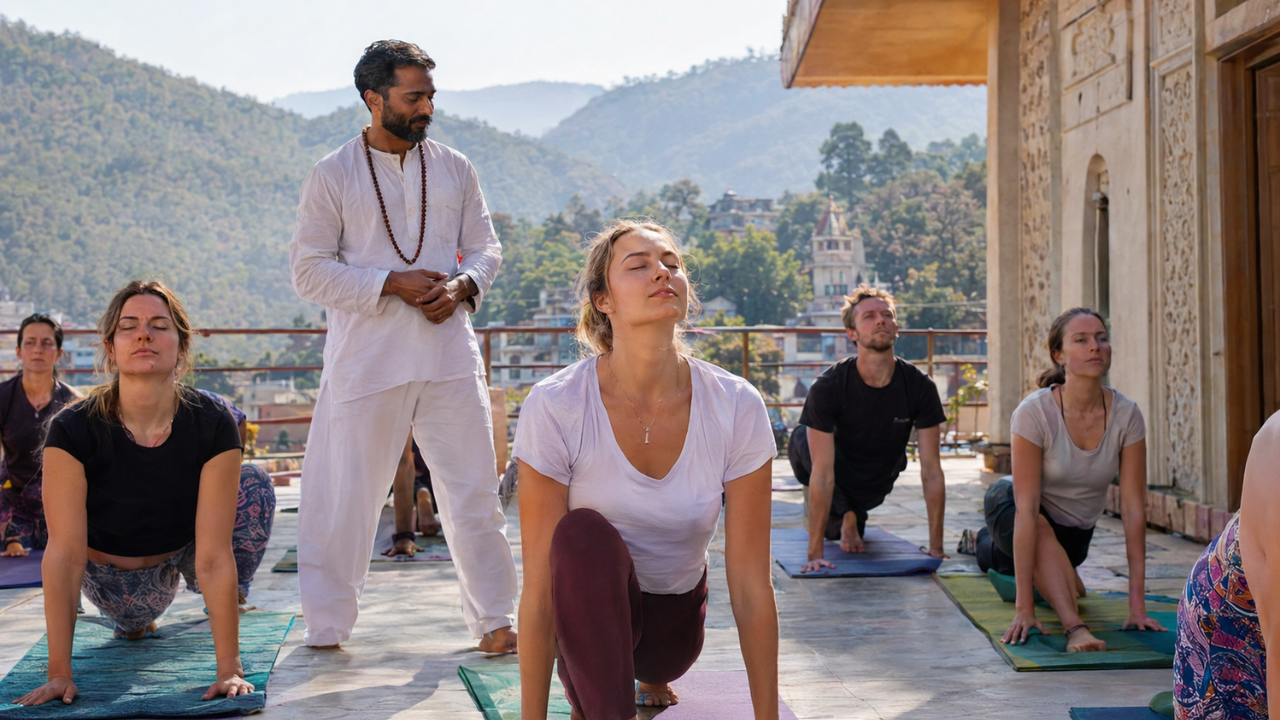
Want to learn Reverse Warrior Pose the right way? Come practice at Adishesh Yoga in Rishikesh. Our teachers watch your alignment carefully and guide you through every pose with patience. You will not just do the pose — you will feel it fully.
We teach traditional Hatha yoga in small groups. Every student gets personal attention and hands-on corrections. Whether you are a first-timer or want to go deeper — we have a class that fits you.
- Daily asana classes: Morning and evening sessions with full alignment guidance for every pose
- Warrior pose sequences: Warrior I, II, Reverse Warrior — all taught in the right order with breath
- Pranayama and meditation: Included in every class and retreat program
- Small group sizes: You get real attention, real corrections, and a calm learning space
- Experienced teachers: Trained in traditional yoga with true depth and genuine teaching experience
Come to Rishikesh. Practice yoga the real way. Leave with a practice that is truly yours.
Frequently Asked Questions
Conclusion
Reverse Warrior Pose gives you so much in one simple movement. It opens tight shoulders, stretches a stiff side body, strengthens the legs, and fills the chest with a deep, refreshing breath. It is one of those poses that always feels good.
Start gentle. Keep the back hand light. Let the front arm reach as far as feels natural. That is the pose working already. As you practice more, the openness will come on its own.
If you want to learn it properly with a real teacher watching your form — come practice at Adishesh Yoga in Rishikesh. We will help you build a practice that feels strong, safe, and deeply yours.