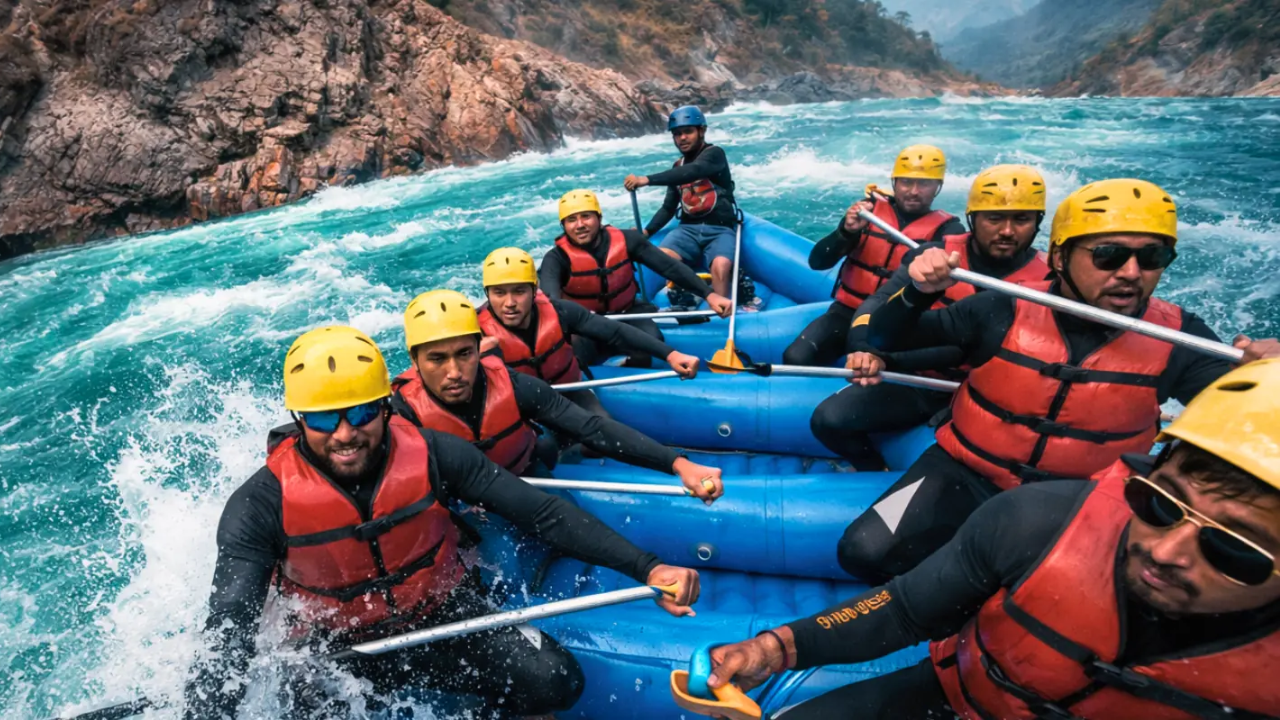
You are sitting in a raft. The Ganga is rushing fast. A big wave is coming. Your guide shouts — paddle forward! — and everything happens in seconds. That feeling? That is river rafting in Rishikesh.
Rishikesh is the river rafting capital of India. Every year, thousands of people come here to raft the Ganga — from first-timers to adventure lovers. This 2026 guide covers everything you need to know — rafting cost, routes, safety rules, what to carry, and how to book. Simple and clear.
What is River Rafting?
River rafting is an outdoor activity where a group of people sit in a big inflatable raft and paddle through a river. The river has fast-moving water sections called rapids. These rapids make the ride exciting and fun.
Rapids are graded from 1 to 6 based on how difficult they are. Grade 1 is very calm. Grade 6 is almost impossible. In Rishikesh, the rapids are mostly Grade 2, 3, and 4 — perfect for beginners and those who want a real challenge.
Why Rishikesh is the Best Place for Rafting in India
Rishikesh sits at the point where the Ganga comes out of the Himalayas. The river here is strong, fast, and clean. The hills on both sides are covered with forest. It is one of the most scenic rafting experiences in Asia.
- The Ganga has natural, powerful rapids — no artificial setup needed
- Many certified and experienced rafting operators are available
- Affordable cost compared to other countries
- Suitable for all levels — from total beginners to experts
- You can combine rafting with camping, bungee jumping, and yoga
- Safe infrastructure — life jackets, trained guides, and fixed routes
This is why Rishikesh is known across the world as a river rafting destination. It has everything — thrill, nature, safety, and good price.
Rafting Routes in Rishikesh (2026)
There are three main rafting routes in Rishikesh. Each one is different — in distance, difficulty, and experience. Choose the one that matches your comfort level.
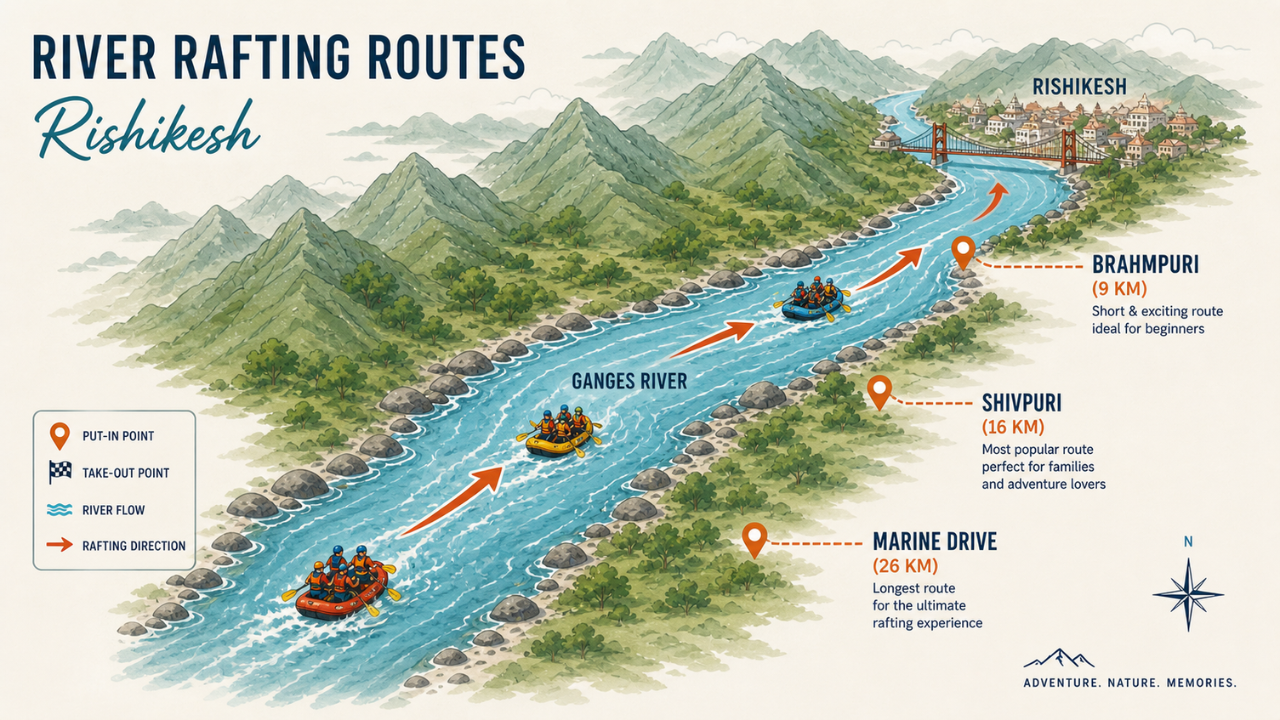
Route 1 — Brahmpuri to Rishikesh (9 km)
- Distance: 9 km
- Difficulty: Easy (Grade 1 – Grade 2)
- Duration: 1 to 1.5 hours
- Best for: Families, children, first-timers, elderly
- Rapids: Gentle — small waves, smooth water
- Cost: ₹400 – ₹600 per person
This is the shortest and calmest route. Good for people who want to try rafting for the first time but are not sure about big rapids. Very relaxed and scenic.
Route 2 — Shivpuri to Rishikesh (16 km) — Most Popular
- Distance: 16 km
- Difficulty: Moderate (Grade 2 – Grade 3+)
- Duration: 2 to 2.5 hours
- Best for: Beginners who want some thrill
- Rapids: Double Trouble, Roller Coaster, Golf Course
- Cost: ₹600 – ₹900 per person
This is the most booked route in Rishikesh. It has good rapids, nice scenery, and is manageable for most people. If you are not sure which route to choose — choose this one.
Route 3 — Marine Drive to Rishikesh (26 km)
- Distance: 26 km
- Difficulty: Moderate to Challenging (Grade 3 – Grade 4)
- Duration: 3 to 4 hours
- Best for: Adventure seekers, repeat rafters
- Rapids: Cross Fire, Three Blind Mice, Hilton, Black Money
- Cost: ₹1,000 – ₹1,500 per person
The longest route. Big rapids. Long time on water. This is for people who are ready to get properly wet and have a full rafting adventure. Not recommended for complete beginners or those with heart conditions.
Rishikesh Rafting Cost 2026 — Full Price List
Rafting prices in Rishikesh are quite affordable. Here is the latest realistic price list for 2026. Prices can change slightly with season and operator.
- Brahmpuri to Rishikesh (9 km): ₹400 – ₹600 per person
- Shivpuri to Rishikesh (16 km): ₹600 – ₹900 per person
- Marine Drive to Rishikesh (26 km): ₹1,000 – ₹1,500 per person
- Rafting + Camping package (1 night): ₹1,200 – ₹2,500 per person
- GoPro video add-on: ₹300 – ₹500 extra
- Group discount: Often available for groups of 8 or more
Avoid very cheap operators offering rafting at ₹200 or ₹300. They often cut corners on safety equipment. Always choose a certified and registered operator.
What is Included in the Rafting Package?
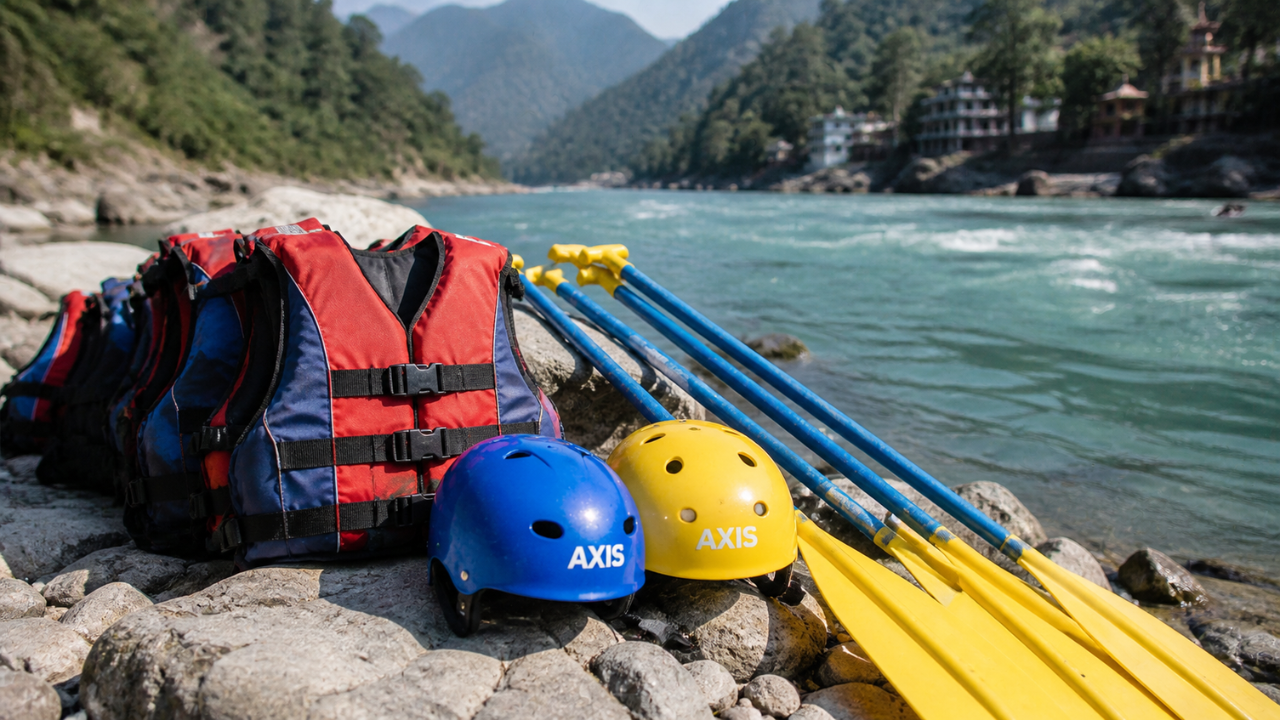
- Life jacket and helmet — provided by operator
- Paddle — one per person
- Professional certified guide in the raft
- Safety kayaker following the raft on all routes
- Changing room at the end point
- Drop-off at Rishikesh (depending on operator)
GoPro camera recording is usually not included — you have to pay extra for it. Ask the operator before booking.
Safety Rules for River Rafting in Rishikesh
Rafting is safe — but only when you follow the rules. Read these carefully, especially if it is your first time.
Before You Get in the Raft
- Always wear your life jacket. Do not loosen it.
- Always wear your helmet. Rocks are real.
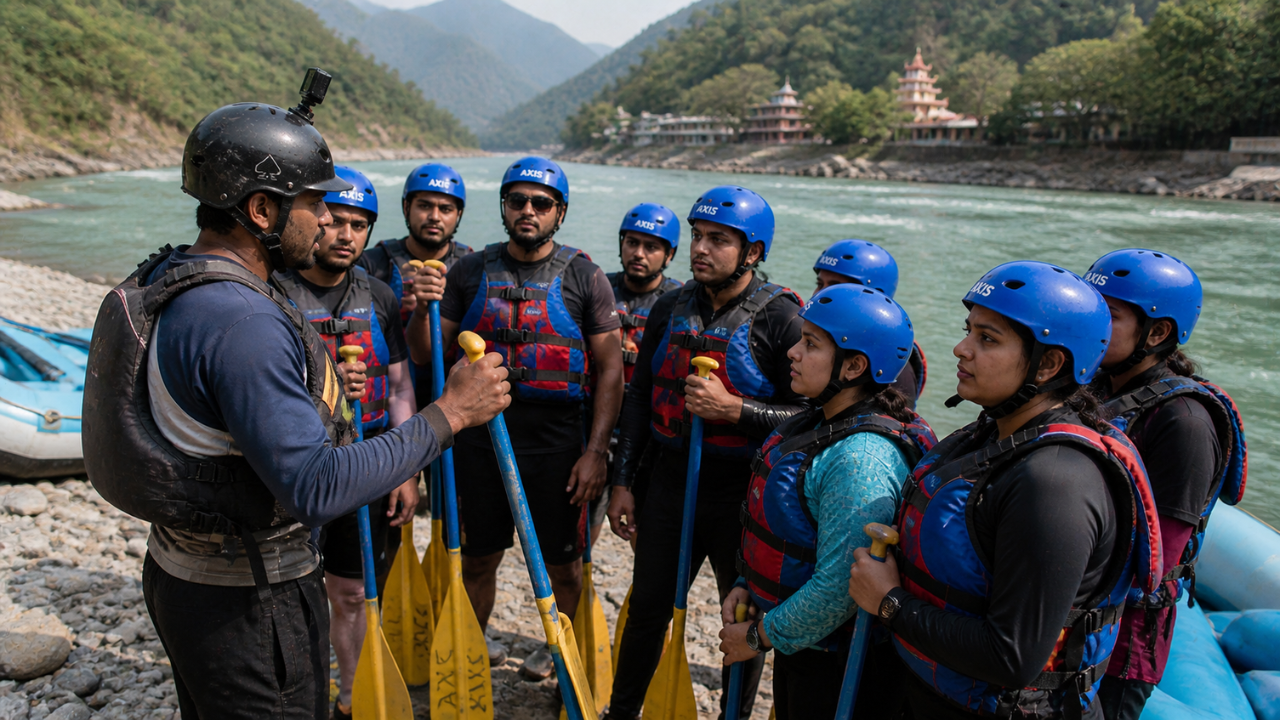
- Listen fully to the safety briefing by your guide — every word matters
- Tell your guide if you cannot swim, have heart issues, or are pregnant
- Do not eat a heavy meal right before rafting
- Remove all loose jewellery, watches, and glasses
During Rafting
- Paddle when your guide says paddle — the timing matters for safety
- Hold the rope on the side of the raft when going through big rapids
- Do not stand up inside the raft
- Do not panic if you fall in the water — life jacket will keep you up
- If you fall, lie on your back, keep feet pointing downstream
- Do not try to swim against the current — relax and float
Falling in the water sounds scary. But with a life jacket on — you will float. The guide will pull you back in or guide you to shore. It happens often and it is safe. Do not panic — that is the most important rule.
Who Can Do Rafting — and Who Should Avoid It
Who Can Do Rafting
- Anyone aged 14 and above in good health
- Non-swimmers — life jacket keeps you afloat (stick to easier routes)
- People with mild fear of water — start with the 9 km Brahmpuri route
- Groups, couples, families with older children
- People visiting Rishikesh for yoga retreat or spiritual trip — many do this
Who Should Avoid Rafting
- Pregnant women — not safe at any stage
- People with heart conditions or high blood pressure
- People with severe back or spinal problems
- Children below 14 years old
- Anyone under the influence of alcohol or medication that causes drowsiness
What to Carry for River Rafting in Rishikesh
Packing right makes the whole experience better. Here is exactly what to bring and what to leave behind.
Carry These
- Quick-dry shorts or light pants — jeans get very heavy when wet
- T-shirt or sports top — something you do not mind getting soaked
- Water shoes, sports sandals, or old sneakers — not flipflops
- A change of clothes in a bag left safely at the base
- Sunscreen — the Ganga reflects strong sunlight
- A small waterproof bag if you want to carry your phone on the raft
- Water bottle — drink water before you start
Leave These Behind
- Your phone (unless it has a proper waterproof case)
- Loose jewellery, rings, necklaces — they fall off in water
- Glasses without a strap — they will be lost in the river
- Expensive camera — rent a GoPro from the operator instead
- Heavy backpack — there is no room or need for it in the raft
Best Time for River Rafting in Rishikesh
Rafting in Rishikesh is available for most of the year — but not all months are equal. The water level and weather changes the experience completely.
- October to February (Best season): Cool weather, clean water, lower river levels — great for beginners. Temperature is 10°C to 22°C. Raft hire is easy.
- March to June (Excellent season): Warmer weather, good water level, slightly bigger rapids. Very popular month — book in advance.
- July to September (Closed): Monsoon season. Rafting is banned during heavy rains because river levels become dangerously high. Do not try rafting during this time.
If you want the most exciting rapids — visit in March or April. Water level is high from the Himalayan snowmelt and the rapids are at their most powerful. If you are a beginner — October to December is ideal.
How to Book River Rafting in Rishikesh — Step by Step
Booking rafting in Rishikesh is simple. Here is exactly how to do it — step by step.
- Step 1 — Choose your route: Decide between Brahmpuri (9 km), Shivpuri (16 km), or Marine Drive (26 km) based on your experience level.
- Step 2 — Find a certified operator: Look for operators registered with the Uttarakhand Tourism Department. Ask for their licence number if unsure.
- Step 3 — Book online or in person: You can book through trusted travel sites like MakeMyTrip, Thrillophilia, or directly with local operators in Rishikesh near Lakshman Jhula.
- Step 4 — Confirm what is included: Ask clearly — is transport included? Is GoPro recording extra? Is there a changing room?
- Step 5 — Arrive early: Reach the starting point at least 30 minutes before your slot. The safety briefing takes 15 minutes. You do not want to rush into the water.
- Step 6 — Get geared up and enjoy: Wear your life jacket and helmet, listen to the guide, and get in the raft. The rest happens naturally.
During peak season — February to May — book at least one to two days in advance. Slots fill up fast, especially on weekends.
What Actually Happens During Rafting — Real Experience Flow
If you have never done rafting before, you might be wondering — what exactly will happen on that day? Here is the full picture.
- Arrival: You reach the camp or pickup point. The operator gives you your gear.
- Safety briefing: Your guide explains commands — forward paddle, back paddle, stop, hold. Pay full attention here.
- Getting in the raft: You sit on the sides of the raft with your feet tucked in. The guide sits at the back and steers.
- First few minutes: The water is calm. You warm up with paddling. Everyone gets a feel for the raft.
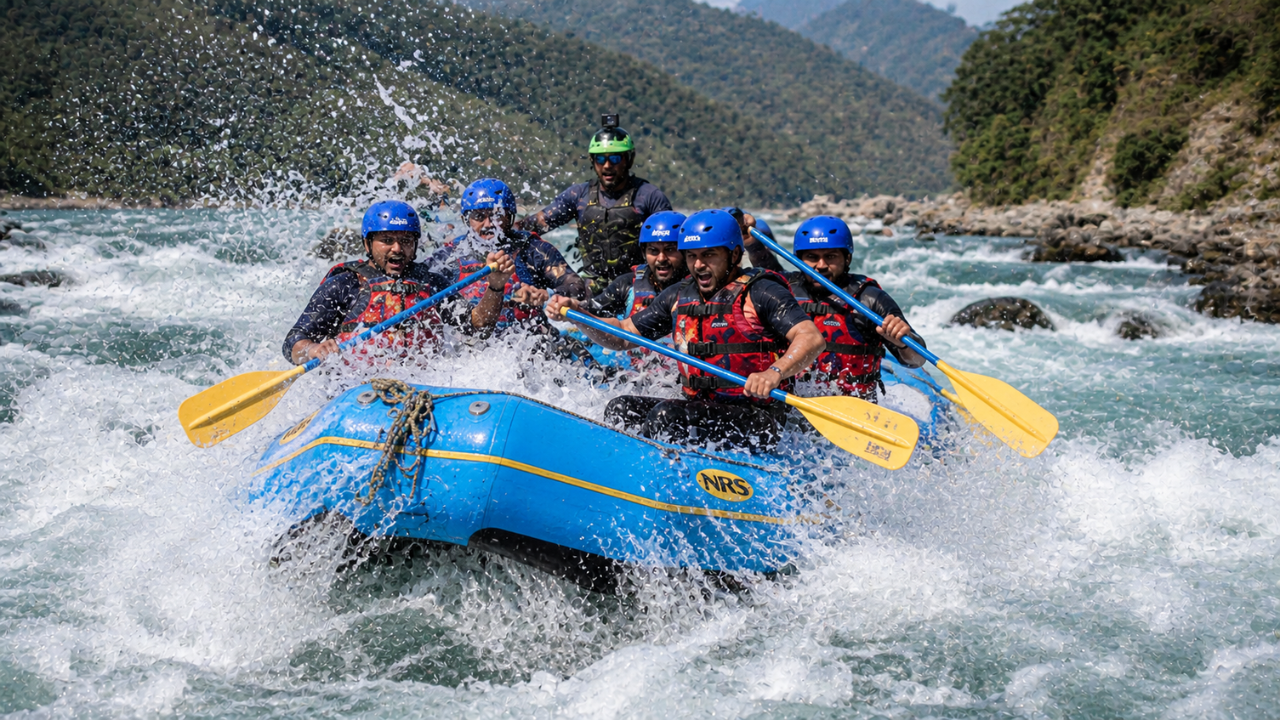
- First rapid: You hear a roar. The guide shouts forward paddle. The raft hits the wave. Water splashes. Everyone screams and laughs.
- Middle stretch: You go through several rapids with calm sections in between. Time to look around — the Himalayan hills, the clear Ganga, the forest.
- Cliff jumping (optional): Some routes have a spot where you can jump from a small cliff into the river. Totally optional. Life jacket is on.
- End point: You reach Ram Jhula or Lakshman Jhula area. Get out, change clothes, celebrate.
Common Beginner Mistakes in Rishikesh Rafting
Most problems during rafting happen because of these simple mistakes. Avoid them and your experience will be smooth and safe.
- Ignoring the safety briefing: Many people treat it like a formality. It is not. The briefing tells you exactly what to do if you fall in the water. Listen carefully.
- Choosing a too-long route too soon: Some beginners book Marine Drive (26 km) because it sounds exciting. If you have never rafted before — start with Shivpuri (16 km).
- Wearing jeans: Jeans hold water, become very heavy, and make movement difficult. Always wear quick-dry clothes.
- Panicking when the raft tilts: The raft is designed to tilt and rock. That is normal. Hold the rope and trust the guide.
- Booking the cheapest operator: Price is not everything. A cheap operator may have old safety gear or untrained guides. Choose certified ones.
- Eating a heavy meal right before: River water plus waves plus a full stomach is not a great combination. Eat light at least two hours before.
- Standing up in the raft: Never stand in the raft. It can tip. Stay seated and hold on during rapids.
River Rafting in Rishikesh — Quick Summary
The most popular route is Shivpuri to Rishikesh (16 km). Cost starts at ₹600 per person. Best season is October to June. Always book a certified operator.
Frequently Asked Questions
Combine Rafting with a Yoga Retreat in Rishikesh
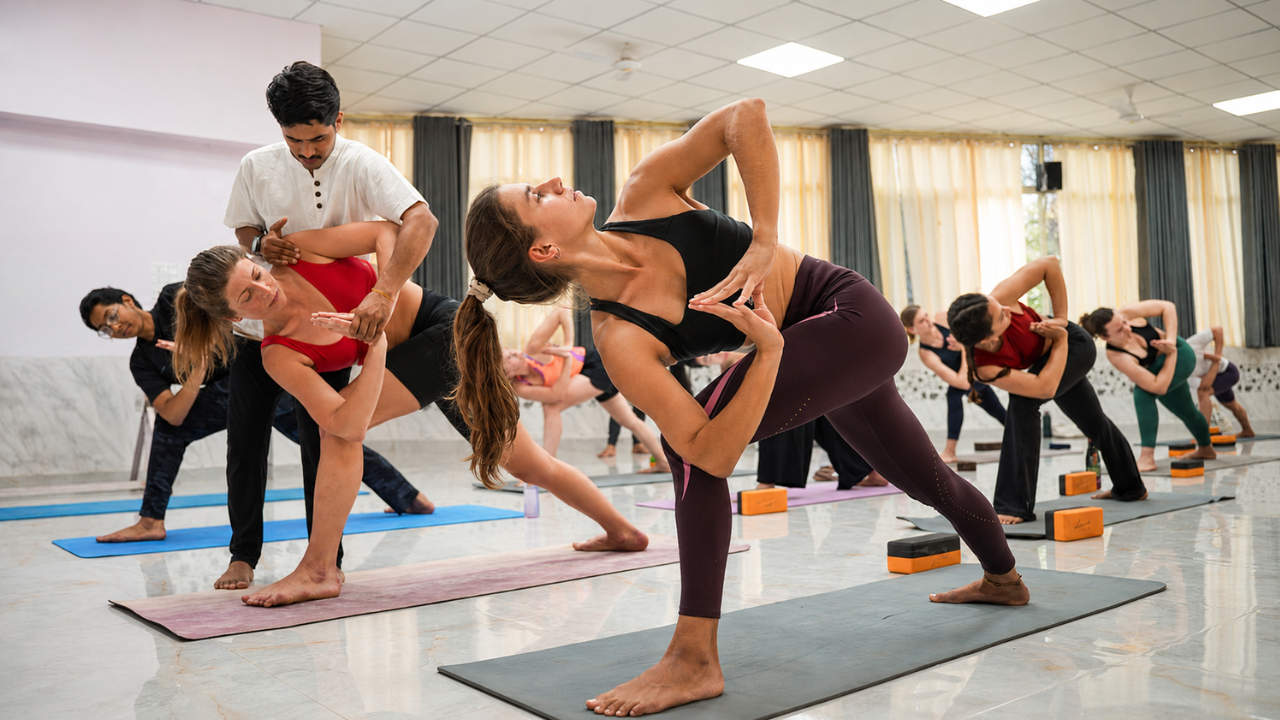
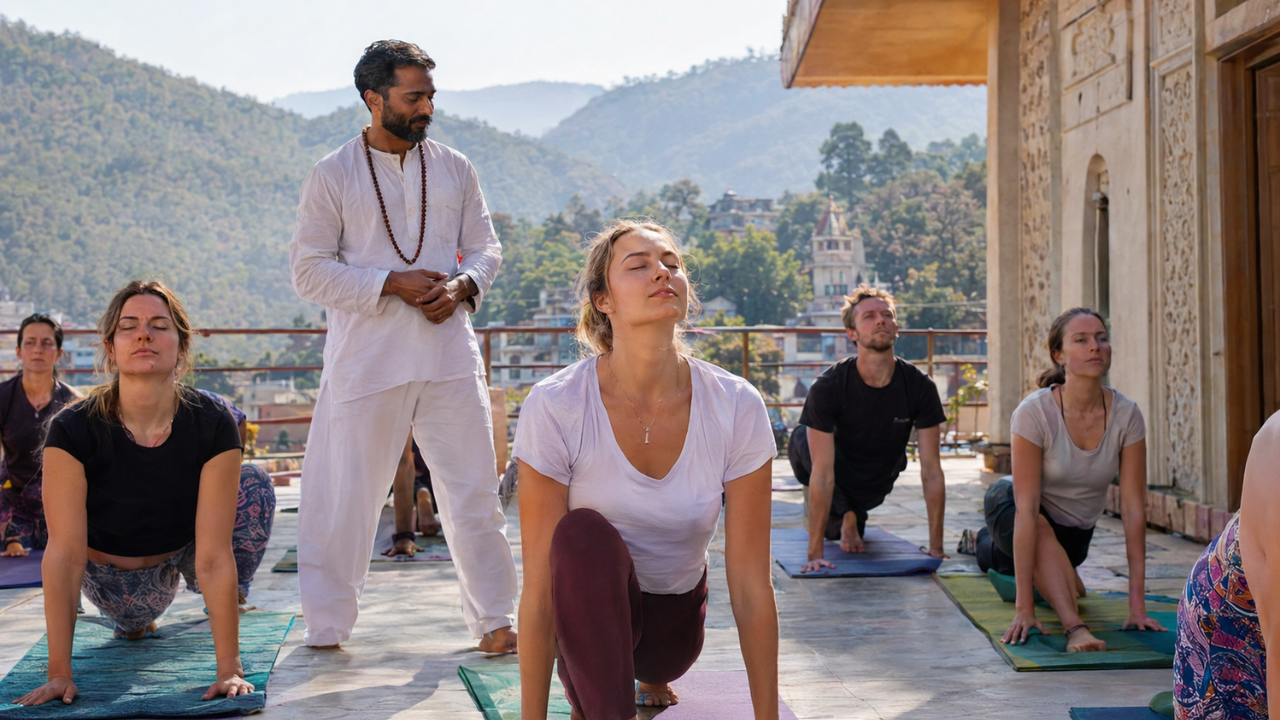
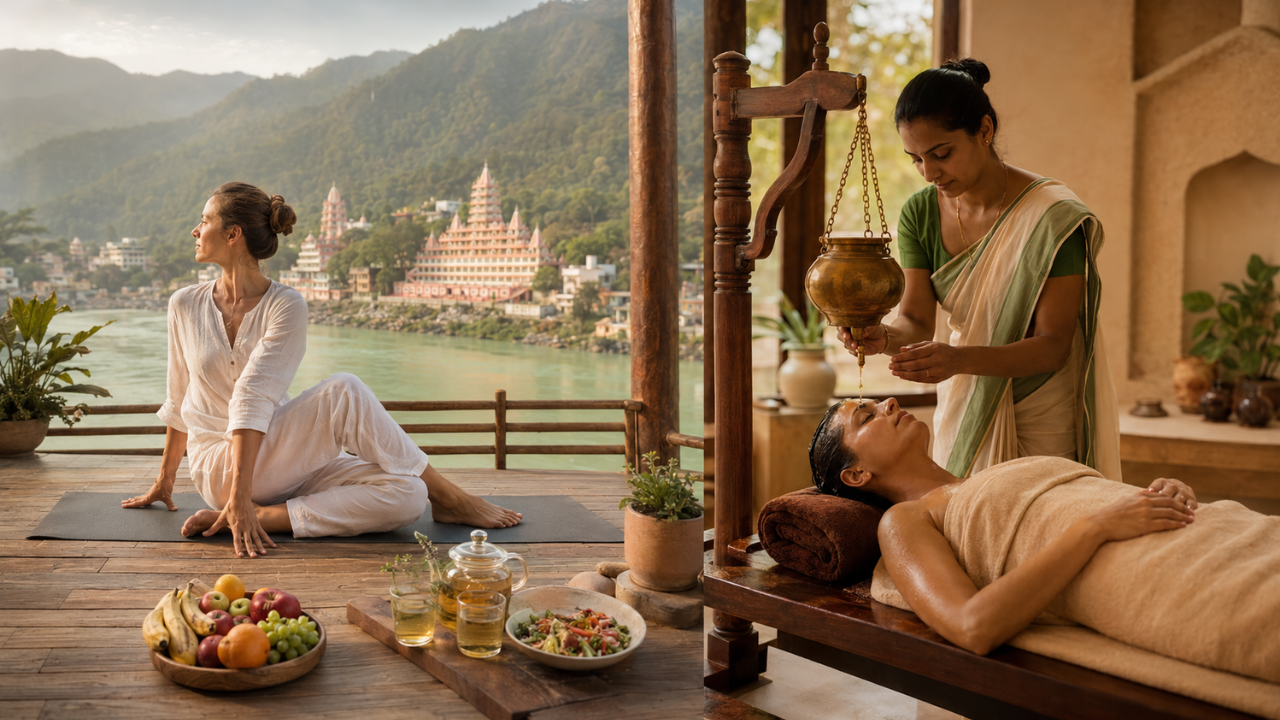
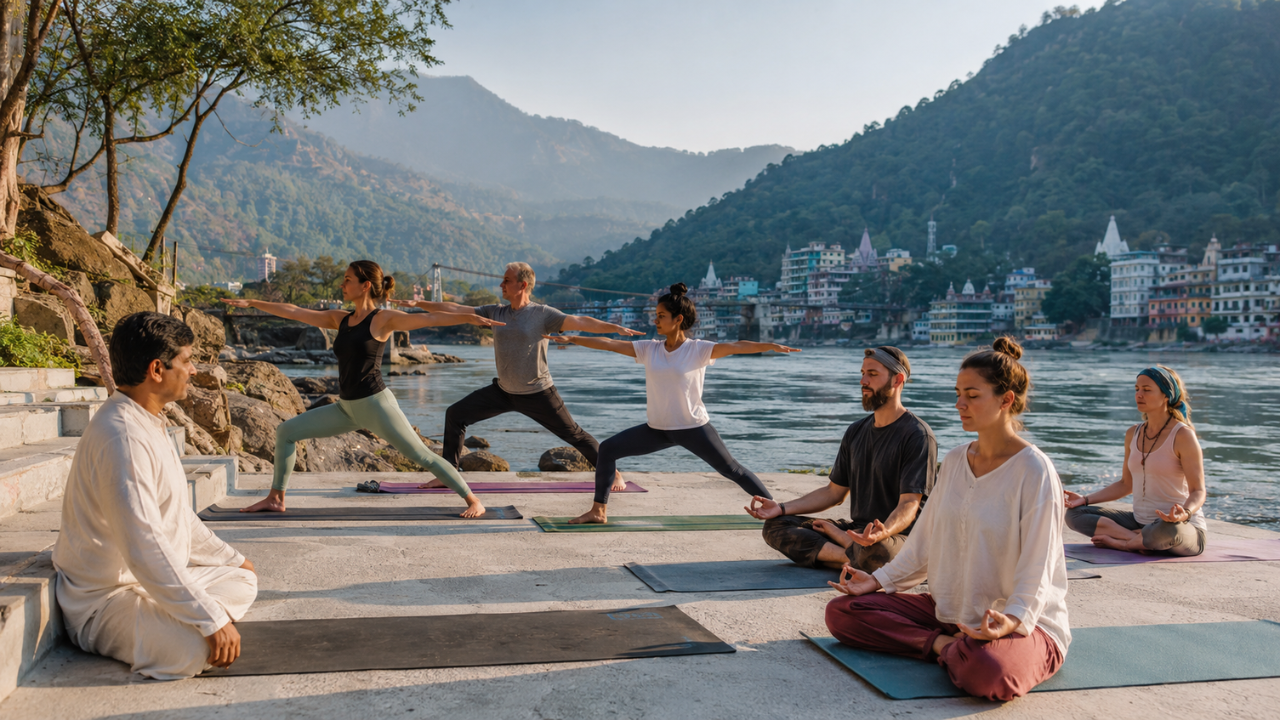
Many people who visit Rishikesh for yoga also go rafting. It is the perfect balance — a quiet morning yoga session and then the rush of the river in the afternoon. Both give you energy in completely different ways.
At Adishesh Yoga, we help retreat guests plan their experience in Rishikesh — including guided rafting trips, sunrise visits to Kunjapuri Temple, and full yoga and meditation programs. It is a complete Rishikesh experience — inside and outside.
- Morning yoga & pranayama: Start the day calm and centred
- Afternoon rafting: Add adventure and adrenaline
- Evening Ganga Aarti: End the day with peace at Triveni Ghat
- Sattvic meals: Clean, healthy food throughout your stay
Things to Do Near Rafting Points in Rishikesh
After your rafting session, there is plenty more to explore near the river. Most of these are close to the Shivpuri and Brahmpuri starting points.
- Beach camping on the Ganga: Stay overnight in tents right next to the river — very popular with groups
- Bungee jumping at Jumpin Heights: India's highest bungee (83 metres) is just outside Rishikesh near the Shivpuri area
- Cliff jumping: Some rafting operators stop at a safe cliff for optional jumping into the river
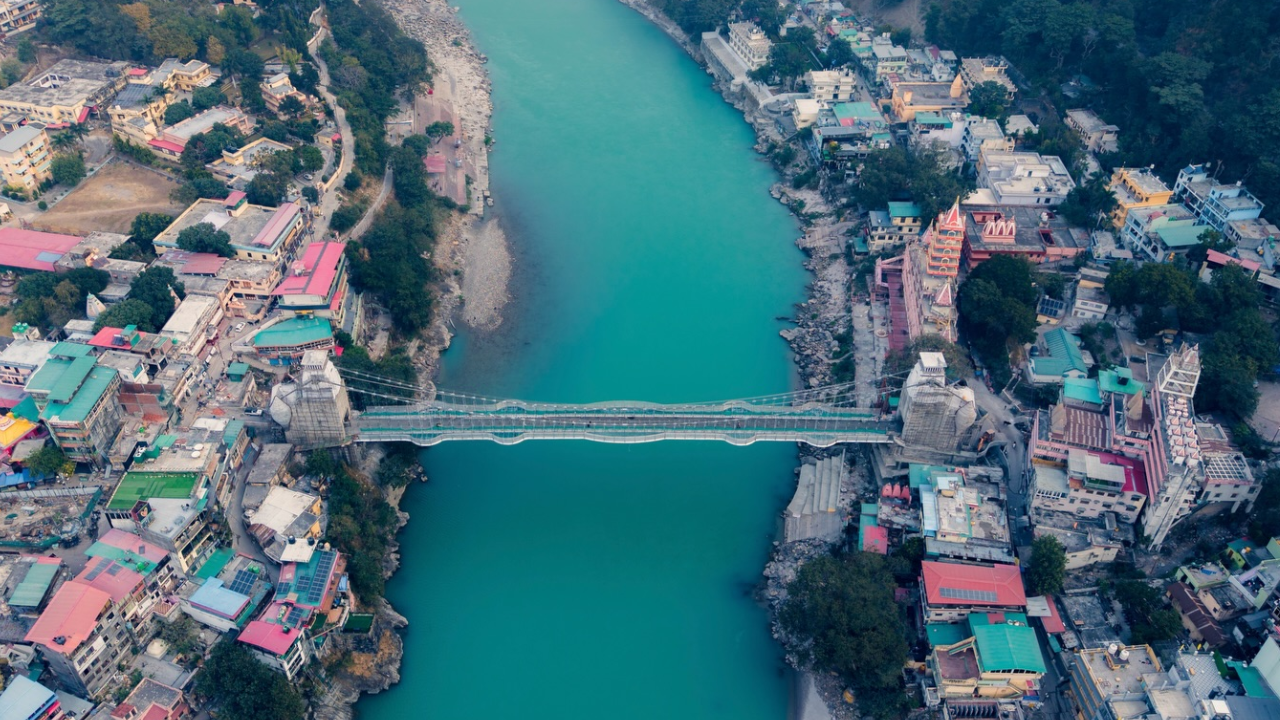
- Lakshman Jhula and Ram Jhula: Walk across these iconic suspension bridges over the Ganga — the views are beautiful
- Ganga Aarti at Triveni Ghat: Every evening at sunset — one of the most moving spiritual experiences in Rishikesh
Conclusion
River rafting in Rishikesh is one of those experiences that stays with you. The cold Ganga on your face, your guide shouting paddle, the roar of a rapid coming at you — you cannot replicate that feeling anywhere else.
Whether you are a total beginner or looking for a bigger challenge — Rishikesh has a route for you. Just choose your route, book a certified operator, follow the safety rules, and get in that raft.
And if you are staying at a yoga retreat in Rishikesh — add a rafting day to your trip. It is one of the things you will remember most from your time here. At Adishesh Yoga, we can help you plan the perfect day — from morning yoga to the river and back again.