Crow Pose looks impossible the first time you see it. Someone balancing their whole body on just two hands — knees tucked in, feet off the ground, completely still. You think, "That cannot be for me."
But here is the truth: Crow Pose is one of the easiest arm balances in all of yoga. It is more about technique than strength. Most beginners get their first lift-off within just a few weeks — sometimes even on the very first try.
What Is Crow Pose?
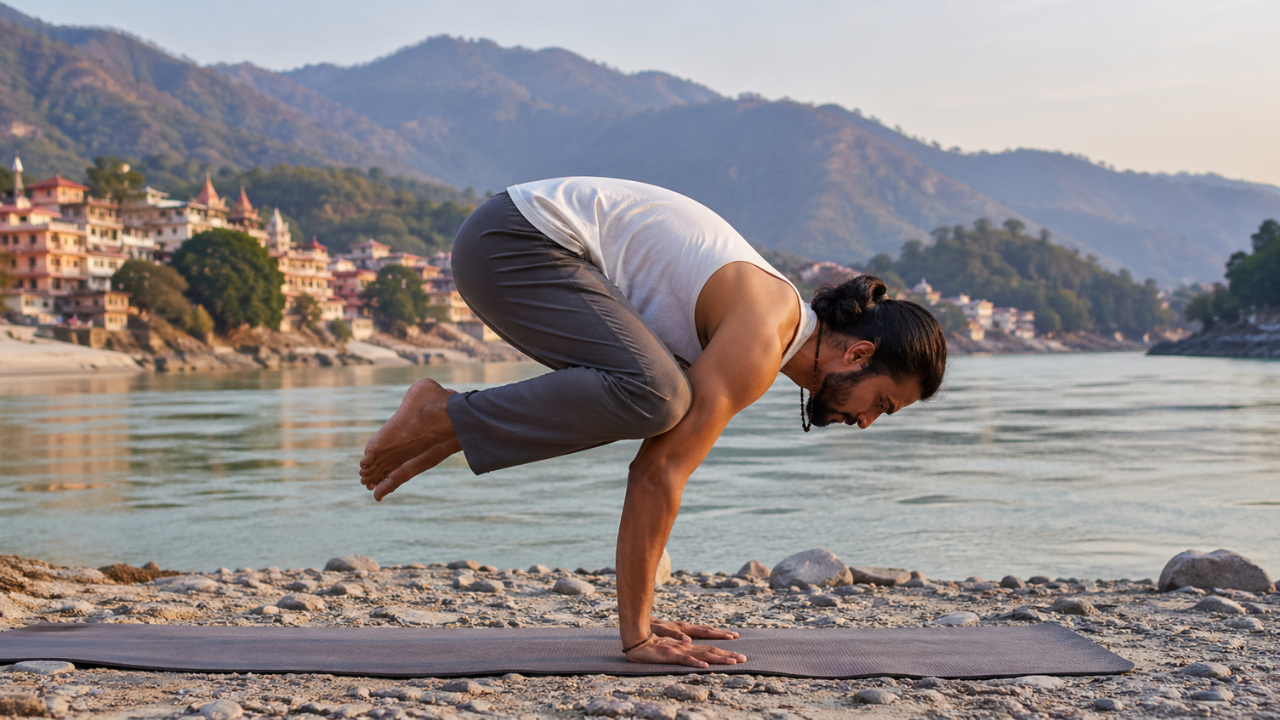
Crow Pose is called Bakasana in Sanskrit. "Baka" means crow or crane. And when you are in this pose — body lifted, arms strong, gaze forward — you do look a little like a crow about to take off.
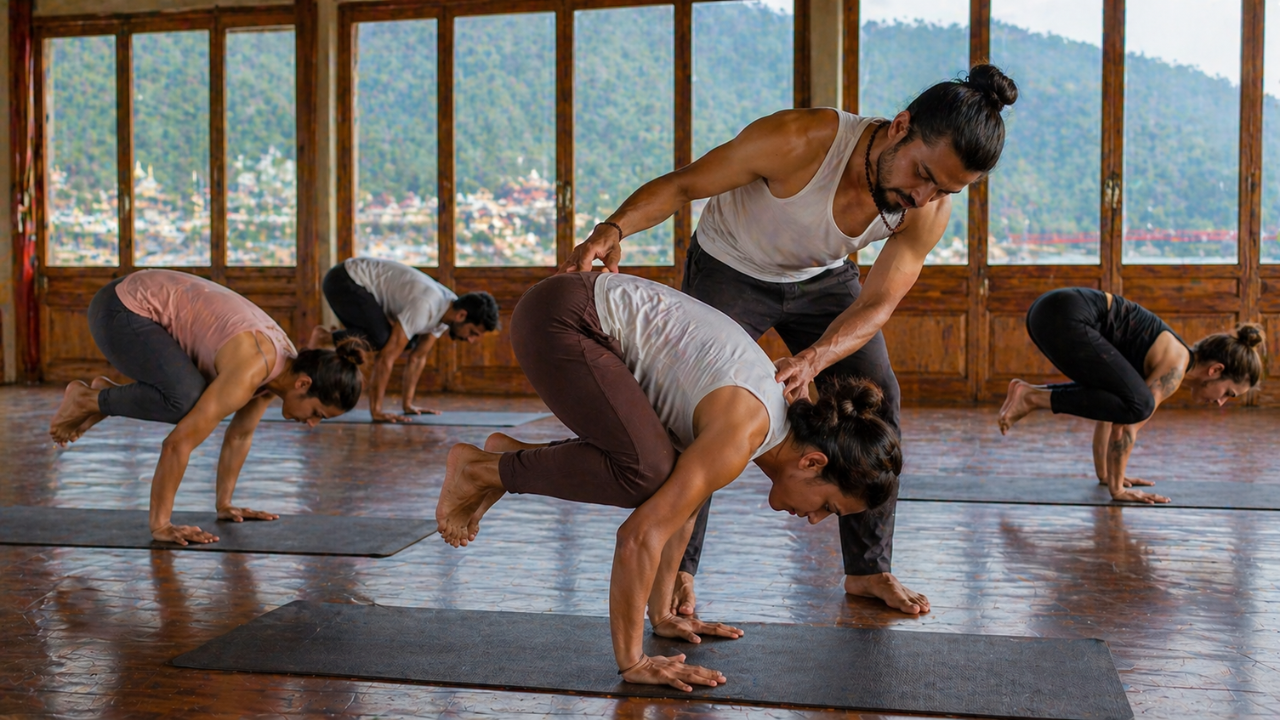
In this pose, you squat down, place both palms flat on the mat, and rest your knees on the back of your upper arms — just above the elbows. Then you slowly shift your weight forward until your feet lift off the ground. Your whole body floats on just your two hands.
- Sanskrit name: Bakasana
- Meaning: Crow Pose / Crane Pose
- Pose type: Arm balance
- Level: Beginner to intermediate
- Hold time: 3 to 10 breaths
- Part of: Hatha yoga, Vinyasa yoga, Power yoga sequences
Crow Pose is usually taught after students are comfortable with basic squats, planks, and hip-opening poses. If you can hold a plank for 20 seconds and squat down easily — you are already ready to try Crow Pose.
Benefits of Crow Pose
Crow Pose does a lot more than just look impressive. Here is what your body and mind actually gain from regular practice.
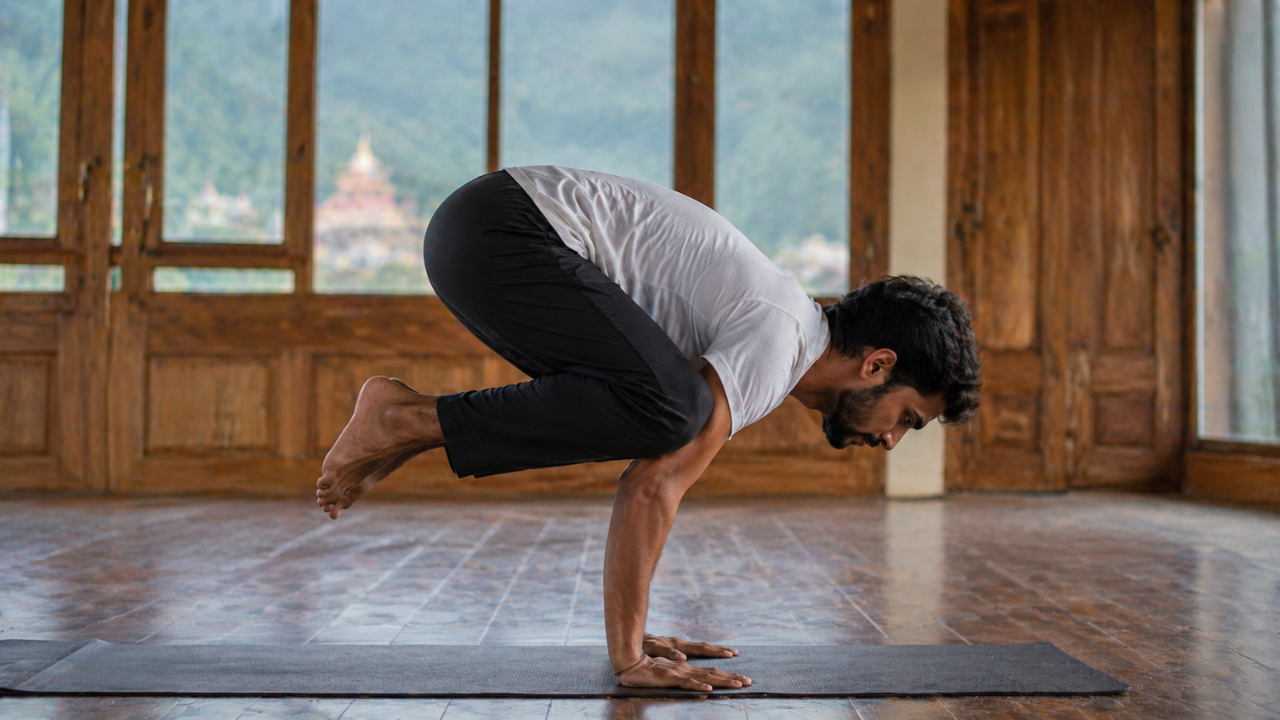
- Stronger arms and wrists: Holding your body weight on your hands builds real strength in the wrists, forearms, and shoulders.
- Deep core strength: The belly and deep abdominal muscles work hard to lift and hold the legs up. This is core training at its best.
- Hip flexibility: As the knees press into the arms, the hips open and the groin gets a deep stretch.
- Better balance: Balancing on your hands builds full-body awareness and coordination you cannot get from standing poses.
- Mental focus and courage: Crow Pose asks you to trust yourself and lean forward. This builds mental strength and confidence on and off the mat.
- Shoulder stability: The shoulders learn to support weight in a new way — making them stronger and more stable over time.
- Body awareness: You quickly learn where your weight is and how to shift it — a skill that improves every other yoga pose too.
- Gateway to harder poses: Crow Pose is the starting point for many advanced arm balances. Master this and the next level opens up.
Many students say Crow Pose gave them real confidence. When you lift off the ground for the first time — even for just one second — something shifts inside. You start believing you can do hard things.
How to Do Crow Pose — Step by Step
Read all the steps once fully before you try. Then go to your mat and go slow. Each step prepares you for the next.
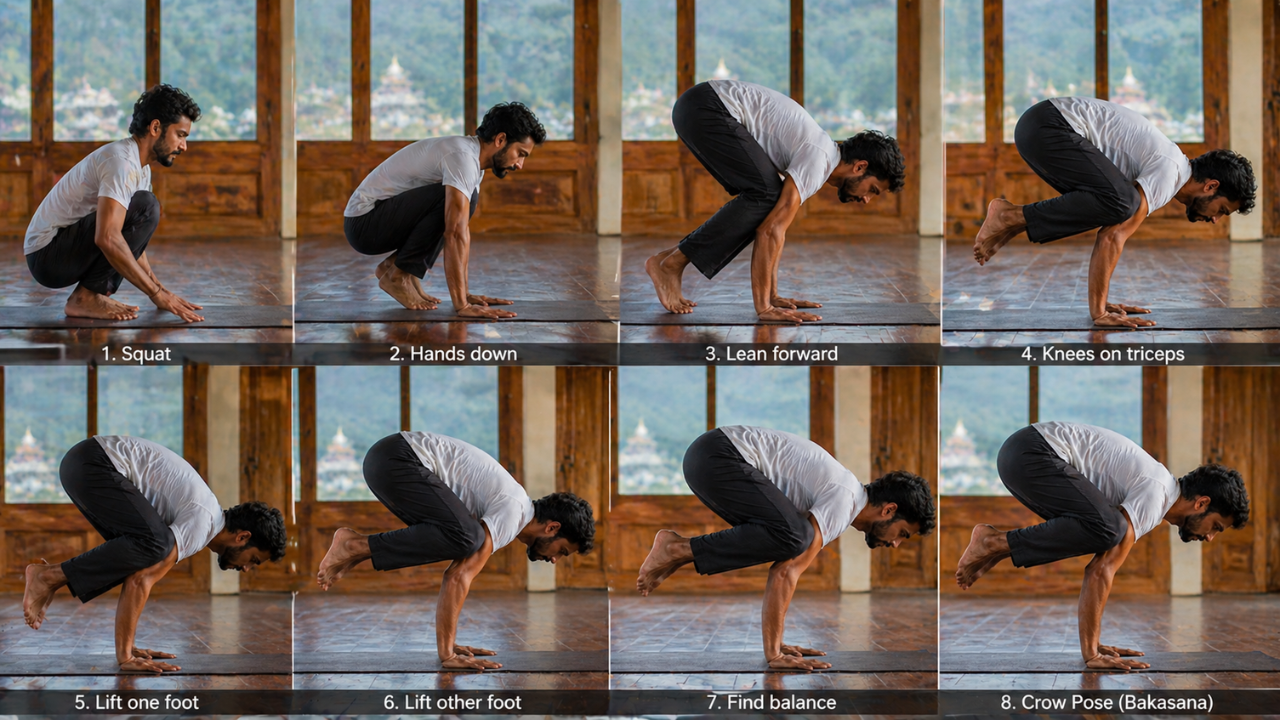
- Step 1: Come into a low squat — feet hip-width apart, knees wide, heels on the floor or on a folded blanket if needed.
- Step 2: Place both palms flat on the mat, shoulder-width apart. Spread the fingers wide. Middle fingers point forward.
- Step 3: Bend the elbows slightly — about 45 degrees. Do not straighten them yet. This creates a shelf for your knees.
- Step 4: Place the knees on the back of the upper arms — as high as possible, close to the armpits. Not on the elbow joint.
- Step 5: Squeeze the knees gently into the arms. This grip is what keeps you stable.
- Step 6: Look slightly forward — not straight down. Pick a point on the floor about 30 cm in front of your hands. Fix your gaze there.
- Step 7: Take a breath in. On the exhale, round the upper back — like a cat. Pull the belly in and up. This activates the core.
- Step 8: Shift your whole body weight slowly forward onto your hands. Let the heels naturally lift off the floor as you do this.
- Step 9: Once both feet are off the ground — hold still. Draw the heels toward the seat. Breathe slowly. Try to hold for 3 to 5 breaths.
- Step 10: To come down, shift weight back slowly and lower the feet to the floor with control. Never just drop down.
If you fall forward — that is fine. Place a folded blanket in front of you for safety. Falling means you were brave enough to shift your weight forward. That is exactly what the pose needs.
Key Alignment Tips for Crow Pose
These small alignment details make a big difference. Good alignment means less effort and more control in the pose.
- Hand position: Palms fully flat on the mat. Spread all fingers wide. Press through the fingertips and the base of the palm evenly — do not collapse the wrist.
- Elbows: Keep a soft bend — about 45 degrees. Straight arms make balancing much harder. Bent arms create the shelf your knees need.
- Knee placement: Knees as high on the arms as possible — ideally in the armpits. Low knee placement near the elbows makes the pose much harder.
- Core engagement: Round the upper back and draw the belly in and up before lifting. Keep this engagement throughout the hold.
- Gaze: Look forward — about 30 cm in front of your hands. Looking straight down shifts the weight back and causes you to fall.
- Heels: Draw the heels toward the seat as you lift. This shortens the body and makes balancing much easier.
- Shoulders: Press the shoulder blades apart and slightly forward. Do not let the chest sink down toward the floor.
- Breath: Keep breathing steadily. Holding the breath tightens the body and breaks balance faster.
Work on one alignment point per practice session. You do not need to fix everything at once. Pick one detail — knee placement, gaze, or core — and focus on just that today.
Common Mistakes to Avoid
These mistakes are very common — and easy to fix once you know about them. Check each one before your next practice.
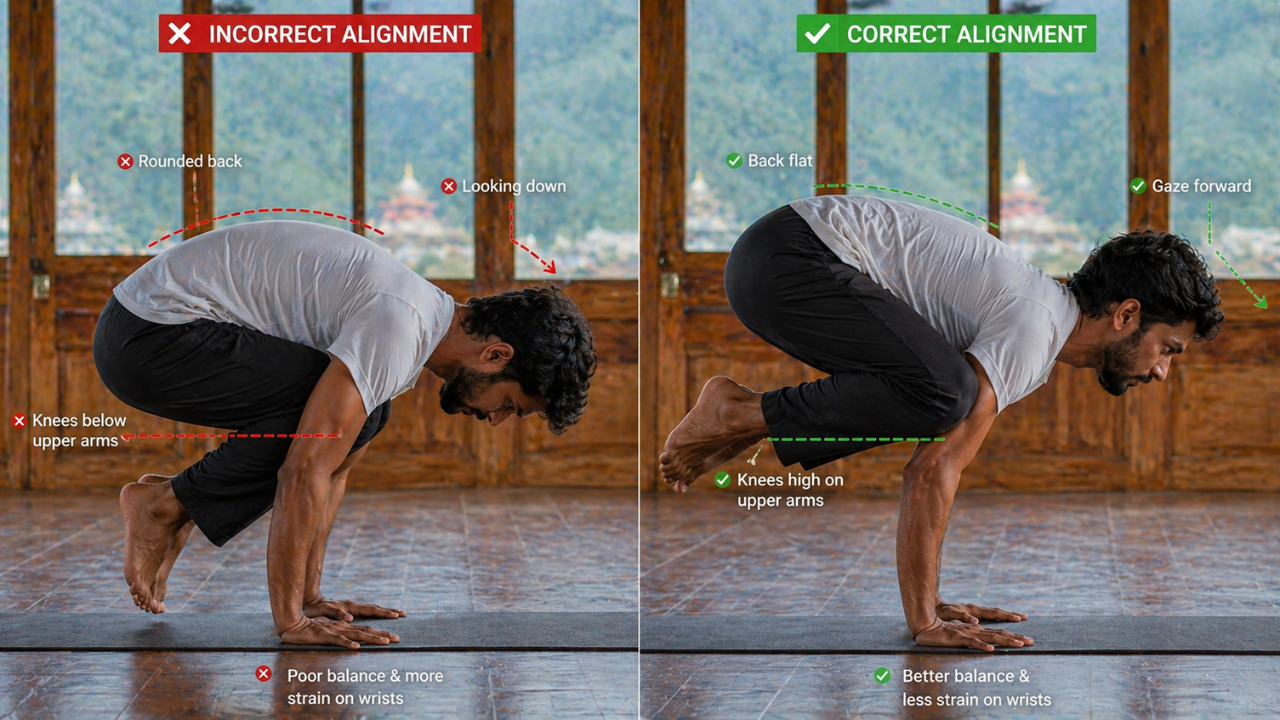
- Looking straight down: This is the most common reason people fall back. Always look slightly forward — your weight follows your gaze. Forward gaze, forward lift.
- Knees too low on the arms: If the knees are near the elbows, the pose becomes very hard. Push the knees as high as they will go — toward the armpits.
- Not leaning forward enough: Most beginners are afraid to fall, so they never shift the weight enough. But you must lean forward bravely. That is the only way the feet lift.
- Arms too straight: Completely straight arms give the knees no place to grip. Keep a soft bend in the elbows always.
- Core is soft: A relaxed belly drops the body down and breaks the balance. Pull the belly in and up before you lift — and keep it there.
- Holding the breath: Many students tense up and stop breathing. This creates body stiffness and shakes the balance. Keep the breath slow and steady throughout.
- Rushing the entry: Jumping into the pose leads to wrong arm and knee placement. Always set up slowly — hands flat, knees high, gaze forward — then lift.
Easy Modifications for Beginners
If the full Crow Pose feels out of reach right now — use these changes. They will get you there faster and more safely.
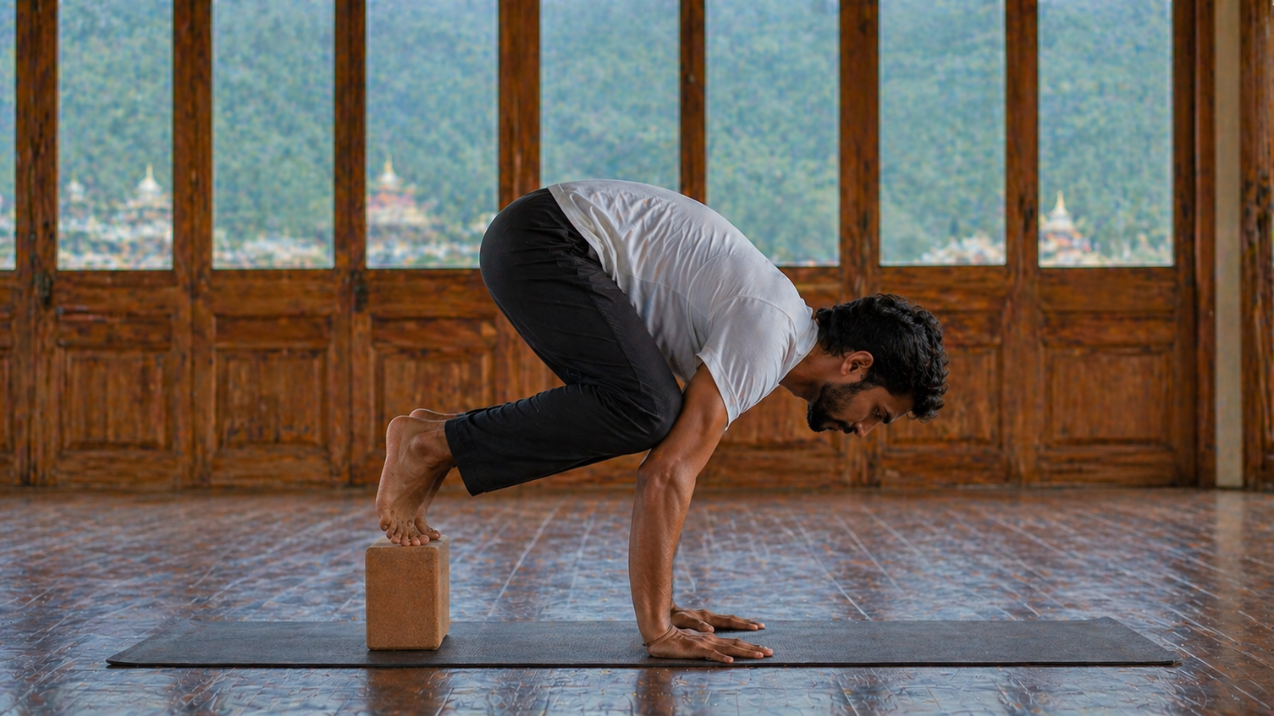
- Use a yoga block under the feet: Stand on a block to start. The extra height makes it much easier to get the knees high on the arms and shift the weight forward.
- Place a blanket in front: Fold a thick blanket and put it just in front of your hands. This removes the fear of falling on your face and lets you lean forward more freely.
- Tip-toe lift: Instead of lifting both feet at once, try lifting just the heels first — stay on tip-toes. This helps you feel the weight shift before the full lift.
- One foot at a time: Lift one foot off the floor while the other toe stays lightly on the mat. Build confidence on one side before lifting both.
- Practice on a low step or stair: Standing on a low step with hands on the floor below makes the arm angle easier and reduces the strength needed to begin.
Props are not a shortcut — they are tools. A block under the feet teaches your body the correct mechanics of the pose. Once your body knows the feeling, the full pose comes naturally.
Tips to Make Crow Pose Feel Easier
These small things can make a big difference in how quickly you progress. Add them to your next practice.
- Warm up the wrists first: Do wrist circles, wrist stretches, and a few plank holds before attempting Crow Pose. Cold wrists under full body weight get strained easily.
- Warm up the hips too: Do a few deep squats and hip circles before Crow. Open hips make it much easier to get the knees high on the arms.
- Say "lean" to yourself: The biggest barrier is mental fear of falling forward. Remind yourself — "lean forward" — each time you set up the pose. Weight must go forward to lift.
- Round the back actively: Before lifting, do one big cat-back stretch — round the upper back like an angry cat. Hold that shape the whole time you are in the pose.
- Use an exhale to lift: On a long exhale, pull the belly in and shift forward. The exhale naturally activates the core and gives you the lift you need.
- Practise forearm plank daily: A strong forearm plank builds the shoulder and core strength that supports Crow Pose. Even 30 seconds a day makes a difference within weeks.
- Do not try too many times in one session: Three to five good attempts per session are better than twenty rushed ones. Quality focus beats quantity every time.
Who Should Be Careful with Crow Pose?
Crow Pose is safe for most healthy adults. But some conditions need extra care or a teacher's guidance before trying it.
- Wrist pain or injury: Crow Pose puts full body weight on the wrists. If you have a wrist injury or carpal tunnel, skip this pose until healed or work with a teacher on modifications.
- Shoulder injury: The shoulders carry a lot of the load in Crow. Any existing shoulder pain should be checked with a doctor before you try this pose.
- Pregnancy: Avoid Crow Pose during pregnancy. The compression on the belly and the weight shift forward is not safe during this time.
- High blood pressure or heart conditions: Arm balances raise the heart rate and shift blood flow. People with these conditions should consult a doctor before trying any arm balance pose.
- Knee problems: The knees press against the arms in Crow Pose. If you have knee pain, use a folded blanket between the knees and arms to reduce pressure.
When in doubt — always practice with a teacher first. A good teacher can watch your body, spot the issue quickly, and give you a safe modification that still gives you all the benefits. Never push through pain in any yoga pose.
Quick Checklist — Is Your Crow Pose Correct?
Go through this list while you are in the pose. If all of these feel right — your Crow Pose is solid.
- Both palms are flat on the mat, fingers spread wide
- Elbows have a soft bend — not fully straight
- Knees are high on the arms — close to the armpits
- Knees are gently squeezing into the arms
- Upper back is rounded like a cat
- Belly is drawn in and up — core is engaged
- Gaze is forward — not straight down
- Heels are drawing toward the seat
- Shoulders are pressing apart and forward — not sinking
- Breath is slow and steady throughout the hold
- Face, jaw, and eyes are relaxed and soft
Learn Crow Pose at Adishesh Yoga, Rishikesh
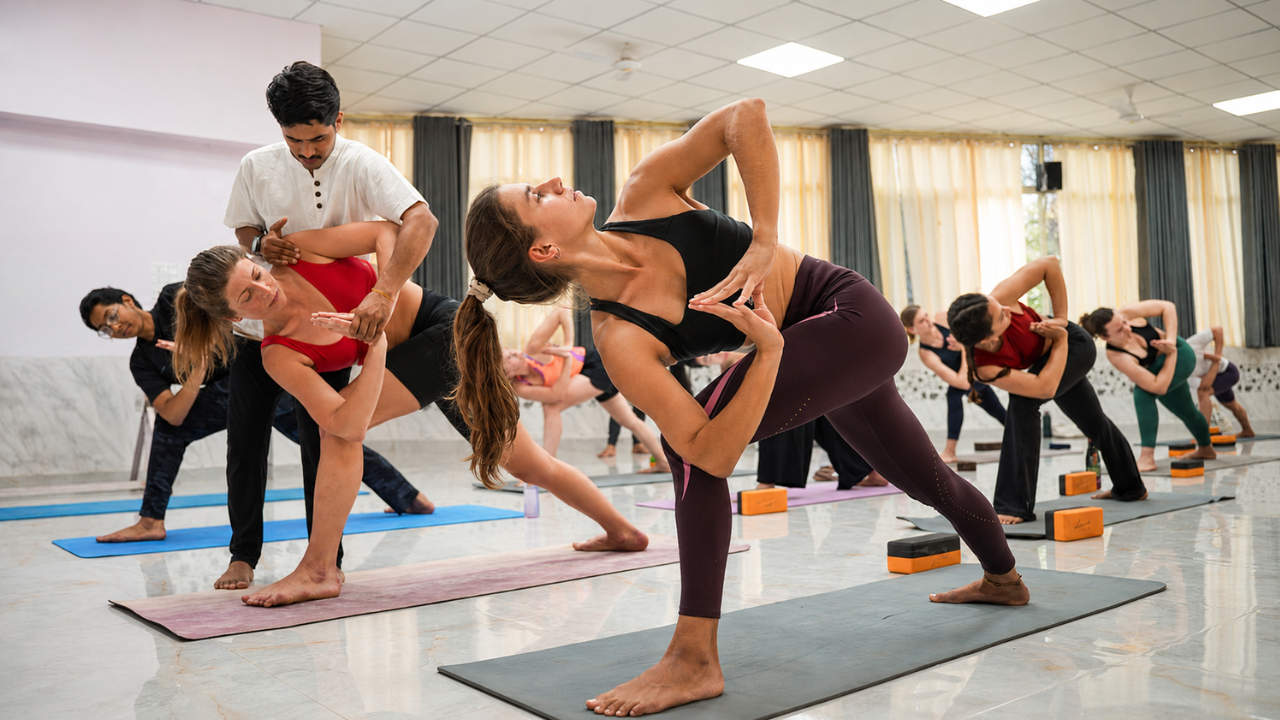
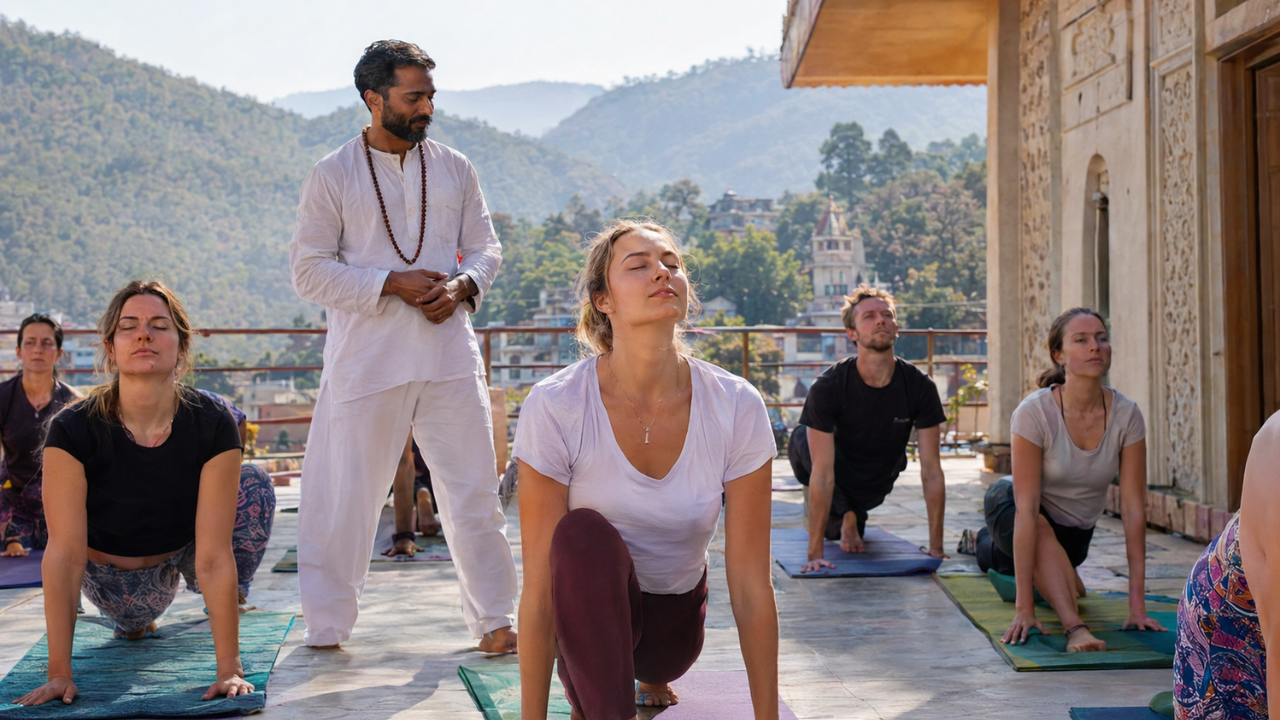
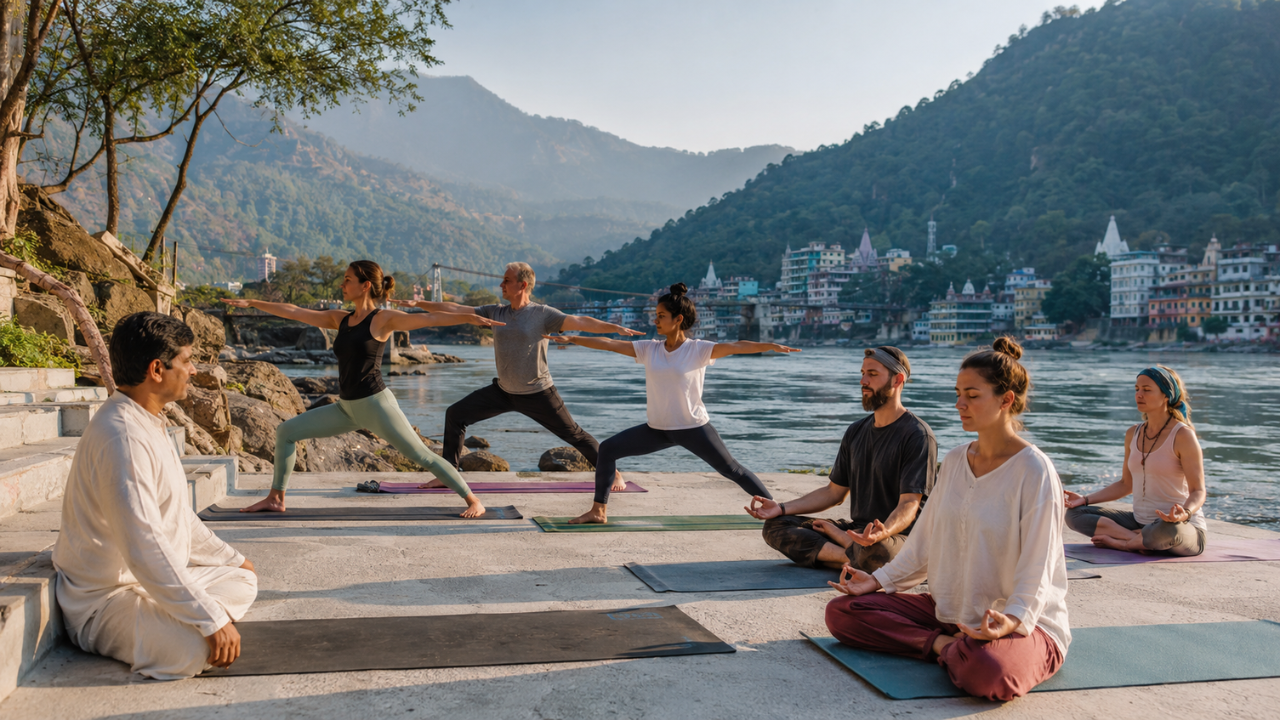
Want to get your first Crow Pose lift-off with proper guidance? Come practice at Adishesh Yoga in Rishikesh. Our teachers guide every student step by step — hands-on, clear, and patient. You will not just try the pose — you will understand exactly why it works.
We teach traditional Hatha yoga in small groups. Every class is personal, calm, and focused. Whether you are on your first mat or building toward an advanced practice — there is a class here that fits where you are right now.
- Daily asana classes: Morning and evening sessions covering arm balances, standing poses, and full sequences with personal alignment guidance
- Arm balance progressions: Crow Pose, Side Crow, and beyond — taught in the right order with breath, core work, and proper technique
- Pranayama and meditation: Included in every class and retreat to deepen the mind-body connection and build inner focus
- Small group sizes: Real personal attention, real corrections, and a calm and supportive space to learn
- Experienced teachers: Trained in classical yoga with genuine depth, real care, and years of teaching experience
Come to Rishikesh. Lift off the ground. Feel what happens when strength and stillness meet in your own two hands.
Frequently Asked Questions
Conclusion
Crow Pose is not about strength. It is about courage, technique, and trust in your own body. When you understand where to place your knees, how to shift your weight, and how to keep your core active — the pose stops feeling impossible and starts feeling natural.
Start with a block. Use a blanket. Look forward, not down. Lean a little more each time. Every small step counts. One day, without even thinking about it — your feet will lift. And when they do, you will understand why this pose matters.
If you want a real teacher to guide your hands, adjust your knees, and help you feel the pose from the inside — come to Adishesh Yoga in Rishikesh. We will help you find your lift — in Crow Pose and beyond.