What Is Surya Namaskar and How Does It Work?
Surya Namaskar (Sun Salutation) is a classical sequence of 12 linked yoga postures performed in a continuous, flowing rhythm synchronized with your breath. In Sanskrit, Surya means "Sun" and Namaskar means "salutation or bowing with gratitude." It is considered the foundation of Hatha yoga because it stretches every major muscle group, flexes the entire spine forward and backward, kindles internal digestive fire (Agni), and balances your body's solar energy channel (Pingala Nadi).
If you only have 15 minutes each morning to dedicate to your health, practicing Surya Namaskar is the single most complete full-body routine you can do.
Unlike isolated gym exercises that train one muscle at a time, Sun Salutation works your cardiovascular system, strengthens your core, stretches tight hamstrings, stimulates your thyroid gland, and calms racing thoughts — all in one smooth cycle.
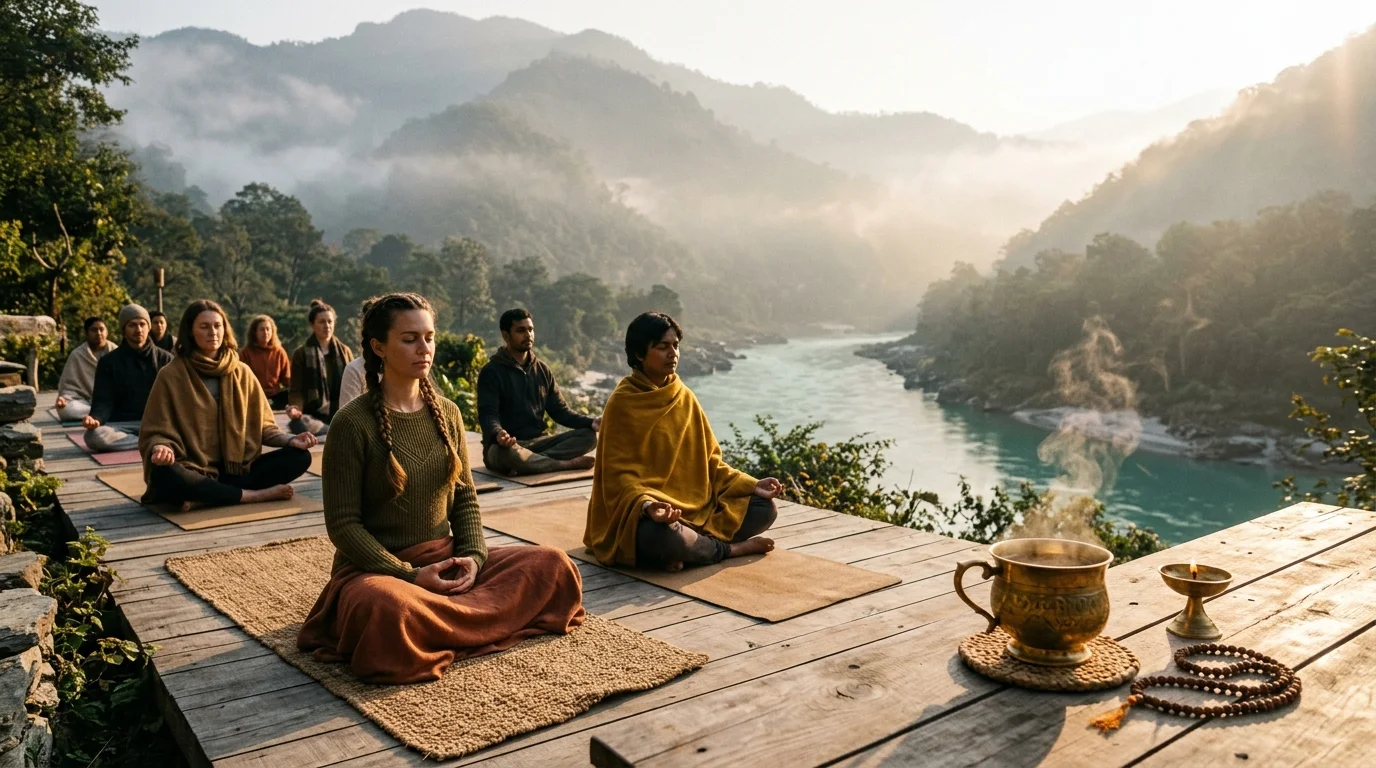
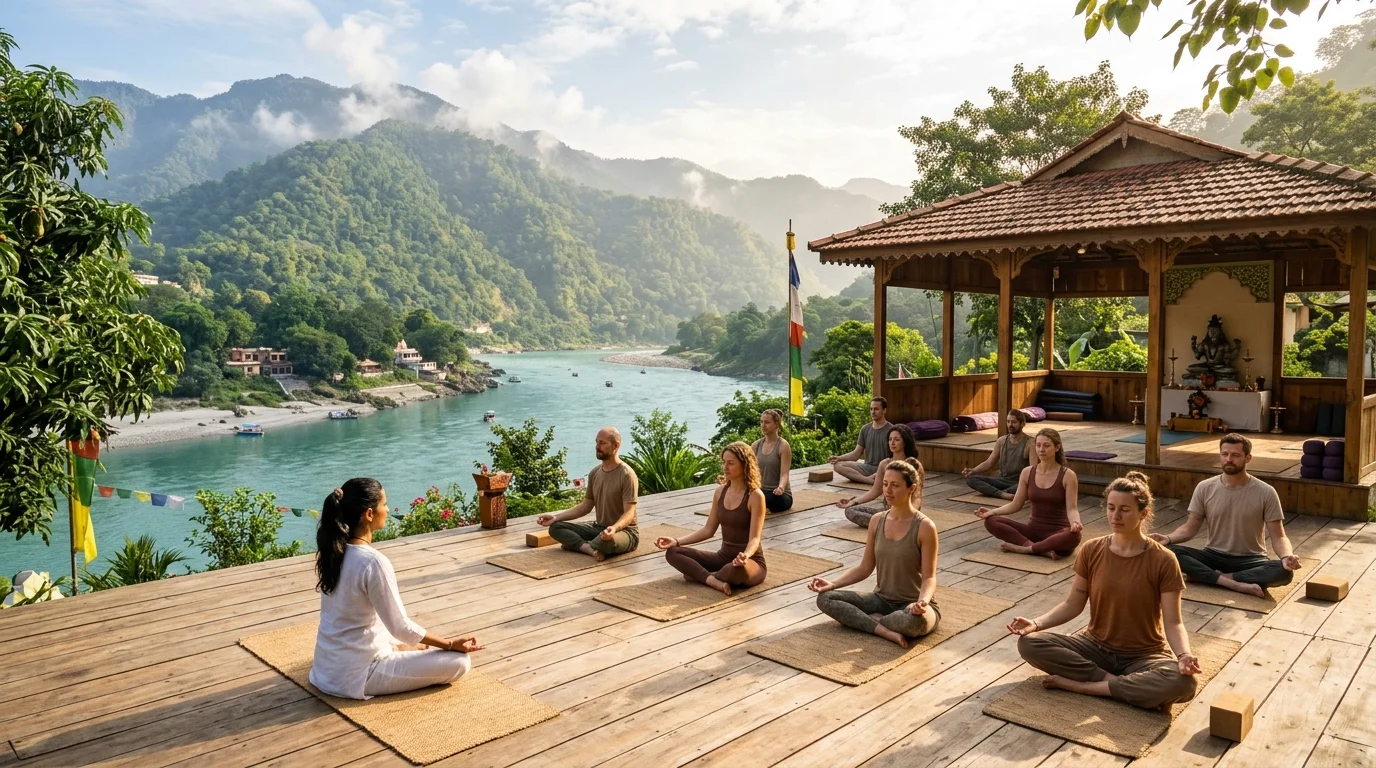
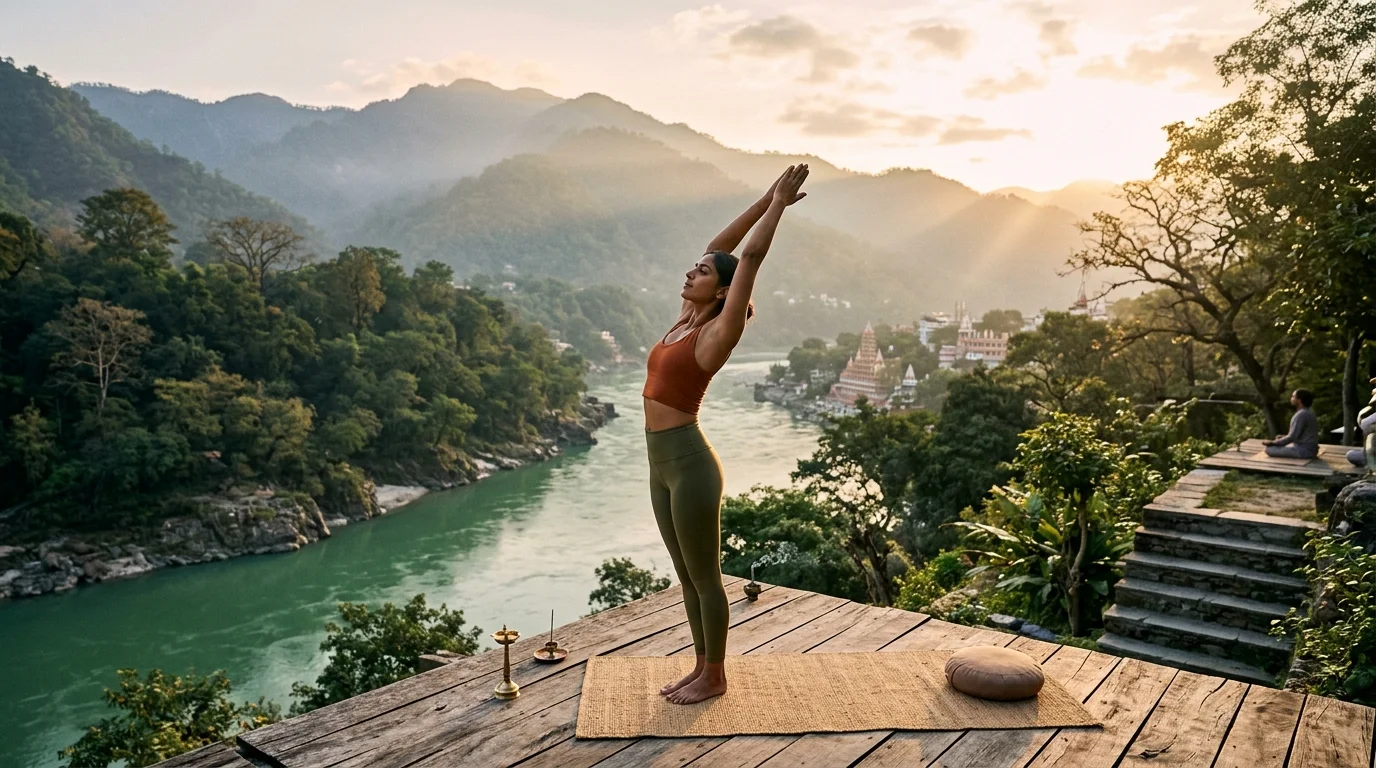
At our ashram here in Tapovan, Rishikesh, every morning yoga practice begins with Surya Namaskar facing the rising sun over the Himalayan mountains. In this easy beginner guide, you will learn the exact 12 steps, how to breathe correctly, the traditional solar mantras, and common mistakes to avoid.
The 12 Steps of Surya Namaskar (With Breath Cues)
Each posture in Surya Namaskar has a specific breath cue. Remember this golden rule: inhale when opening or expanding the chest, and exhale when folding or compressing the abdomen.
- Step 1: Pranamasana (Prayer Pose) — Exhale: Stand upright at the front of your mat with feet together. Bring your palms together at your chest in Anjali Mudra. Relax your shoulders, lengthen your spine, and exhale completely. Focus on the Heart Chakra (Anahata).
- Step 2: Hastauttanasana (Raised Arms Pose) — Inhale: Breathing in deeply, lift both arms overhead and gently arch backward from your upper back. Keep biceps close to your ears and push hips forward slightly. Avoid crunching your lower back.
- Step 3: Padahastasana (Standing Forward Bend) — Exhale: Hinging from your hips, fold forward as you exhale. Bring your hands to the floor beside your feet. If your hamstrings are tight, bend your knees slightly so your palms can rest comfortably on the mat.
- Step 4: Ashwa Sanchalanasana (Equestrian Pose) — Inhale: Step your right leg far back, drop your right knee to the mat, and press your hips downward. Keep your left knee stacked directly above your left ankle at 90 degrees. Roll your shoulders back and gaze upward.
- Step 5: Dandasana (Plank Pose) — Retain / Exhale: Step your left leg back next to your right leg. Keep your entire body in one straight line from head to heels, like a firm wooden plank. Engage your core and keep wrists directly under shoulders.
- Step 6: Ashtanga Namaskara (Eight-Limbed Pose) — Exhale: Gently lower your knees to the mat, then bring your chest and chin to the floor between your hands. Eight parts of your body touch the ground: two feet, two knees, two hands, chest, and chin. Your hips remain slightly raised.
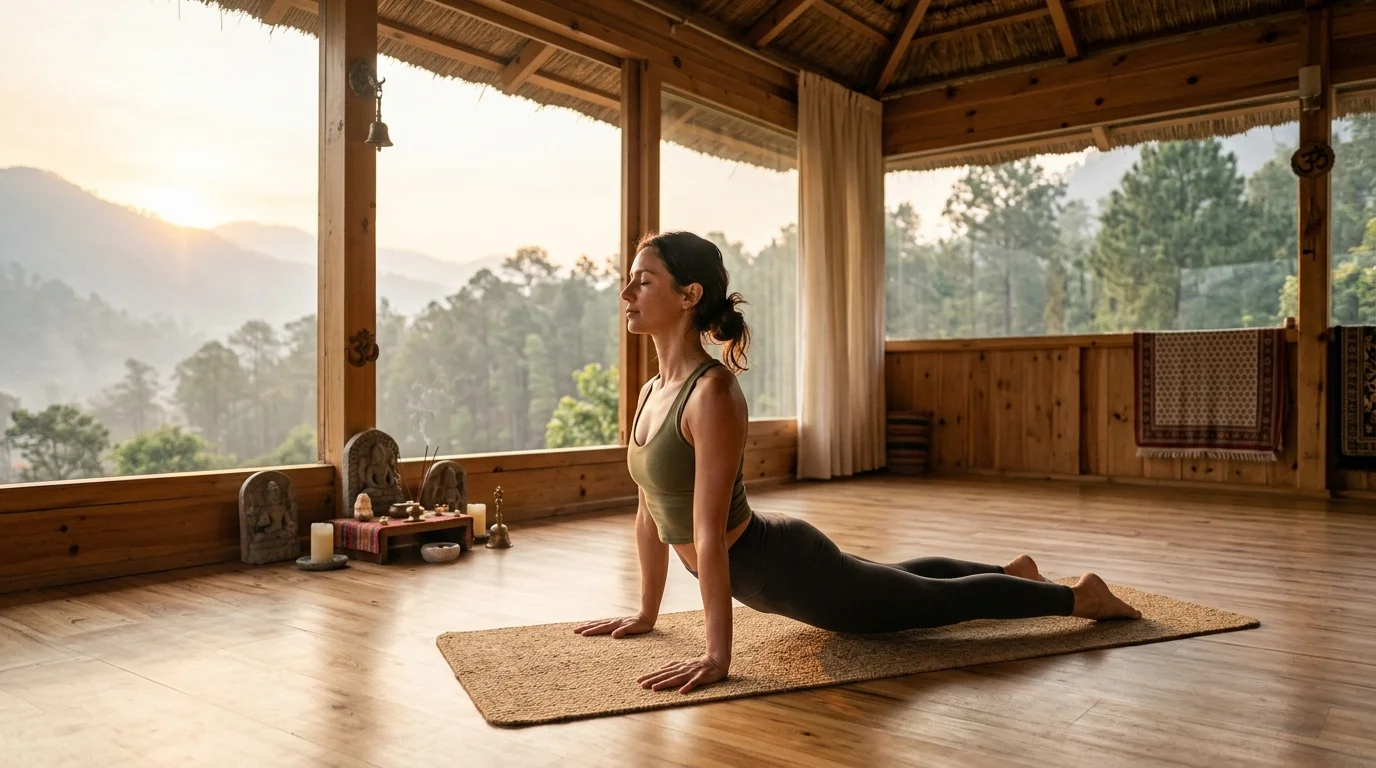
- Step 7: Bhujangasana (Cobra Pose) — Inhale: Slide forward and unroll your toes. Press lightly through your palms and lift your chest off the mat. Keep elbows slightly bent, shoulders down away from your ears, and engage your back muscles.
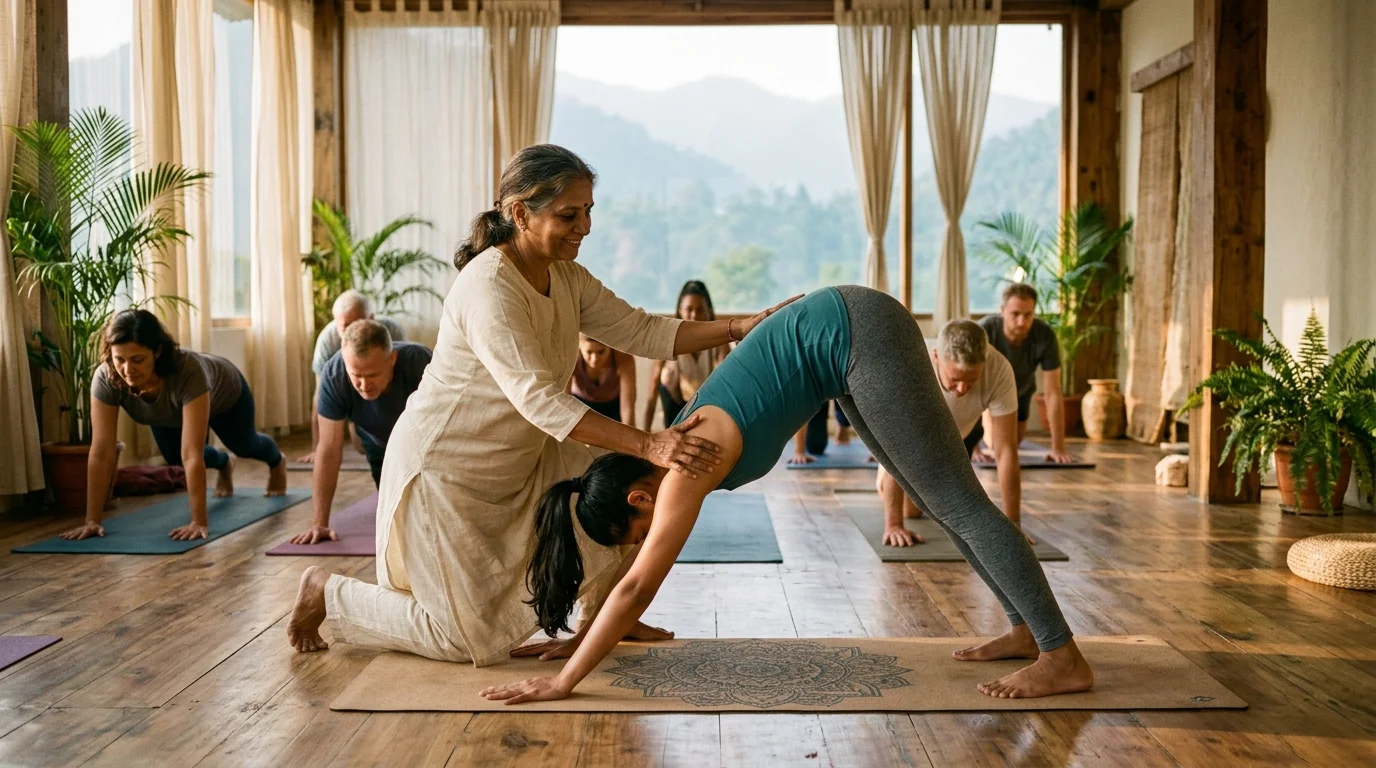
- Step 8: Adho Mukha Svanasana (Downward-Facing Dog) — Exhale: Tuck your toes and lift your hips high toward the sky, forming an inverted "V" shape. Press firmly through your knuckles, lengthen your spine, and let your heels melt toward the floor.
- Step 9: Ashwa Sanchalanasana (Equestrian Pose) — Inhale: Step your right foot forward between your hands. Lower your left knee to the floor, open your chest, and gaze upward. This brings symmetry to the sequence.
- Step 10: Padahastasana (Standing Forward Bend) — Exhale: Step your left foot forward to meet your right foot. Fold deeply at your hips, bringing your head toward your knees.
- Step 11: Hastauttanasana (Raised Arms Pose) — Inhale: Inhale deeply, sweep your arms forward and up, uncurling the spine vertebrae by vertebrae. Reach toward the sky and arch backward gently.
- Step 12: Pranamasana (Prayer Pose) — Exhale: Exhale smoothly and return to standing with palms joined at the center of your heart. Lower your hands, close your eyes, and feel the vibrant prana flowing through your veins.
Complete Surya Namaskar 12 Steps & Mantras Table
In classical Indian yoga, each of the 12 steps is linked to a solar mantra honoring different cosmic qualities of the sun:
| Step # | Sanskrit Name | English Name | Breath Cue | Chakra Focus | Solar Mantra |
|---|---|---|---|---|---|
| 1 | Pranamasana | Prayer Pose | Exhale | Anahata (Heart) | Om Mitraya Namaha |
| 2 | Hastauttanasana | Raised Arms Pose | Inhale | Vishuddhi (Throat) | Om Ravaye Namaha |
| 3 | Padahastasana | Standing Forward Bend | Exhale | Swadhisthana (Sacral) | Om Suryaya Namaha |
| 4 | Ashwa Sanchalanasana | Equestrian Pose (Right) | Inhale | Ajna (Third Eye) | Om Bhanave Namaha |
| 5 | Dandasana | Plank Pose | Retain / Exhale | Manipura (Solar Plexus) | Om Khagaya Namaha |
| 6 | Ashtanga Namaskara | Eight-Limbed Salute | Exhale | Manipura (Solar Plexus) | Om Pushne Namaha |
| 7 | Bhujangasana | Cobra Pose | Inhale | Swadhisthana (Sacral) | Om Hiranyagarbhaya Namaha |
| 8 | Adho Mukha Svanasana | Downward-Facing Dog | Exhale | Vishuddhi (Throat) | Om Marichaye Namaha |
| 9 | Ashwa Sanchalanasana | Equestrian Pose (Left) | Inhale | Ajna (Third Eye) | Om Adityaya Namaha |
| 10 | Padahastasana | Standing Forward Bend | Exhale | Swadhisthana (Sacral) | Om Savitre Namaha |
| 11 | Hastauttanasana | Raised Arms Pose | Inhale | Vishuddhi (Throat) | Om Arkaya Namaha |
| 12 | Pranamasana | Prayer Pose | Exhale | Anahata (Heart) | Om Bhaskaraya Namaha |
How Many Rounds Should You Do? (Beginner Progression)
One complete cycle of Surya Namaskar consists of two rounds: 12 steps leading with your right leg, followed by 12 steps leading with your left leg. Here is how beginners should progress:
- Week 1 (Beginner): Practice 3 to 4 rounds at a slow, deliberate pace. Focus purely on your breath coordination and alignment rather than speed.
- Week 2–3 (Intermediate): Gradually build up to 6 to 8 rounds. You will notice increased shoulder stamina, smoother transitions, and deeper forward bends.
- Week 4+ (Regular Daily Practice): Settle into 12 rounds daily (6 right, 6 left). 12 rounds take about 15 minutes and deliver maximum cardiovascular and hormonal balance.
- Traditional Equinox Challenge: Experienced yogis often perform 108 rounds of Surya Namaskar during the spring or autumn equinox as a powerful ritual of detox and spiritual purification.
4 Common Beginner Mistakes to Avoid
Even seasoned practitioners occasionally develop bad habits that strain the lower back or wrists. Keep these tips in mind:
- 1. Arching the Lower Back Instead of the Upper Chest: In Step 2 (Hastauttanasana) and Step 7 (Cobra Pose), do not pinch your lumbar spine. Think of lifting your sternum up toward the sky rather than throwing your head and back down. For complementary back-strengthening, explore our guide to Camel Pose (Ustrasana) and Bow Pose (Dhanurasana).
- 2. Holding Your Breath: When transitions feel difficult, beginners often hold their breath. If you lose your breathing rhythm, pause in Downward Dog or Child's Pose for three slow breaths before continuing.
- 3. Dropping Hips in Plank Pose: In Step 5 (Dandasana), letting your hips sag compresses your lower back. Squeeze your glutes, draw your navel toward your spine, and push the floor away. Check out our detailed cues for Side Plank Pose (Vasisthasana) to build stronger core stability.
- 4. Forcing Straight Legs in Forward Fold: In Step 3 and 10 (Padahastasana), forcing straight knees when hamstrings are tight rounds your lower spine dangerously. Keep knees soft and prioritize keeping your spine long. For hip-opening preparation, practice Pigeon Pose and Butterfly Pose.
Classical Hatha vs. Ashtanga Sun Salutations: What's the Difference?
When studying yoga in Rishikesh, you will encounter two primary styles of Sun Salutations:
- Classical Hatha Surya Namaskar (12 Postures): The traditional sequence described in this guide. It includes low lunges (Ashwa Sanchalanasana) and Ashtanga Namaskara (knees-chest-chin). It focuses on grounding, pranayama breath awareness, and balancing masculine (Pingala) and feminine (Ida) energies. It is the best sequence for beginners, daily morning rituals, and gentle therapeutic practice.
- Ashtanga Surya Namaskar A & B (Vinyasa Flow): Popularized by K. Pattabhi Jois in Mysore, Ashtanga Sun Salutation A has 9 counts (vinyasas) and Sun Salutation B has 17 counts, featuring Chair Pose (Utkatasana) and Warrior I (Virabhadrasana I). It uses floating jump-backs to Chaturanga Dandasana and Upward-Facing Dog, building intense internal heat and athletic stamina.
At Adishesh Yoga, we recommend mastering the 12 classical Hatha steps first to develop healthy spinal mobility and steady diaphragmatic breathing before moving into rapid jump-back transitions.
Health & Mental Benefits of Daily Sun Salutations
The physiological and mental rewards of practicing Surya Namaskar every day include:
- Natural Calorie Burning: A dynamic 12-round session burns roughly 150 to 170 calories, boosting your basal metabolic rate and aiding sustained weight management.
- Improved Spine Flexibility: The alternation between forward and backward bending compresses and stretches spinal discs, preventing posture issues caused by long hours of desk sitting.
- Stimulates Digestion & Metabolism: Compressing the abdominal organs in Ashtanga Namaskara and Padahastasana massages the liver, intestines, and pancreas, alleviating morning bloating.
- Clears Mental Fog: Inversions like Downward Dog encourage fresh oxygenated blood to rush to the brain, sharpening mental clarity and reducing stress.
- Deepens Yogic Discipline: Consistent daily morning practice builds Tapas (self-discipline), one of the fundamental Niyamas in Ashtanga Yoga Philosophy.
Master Traditional Hatha Yoga at Adishesh Yoga
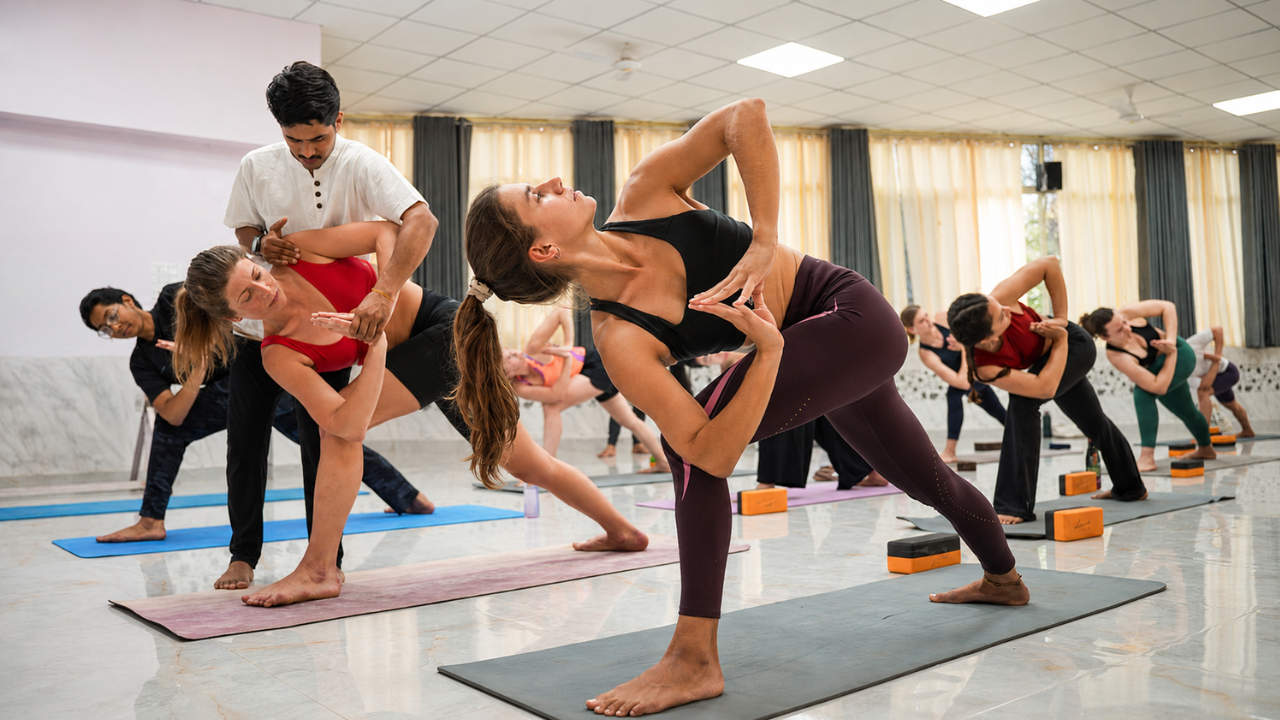
Learn classical Surya Namaskar, pranayama, and authentic Himalayan meditation under the guidance of certified Indian yoga masters in Tapovan, Rishikesh.
Frequently Asked Questions About Surya Namaskar
The 12 steps are: 1. Pranamasana (Prayer Pose), 2. Hastauttanasana (Raised Arms Pose), 3. Padahastasana (Forward Bend), 4. Ashwa Sanchalanasana (Equestrian Pose), 5. Dandasana (Plank Pose), 6. Ashtanga Namaskara (Eight-Limbed Salute), 7. Bhujangasana (Cobra Pose), 8. Adho Mukha Svanasana (Downward Dog), 9. Ashwa Sanchalanasana (Equestrian Pose opposite leg), 10. Padahastasana (Forward Bend), 11. Hastauttanasana (Raised Arms Pose), and 12. Pranamasana (Prayer Pose).
Beginners should start with 3 to 5 rounds daily at a gentle pace. As your stamina and flexibility improve, gradually increase to 6 to 12 rounds every morning.
Yes! Performing 12 rounds of Sun Salutation burns roughly 150 to 170 calories (approx. 13.9 calories per round). Done at a brisk, flowing pace, it works as an effective cardiovascular workout that tones the arms, core, and legs.
Early morning at sunrise on an empty stomach is the ideal time. You can also practice around sunset facing west, provided you have not had a heavy meal for at least 3 to 4 hours.
Those with acute back pain, spinal disc herniation, severe high blood pressure, or wrist injuries, as well as pregnant women in later trimesters, should avoid rigorous Sun Salutations or practice gentle modifications under an experienced teacher.
Breathing synchronizes the flow: inhaling during backward extensions opens the lungs, while exhaling during forward bends compresses the abdomen and empties stale air. This transforms physical exercise into a calming moving meditation.
Final Thoughts: Making Sun Salutation a Daily Ritual
Surya Namaskar is far more than physical exercise — it is a daily celebration of life, vitality, and gratitude for the solar energy that powers our world.
Even if your morning schedule is hectic, just three mindful rounds of Sun Salutation will center your thoughts, align your spine, and fill your day with steady Himalayan calm.
Ready to deepen your daily practice in the Yoga Capital of the World? Discover our transformative programs at Adishesh Yoga Rishikesh or reach out through our contact page to begin your journey.