If your hips feel tight after a long day of sitting — Pigeon Pose is for you. This one pose can do more for your hips than almost anything else in yoga. And once you feel the deep stretch — you will understand why people call it their favourite pose.
Pigeon Pose is called Eka Pada Rajakapotasana in Sanskrit. "Eka Pada" means one leg. "Rajakapota" means king pigeon. When you are in the pose, your chest lifts and opens — just like a pigeon puffing its chest out. This 2026 guide will teach you how to do it safely, what benefits it gives, and how to make it work for your body right now.
What Is Pigeon Pose?
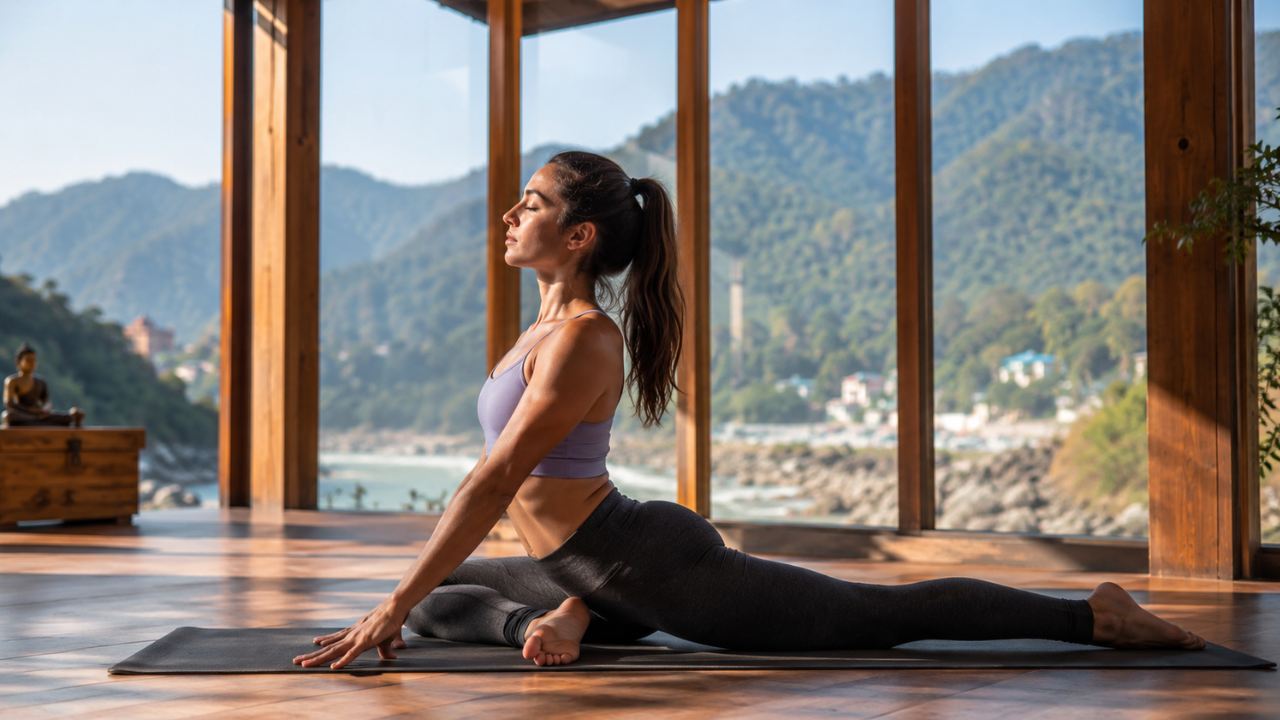
Pigeon Pose is a deep hip opener. You bring one knee forward and rest the front shin on the mat. The other leg stretches straight behind you. Your hips sink toward the floor and the front hip gets a very deep stretch.
It targets the hip flexors, glutes, groin, and the piriformis muscle — a small but very important muscle deep in the hip that gets very tight in people who sit a lot. No other common yoga pose stretches this area as well.
- Sanskrit name: Eka Pada Rajakapotasana
- English name: Pigeon Pose / One-Legged King Pigeon
- Type: Hip Opener / Stretch / Forward Fold
- Level: Beginner to Intermediate
- Hold time: 5 to 10 breaths per side (30 to 60 seconds)
- Good for: Hips, glutes, groin, lower back, sciatic pain
How to Do Pigeon Pose – Step by Step
Take your time with each step. This pose needs patience — not force. The slower you go, the deeper the stretch, and the safer it feels.
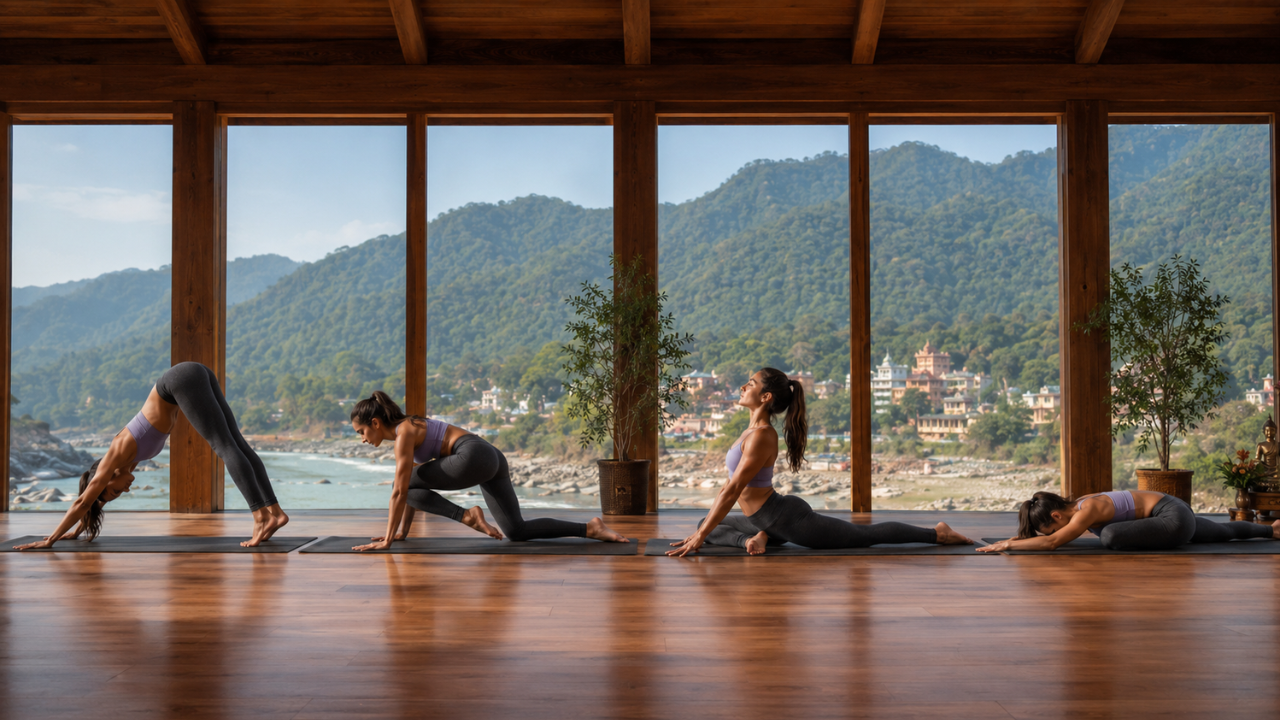
Step 1 – Start in Downward Dog
Begin on your hands and knees, then lift your hips up into Downward Facing Dog. Take two or three deep breaths here to warm your hips before you move into the pose.
Step 2 – Bring One Knee Forward
Lift your right leg up, then bring your right knee forward toward your right wrist. Place your right shin on the mat at a slight angle. The more your shin is parallel to the top of the mat, the deeper the hip stretch — but start with a smaller angle if your hips are tight.
Step 3 – Extend the Back Leg
Slide your left leg straight back. Your left thigh, knee, and top of the foot should all rest flat on the mat. Point your left toes back. The back leg stays straight and relaxed — not twisted to the side.
Step 4 – Square Your Hips
This is the most important step. Try to keep both hip bones pointing forward toward the mat. The right hip will want to open to the right — resist that. Gently pull the right hip back and push the left hip forward. Squaring the hips protects your lower back and makes the stretch much more effective.
Step 5 – Hands Down, Spine Long
Press your fingertips into the mat on either side of your front shin. Lift your chest and sit tall. Take a few breaths here first — just feeling the stretch. Do not rush to fold forward yet.
Step 6 – Fold Forward (Optional)
When you are ready — walk your hands forward and slowly lower your chest toward the mat. Rest your forehead on the floor or on stacked hands. This is the full Sleeping Pigeon version — and it goes even deeper into the hips. Stay here and breathe.
Step 7 – Hold and Switch Sides
Hold for 5 to 10 slow, deep breaths. Then press up slowly, tuck the back toes, and come back to Downward Dog. Always do both sides — repeat the same steps with the left leg forward. The two sides are rarely equal — that is completely normal.
Top Benefits of Pigeon Pose
Pigeon Pose gives benefits that very few other poses can match — especially for people with tight hips, desk jobs, or lower back discomfort. Here is what it does for you.
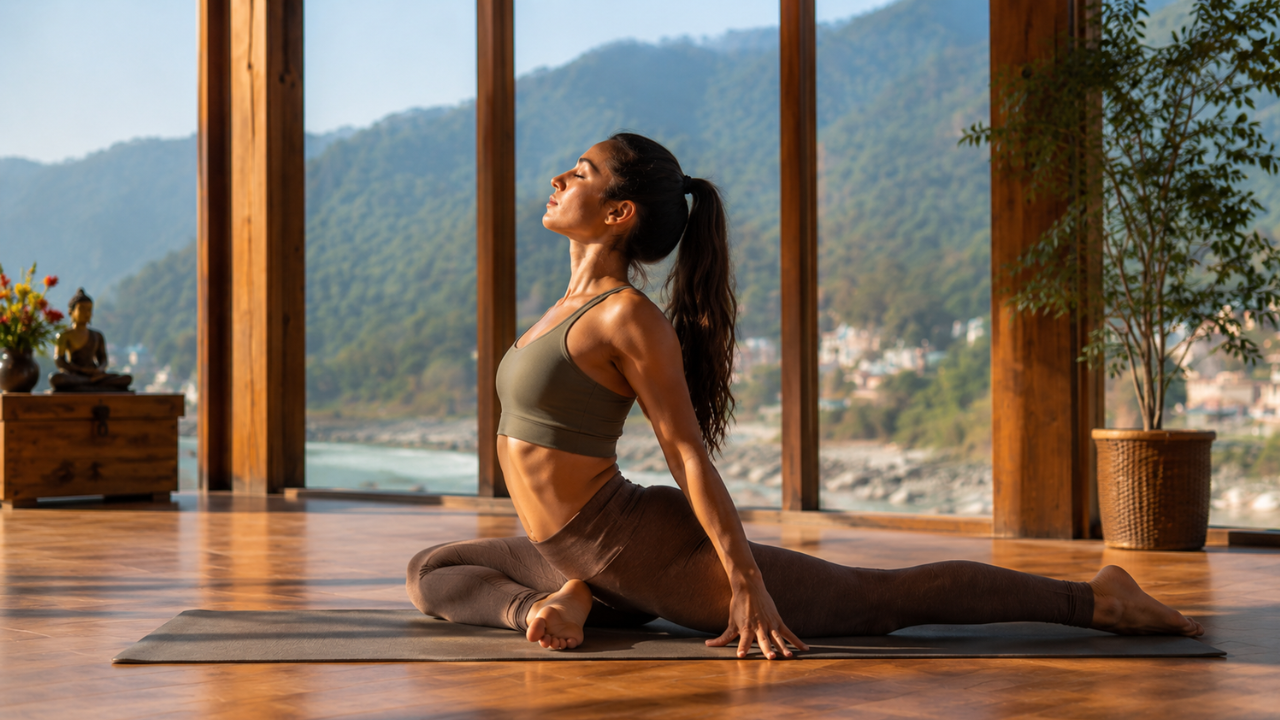
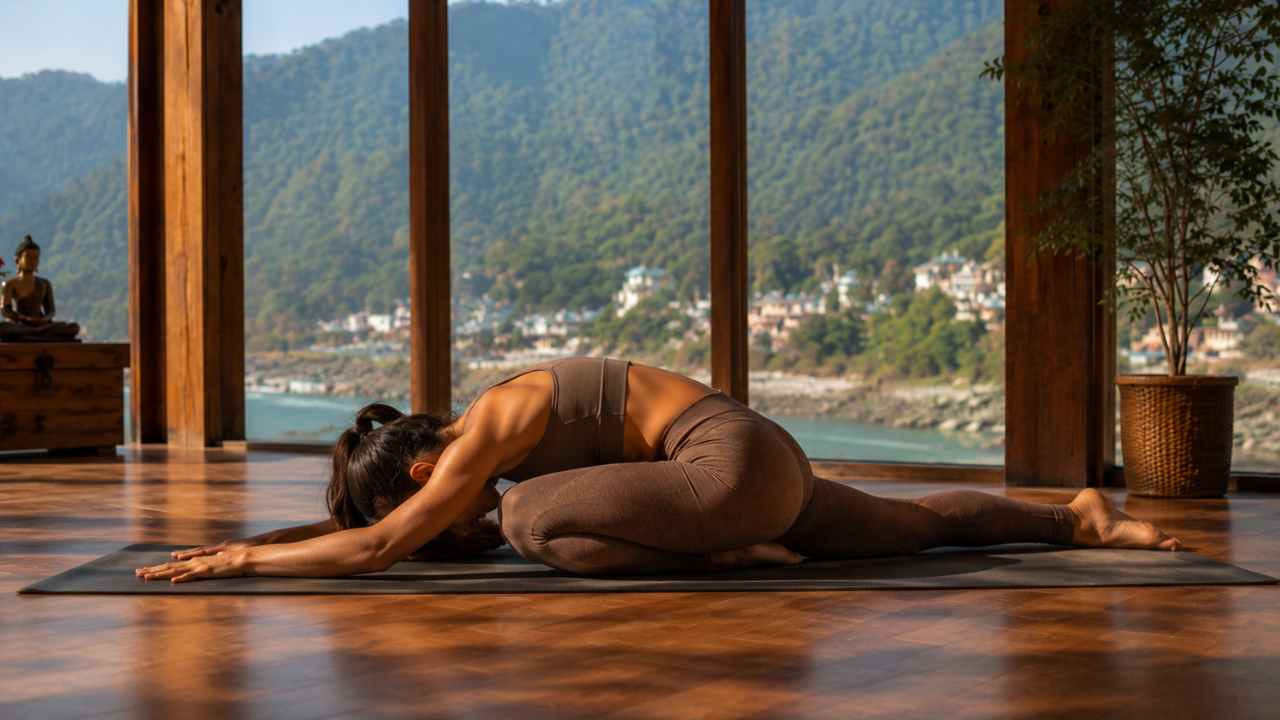
1. Opens Tight Hips
Pigeon Pose goes deeper into the hips than almost any other pose. It stretches the hip flexors at the front and the glutes and piriformis at the back — all at the same time. If you have tight hips from sitting or sport, even one session of Pigeon Pose will make a difference.
2. Helps with Sciatic Pain
The piriformis muscle sits right next to the sciatic nerve. When this muscle gets tight, it can press on the nerve and cause pain down the leg. Pigeon Pose stretches the piriformis directly — and many people find it gives real relief from sciatic discomfort when done regularly.
3. Relieves Lower Back Tension
Tight hips put extra pressure on the lower back. When the hips open up, the lower back naturally gets relief. Many people with chronic lower back tightness feel much better after adding Pigeon Pose to their routine.
4. Improves Hip Flexibility
Regular Pigeon Pose practice improves your range of motion in the hips over time. This helps with walking, running, climbing stairs, and sitting comfortably on the floor — all daily movements that depend on hip mobility.
5. Reduces Stress
In yoga, the hips are known as a place where the body holds emotional stress. Long holds in Pigeon Pose — especially the forward fold version — can trigger a slow, deep release of both physical and emotional tension. Many people feel calmer and lighter after this pose.
6. Stretches the Groin and Inner Thigh
The groin and inner thigh muscles rarely get stretched in daily life. Pigeon Pose opens these areas gently and steadily. Athletes — especially runners, cyclists, and football players — benefit a lot from this.
7. Prepares You for Advanced Poses
Pigeon Pose builds the hip flexibility needed for Lotus Pose, Splits, and the full King Pigeon Pose backbend. If you want to progress in yoga, this is one of the most important foundation poses to practice.
- Muscles stretched: Piriformis, glutes, hip flexors, groin, inner thigh, IT band
- Improves: Hip mobility, lower back flexibility, posture, range of motion
- Relieves: Sciatic pain, tight hips, lower back tension, emotional stress
- Prepares for: Lotus Pose, Splits, Full King Pigeon, Bound Angle Pose
Common Mistakes in Pigeon Pose
These mistakes happen a lot — especially with beginners. Knowing them before you try the pose will protect your knees and lower back, and help you get the full benefit of the stretch.
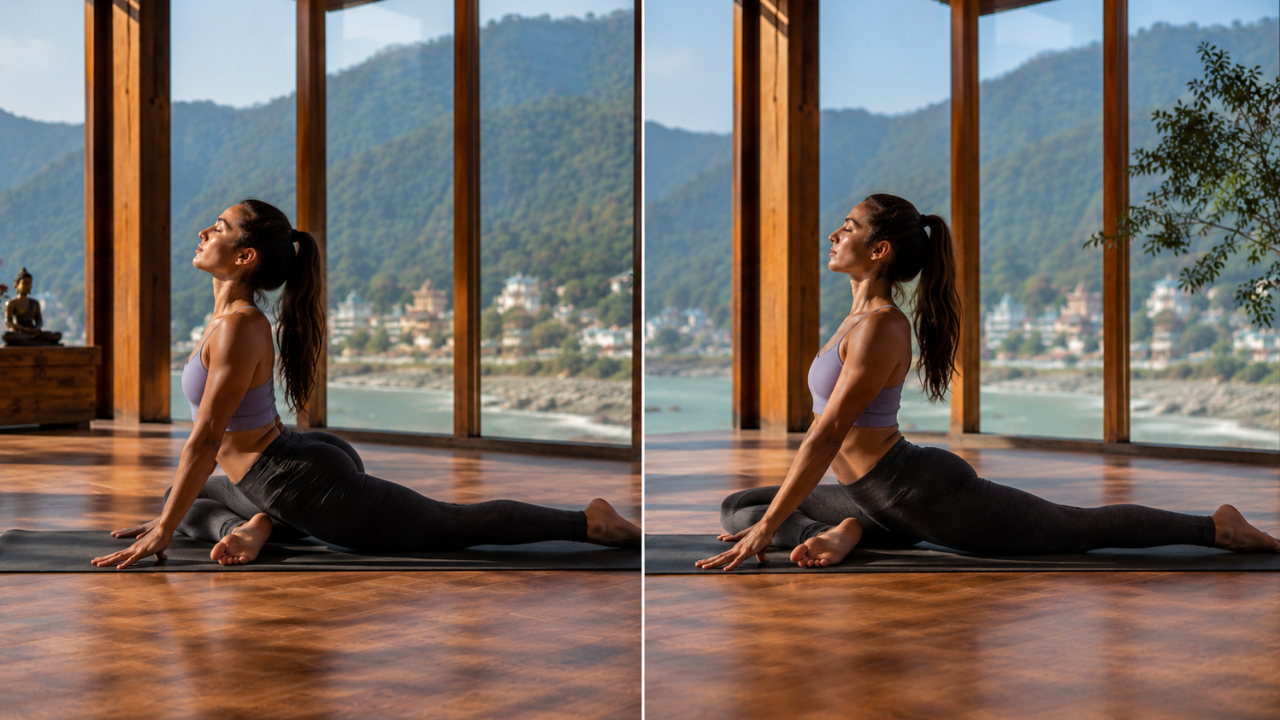
Mistake 1 – Hips Not Squared
Most beginners let the front hip drop open to the side. This makes the stretch feel easier — but it moves the stretch away from the target muscles and puts strain on the lower back. Fix: Keep both hips facing forward. Use a blanket under the front hip if it does not reach the mat.
Mistake 2 – Front Foot Too Close to the Hip
If the front foot is tucked right under the hip — the knee takes all the pressure. This can cause knee pain. Fix: Bring the front foot slightly forward — away from the hip. The more the shin angles across the mat, the safer it is for the knee.
Mistake 3 – Back Leg Rotating Outward
The back leg often rolls outward, with the knee turning to the side. This twists the lower back and reduces the hip stretch. Fix: Keep the back knee pointing straight down into the mat. Press the top of your back foot into the floor.
Mistake 4 – Collapsing Into the Pose
Many people just drop into the pose too fast and sit with a rounded, collapsed spine. This puts all the weight unevenly on one hip and causes discomfort. Fix: Engage your core slightly. Keep the spine long before you fold forward. Think: "grow tall first, then fold."
Mistake 5 – Skipping the Counterpoise
After deep hip openers, many people just move on. But the body needs a moment to rebalance. Fix: After each side of Pigeon Pose — come back to Downward Dog for a few breaths. Then do a gentle seated forward fold to balance the body before moving on.
Tips for Beginners – Make Pigeon Pose Easier
Pigeon Pose can feel very intense if your hips are tight. That is normal. Use these tips to make the pose more comfortable and still get full benefit.
- Use a blanket under the front hip: If your hip does not touch the mat — place a folded blanket or yoga block underneath. This supports the hip and keeps it level.
- Try Reclined Pigeon first: Lie on your back. Cross your right ankle over your left knee. Flex the right foot. Lift the left leg. This is the same stretch — but lying down and much easier on the knees.
- Keep the front foot flexed: Flex your front foot slightly (pull the toes back). This protects the knee by engaging the muscles around the joint.
- Do not force the forward fold: Stay upright with hands on the mat if folding forward is too much. The upright version still gives a great stretch.
- Warm up your hips first: Do Butterfly Pose, Low Lunge, and Hip Circles before Pigeon. Warm hips open more easily and safely.
- Hold longer, not deeper: The magic of Pigeon Pose is in the time you hold it — not how deep you go. Even a shallow position held for 1 to 2 minutes gives great results.
How Long Should You Hold Pigeon Pose?
Beginners should hold for 5 to 8 breaths per side — about 30 to 45 seconds. As your hips open up over time, you can build to 1 to 2 minutes per side. Yin yoga practitioners sometimes hold it for 3 to 5 minutes. The longer you hold, the deeper the connective tissue releases.
Pigeon Pose Modifications for All Levels
Every body is different. These variations let you get the full benefit of Pigeon Pose — at whatever stage you are at today.
For Beginners – Reclined Pigeon
Lie flat on your back. Bend both knees, feet on the floor. Cross your right ankle over your left thigh just above the knee. Flex the right foot. Lift the left foot off the floor and draw the left knee toward your chest. Hold here and breathe. This is the same stretch as floor Pigeon — but much gentler on the knees and easier to control.
For Tight Hips – Block Under the Hip
Place a yoga block or thick folded blanket under the front hip so it is fully supported. This lets you relax into the pose without the body compensating or tilting to one side. As your hips open over weeks and months, lower the support gradually until the hip rests on the mat.
For Advanced Practitioners – King Pigeon
Once comfortable in standard Pigeon, try the full King Pigeon backbend. From Pigeon Pose, bend the back knee and reach back to hold the back foot. Draw the foot toward your head. This adds a deep spinal backbend on top of the hip opener — and requires good shoulder and spine flexibility too.
Pigeon Pose vs Lizard Pose – What Is the Difference?
- Target area: Pigeon = glutes and piriformis. Lizard = hip flexors and inner groin.
- Position: Pigeon = front shin on mat. Lizard = front foot outside the hand, both feet on floor.
- Knee safety: Lizard Pose is generally safer for people with knee sensitivity.
- Intensity: Pigeon is deeper into the outer hip. Lizard goes deeper into the front hip flexor.
- Which is better? Do both. They complement each other and together give a complete hip stretch.
Who Should Be Careful with Pigeon Pose
Pigeon Pose is safe and helpful for most people. But a few conditions need extra care or a modified approach.
- Knee injuries: If you have any knee pain or injury — do the Reclined Pigeon version instead. Never force the front knee if it feels any sharp pain or clicking.
- Hip replacement: People who have had hip replacement surgery should avoid this pose entirely unless cleared by a doctor. The extreme range of motion can be risky.
- Sacroiliac joint issues: If you have SI joint pain, be very careful with how you square the hips. Use a block under the front hip and avoid any rotation in the pelvis.
- Pregnancy: As the belly grows, standard Pigeon Pose becomes difficult. Use the Reclined version or do the pose with extra support and guidance from a prenatal yoga teacher.
- Tight knees from sitting: If the knee feels stiff or painful when bent — warm up the knee with gentle circles and low lunge first before attempting Pigeon Pose.
When in doubt — use the Reclined Pigeon version. It gives the same hip stretch with far less pressure on the knees and joints. And if you have any condition that makes you unsure — always work with a trained yoga teacher who can guide you safely.
How to Add Pigeon Pose to Your Daily Yoga
Pigeon Pose works well at different points in a yoga session. Here is how to use it based on what you want to achieve.
- After a warm-up: Always warm the hips first with Cat-Cow, Low Lunge, and Butterfly Pose before going into Pigeon. Cold hips do not open — they resist and risk injury.
- In a hip-opening sequence: Place Pigeon Pose after Warrior II, Low Lunge, and Lizard Pose. This builds the hip opening gradually before the deepest stretch.
- As a cool-down: Pigeon Pose works very well as a cool-down pose at the end of a yoga session or after running, cycling, or any lower body workout.
- For stress relief: Hold the forward fold version for 1 to 2 minutes per side with your eyes closed. Focus on slow breathing. This is one of the most calming things you can do for your body and nervous system.
- How often: Practise Pigeon Pose 3 to 5 times a week for real and lasting improvement in hip flexibility and lower back comfort.
Learn Pigeon Pose at a Yoga Retreat in Rishikesh
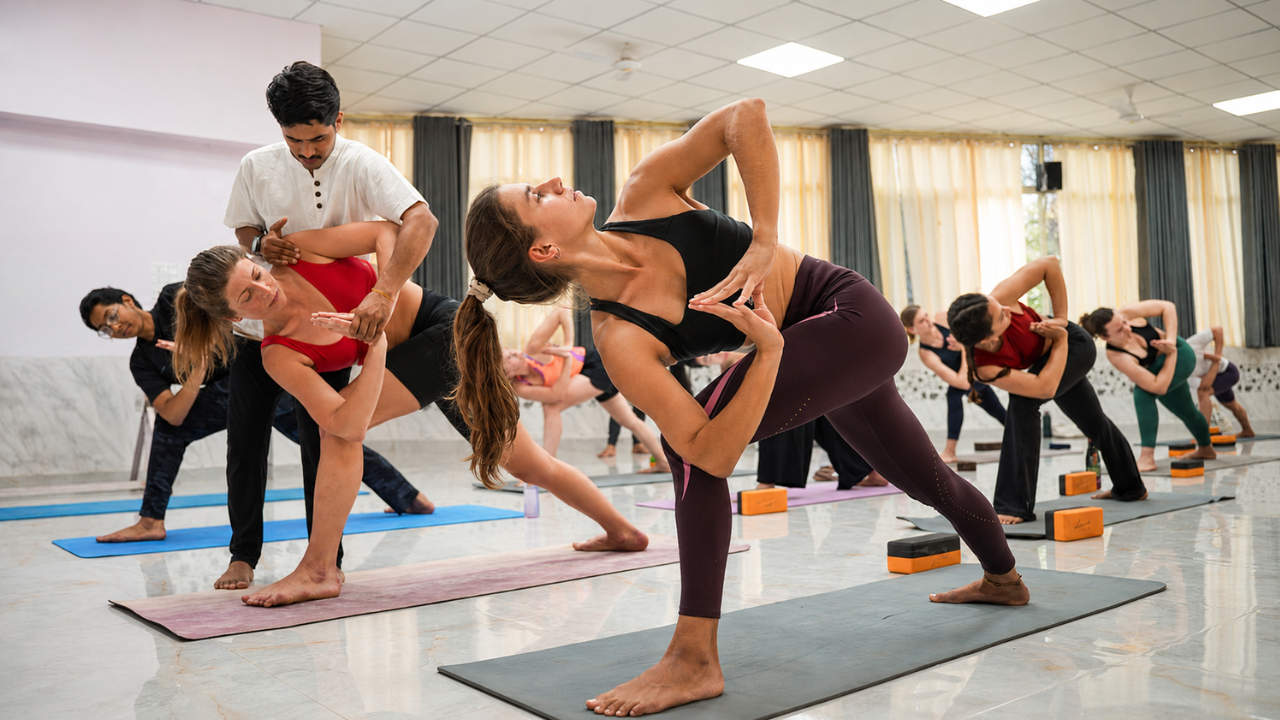
Reading about Pigeon Pose helps. But when a trained teacher watches your alignment and gives you a small adjustment — you will feel things open that you never felt before. That is the power of learning yoga in person.
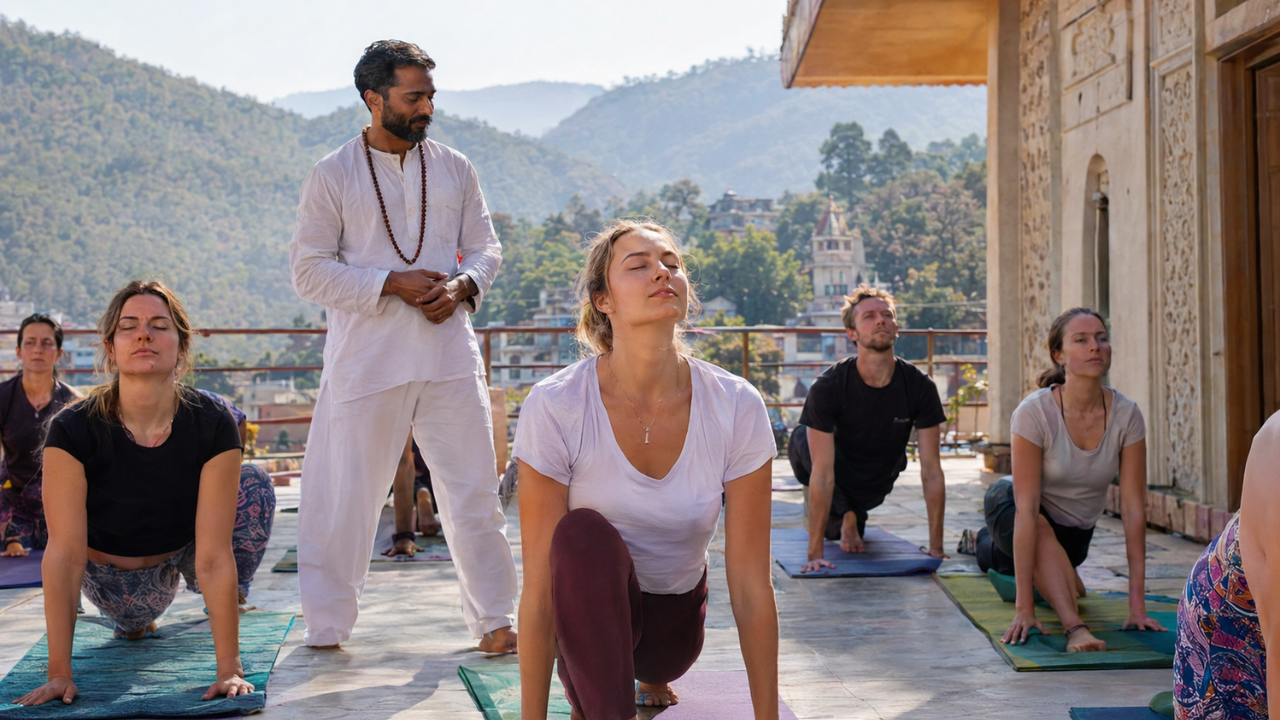
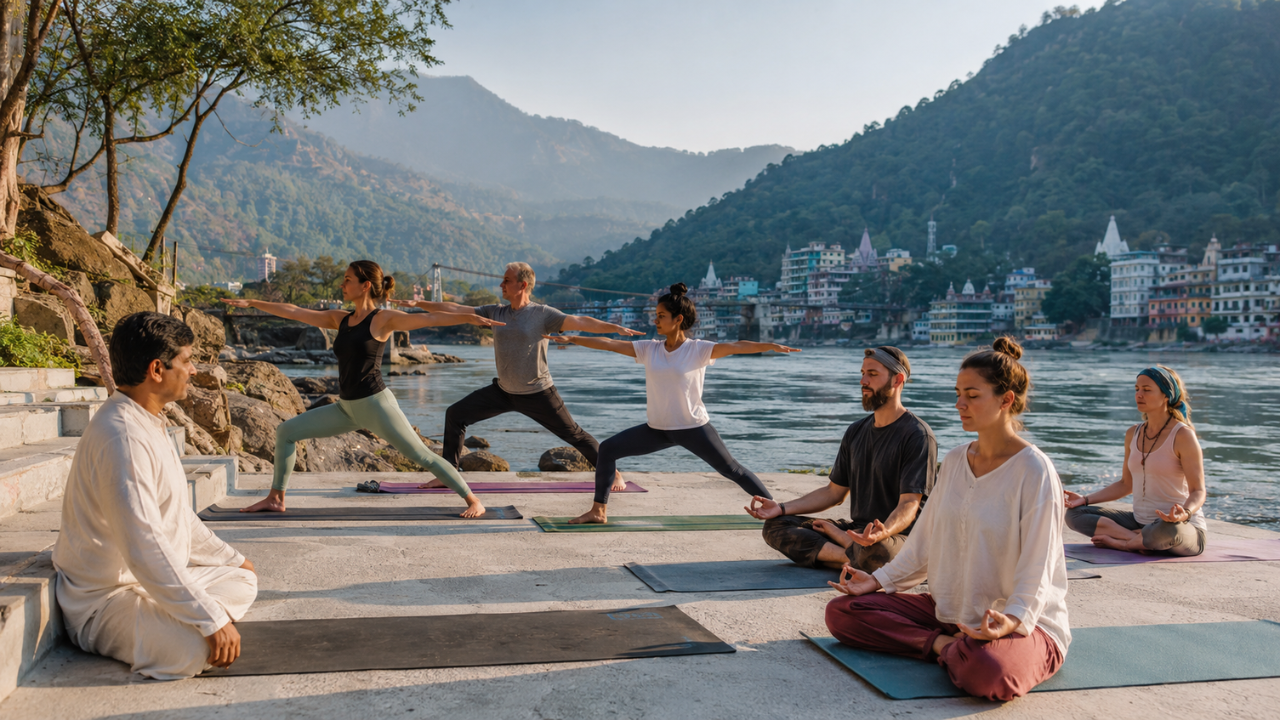
At Adishesh Yoga in Rishikesh, Pigeon Pose is part of our daily asana practice in both yoga retreats and teacher training programs. Small groups, experienced teachers, and the calm energy of the Himalayas make every session something special.
- Daily asana classes: Practice Pigeon Pose and all major hip openers with proper alignment guidance every day
- Hip-opening workshops: Dedicated sessions on hip anatomy, common problems, and how to safely open tight hips
- Yin yoga sessions: Experience long-hold Pigeon Pose in a relaxing yin class — the deepest way to release the hips
- Personal attention: Small class sizes mean the teacher actually sees you — and gives you real, individual guidance that online videos cannot offer
Frequently Asked Questions
Conclusion
Pigeon Pose is one of the most powerful hip openers in all of yoga. It stretches muscles that rarely get stretched in daily life — and gives relief that you can feel from the very first session.
You do not need to be flexible to start. You just need to get on the mat, bring one knee forward, and breathe. Even the gentlest version of this pose will start to open your hips over time. Everything else comes with patience and regular practice.
Want to learn Pigeon Pose with proper guidance — with a real teacher, a small group, and the peaceful air of Rishikesh around you? Come join us at Adishesh Yoga. We would love to practice with you.