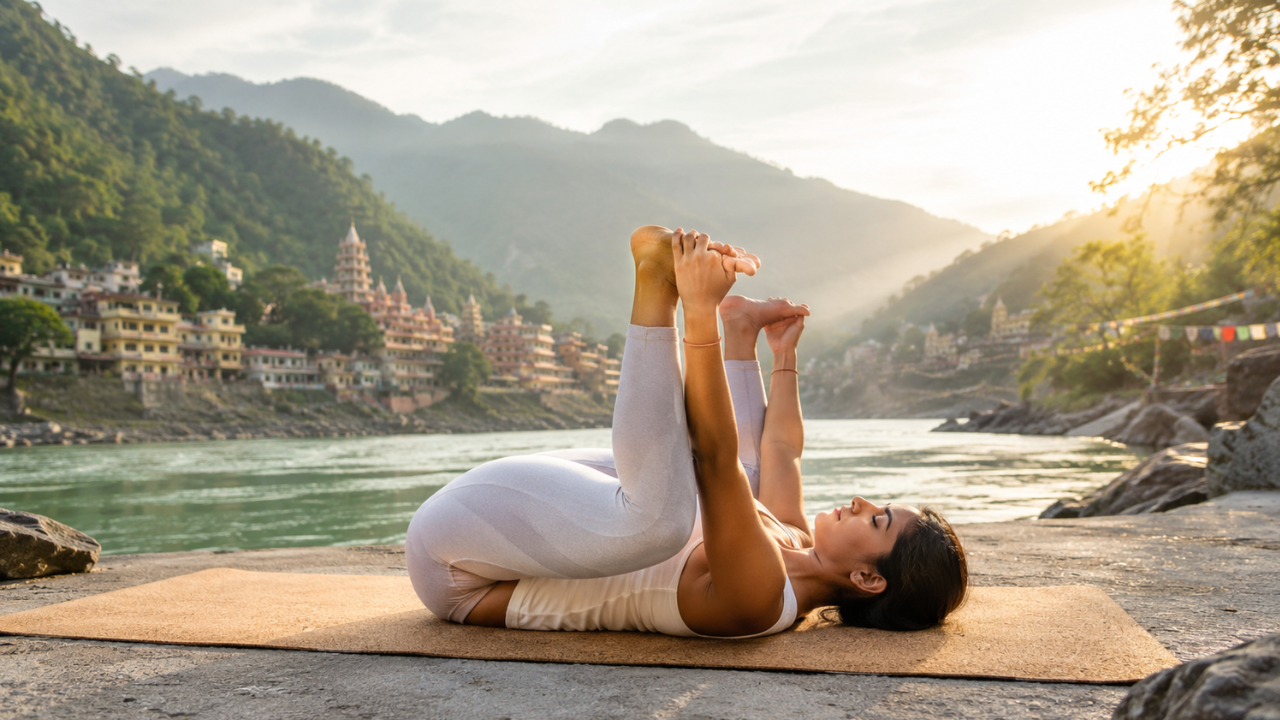
Quick answer: Happy Baby Pose (Ananda Balasana) is a reclined hip opener where you lie on your back, bend your knees toward your chest, and hold your feet while rocking gently side to side. It releases tight hips and calms the mind in under a minute.
After a long day of sitting, standing, or walking, the hips carry more tension than most people realize. Happy Baby Pose is one of the simplest ways to let that tension go. It needs no strength, no flexibility, and almost no effort — just a mat and a few slow breaths.
What Is Happy Baby Pose?
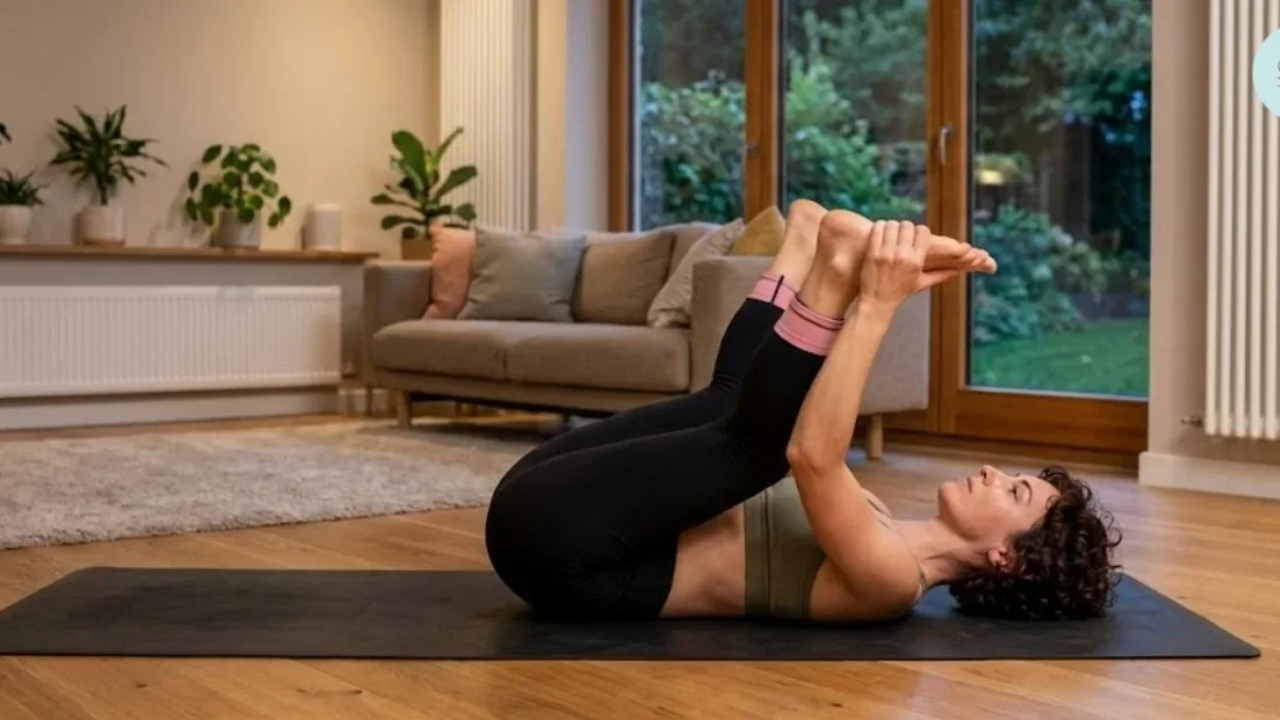
Happy Baby Pose is a gentle reclined stretch. You lie flat on your back, draw both knees toward your chest, and hold the outer edges of your feet with your hands. Your knees open wide and drop gently toward the floor on each side of your body.
The name comes from the way babies naturally lie on their backs and grab their feet while playing. There is nothing to force here. The pose works through gravity and stillness, not effort, which makes it one of the most relaxing poses in a yoga class.
- Sanskrit name: Ananda Balasana
- English name: Happy Baby Pose
- Type: Hip Opener / Restorative Pose
- Level: Beginner
- Hold time: 5 to 10 breaths (30 to 60 seconds)
- Good for: Hips, inner thighs, lower back, nervous system
How to Do Happy Baby Pose – Step by Step
This pose is easy to learn in one try, but small details make it far more comfortable. Follow these steps to keep your lower back safe and get the full relaxing effect.
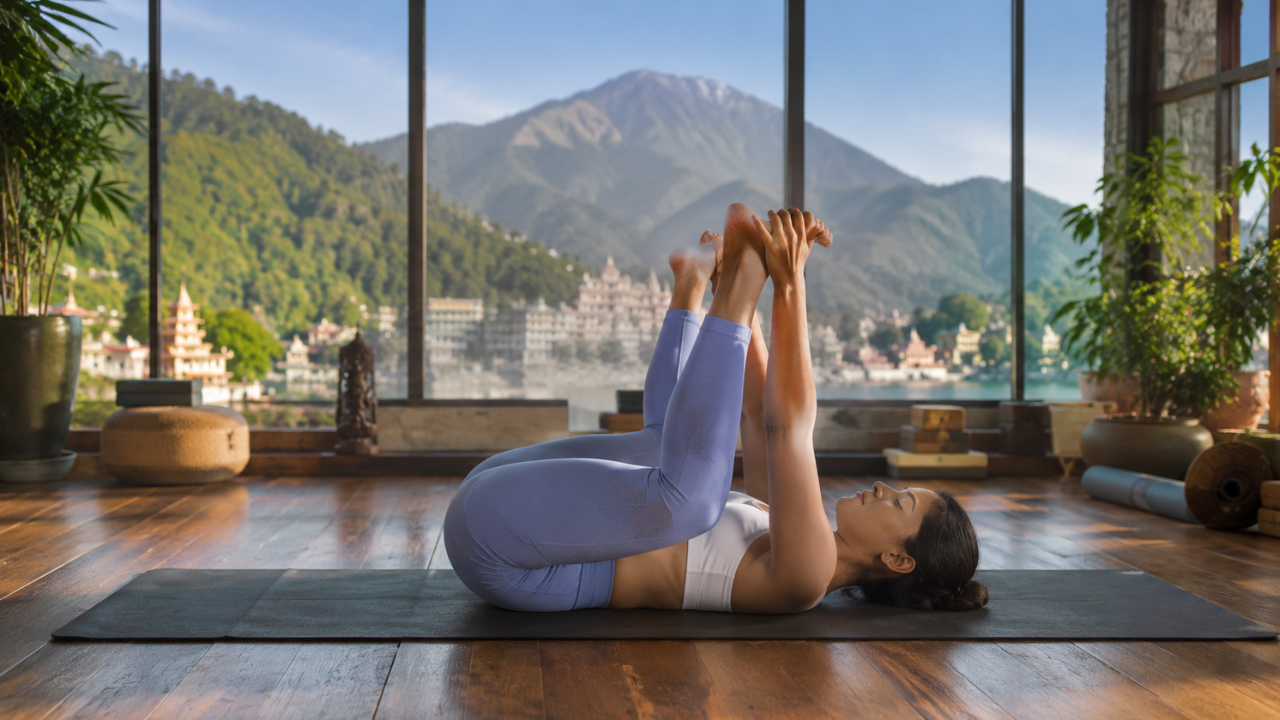
Step 1 – Lie Down on Your Back
Lie flat on your mat with your legs relaxed. Take one slow breath here first, letting your lower back settle naturally into the floor.
Step 2 – Bend Your Knees to Your Chest
Bend both knees and draw them toward your chest. Let your knees open slightly wider than your torso, roughly toward your armpits.
Step 3 – Hold Your Feet
Reach up and hold the outer edges of your feet with your hands. If this feels far, hold your ankles or shins instead — both work just as well.
Step 4 – Flex Your Feet Gently
Flex your feet slightly toward your shins. This keeps your ankles active and stops your knees from feeling heavy or strained.
Step 5 – Press Your Lower Back Down
Keep your lower back gently pressed into the mat rather than lifting off the floor. This protects your spine and lets the stretch work in your hips instead.
Step 6 – Rock and Breathe
Stay here for 5 to 10 slow breaths. If it feels good, rock gently side to side like a light massage for your lower back and hips.
Top Benefits of Happy Baby Pose
This small, quiet pose does far more than it looks like. Here is what regular practice of Happy Baby Pose brings to your body and mind.
1. Opens the Hips and Inner Thighs
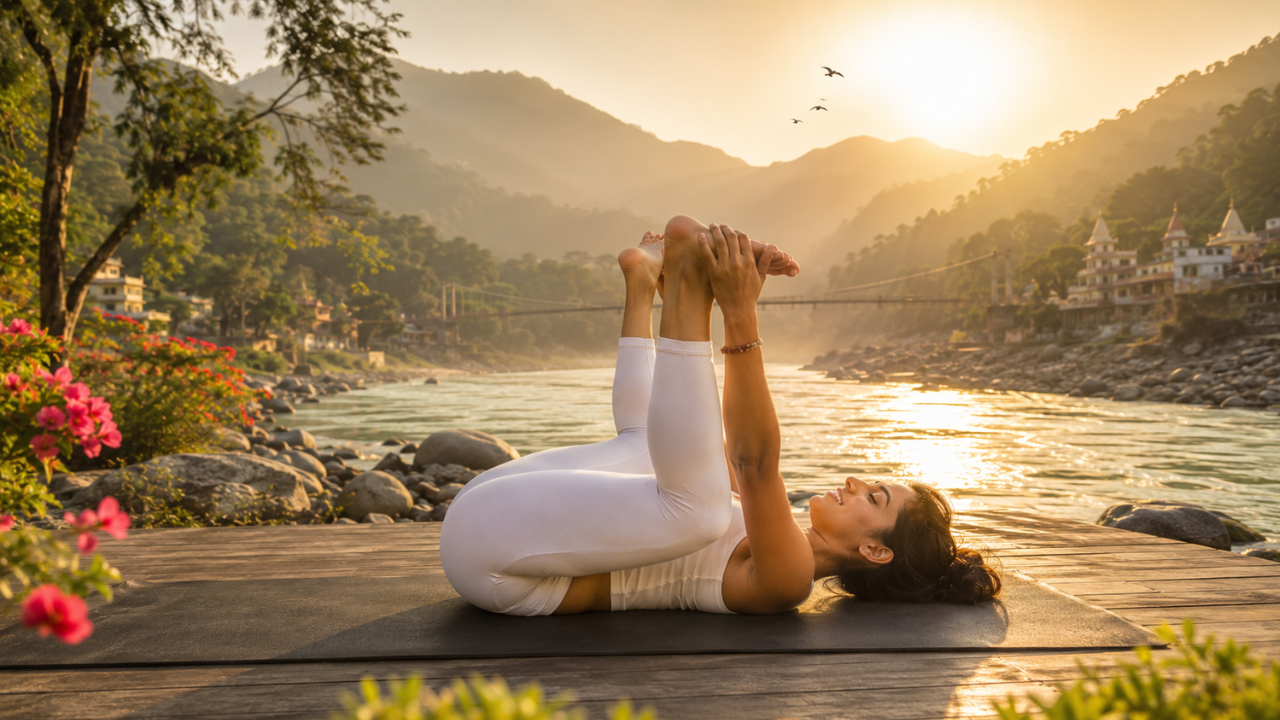
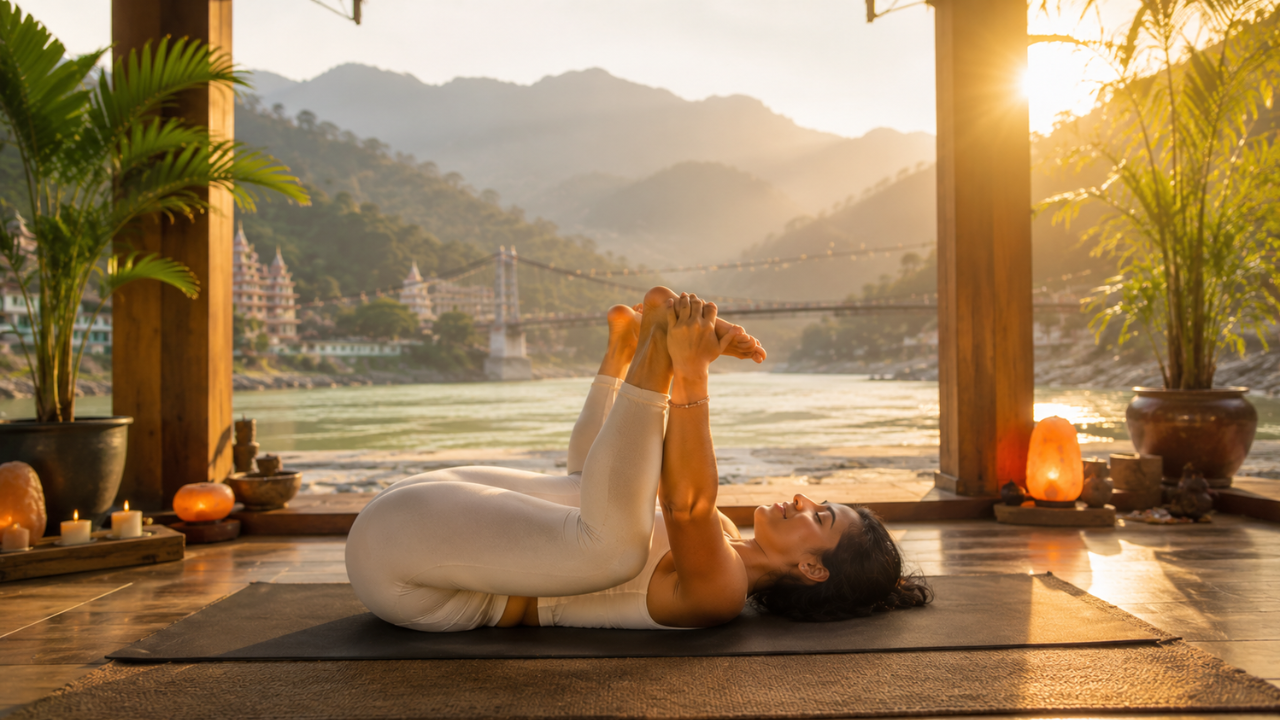
Happy Baby Pose gently stretches the hip joints and inner thighs at the same time. Over regular practice, this brings back range of motion that gets lost from long hours of sitting.
2. Relieves Lower Back Tension
Lying flat and letting the spine lengthen against the floor releases tightness that builds up in the lower back through the day.
3. Calms the Nervous System
Because the body is fully supported by the floor, this pose naturally slows the breath and lowers stress. Many people feel noticeably calmer within a few breaths.
4. Improves Circulation in the Legs
Holding the legs up and slightly open can help ease tired, heavy legs after standing or sitting for long periods.
5. Prepares the Body for Deeper Hip Openers
Happy Baby Pose is a gentle warm-up for stronger hip stretches like Pigeon Pose or Garland Pose, since it opens the joint without any strain.
6. Supports Better Sleep
Practiced slowly before bed, this pose helps release the day's tension from the hips and lower back, which can make it easier to fall asleep.
- Muscles stretched: Hips, inner thighs, groin, lower back
- Improves: Hip mobility, circulation, relaxation, breath awareness
- Relieves: Tight hips, lower back tension, daily stress
- Prepares for: Pigeon Pose, Garland Pose, final relaxation
Common Mistakes in Happy Baby Pose
Happy Baby Pose is gentle, but a few small habits can stop it from feeling comfortable. Watch for these common issues.
Mistake 1 – Lifting the Lower Back Off the Mat
Pulling the knees too close to the chest can lift the lower back off the floor. Fix: Keep the knees at a comfortable distance so your lower back stays gently grounded.
Mistake 2 – Straining to Hold the Feet
Reaching too hard for the feet can tense the shoulders and neck. Fix: Hold your ankles or shins if your feet feel too far away.
Mistake 3 – Tensing the Shoulders
Many people hunch their shoulders up toward their ears while holding the pose. Fix: Let your shoulders rest heavy on the mat and relax your neck completely.
Mistake 4 – Forcing the Knees Down
Pushing the knees hard toward the floor can strain the hips. Fix: Let gravity do the work. The knees will lower naturally as the hips relax.
Mistake 5 – Holding the Breath
Some people forget to breathe while focused on balance. Fix: Keep long, slow breaths going the entire time you hold the pose.
Tips for Beginners – Make Happy Baby Pose Easier
Even though this pose looks simple, a few small adjustments make it feel completely different in your body.
- Use a yoga strap: Loop a strap around each foot if your hands cannot reach comfortably. Hold the strap ends instead of your feet.
- Hold the thighs instead: If reaching the feet feels far, simply hold the back of your thighs and hug your knees toward your chest.
- Cushion under the head: Place a thin folded blanket under your head if your neck feels strained lying flat.
- Rock gently: A soft side-to-side rock massages the lower back and often feels more relaxing than staying still.
- Close your eyes: Closing the eyes helps the nervous system settle faster and deepens the calming effect of the pose.
- Practice on a firm surface: A yoga mat on a firm floor gives your lower back better support than a soft bed or carpet.
How Long Should You Hold Happy Baby Pose?
Start with 5 to 8 slow breaths, about 30 to 45 seconds. You can hold it longer, up to 2 minutes, as a restorative pose near the end of practice. Many people also use it as a short reset during a busy day.
Happy Baby Pose Modifications for All Levels
Every hip is different. These variations help you find the right version of Happy Baby Pose for your body today.
For Beginners – Strap Support
Loop a yoga strap around the arch of each foot. Hold one end of the strap in each hand instead of reaching for your feet directly. This gives the same stretch without strain in the shoulders.
For Tight Hips – Hold the Thighs
If your hips are very tight, simply hold the back of your thighs and hug your knees gently toward your chest. This still opens the hips without forcing the pose.
For Advanced Practitioners – One-Leg Variation
Extend one leg straight along the floor or up toward the ceiling while holding the other foot. This adds a hamstring stretch to the hip opening on the bent side.
Happy Baby Pose vs Pigeon Pose – What Is the Difference?
- Position: Happy Baby Pose = lying on the back, holding the feet. Pigeon Pose = seated forward fold with one leg bent in front.
- Intensity: Happy Baby Pose is gentle and restorative. Pigeon Pose is a deeper, more intense hip stretch.
- Effort: Happy Baby Pose uses gravity, needing almost no effort. Pigeon Pose requires more active alignment.
- Best for: Happy Baby Pose suits beginners and relaxation. Pigeon Pose suits practitioners ready for a stronger stretch.
- Which is better? Both are useful. Many practitioners use Happy Baby Pose to warm up before Pigeon Pose.
Who Should Be Careful with Happy Baby Pose
Happy Baby Pose is one of the gentlest poses in yoga, but a few conditions still need extra care.
- Hip or groin injuries: A recent strain or injury means you should hold the thighs only and avoid pulling the knees too wide.
- Knee injuries: Bend the knees only as far as feels comfortable and avoid any sharp pulling sensation.
- Neck problems: Keep the head resting flat, or supported with a thin blanket, and avoid straining to look at your feet.
- Later pregnancy: Deep compression on the belly should be avoided. A gentler, supported variation may be used with guidance from an experienced prenatal yoga teacher.
- Lower back sensitivity: If your lower back lifts off the mat, bring the knees a little further from the chest until it settles down again.
If you are unsure about anything, start with the gentlest version of this pose and work with a trained yoga teacher. Discomfort is okay. Pain is always a signal to back off.
How to Add Happy Baby Pose to Your Daily Yoga
Happy Baby Pose fits naturally into many parts of a yoga session. Here is how to use it for the best results.
- Before final relaxation: Practice Happy Baby Pose right before Savasana to release the hips and lower back before lying still.
- After hip openers: Use it as a gentle counter-pose after stronger stretches like Pigeon Pose or Garland Pose.
- As a morning stretch: A few slow rounds of Happy Baby Pose in bed can ease stiffness before you even stand up.
- As an evening wind-down: Practice it slowly at night to release the day's tension and prepare the body for sleep.
- How often: Happy Baby Pose is gentle enough to practice daily. Even a short session brings noticeable ease within a week or two.
Learn Happy Baby Pose at a Yoga Retreat in Rishikesh
A guide can teach you the shape of the pose. But a real teacher watching your breath and posture can help you feel the release far more deeply than practicing alone.
At Adishesh Yoga in Rishikesh, Happy Baby Pose and other gentle hip openers are woven into our daily asana and restorative classes across both yoga retreats and teacher training programs. Small groups, senior teachers, and the calm of the Himalayan foothills make every session feel like a reset.
- Daily asana classes: Practice Happy Baby Pose and other hip openers with proper alignment guidance every day
- Restorative sessions: Dedicated classes focused on gentle release, breath, and nervous system calm
- Prenatal-friendly guidance: Supported variations for expecting mothers under experienced supervision
- Personal attention: Small class sizes mean the teacher actually sees your alignment and gives you real guidance that no video can replace
Frequently Asked Questions
Conclusion
Happy Baby Pose proves that yoga does not always need effort to be effective. Lying still, holding your feet, and breathing slowly can release the hips and calm the mind more than many harder poses ever will.
You do not need open hips or flexible shoulders to start. You just need a mat, a few quiet minutes, and a willingness to let go. Practice it often, and your body will thank you with more ease every day.
Want to deepen your practice with a real teacher who can guide your breath and alignment? Come practice with us at Adishesh Yoga in Rishikesh. We would love to have you on the mat.
Explore Authentic Yoga in Rishikesh with Adishesh Yoga
Ready to refine your alignment, anatomy, and sequencing under traditional masters? Join our Yoga Alliance certified courses or unwind with restorative retreats in the Himalayan foothills.