Your hips are tight. Your lower back aches after sitting all day. You have tried stretching but nothing seems to reach that deep spot. Fire Log Pose can fix that.
Fire Log Pose is called Agnistambhasana in Sanskrit. "Agni" means fire. "Stambha" means log. You stack your shins like two logs placed on a fire — and the pose burns deep into the outer hips. This 2026 guide will show you exactly how to do it, what it does for your body, and how to make it safe and easy for your level.
What Is Fire Log Pose?
Fire Log Pose is a seated yoga pose where you sit on the floor and stack both shins one on top of the other. Your bottom shin rests parallel to the mat. Your top shin rests right on top — ankle on the knee, knee above the ankle. Both shins stacked like two logs.
It looks simple. But the stretch it gives to your outer hips, glutes, and piriformis is very deep. People who sit at a desk all day — or runners and cyclists — feel this pose the most. It reaches exactly where tightness builds up and does not let go.
- Sanskrit name: Agnistambhasana
- English name: Fire Log Pose / Double Pigeon Pose
- Type: Hip Opener / Seated Stretch
- Level: Beginner to Intermediate
- Hold time: 5 to 10 breaths per side (30 to 60 seconds)
- Good for: Outer hips, glutes, groin, piriformis, lower back
How to Do Fire Log Pose – Step by Step
Go slowly. Do not rush into the full pose on day one. Let your hips warm up and open at their own pace. Each step matters here.

Step 1 – Sit on the Floor
Sit comfortably on your yoga mat. Extend both legs in front of you. If your hips are tight, sit on a folded blanket. This tilts the pelvis slightly forward and makes it much easier to sit upright.
Step 2 – Place the Bottom Shin
Bend your right knee and bring the right shin in front of you, parallel to the top edge of your mat. The right foot should be flexed — pull your toes back slightly. The right ankle is on the left side, and the right knee is on the right side.
Step 3 – Stack the Top Shin
Now bend your left knee. Lift the left leg and place the left shin directly on top of the right shin. Your left ankle rests on your right knee. Your left knee rests above your right ankle. This is the "double stacked log" position. Flex the left foot too.
Step 4 – Flex Both Feet
This step protects your knees. Flex both feet firmly — pull the toes back and press through the outer edges of both feet. This engages the muscles around the knee joints and keeps them safe during the deep hip stretch.
Step 5 – Sit Tall and Breathe
Place your hands on your knees or on the mat beside you. Sit up tall. Lengthen your spine. Take a few slow breaths here and feel the stretch in your outer hips. Do not push or force the knees down — just let gravity do the work.
Step 6 – Fold Forward (Optional)
When you feel ready — walk your hands forward on the mat and slowly lower your chest. Keep your spine long as you fold. You can rest your hands on the mat or on your stacked shins. This deepens the outer hip stretch even more. Breathe slowly.
Step 7 – Come Up and Switch Sides
After 5 to 10 deep breaths, slowly come back up. Release the legs, shake them out gently, and then switch sides — left shin on the bottom, right shin on top. Always do both sides. One hip is almost always tighter than the other — that is normal.
Top Benefits of Fire Log Pose
This pose looks quiet and simple. But it works very deep in the body. Here is what Fire Log Pose does for you when you practice it regularly.

1. Opens the Outer Hips Deeply
Fire Log Pose puts both hips into deep external rotation at the same time. Very few poses do this. It reaches the outer hip — the glutes and the piriformis — in a way that most stretches simply cannot. If your hips feel locked and tight, this pose will begin to open them fast.
2. Stretches the Piriformis Muscle
The piriformis is a small muscle deep in the hip. It gets tight very easily — from sitting, driving, and sport. When it tightens, it can press on the sciatic nerve and cause pain down the leg. Fire Log Pose stretches this muscle directly and gives real relief when done regularly.
3. Relieves Lower Back Pain
Tight hips pull on the lower back and create pain and tension there. When Fire Log Pose opens the hips, that pulling stops. The lower back relaxes. Many people with chronic lower back tightness notice a clear difference after a few sessions.
4. Opens the Groin and Inner Thigh
The stacked leg position also creates a gentle stretch across the groin and inner thigh. These muscles get very little attention in daily life. Regular Fire Log Pose practice keeps them open and flexible.
5. Calms the Mind
Fire Log Pose is a still, grounded pose. When you sit with it and breathe slowly, it activates the parasympathetic nervous system — the body's rest mode. Stress and anxiety reduce. Many people feel much calmer after even a short hold in this pose.
6. Prepares You for Lotus Pose
Lotus Pose needs flexible, open hips. Fire Log Pose builds exactly that. If Lotus is your goal — Fire Log Pose is one of the most important preparation poses you can practice.
7. Good for People Who Sit All Day
Sitting closes the hips and tightens everything from the lower back down. Fire Log Pose does the exact opposite — it opens all the areas that sitting closes. Even 2 minutes per side after work makes a big difference over time.
- Muscles stretched: Piriformis, glutes, outer hip, groin, inner thigh, IT band
- Improves: Hip mobility, hip flexibility, posture, range of motion
- Relieves: Tight hips, lower back tension, sciatic discomfort, stress
- Prepares for: Lotus Pose, Bound Angle Pose, Seated Forward Fold, Advanced Hip Openers
Common Mistakes in Fire Log Pose
These mistakes are very common — especially when people are new to this pose. Knowing them first will keep your knees safe and help you get the real benefit from the stretch.
Mistake 1 – Pushing the Knee Down
Many people try to push the top knee down to the mat. This puts too much pressure on the knee joint and can cause pain or injury. Fix: Never push the knee. Let it float at whatever height it naturally sits. Use a block under it if needed. The knee will lower on its own as your hips open over weeks.
Mistake 2 – Feet Not Flexed
When the feet are relaxed and not flexed, the knee ligaments take all the stress of the rotation. This can hurt the knees. Fix: Always flex both feet firmly. Pull the toes back toward your shins. This is the most important alignment point in this pose and protects the knees every time.
Mistake 3 – Leaning Back Instead of Sitting Tall
Tight hips make beginners collapse the lower back and lean back behind the sitting bones. This makes the pose feel easier but removes the hip stretch entirely. Fix: Sit on a folded blanket. This lifts the hips and helps you sit tall naturally.
Mistake 4 – Shins Not Stacked Properly
Sometimes the top foot hangs off the bottom knee instead of resting ankle-on-knee. Or the bottom ankle is not lined up under the top knee. Fix: Check that the bottom ankle is directly under the top knee. And the top ankle is directly on the bottom knee. Clean stacking = deeper and safer stretch.
Mistake 5 – Only Doing One Side
People often skip the second side because the tighter hip is uncomfortable. Fix: Always do both sides, every time. The tighter side needs more attention — not less. Hold it a little longer on the tight side if needed.
Tips for Beginners – Make Fire Log Pose Easier
Fire Log Pose can feel very intense if your hips are tight. That is totally normal. These tips will help you get the full benefit — without any pain or frustration.
- Sit on a folded blanket: This is the single best tip for tight hips. A 2 to 4 inch lift under your sitting bones tilts the pelvis forward and makes it much easier to sit upright and let the hips open.
- Block under the top knee: If the top knee floats high in the air — place a yoga block under it. This removes the strain and lets you relax into the pose safely.
- Try simple cross-legged first: If Fire Log Pose is too intense today — just sit cross-legged (Sukhasana). This is the beginner version that gives a similar but lighter stretch.
- Warm up the hips first: Do Butterfly Pose, Reclined Pigeon, and Cat-Cow before Fire Log Pose. Warm hips open more easily and safely.
- Hold longer, not harder: Do not go deeper into the pose — just hold it longer. Even a light version held for 60 to 90 seconds gives excellent results.
- Breathe into the hips: With every exhale — imagine the hips softening and releasing. This mental focus helps the body let go of the tightness faster.
How Long Should You Hold Fire Log Pose?
Start with 5 to 8 deep breaths per side — about 30 to 45 seconds. As your hips become more flexible, build up to 1 to 2 minutes per side. In Yin Yoga, this pose is often held for 3 to 5 minutes. The longer you stay — the deeper the connective tissue releases around the hip joint.
Fire Log Pose Modifications for All Levels
Every body is different. These variations let you get the full benefit of Fire Log Pose — at whatever level you are at right now.
For Beginners – Easy Cross-Legged (Sukhasana)
If stacking the shins is too much today — just sit cross-legged. Place the right foot under the left knee and the left foot under the right knee. Sit tall. This gives a lighter version of the same outer hip stretch. Work here until the hips begin to open, then slowly progress to the full Fire Log Pose over time.
For Tight Hips – Blanket and Block Support
Sit on a thick folded blanket. Place a yoga block or another folded blanket under the top knee. Let the body be fully supported. In this supported version, you can hold the pose for longer without any strain — and over time, the hips will gradually open without you ever having to force them.
For Advanced Practitioners – Forward Fold
Once the hips are open and the shins stack easily — add the forward fold. Keep the spine long and walk your hands forward as you lower your chest toward your stacked shins. Rest the forehead on stacked hands or on the mat. This deepens the outer hip stretch into the full Agnistambhasana expression.
Fire Log Pose vs Pigeon Pose – What Is the Difference?
- Position: Fire Log = both legs stacked, seated. Pigeon = one leg forward, one back, on the floor.
- Target: Both target the outer hip and piriformis. Fire Log works both hips at once. Pigeon does one side at a time.
- Knee safety: Fire Log Pose needs careful knee attention — feet must stay flexed. Pigeon puts pressure on the front knee instead.
- Intensity: Fire Log Pose is often more intense because both hips are open at the same time.
- Which is better? Do both. They target the same area from different angles. Together they give a complete hip release.
Who Should Be Careful with Fire Log Pose
Fire Log Pose is safe for most people when done correctly. But some conditions need extra care or a different approach.
- Knee injuries: Any pain or injury in the knee means you should skip this pose or do the easy cross-legged version only. Never bend a painful knee into the stacked position.
- Hip surgery or replacement: People who have had hip surgery should avoid Fire Log Pose unless a doctor and experienced yoga teacher have cleared them for it.
- Very tight hips: If the top knee is very high up in the air and the pose creates sharp pain anywhere — stop. Use the cross-legged modification and build slowly over months.
- Sacroiliac joint pain: Be careful with pelvic alignment in this pose. Use a blanket under the hips and avoid any twisting or rotation in the pelvis.
- Pregnancy: As the belly grows, sitting in Fire Log Pose becomes harder. Use extra support or work with a prenatal yoga teacher for safe modifications.
If you are unsure about anything — start with the easiest version of this pose and work with a trained yoga teacher. Pain is always a signal to back off. Discomfort is okay. Pain is not.
How to Add Fire Log Pose to Your Daily Yoga
Fire Log Pose works well at different points in a yoga session. Here is how to use it for best results.
- After warming up: Always warm the hips first with Cat-Cow, Butterfly Pose, or Low Lunge before you sit in Fire Log Pose. Cold hips resist the stretch and increase injury risk.
- In a hip-opening sequence: Place Fire Log Pose after Warrior II, Lizard Pose, and Pigeon Pose. This builds the hip opening step by step before going into this deep seated version.
- As a cool-down: Fire Log Pose is excellent at the end of a yoga session or after running, cycling, or any lower body workout.
- As a Yin Yoga hold: Hold the forward fold version for 2 to 3 minutes per side with closed eyes and slow breathing. This is one of the deepest ways to release the hips and calm the nervous system.
- How often: Practice Fire Log Pose 3 to 5 times per week. Consistency is everything with hip openers. Even one session every two days gives noticeable results within 2 to 4 weeks.
Learn Fire Log Pose at a Yoga Retreat in Rishikesh
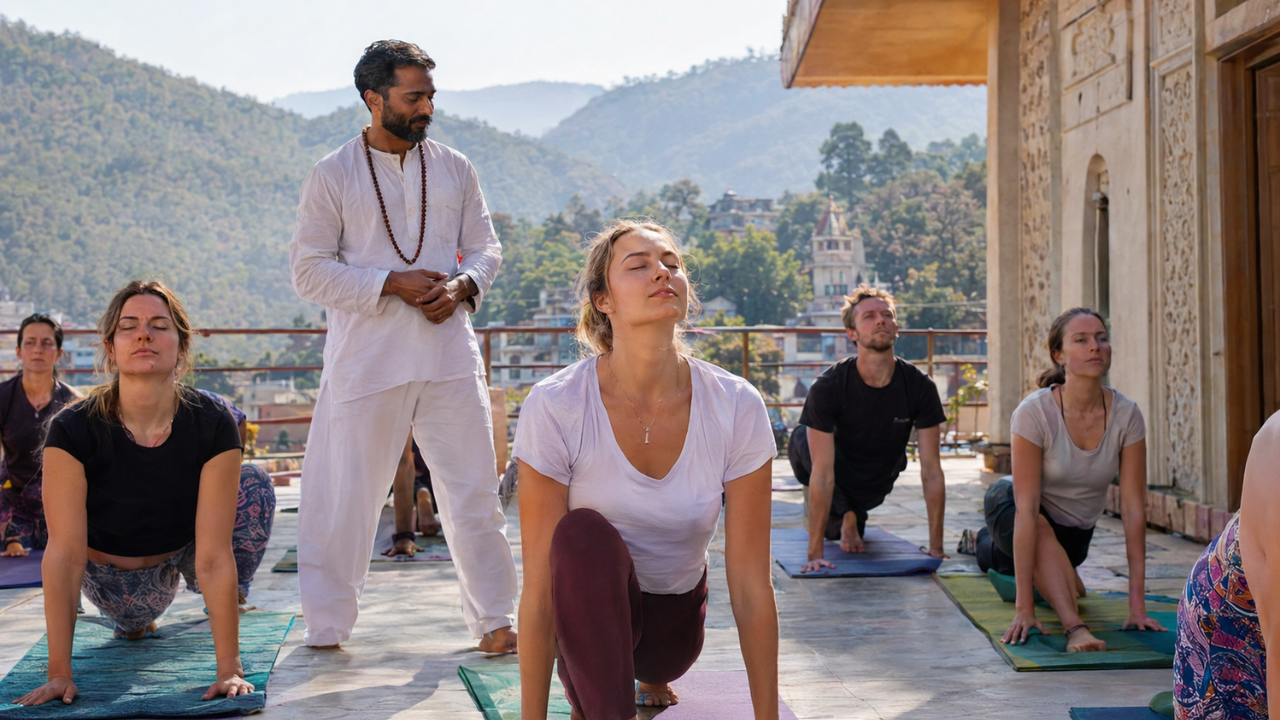
A guide can teach you the steps. But when a real teacher watches you sit in Fire Log Pose and gives you one small correction — you will feel the stretch in a completely different way. That is what in-person learning does.
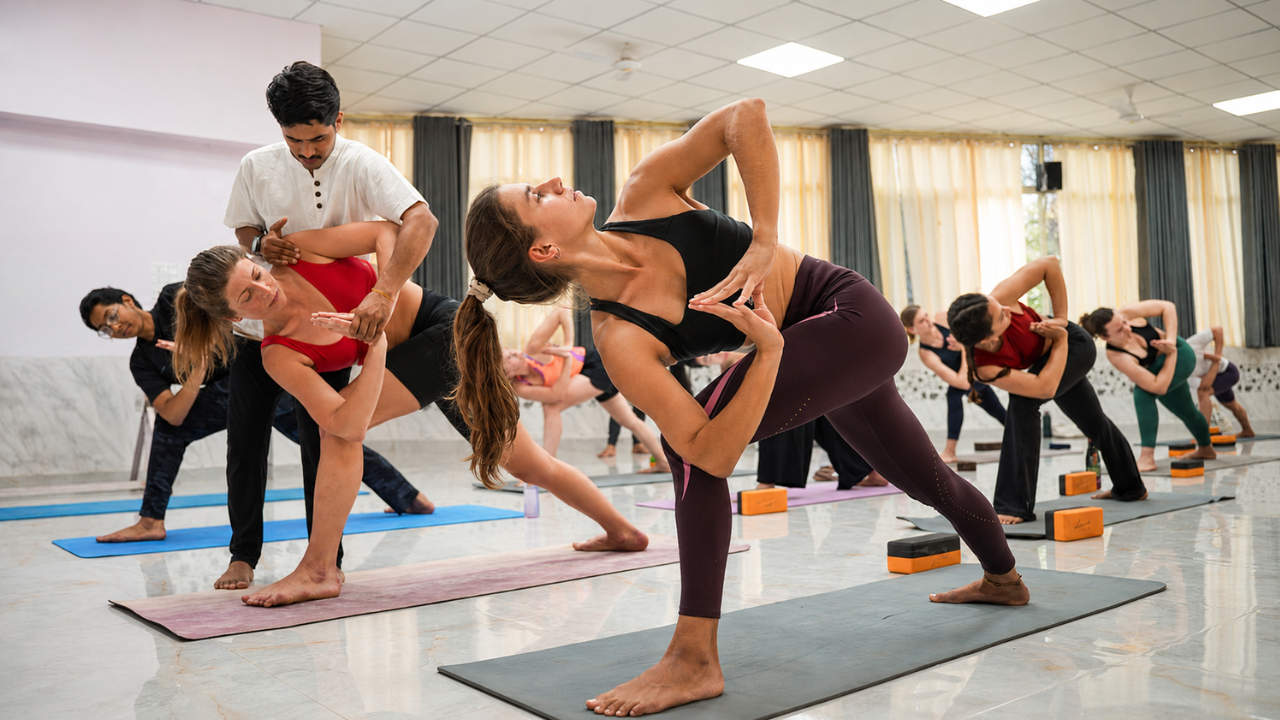
At Adishesh Yoga in Rishikesh, Fire Log Pose and all major hip openers are part of our daily asana classes in both yoga retreats and teacher training programs. Small groups, senior teachers, and the peaceful energy of the Himalayan foothills make every session something you remember.
- Daily asana classes: Practice Fire Log Pose and all hip openers with proper alignment guidance every day
- Hip-opening workshops: Dedicated sessions on hip anatomy, why hips get tight, and how to safely open them
- Yin yoga sessions: Experience long-hold Fire Log Pose in a deep yin class — the most effective way to release the connective tissue around the hips
- Personal attention: Small class sizes mean the teacher actually sees your alignment and gives you real guidance that no video can replace
Frequently Asked Questions
Conclusion
Fire Log Pose is one of the most effective hip openers in yoga. It goes right into the outer hips and glutes — exactly where modern life creates the most tightness. And it does it from a simple, seated position that anyone can try.
You do not need open hips to start this pose. You just need a mat, a blanket, and a little patience. The hips will begin to open with each session. Just sit, breathe, and let the pose do its work.
Want to learn Fire Log Pose with a real teacher who can watch your alignment and guide you safely? Come practice with us at Adishesh Yoga in Rishikesh. We would love to have you on the mat.