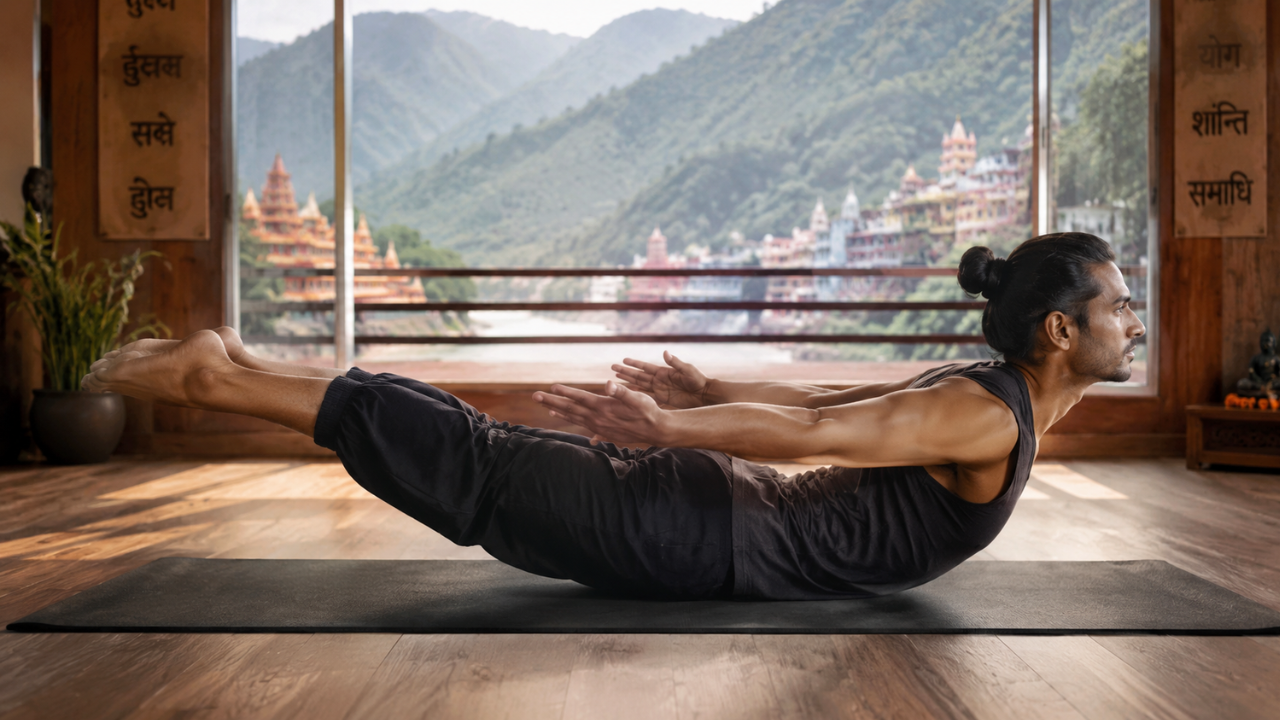
Locust Pose looks simple — just lie down and lift up. But it works your whole back body in one shot. No fancy moves, no balance needed. Just you, the mat, and your own strength.
It is one of the best poses for a strong lower back. It also opens the chest and lifts your mood. Many students feel taller and lighter right after this pose.
What Is Locust Pose?
Locust Pose is called Salabhasana in Sanskrit. "Salabha" means locust — a small flying insect. This pose looks like a locust resting close to the ground, body slightly raised.
In this pose, you lie on your belly. Then you lift your chest, arms, and legs off the floor at the same time. Only your hips and belly stay on the mat. The back muscles do all the work here — no jumping, no balance, just steady lifting power.
- Sanskrit name: Salabhasana
- Meaning: Locust Pose
- Pose type: Back-bending, prone pose
- Level: Beginner to intermediate
- Hold time: 3 to 5 breaths per round
- Part of: Hatha yoga, Vinyasa yoga, back-strength sequences
This pose is often taught before Bow Pose or Cobra Pose. It builds the back strength you need for deeper backbends later.
Benefits of Locust Pose
This pose works the back, legs, arms, and chest together. Here is what regular practice gives you.
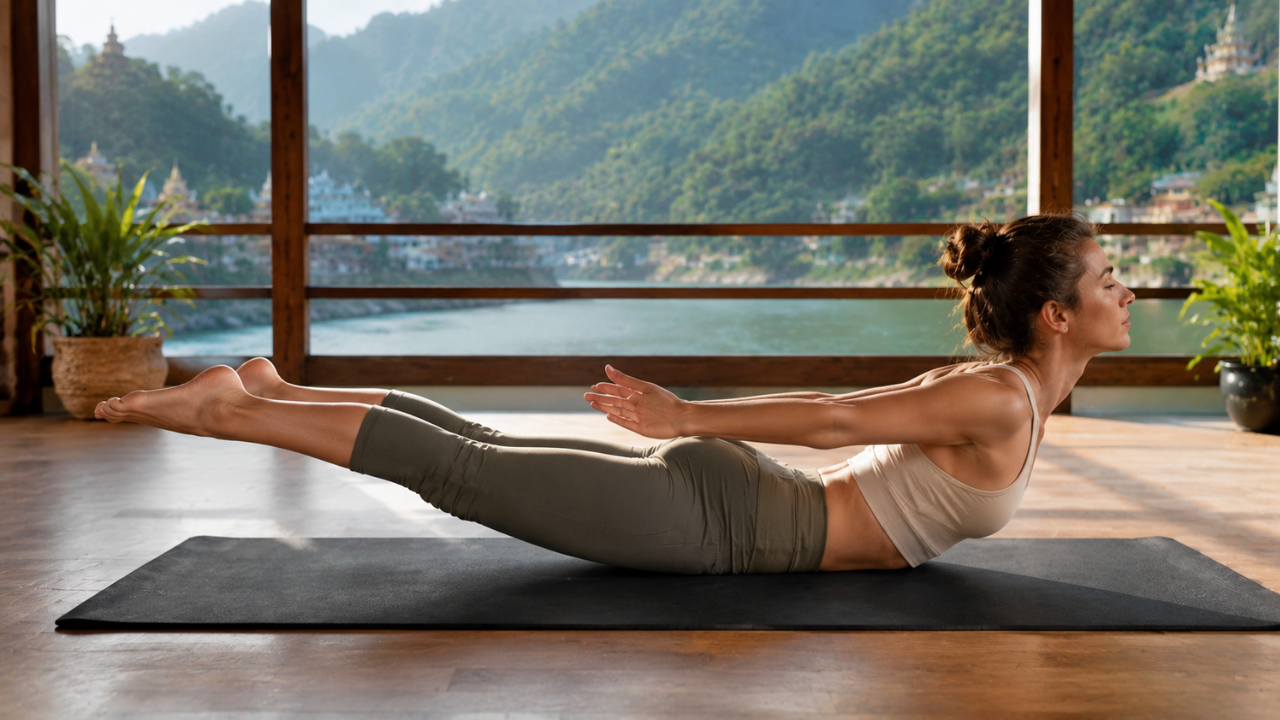
- Stronger lower back: Builds real strength in the muscles that support your spine all day long.
- Better posture: Strengthens the back body, which helps you sit and stand taller.
- Open chest: The chest and shoulders open wide, making breathing feel deeper and easier.
- Stronger legs and glutes: Lifting the legs works the glutes, hamstrings, and lower body.
- Eases mild back pain: Helps loosen tightness from long hours of sitting or desk work.
- Better digestion: The belly press on the mat can gently stimulate the digestive organs.
- Builds stamina: Holding the lift trains endurance in the back and core muscles.
- Mood lift: Opening the chest often brings a quick feeling of energy and freshness.
People who sit for long hours at work often feel quick relief in the lower back after just a few rounds of this pose.
How to Do Locust Pose — Step by Step
Go slow and steady. Read all steps once, then try it on your mat.
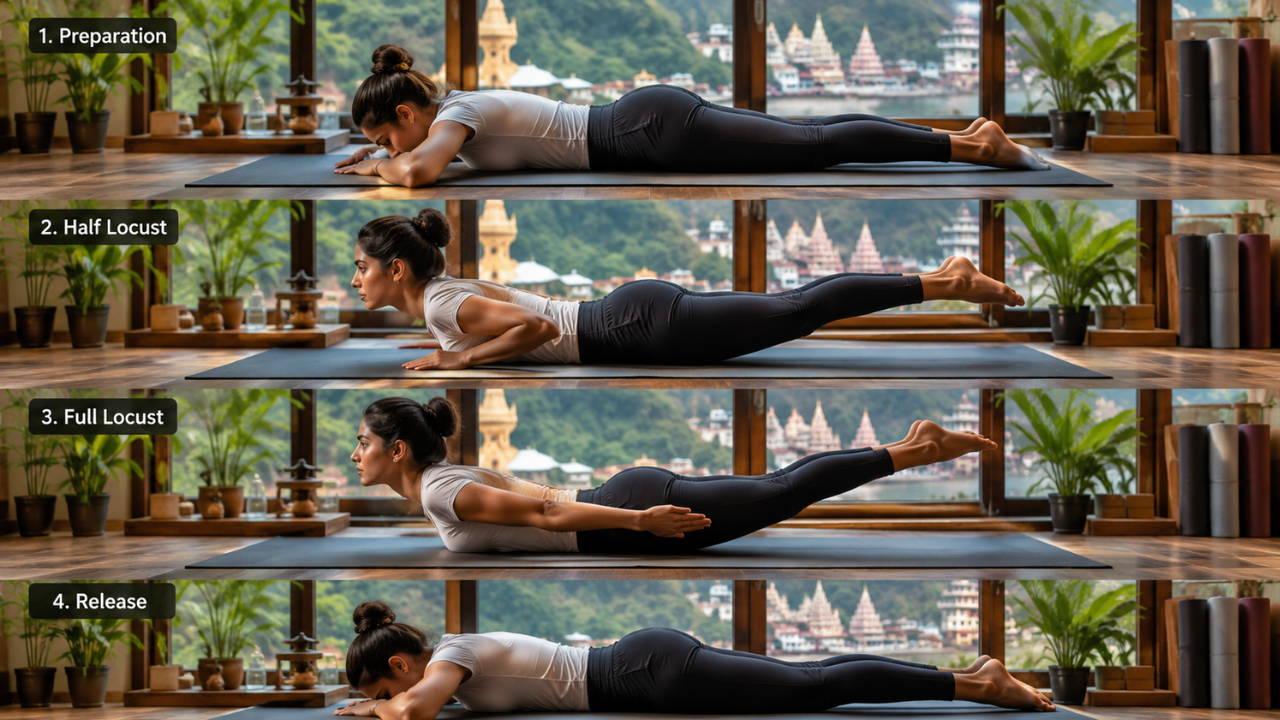
- Step 1: Lie flat on your belly. Keep your legs together and arms by your sides, palms facing down.
- Step 2: Rest your forehead or chin gently on the mat. Take a few slow breaths here.
- Step 3: Press the top of your feet and your hip bones into the mat. This is your base.
- Step 4: On an inhale, slowly lift your head, chest, arms, and legs off the floor together.
- Step 5: Reach your arms back toward your feet. Keep them straight and lifted.
- Step 6: Keep your legs straight and lifted, toes pointing back, not too wide apart.
- Step 7: Keep your neck long. Look slightly forward, not straight up.
- Step 8: Hold for 3 to 5 slow breaths. Keep breathing — do not hold your breath.
- Step 9: Exhale and lower down slowly. Rest your cheek on the mat.
- Step 10: Rest for a few breaths, then repeat for 2 to 3 rounds total.
Small lift is also good lift. Do not force the height — let your back build strength naturally over time.
Key Alignment Tips for Locust Pose
Good alignment keeps your back safe and makes the lift feel stronger. Keep these points in mind every time.
- Hip bones: Press the hip bones firmly into the mat. They give you a stable base to lift from.
- Legs: Keep the legs straight and close together. Squeeze the inner thighs gently.
- Lower back: Lift from the back muscles, not by jerking up. Keep the lift smooth and controlled.
- Arms: Reach back through the fingertips. Keep the arms active, not loose.
- Shoulders: Roll the shoulders back and down, away from the ears.
- Neck: Keep it long and in line with the spine. Do not crank the head back.
- Core: Keep a gentle hug at the belly to protect the lower back.
- Breath: Keep breathing steady throughout — never hold the breath while lifting.
Pick one cue at a time to focus on. Trying to fix everything together makes the pose feel harder than it really is.
Common Mistakes to Avoid
These are the mistakes most beginners make. Avoiding them keeps the lower back safe and the pose effective.
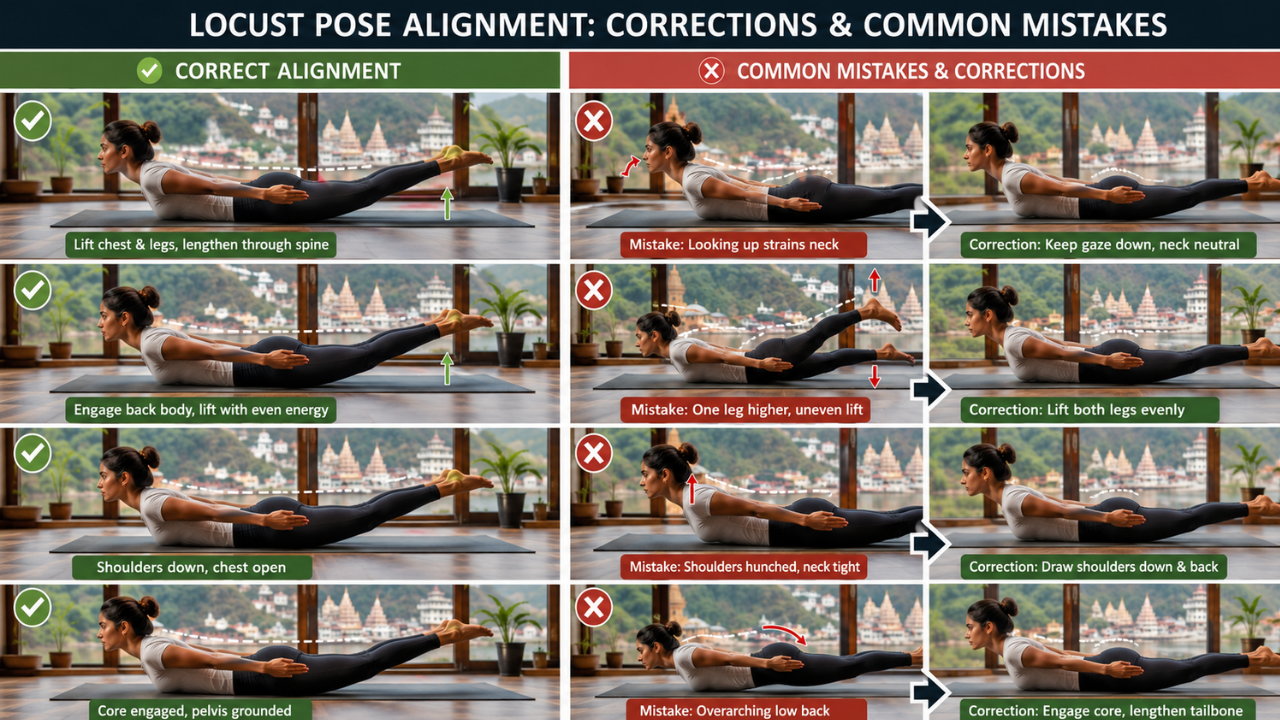
- Jerking up too fast: A sudden lift can strain the lower back. Always lift slowly with the breath.
- Holding the breath: Many beginners freeze the breath while lifting. Keep breathing slow and steady the whole time.
- Legs falling apart: Letting the legs spread wide reduces the lift. Keep them close together and active.
- Cranking the neck back: Looking too far up can strain the neck. Keep the gaze low and the neck long.
- Shoulders near the ears: Tense shoulders make the pose feel tighter. Roll them back and down.
- Lifting only the chest: The legs need to lift too, even a little, for the full benefit of the pose.
- No rest between rounds: Skipping rest tires the back fast. Always rest a few breaths before repeating.
Easy Modifications for Beginners
If the full lift feels hard right now — that is completely normal. These simple changes help you build strength safely.
- Lift chest only first: Start by lifting just the chest and arms. Add the legs once the back feels stronger.
- Hands under thighs: Place your hands or fists under your thighs for extra support while you lift the chest.
- One leg at a time: Lift one leg, then switch. This builds strength before lifting both legs together.
- Use a folded blanket: Place a soft folded blanket under the hips for extra comfort and support.
- Shorter holds: Hold for just 1 to 2 breaths at first. Build up the time slowly over weeks.
Going small first is smart practice — not weak practice. Your back gets stronger safely this way, round after round.
Tips to Make This Pose Feel Better
Small things make a big difference in this pose. Try these in your next practice.
- Warm up the spine first: Do a few rounds of Cat Cow Pose before Locust. This wakes up the back muscles gently.
- Press the hips down: The more you press the hips into the mat, the higher and safer your lift will feel.
- Lengthen before you lift: Stretch the body long first, then lift — this protects the lower back.
- Breathe into the back: Feel the breath move into the back body, not just the chest, during the hold.
- Engage the legs fully: Squeeze the thighs and point the toes back to keep the legs active and lifted.
- Relax the face: A soft jaw and soft eyes help the whole body stay relaxed during effort.
- Practice often: Even a few rounds daily builds real back strength within a few weeks.
Who Should Be Careful with This Pose?
Locust Pose is safe for most people. But a few conditions need extra attention.
- Lower back injury: Lift only a small amount and avoid this pose during acute pain or flare-ups.
- Neck pain: Keep the gaze low and the neck long — do not lift the chin too high.
- Pregnancy: Avoid lying on the belly. Practice only with guidance from a qualified teacher.
- Recent abdominal surgery: Skip this pose until fully healed and cleared by a doctor.
- High blood pressure: Practice gently and avoid holding the breath during the lift.
If you are unsure — practice with a yoga teacher. They can watch your back and guide you safely. Never push through pain in any yoga pose.
Quick Checklist — Is Your Pose Correct?
Run through this list while you are in the pose. If all of these feel right — your Locust Pose is solid.
- Hip bones are pressing firmly into the mat
- Chest, arms, and legs are lifted at the same time
- Legs are straight and close together
- Arms are reaching back, active and straight
- Shoulders are rolled back and down
- Neck is long, gaze is low and relaxed
- Core has a gentle, steady engagement
- Breath is slow and even throughout
- Face and jaw are soft and relaxed
- Coming down is slow and controlled
Learn Locust Pose at Adishesh Yoga, Rishikesh
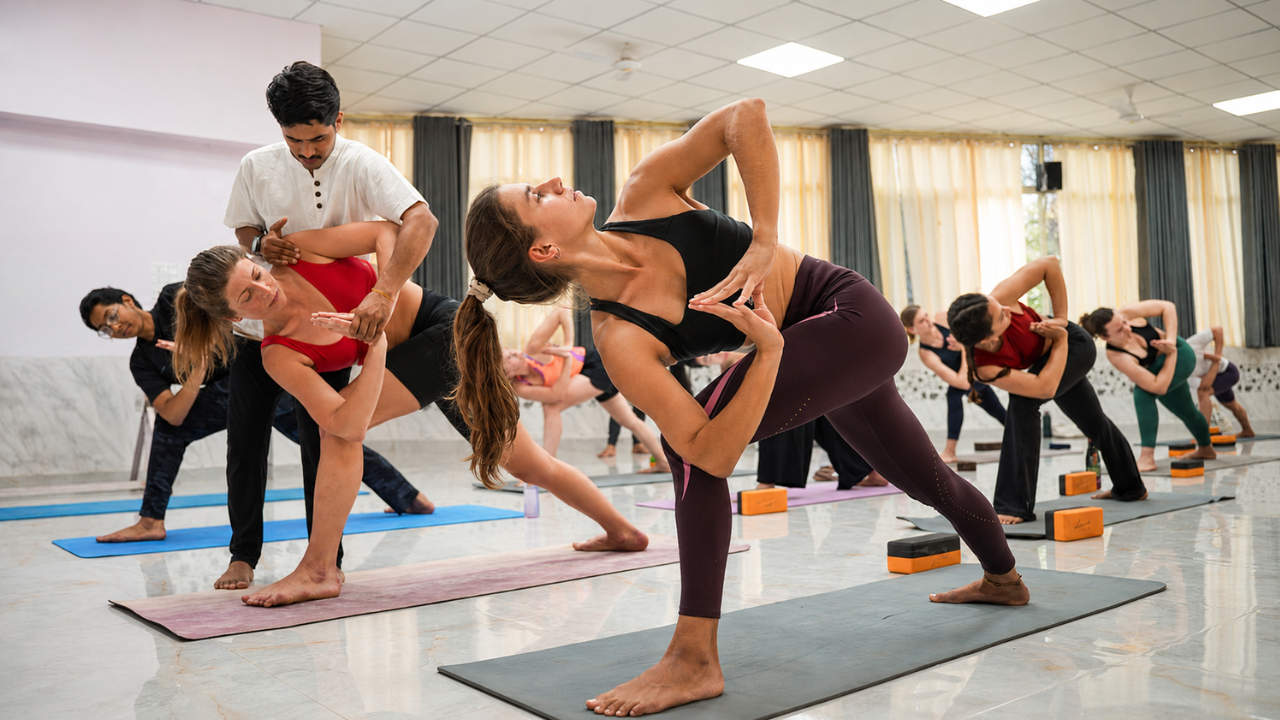
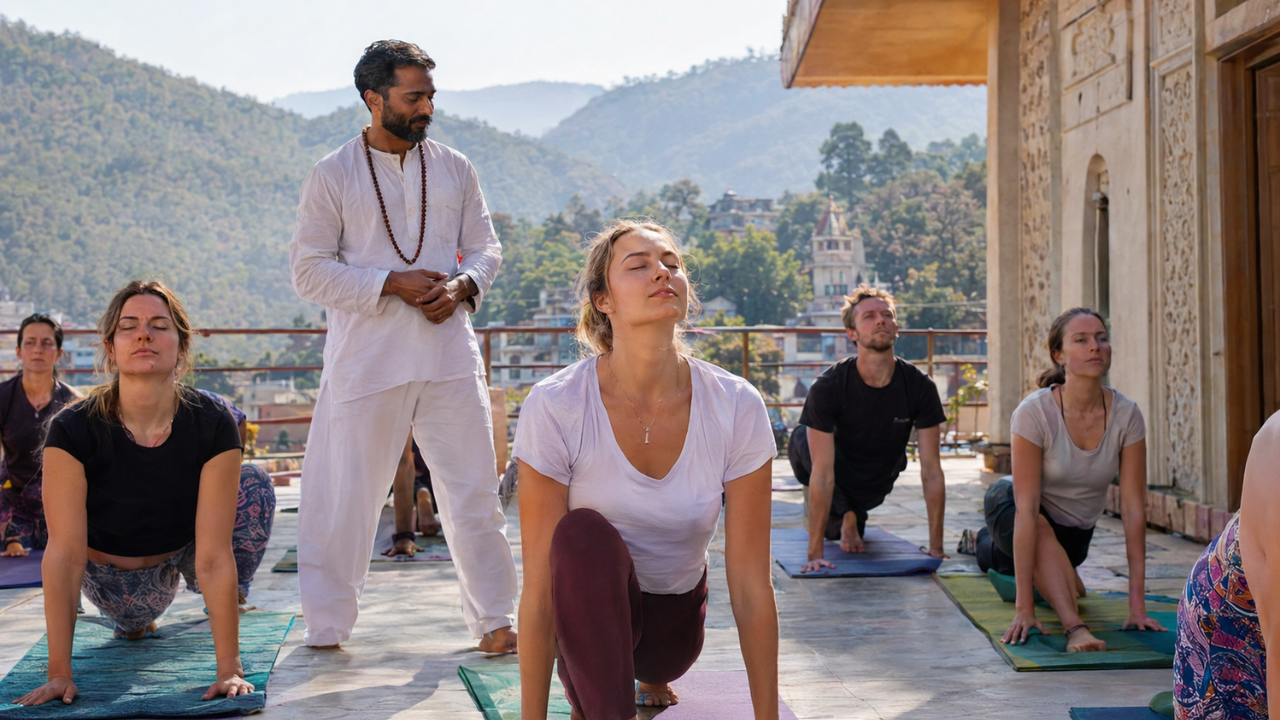
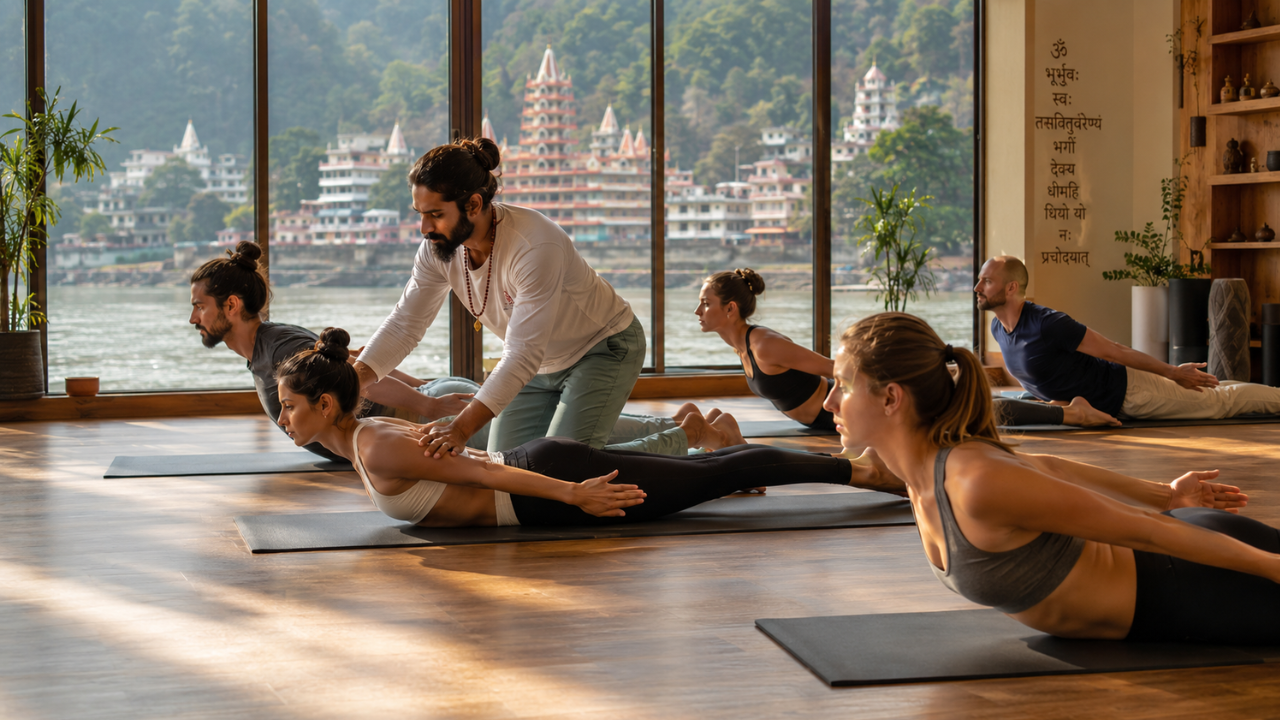
Want to build real back strength the right way? Come practice at Adishesh Yoga in Rishikesh. Our teachers guide every student with hands-on adjustments and clear, simple cues. You will not just try the pose — you will feel your back grow stronger, safely and steadily.
We teach traditional Hatha yoga in small groups. Every class is calm, focused, and personal. Whether you are stepping on a mat for the first time or deepening an existing practice — there is a class here that is right for you.
- Daily asana classes: Morning and evening sessions covering backbends, core poses, and full sequences with alignment guidance
- Back-strength sequences: Locust, Cobra, Bow — all taught in the right order with breath and focus
- Pranayama and meditation: Included in every class and retreat program to deepen your mind-body connection
- Small group sizes: Personal attention, real corrections, and a calm and supportive learning space
- Experienced teachers: Trained in classical yoga with real depth, genuine care, and years of teaching experience
Come to Rishikesh. Lie down, lift up, and feel your back come alive.
Frequently Asked Questions
Conclusion
Locust Pose is more than a simple lift. It is a full back-body workout — one that builds strength in the spine, opens the chest, and brings quick energy in just a few rounds.
Start small. Lift only what feels safe. Rest between rounds. None of that is cheating — it is how every strong back is built. Bit by bit, the lift gets higher. The strength stays.
If you want a teacher to watch your form and guide you safely — come practice at Adishesh Yoga in Rishikesh. We will help you build a strong, healthy back — one breath at a time.