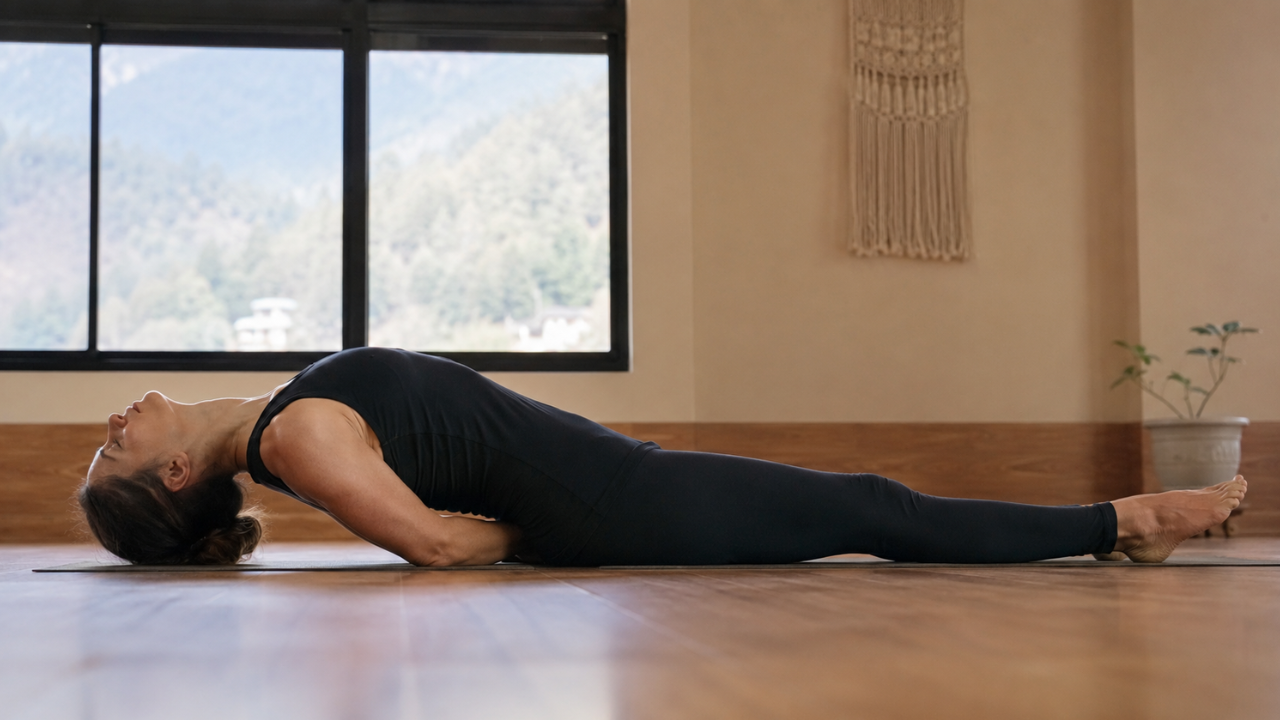
Fish Pose is a soft, easy backbend. You lie down, lift your chest, and let your throat and chest open up. It feels calm and gentle, like a slow stretch after a long day.
This pose is great after sitting all day at a desk. It opens tight shoulders, helps you breathe deeper, and brings a feeling of peace to the whole body.
What Is Fish Pose?
Fish Pose is called Matsyasana in Sanskrit. "Matsya" means fish. In this pose, the body looks a little like a fish floating gently in water — calm and open.
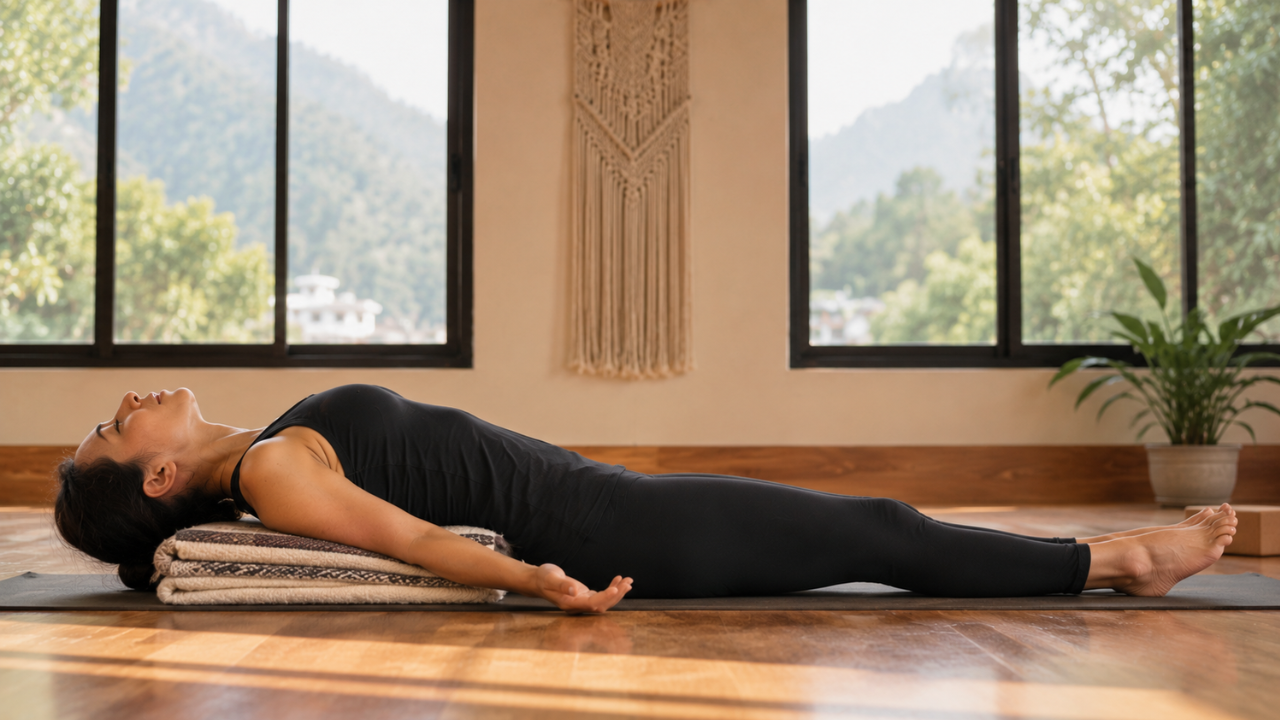
You lie flat on your back. The chest lifts up and opens. The back makes a small, soft arch. The top of the head touches the floor lightly. The legs stay relaxed and straight. It is a quiet, easy pose that opens the front of the body.
- Sanskrit name: Matsyasana
- Meaning: Fish Pose
- Pose type: Reclining backbend / chest opener
- Level: Beginner friendly
- Hold time: 15 to 60 seconds
- Part of: Hatha yoga, Restorative yoga, Yin yoga sequences
Fish Pose is often done after Bridge Pose or Shoulder Stand. It is a nice way to open the chest again after the body has been folded forward.
Benefits of Fish Pose
This simple pose gives the chest, neck, and shoulders a deep, gentle stretch. Here is what regular practice can give you.
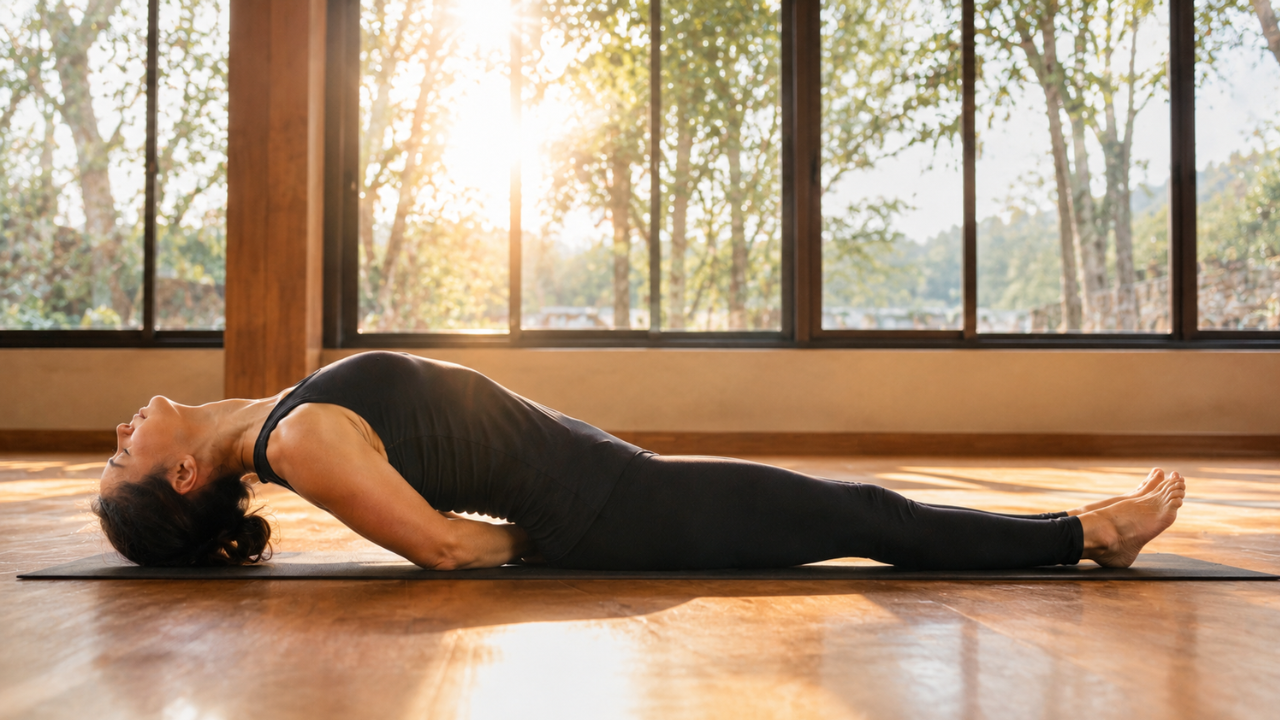
- Open chest: Stretches the chest wide, which can make breathing feel easier and deeper.
- Better posture: Helps fix rounded shoulders from sitting or using phones too much.
- Neck and throat stretch: Gently stretches the front of the neck and throat area.
- Calm mind: The slow backbend and steady breath help the mind feel calm and settled.
- Relieves back stiffness: A gentle stretch for the upper back and spine after long sitting.
- Opens shoulders: Loosens tight shoulders from desk work or carrying bags.
- Improves breathing: The open chest makes each breath feel fuller and slower.
- Good cool-down: Works well as a closing pose after a backbend practice.
People who practice Fish Pose often say their breathing feels lighter and their shoulders feel more open, even outside of yoga class.
How to Do Fish Pose — Step by Step
Go slow and stay gentle. Read all steps once, then try it on your mat.
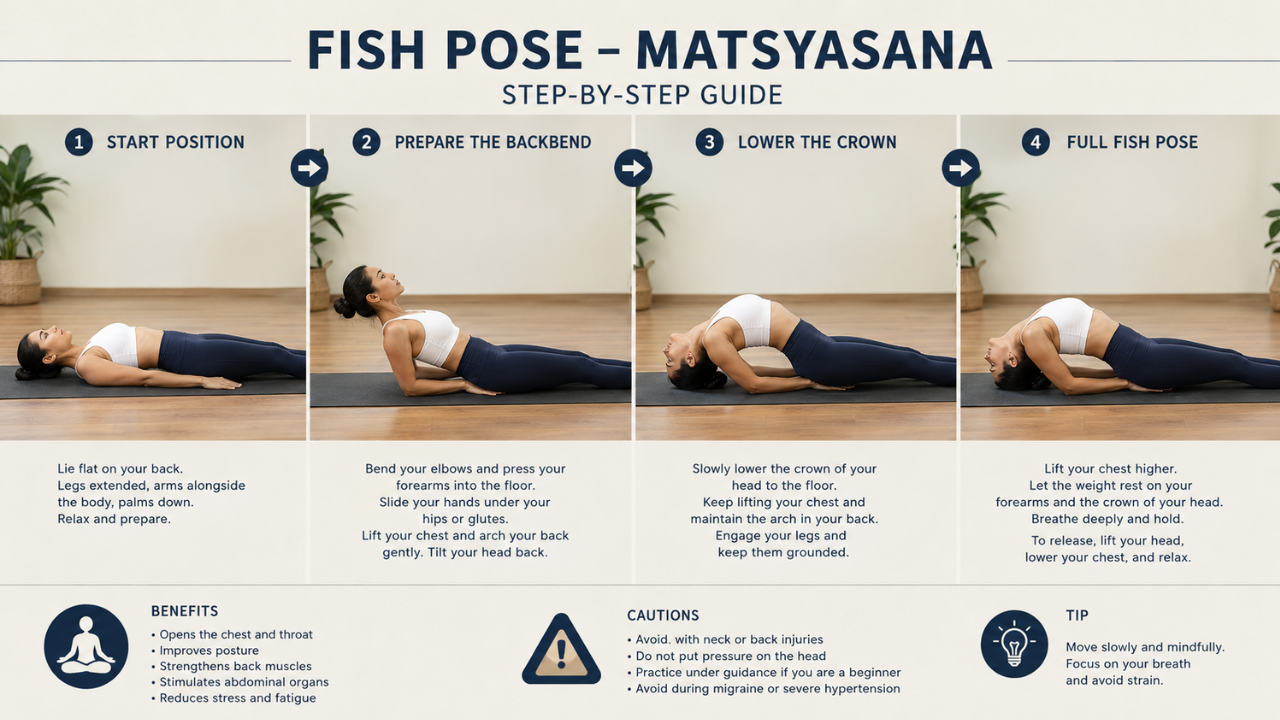
- Step 1: Lie flat on your back on the mat. Legs straight, arms by your sides.
- Step 2: Press your forearms and elbows into the floor, close to your body.
- Step 3: On an inhale, slowly lift your chest up toward the ceiling.
- Step 4: Let your head tilt back gently. Rest the top of the head lightly on the floor.
- Step 5: Keep most of your body weight on your forearms — not on the head or neck.
- Step 6: Open your chest wide. Let the collarbones spread out to the sides.
- Step 7: Keep the legs active and straight, feet relaxed.
- Step 8: Breathe slowly and stay here for a few breaths.
- Step 9: Hold for 15 to 30 seconds, breathing gently throughout.
- Step 10: To come out, press the forearms down, lift the head, and lower the body slowly.
Move slowly when you come in and out of this pose. The neck is sensitive, so never rush this stretch.
Key Alignment Tips for Fish Pose
Good alignment keeps the neck safe and makes the chest opening feel much better. Keep these points in mind.
- Forearms: Press them firmly into the floor. They should carry most of your weight, not the head.
- Head: Let it rest lightly on the floor — only a small amount of weight on top of the head.
- Neck: Keep the back of the neck long. Do not jam the neck or force the head back too far.
- Chest: Lift it up and open it wide, like the chest is the highest point of the body.
- Shoulders: Roll the shoulders down and back, away from the ears.
- Legs: Keep them straight and slightly active, feet relaxed and soft.
- Lower back: Keep a gentle arch — do not force a deep curve in the lower back.
- Breath: Stay slow and steady. If breathing feels hard, lower the chest slightly.
Focus on one cue at a time. The neck and forearm position matter most for a safe and comfortable Fish Pose.
Common Mistakes to Avoid
These mistakes are common with beginners. Avoiding them will protect your neck and make the pose feel much better.
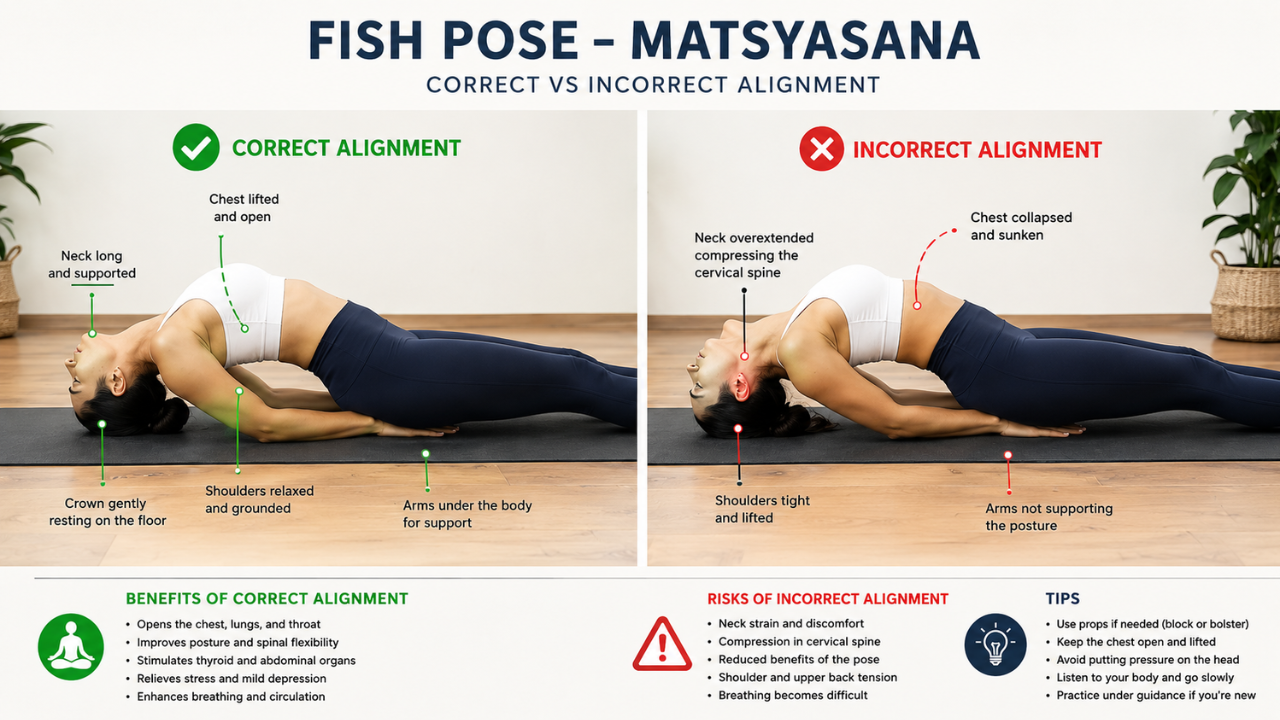
- Too much weight on the head: The head should only rest lightly. Most weight goes on the forearms.
- Forcing the backbend: The arch should be small and gentle, not deep and forced.
- Holding the breath: Many beginners hold their breath when the chest lifts. Keep breathing slow and steady.
- Tight shoulders near ears: Let the shoulders roll down and back, away from the neck.
- Legs too loose: Fully relaxed legs can make the pose feel unstable. Keep a small amount of activity in the legs.
- Rushing in or out: Sudden movements can strain the neck. Always move slowly into and out of the pose.
- Skipping props: Beginners often skip a blanket even when the neck feels tight. Props make this pose safer.
Easy Modifications for Beginners
If the full backbend feels too much right now, that is okay. These simple changes make the pose gentle and safe.
- Use a folded blanket: Place a folded blanket under your upper back. This lifts the chest without straining the neck.
- Keep head off the floor: If the neck feels tight, keep the head lifted slightly and do not touch the floor at all.
- Smaller lift: Lift the chest just a little. Even a small lift gives the chest-opening benefit.
- Support under the head: Place a thin cushion under the head if it feels uncomfortable on the floor.
- Bend the knees: If the lower back feels tight, bend the knees with feet flat on the floor.
Using a blanket or cushion is not cheating. It helps your body learn the open chest feeling safely, without any strain on the neck.
Tips to Make This Pose Feel Better
Small changes can make a big difference in this pose. Try these in your next practice.
- Warm up the shoulders first: Do some easy shoulder rolls or Cat-Cow before this pose to open the chest area.
- Press the forearms down: Strong forearm pressure helps lift the chest without straining the neck.
- Breathe into the chest: Feel each inhale open the chest a little more. Let it expand naturally.
- Keep eyes soft: Looking back can feel strange at first. Keep the eyes soft and relaxed.
- Stay short at first: Even 10 to 15 seconds is enough when starting out.
- Rest after the pose: Lie flat for a few breaths after coming out, to let the neck settle.
- Practice often: A few rounds of Fish Pose each week can slowly open tight shoulders and chest.
Who Should Be Careful with This Pose?
Fish Pose is gentle, but a few conditions need extra care.
- Neck injury: Avoid placing weight on the head. Use a blanket and keep the head lifted off the floor.
- Lower back pain: Bend the knees and keep the backbend small and gentle.
- High blood pressure: Keep the head lifted instead of dropping it back fully.
- Recent shoulder injury: Keep the lift small and stop if there is any sharp pain.
- Pregnancy: Skip deep backbends. Talk to a teacher for safe alternatives.
If you are unsure, practice with a yoga teacher. They can guide your body safely and suggest the right changes for you. Never push through pain in any yoga pose.
Quick Checklist — Is Your Pose Correct?
Run through this list while you are in the pose. If all of these feel right — your Fish Pose is good.
- Forearms are pressing firmly into the floor
- Head is resting lightly — not carrying body weight
- Chest is lifted and open
- Neck feels long, not jammed or tight
- Shoulders are rolling down and back
- Legs are straight and gently active
- Lower back has a small, easy arch
- Breath is slow and steady
- Face and jaw are relaxed
- No pain anywhere in the neck
Learn Fish Pose at Adishesh Yoga, Rishikesh
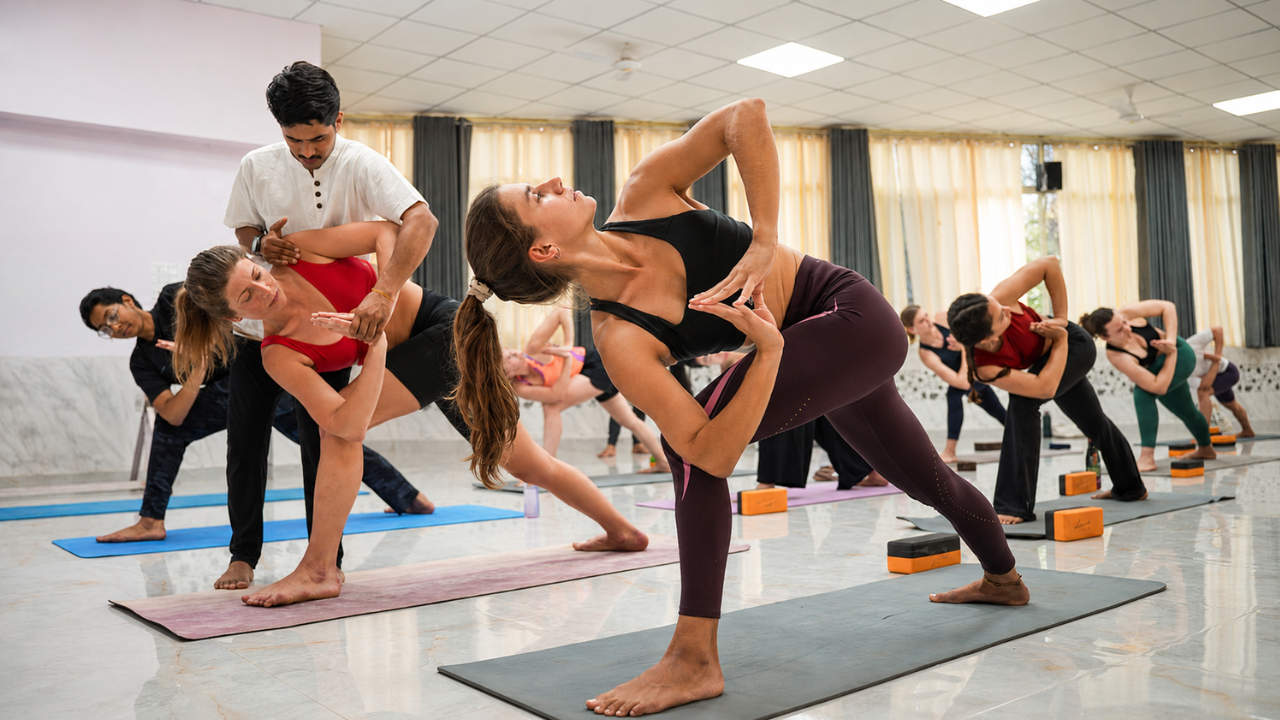
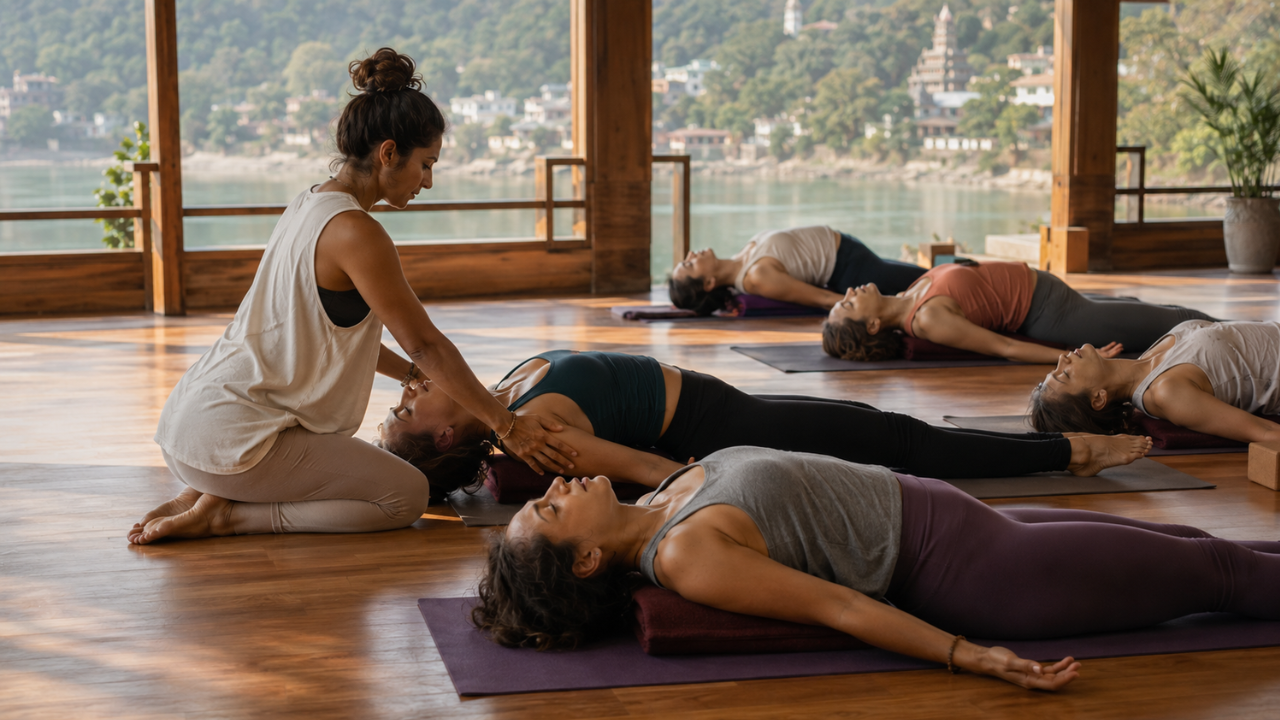
Want to feel the full benefit of Fish Pose? Come practice at Adishesh Yoga in Rishikesh. Our teachers guide every student with hands-on adjustments and simple, clear cues. You will not just try the pose — you will feel exactly how it should open your body.
We teach traditional Hatha yoga in small groups. Every class is calm, slow, and personal. Whether you are new to yoga or have practiced for years — there is a class here that fits you.
- Daily asana classes: Morning and evening sessions covering backbends, chest openers, and full sequences with alignment guidance
- Gentle backbend sequences: Fish Pose, Bridge Pose, Cobra Pose — taught in the right order with breath and care
- Pranayama and meditation: Included in every class and retreat program for deep relaxation
- Small group sizes: Personal attention, real corrections, and a calm, supportive space
- Experienced teachers: Trained in classical yoga with real depth, genuine care, and years of teaching experience
Come to Rishikesh. Lie down, open your chest, and breathe freely. Feel what yoga really means.
Frequently Asked Questions
Conclusion
Fish Pose is a small pose with a big feeling. It is a calm, gentle backbend that opens the chest, frees the shoulders, and helps you breathe deeper — all while lying down and relaxing.
Use a blanket. Keep the lift small. Move slowly. None of that is cheating — it is how the body learns this gentle open shape, step by step.
If you want a teacher to guide your form safely — come practice at Adishesh Yoga in Rishikesh. We will help you breathe easier — in Fish Pose and in life.