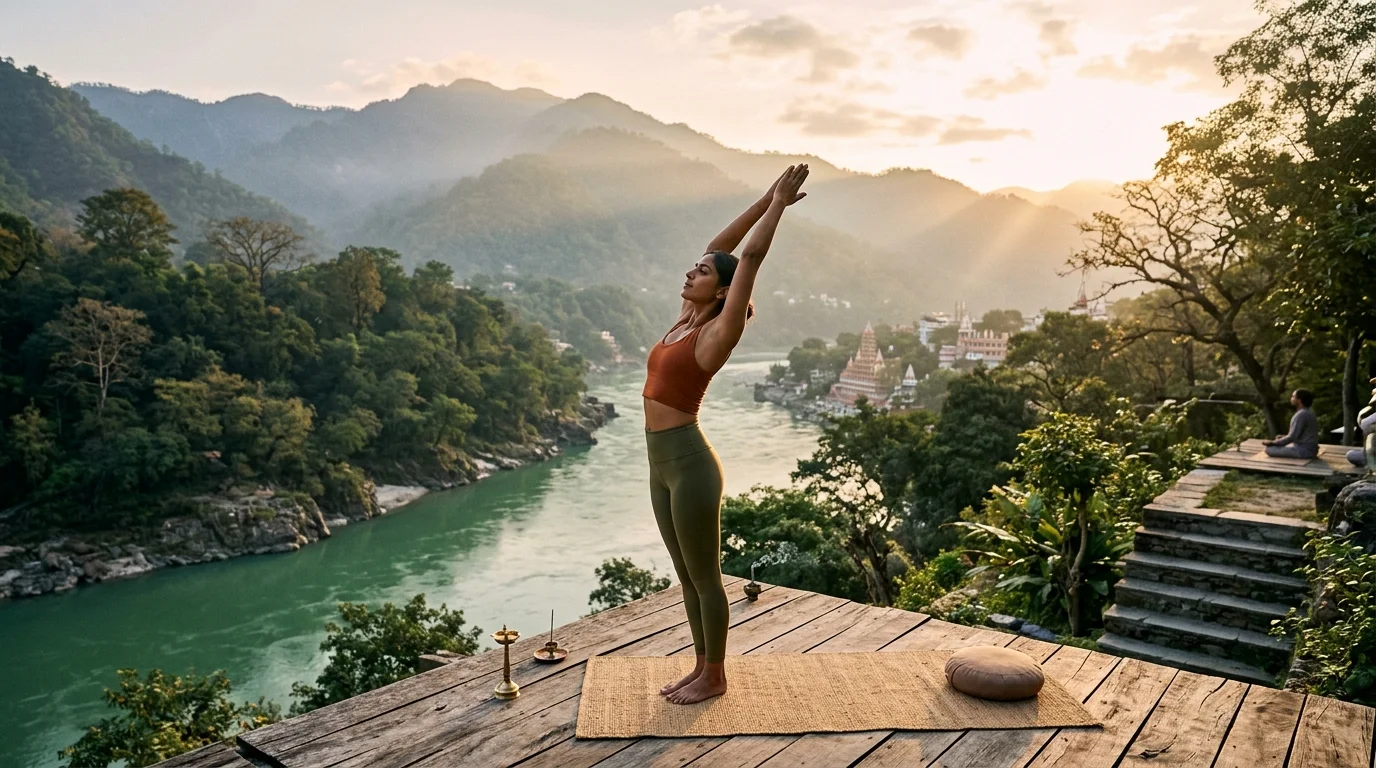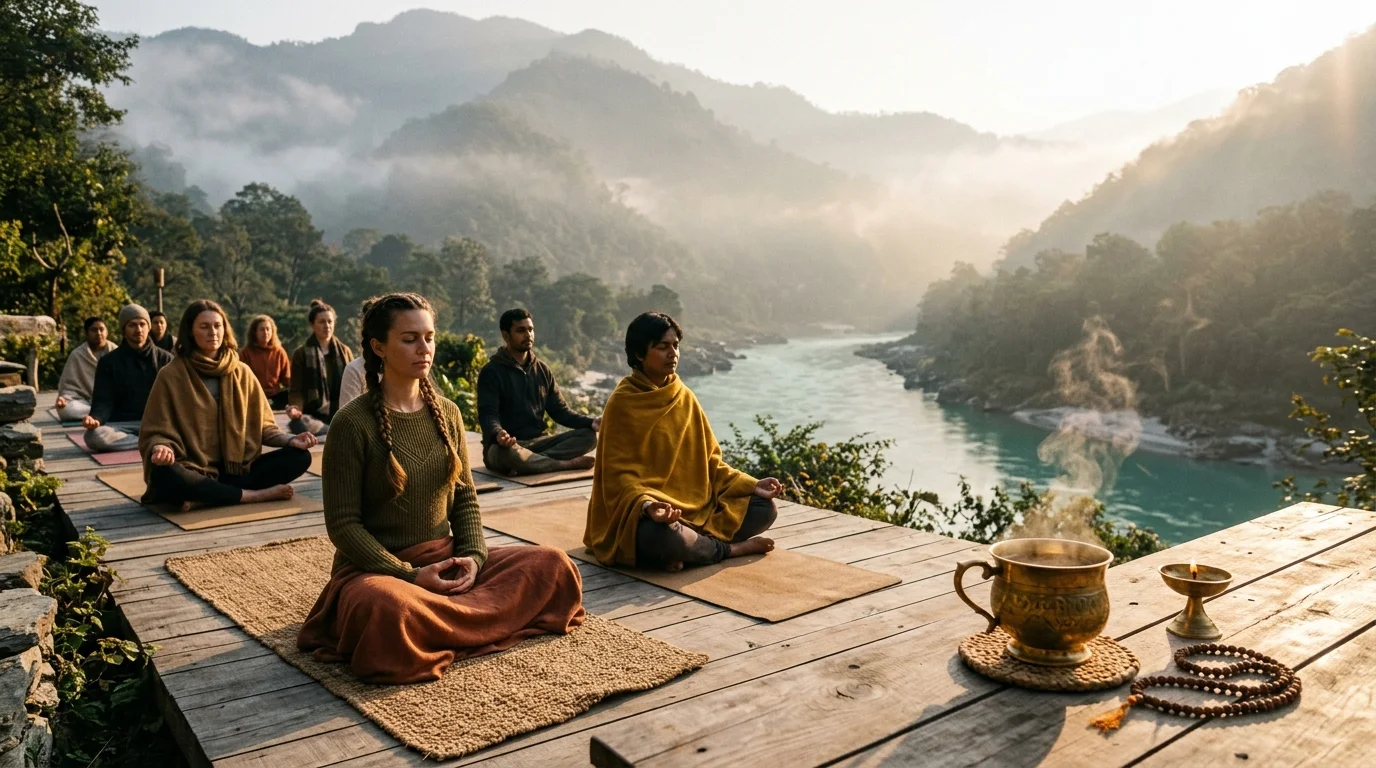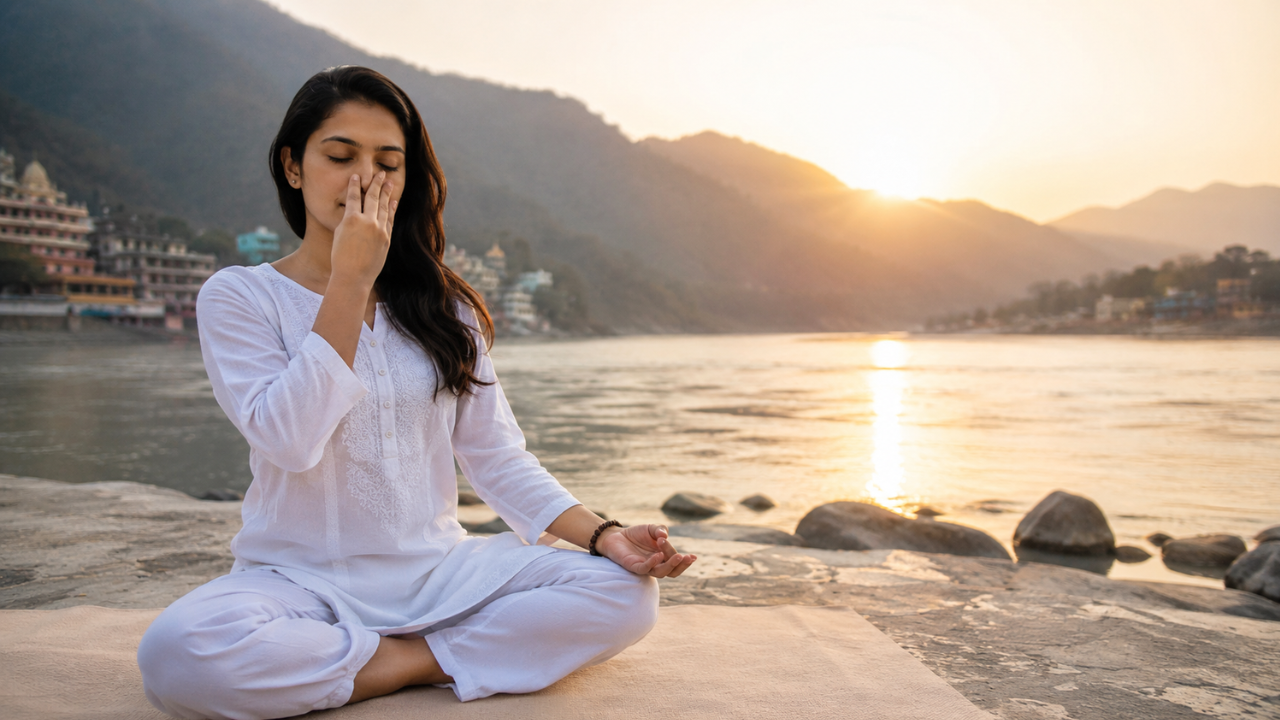
Most people breathe without thinking about it. That is normal. But when you start paying attention to your breath — something changes. The mind gets quiet. The body relaxes. You feel more alive.
That is what pranayama does. It is the yoga practice of breathing with awareness and control. And you do not need years of experience to start. These 5 simple techniques are made for complete beginners.
What Is Pranayama?
Pranayama comes from two Sanskrit words. "Prana" means life energy — the force that keeps you alive. "Ayama" means to extend, expand, or control. So pranayama means controlling your life energy through breath.
In yoga, the breath is the bridge between the body and the mind. When you breathe slowly and with awareness, your nervous system calms down. Stress fades. Focus becomes sharper. Energy becomes steadier.
- Origin: Ancient yoga tradition, mentioned in the Yoga Sutras of Patanjali
- Meaning: Extension and control of life energy through breath
- Practice type: Seated breathing exercises
- Level: Suitable for all — including complete beginners
- Daily time needed: Even 5 to 10 minutes gives real results
- Best time to practice: Early morning, on an empty stomach
You do not need to be flexible. You do not need to know yoga postures. You just need a quiet spot, a comfortable seat, and a few minutes. That is enough to begin.
Why Every Beginner Should Try Pranayama
Before we go into the techniques — here is why pranayama is worth your time. These are real benefits, not just theory.
- Reduces stress fast: Slow breathing activates the body's calm response. You feel it within minutes.
- Clears the mind: Regular pranayama reduces mental noise and helps you think more clearly.
- Better sleep: Evening pranayama calms the nervous system and helps you fall asleep more easily.
- More energy: Deep breathing brings more oxygen into the blood. You feel awake and refreshed without caffeine.
- Stronger lungs: Pranayama trains the breathing muscles. Lung capacity grows over time.
- Lowers anxiety: It slows the heart rate and reduces the stress hormone cortisol in the body.
- Prepares you for meditation: A few minutes of pranayama before sitting quietly makes meditation much easier and deeper.
- Supports the immune system: Better oxygen flow and a calmer nervous system both help the body stay healthy.
Most beginners notice a difference within the first week. Not months — just a few days of consistent practice. That is how powerful breath really is.
Before You Begin — Simple Rules for Beginners
Pranayama is safe. But a few simple rules make your practice more effective and comfortable — especially in the beginning.
- Sit comfortably: Cross-legged on the floor, on a cushion, or on a chair — any position where your spine is tall and you can relax.
- Empty stomach: Practice at least 2 to 3 hours after a meal. Morning practice before breakfast is best.
- Quiet space: Find a calm spot — indoors or outdoors. Less noise means more focus.
- Breathe through the nose: Unless the technique says otherwise, always inhale and exhale through the nose.
- Never force the breath: If something feels uncomfortable or dizzy — stop. Rest. Breathe normally. Start again gently.
- Start short: 5 minutes is enough at the start. Build slowly over days and weeks.
5 Pranayama Techniques for Beginners
These five are the best starting point. Each one is simple, safe, and gives you real results quickly. Read each one, then try it on your mat.
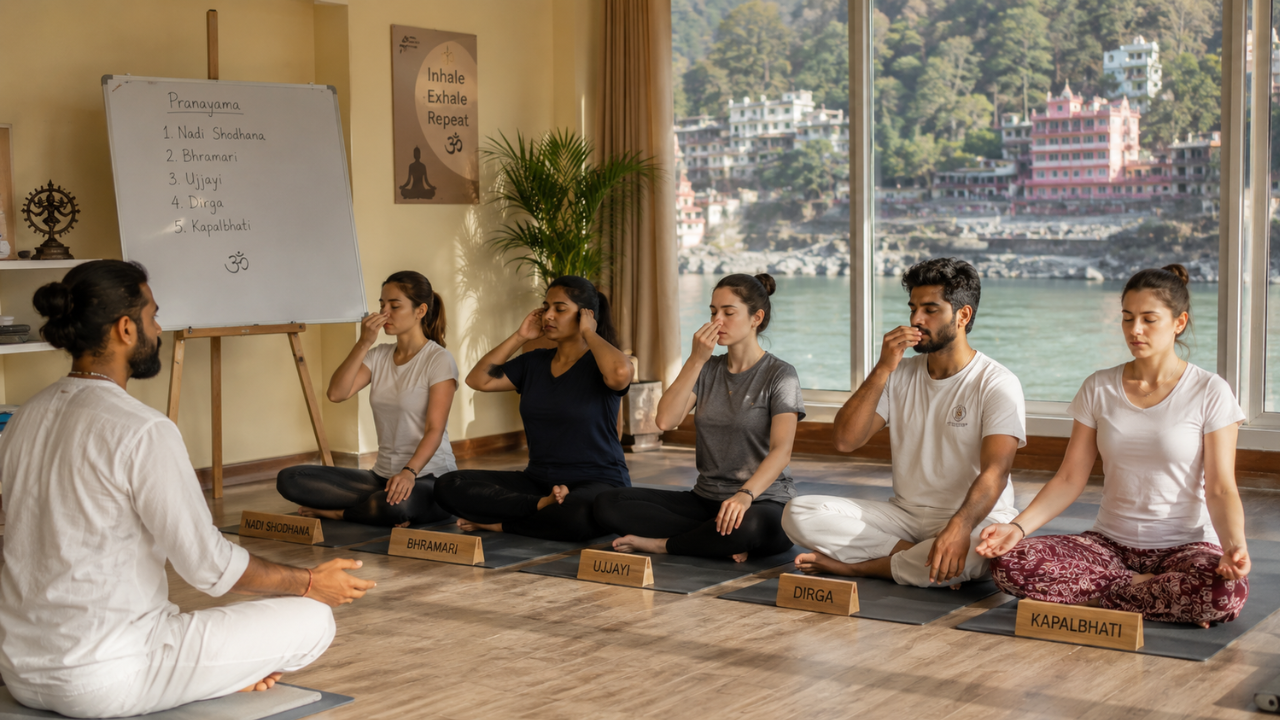
1. Dirga Pranayama — Three-Part Breath
This is the most basic pranayama. It teaches you how to use your full lung capacity — something most people never do in daily life.
Why beginners love it: It is slow, calming, and easy. You can feel the difference after just 3 breaths.
- Step 1: Sit tall. Place one hand on the belly and one hand on the chest.
- Step 2: Inhale slowly. First, fill the belly. Then the ribcage. Then the chest — all in one smooth inhale.
- Step 3: Exhale slowly in reverse — chest first, then ribs, then belly.
- Step 4: Repeat 5 to 10 times. Keep the breath smooth and never rushed.
- Best for: Stress, shallow breathing, first-time pranayama learners
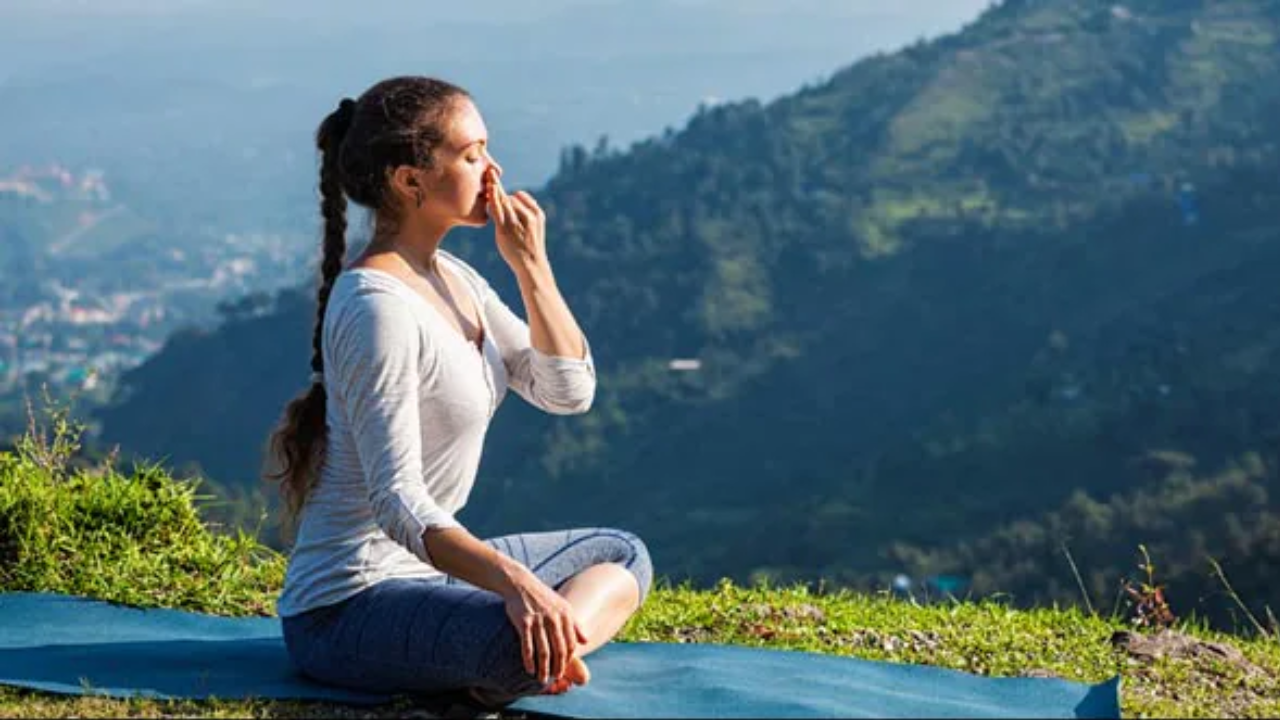
2. Nadi Shodhana — Alternate Nostril Breathing
Nadi Shodhana is one of the most important pranayamas in all of yoga. It balances the left and right sides of the brain, calms anxiety, and brings the mind to a clear, steady place.
Why beginners love it: It works fast. Even 5 minutes leaves you feeling centered and calm.
- Step 1: Sit tall. Rest the left hand on the knee. Bring the right hand to the face — use the thumb for the right nostril and the ring finger for the left.
- Step 2: Close the right nostril with the thumb. Inhale slowly through the left nostril.
- Step 3: Close both nostrils briefly. Then release the thumb — exhale through the right nostril.
- Step 4: Inhale through the right nostril. Close both briefly. Exhale through the left. That is one round.
- Step 5: Do 5 to 10 rounds. Keep the breath slow and even on both sides.
- Best for: Anxiety, mental stress, improving focus, preparing for meditation
3. Bhramari — Humming Bee Breath
Bhramari is the pranayama where you make a gentle humming sound on the exhale — like a bee. That vibration is deeply calming for the nervous system and the brain.
Why beginners love it: It is very easy to learn. And the humming sound immediately quiets a busy, stressed mind.
- Step 1: Sit comfortably. Close the eyes. Take a slow, natural inhale through the nose.
- Step 2: On the exhale, make a soft humming sound — like "hmmm" — through the closed lips. Feel the vibration in the face and head.
- Step 3: Keep the exhale long and smooth. Let the hum last for the full exhale.
- Step 4: Repeat 5 to 10 times. You can cover the ears with the thumbs to hear the vibration more deeply.
- Best for: Anxiety, headaches, poor sleep, emotional stress, overactive mind
4. Ujjayi — Ocean Breath
Ujjayi breath makes a soft, ocean-like sound in the back of the throat. It warms the body from the inside, sharpens focus, and creates a moving meditation during yoga practice.
Why beginners love it: It is used in most yoga classes. Once you learn it, it makes every pose feel better and more connected.
- Step 1: Breathe in and out through the mouth first. Exhale as if fogging a mirror — make a soft "hhh" sound.
- Step 2: Now close the mouth and do the same sound through the nose. You will hear a soft ocean sound in the throat on the exhale.
- Step 3: Apply the same slight constriction on the inhale too. The sound is now present on both inhale and exhale.
- Step 4: Practice 5 to 10 slow breaths. The sound should be soft — only you can hear it, not the whole room.
- Best for: Yoga classes, focus, warming the body, calming the mind during movement
5. Kapalabhati — Skull-Shining Breath
Kapalabhati is more energizing than the others. It wakes up the body, clears the lungs, and fires up the digestive system. "Kapala" means skull — this breath is said to make the mind shine and clear.
Why beginners love it: It feels like a reset. After 2 minutes of Kapalabhati, the mind feels sharp and the body feels awake — without any coffee.
- Step 1: Sit tall. Take one natural inhale through the nose to start.
- Step 2: Exhale sharply through the nose. Pull the belly in quickly as you exhale — like a short, fast pump.
- Step 3: The inhale happens naturally and passively. Do not force it — just let the belly relax and air flows in.
- Step 4: Start slowly — about 1 exhale per second. Do 20 rounds, then take a normal breath. That is one round.
- Step 5: Beginners: start with just 1 round of 20 pumps. Build slowly over weeks.
- Best for: Low energy, sluggish digestion, mental fog, early morning practice
- Avoid if: You are pregnant, have high blood pressure, or have recent abdominal surgery
How to Sequence These 5 Techniques
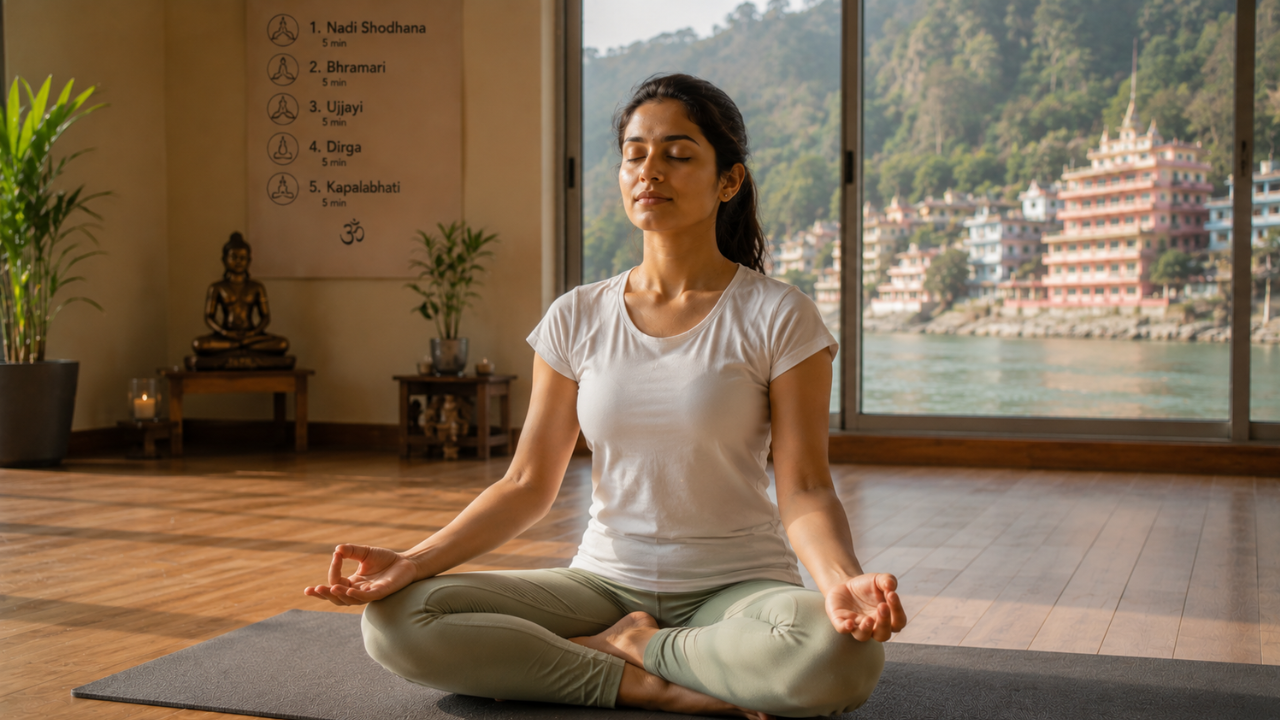
You do not have to do all 5 every day. But if you want a complete practice, here is a simple 15-minute beginner sequence that works beautifully.
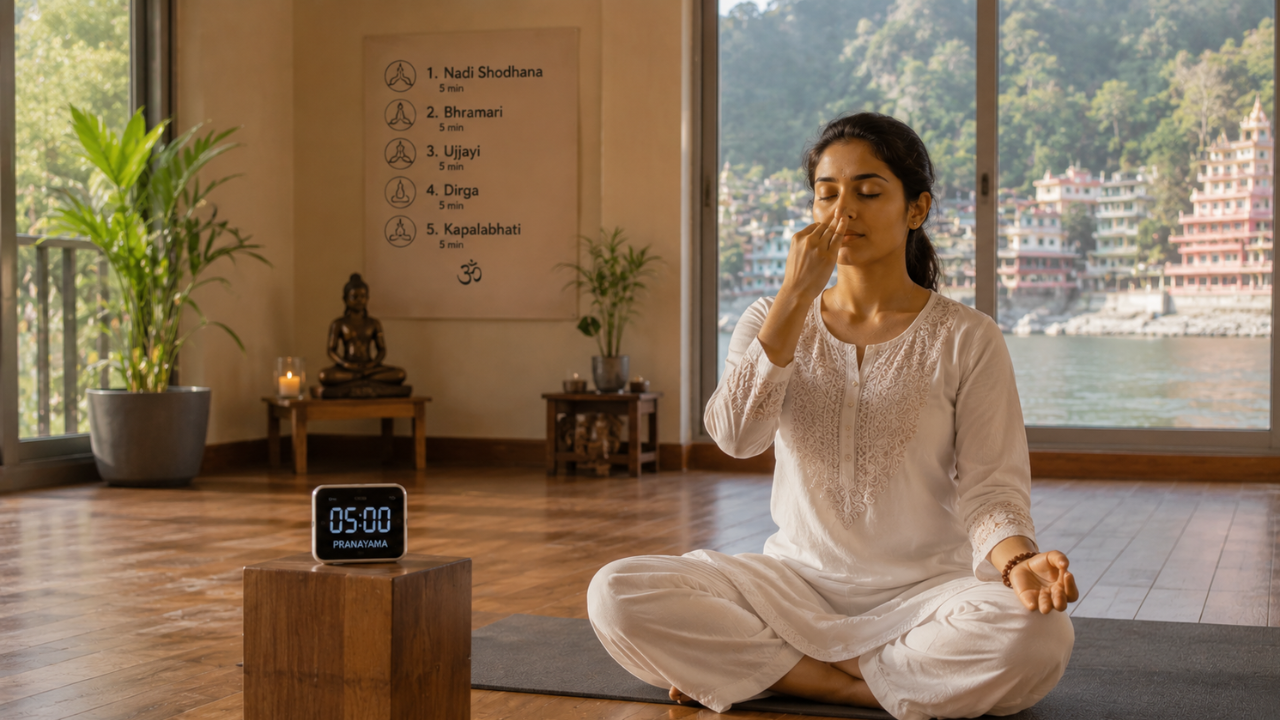
- 1. Dirga (3 min): Start here. Settle the body. Fill the lungs fully. Arrive in your practice.
- 2. Kapalabhati (2 min): Wake up the energy. Clear the lungs. Fire up the belly.
- 3. Nadi Shodhana (5 min): Balance left and right. Calm the mind. Prepare for stillness.
- 4. Ujjayi (2 min): Deepen the breath. Create internal warmth. Sharpen focus.
- 5. Bhramari (3 min): Close the practice. Hum gently. Let the mind go completely quiet.
Sit quietly for 1 to 2 minutes at the end. Just breathe naturally. Feel the stillness. That quiet moment at the end is part of the practice — do not skip it.
Common Mistakes Beginners Make
These small mistakes are very common. Knowing them in advance saves you a lot of frustration.
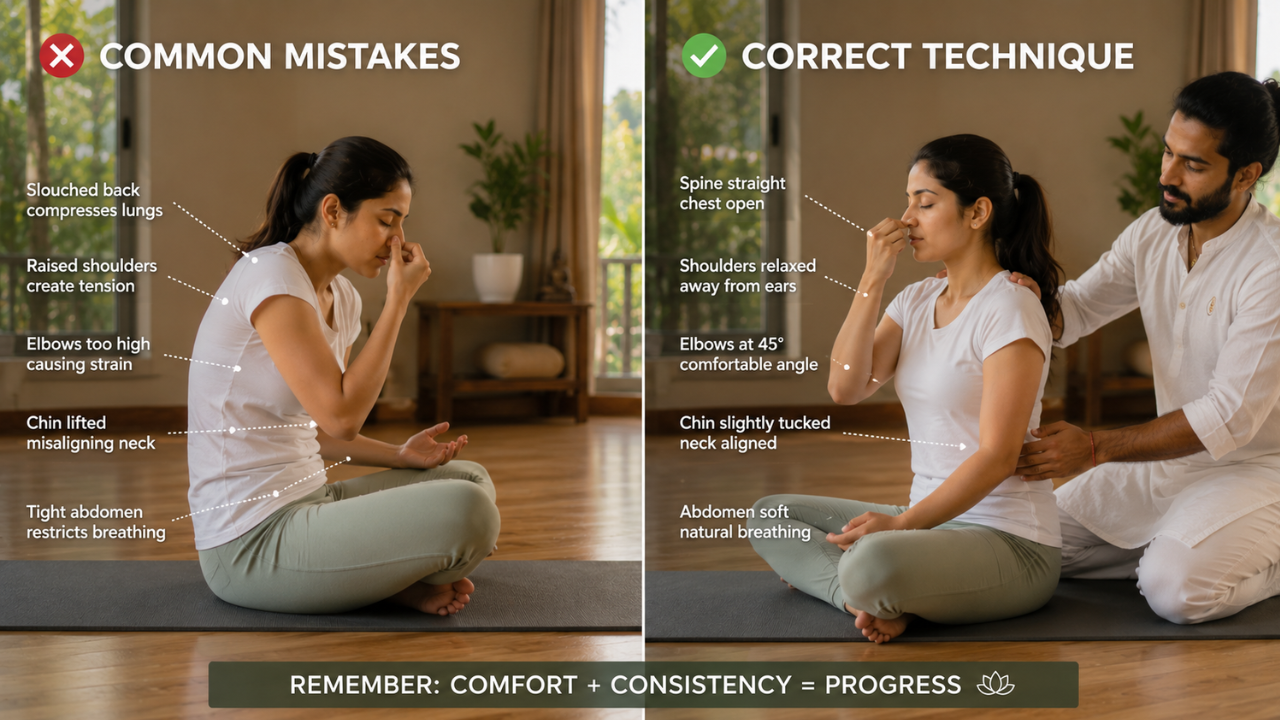
- Forcing the breath: Pranayama should never feel like a struggle. If you feel tightness or dizziness — ease off and breathe normally.
- Holding the spine bent: A slouched spine compresses the lungs. Sit tall every time — this is non-negotiable in pranayama.
- Going too fast too soon: More rounds are not better if the breath quality suffers. Slow and steady always wins.
- Skipping the rest at the end: Those quiet minutes after practice are where the real benefits settle into the body. Do not rush away.
- Practicing with a full stomach: This creates real discomfort — especially with Kapalabhati. Always practice before eating.
- Inconsistent practice: One long session per week is less effective than 10 minutes every day. Daily practice is the real key.
- Mouth breathing by mistake: Keep the mouth closed unless the technique specifically asks for mouth breathing. The nose filters and warms the air.
Who Should Be Careful with Pranayama?
Pranayama is safe for most people. But some conditions need a bit more care — especially with stronger techniques.
- Pregnancy: Avoid Kapalabhati and strong breath retention. Stick to Dirga, Nadi Shodhana, and Bhramari — all gentle and safe.
- High blood pressure: Avoid long breath holds and fast techniques. Nadi Shodhana and Bhramari are both good choices here.
- Asthma or respiratory conditions: Start very gently with Dirga only. Build slowly. Always have a doctor's guidance for stronger techniques.
- Recent surgery: Avoid Kapalabhati and any strong abdominal engagement until fully healed.
- Vertigo or inner ear issues: Avoid fast breathing. Slow, gentle techniques like Bhramari and Nadi Shodhana are safe.
If you are unsure — always ask a yoga teacher or your doctor first. A good teacher will give you the right technique for your body and your current health.
Quick Checklist — Are You Practicing Correctly?
Before and during your session, check these points. If all of them are true — your pranayama practice is on the right track.
- Stomach is empty — at least 2 hours since the last meal
- Spine is tall and relaxed — not hunched or stiff
- Eyes are closed and face is soft
- Breathing through the nose (unless told otherwise)
- Breath feels smooth — never forced or tight
- Mind is following the breath — not drifting to tasks
- Body feels relaxed from the shoulders down
- No dizziness or discomfort — if yes, rest and breathe normally
- Ending with 1 to 2 minutes of quiet, natural breathing
- Practicing consistently — even just 5 minutes counts
Learn Pranayama at Adishesh Yoga, Rishikesh
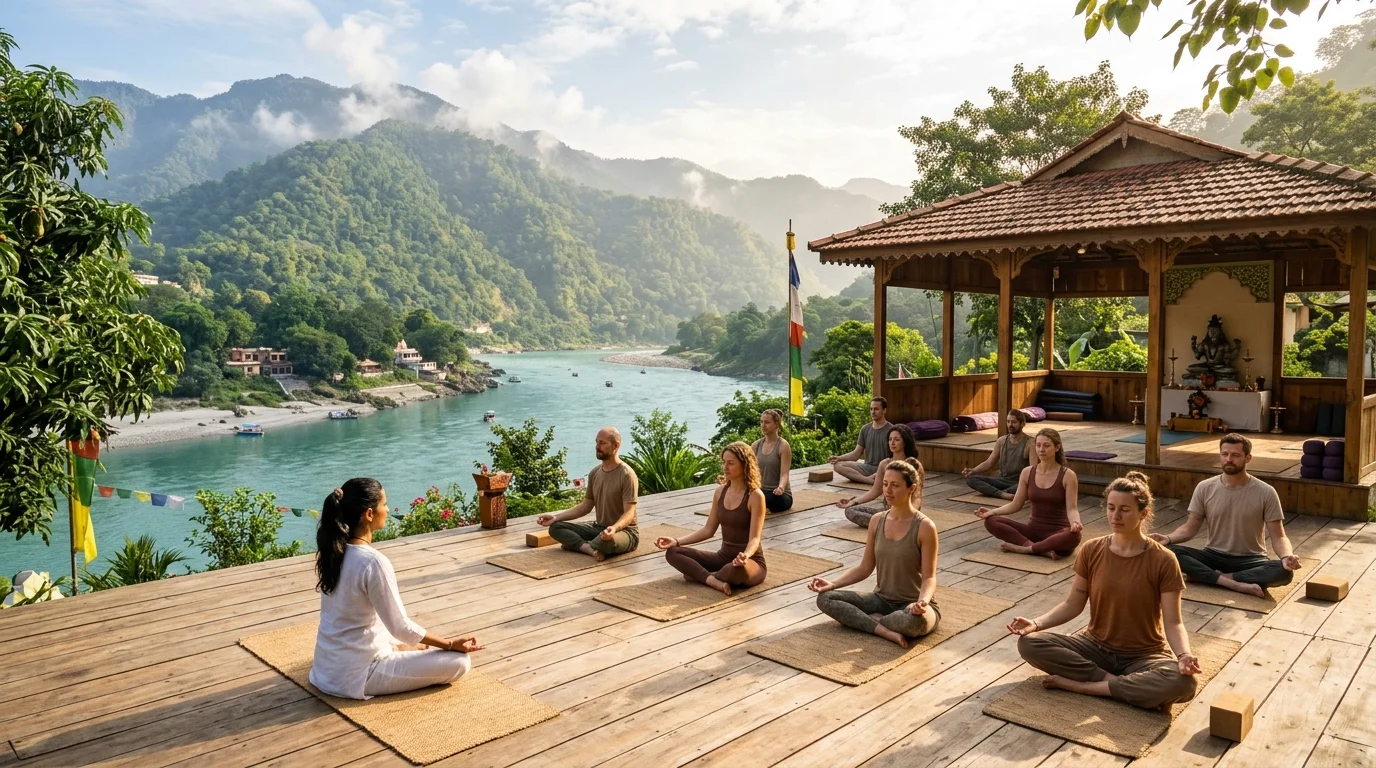
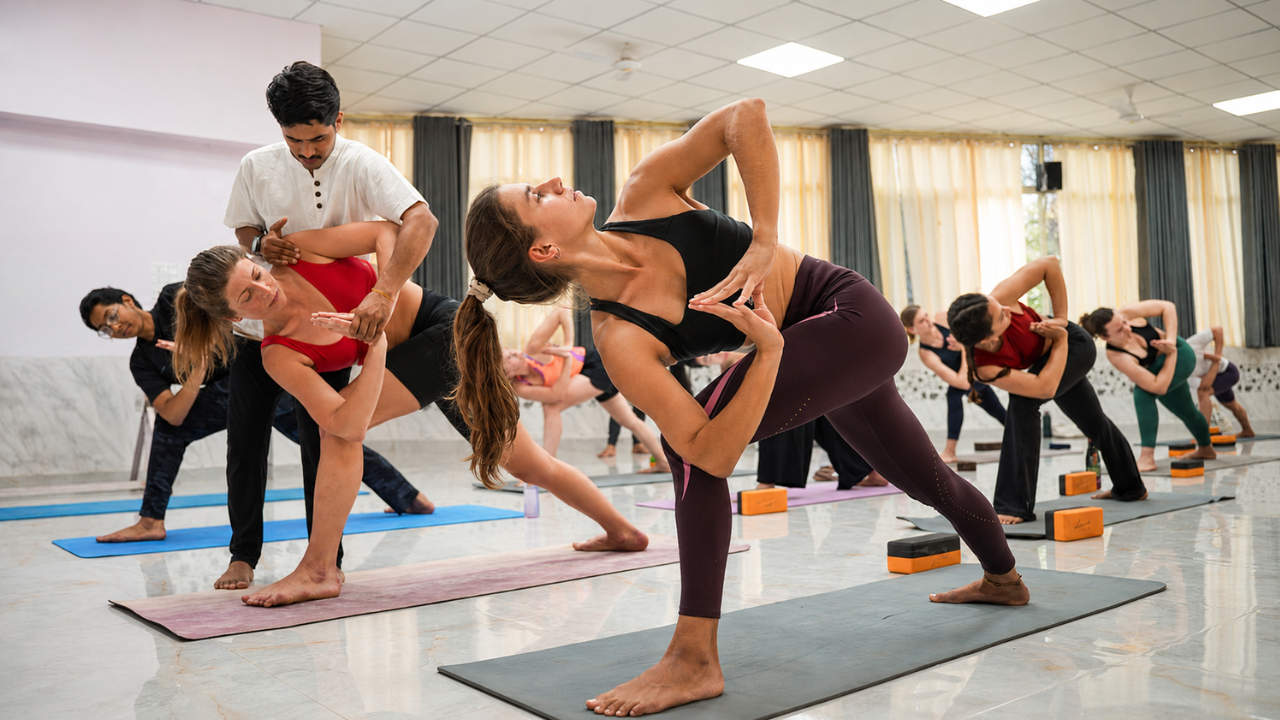
Reading about pranayama is a great start. But practicing with a teacher beside you — that is where the real learning happens. At Adishesh Yoga in Rishikesh, we teach pranayama the traditional way — slowly, carefully, and with full attention on each student.
Every class is small. Every student gets personal guidance. Whether you are breathing consciously for the first time or deepening a practice you already have — there is space for you here.
- Daily pranayama classes: Morning sessions covering all 5 beginner techniques with breath awareness and proper sequencing
- Beginners welcome: No yoga experience needed — we start from the very beginning and go at your pace
- Nadi Shodhana and Bhramari focus: The two most calming techniques taught in depth with personalized corrections
- Meditation integration: Pranayama leads naturally into meditation — both are part of every class
- Traditional teaching: Rooted in classical yoga with real depth, care, and decades of teaching experience
Come to Rishikesh. Sit beside the Ganga. Breathe deeply. Let the practice begin.
Frequently Asked Questions
Conclusion
You already have the most important tool for pranayama — your breath. It is with you right now, and it has been with you your whole life. Pranayama just teaches you how to use it on purpose.
Start with Dirga. Try Nadi Shodhana tomorrow. Add Bhramari when you feel ready. Five minutes a day is all it takes to feel the difference. The practice grows naturally from there.
If you want personal guidance from an experienced teacher — come and sit with us at Adishesh Yoga in Rishikesh. We will show you how to breathe in a way that changes everything.
Explore Authentic Yoga in Rishikesh with Adishesh Yoga
Deepen your meditation and breathwork on the sacred banks of Mother Ganga. Study authentic yogic philosophy and traditional Hatha & Vinyasa under lead instructor Vikas Negi.