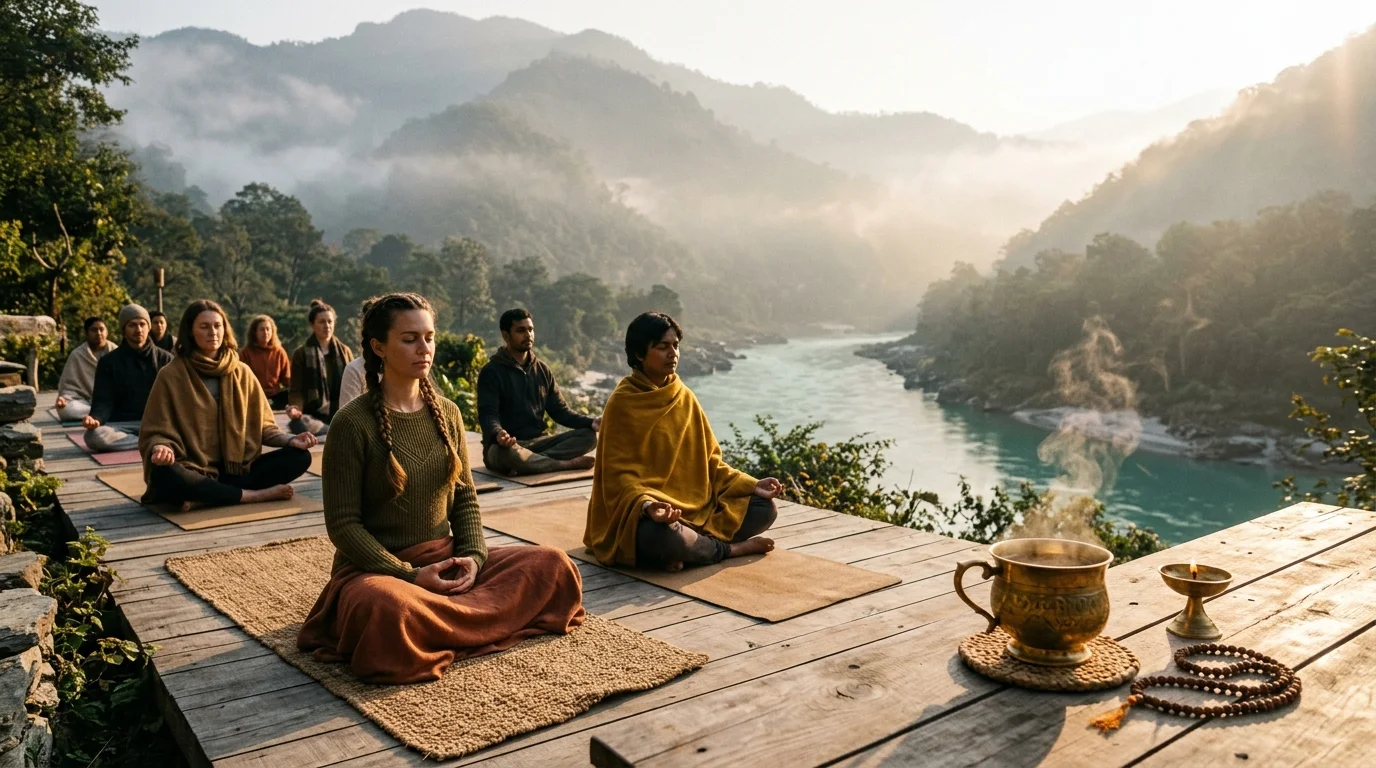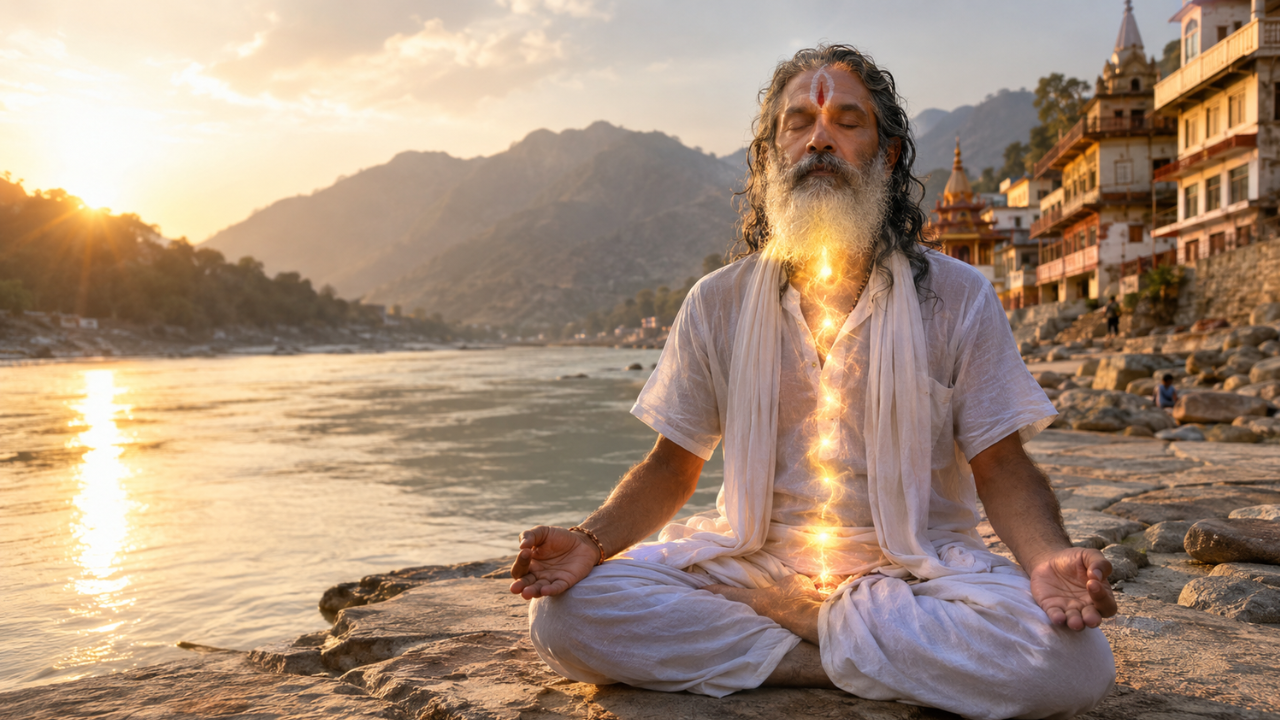
Something shifts. The spine gets warm. The breath deepens on its own. You feel electricity moving up your back — and for a moment, everything goes still.
That might be Kundalini. And if it is — you are not alone. Thousands of people across the world go through this. But most do not know what it is, what to expect, or how to handle it well. This guide explains all of that — simply and honestly.
What Is Kundalini Awakening?
In the yoga tradition, Kundalini is a dormant energy that lives at the base of the spine — in the area of the Muladhara chakra. The word "Kundalini" comes from Sanskrit and means "coiled one". It is described as a serpent coiled three and a half times, resting quietly until conditions are right for it to rise.
When Kundalini rises — through the central energy channel called Sushumna Nadi — it passes through each chakra and eventually reaches the crown of the head. This is what is called Kundalini awakening. It brings deep shifts in body, mind, emotions, and awareness.
- Origin: Ancient yogic and Tantric tradition — described in the Hatha Yoga Pradipika, the Upanishads, and the Shiva Samhita
- Meaning: The rising of dormant life energy (Shakti) from the base of the spine to the crown
- Nature: Can be gradual and gentle, or sudden and intense — depends on the person and their preparation
- Who experiences it: Meditators, yoga practitioners, and sometimes people with no spiritual background at all
- Is it rare: Less rare than people think — many people have partial or full experiences without naming it
- Best support: A genuine teacher, grounding practices, and a calm lifestyle
Kundalini awakening is not a metaphor. It is a real physiological and psychological experience — one that has been documented across cultures, traditions, and centuries.
Physical Signs of Kundalini Awakening
Kundalini awakening is felt in the body first. These are the most common physical signs — and they are real, not imagined. Many people feel confused or scared when they first notice them. Knowing what they are helps a lot.

- Heat in the spine: A warm or burning sensation that moves upward along the back — often the first physical sign people notice.
- Tingling and vibration: Electric-like tingling in the hands, feet, face, or entire body. Some people feel it as gentle waves, others as strong pulses.
- Spontaneous body movements: The body may rock, shake, or move on its own during meditation — these are called "kriyas" and are a natural release of blocked energy.
- Pressure at the crown: A feeling of pressure, fullness, or pulsing at the top of the head — especially at the Sahasrara chakra.
- Breath changes: The breath becomes deep and slow on its own. Some people experience brief natural breath suspension — called Kumbhaka — without trying.
- Altered sleep: Needing less sleep, vivid dreams, or waking between 2 and 4 AM feeling wide awake and unusually clear.
- Changes in appetite: Strong pull toward lighter food. The body naturally starts rejecting heavy, processed, or meat-based foods.
Not all of these happen at once. Most people experience two or three of these signs in the beginning. The experience is always unique to the person.
Emotional and Mental Symptoms
Kundalini does not just move through the body — it moves through the mind and heart too. The emotional and mental symptoms are often the most surprising for people. Here is what to expect.
- Sudden emotional release: Crying without a clear reason. Laughter that comes from very deep inside. Old buried emotions rising to the surface and passing through.
- Waves of bliss: Moments of deep peace, love, or joy that feel bigger than any personal reason. Some people describe it as feeling connected to everything.
- Heightened sensitivity: Sounds feel louder. Lights feel brighter. Other people's emotions feel closer. Crowded or noisy places can feel overwhelming.
- A need for solitude: A strong desire to spend time alone, in nature, or in silence. Social activity that used to feel normal now feels draining.
- Questioning everything: Old beliefs, relationships, career, and lifestyle all get looked at differently. What felt important before may suddenly feel hollow.
- Clarity and insight: Sudden clear understanding of things that were confusing before. Solutions to long-standing problems appear without effort.
- Anxiety or restlessness: Especially early on — the energy can feel like too much to hold. This usually settles with grounding practices and patience.
The emotional symptoms are not a problem. They are the mind and heart cleaning themselves out. The best thing to do is not resist — let it move through. Grounding practices help a lot during this time.
Spiritual Signs of Kundalini Rising
These signs go beyond the body and mind. They point to a shift in how a person experiences reality itself. This is what the yogic texts mean when they say Kundalini changes everything.

- Seeing inner light: Bright light, colors, or geometric shapes appearing during meditation — especially at the Ajna chakra between the eyebrows.
- Expanded awareness: Moments where the sense of being a separate person fades. A deep feeling of oneness with everything around you.
- Synchronicities: Meaningful coincidences that feel too precise to be random. The right people, teachers, or books appearing at exactly the right time.
- Spontaneous meditation states: Falling into deep stillness or absorption without trying — sometimes in the middle of ordinary daily activities.
- A sense of purpose: A clear feeling that life has direction and meaning — even if you cannot yet put it into words.
- Compassion deepens: A natural increase in kindness, patience, and care — not forced, just felt. The heart genuinely softens.
Practices to Support a Safe Kundalini Awakening
Kundalini does not need to be forced. But it does need to be supported. These practices help the energy move cleanly — through open channels, a stable nervous system, and a prepared body. They are safe, time-tested, and taught in the classical yoga tradition.
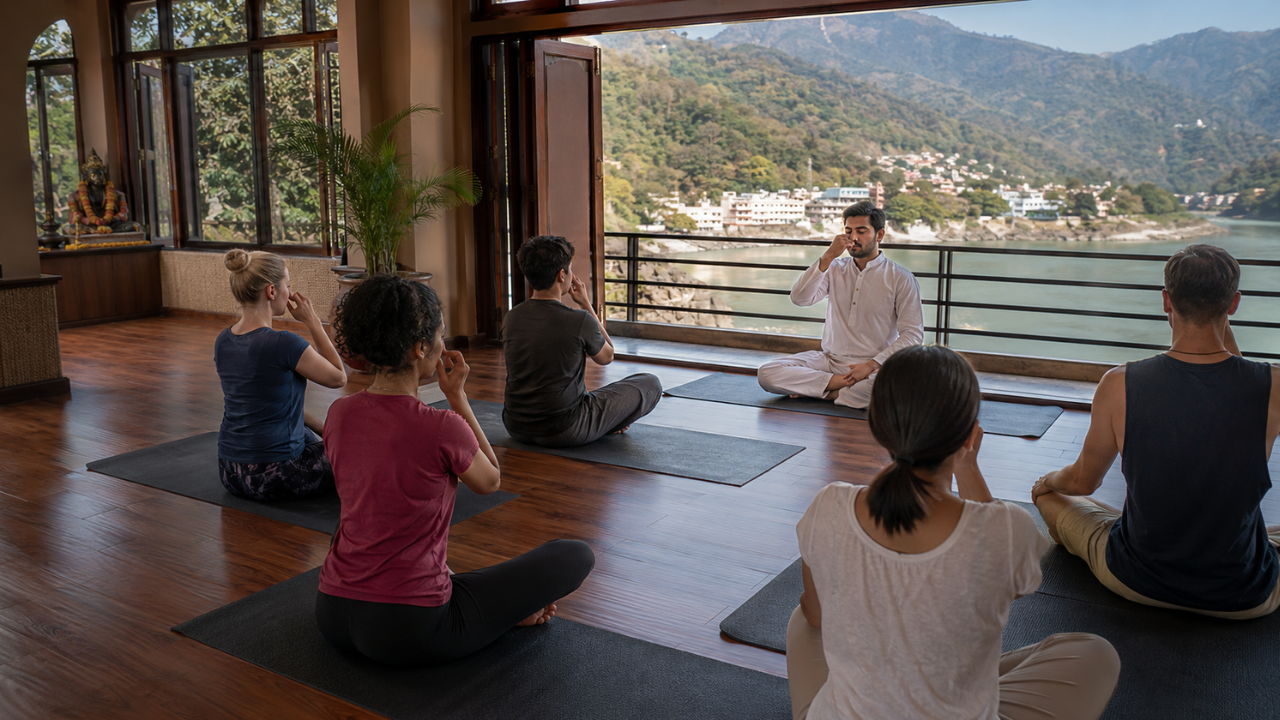
1. Nadi Shodhana — Alternate Nostril Breathing
This is the most important pranayama for Kundalini support. It purifies the Ida and Pingala Nadis — the two main energy channels on either side of the spine. When these are clean and balanced, Kundalini can rise through the central channel (Sushumna) smoothly.
- How long: 10 to 15 minutes daily, morning practice on an empty stomach
- What it does: Balances the nervous system, calms anxiety, and opens the energy channels in the spine
- Important: Keep the breath slow and even — never force or rush
2. Spinal Asana Practice
The spine is the main pathway for Kundalini energy. A stiff, blocked spine creates resistance. Regular spinal movements — both forward bends and backbends — keep the channel open and the energy flowing.
- Key poses: Bhujangasana (Cobra), Marjaryasana-Bitilasana (Cat-Cow), Balasana (Child's Pose), Paschimottanasana (Seated Forward Fold), Ustrasana (Camel)
- How long: 20 to 30 minutes before pranayama and meditation
- What it does: Opens the spine, releases tension from the back, and prepares the body for energy to move freely
3. Kundalini Meditation with Mantra
Mantra creates a specific vibration in the body and nervous system. In the Kundalini tradition, certain sounds are used to activate the chakras and support the rising energy. Mantra also gives the mind something to hold when the experience becomes intense.
- Simple starting mantra: "So Hum" — inhale on "So", exhale on "Hum". Meaning: "I am that." Natural, powerful, and safe for beginners.
- How long: 10 to 20 minutes. Sit quietly after the mantra practice — do not rush out of the stillness.
- What it does: Calms the mind, creates inner vibration, and gradually activates the chakra system from the root upward
4. Shambhavi Mudra — Eyebrow Center Gazing
Shambhavi Mudra is a powerful practice where the eyes are directed upward toward the eyebrow center (Ajna chakra) during meditation. It activates the third eye and pulls the energy upward through the spine. Even a few minutes of this practice creates a noticeable shift in awareness.
- How to practice: Sit still. Close the eyes softly. Direct the gaze upward toward the point between the eyebrows — without straining. Hold for 1 to 3 minutes.
- What it does: Activates the Ajna chakra, draws Prana upward, and deepens meditative stillness
- Important: Never force the eyes. If strain appears — release. This is a subtle practice, not a muscular one.
5. Grounding — The Practice Most People Skip
This is perhaps the most underrated practice during Kundalini awakening. When the energy rises fast, the lower body needs to be stable and rooted. Without grounding, the awakening can feel chaotic, anxious, or unmanageable.
- Walk barefoot: On grass, soil, or sand — even 10 minutes a day makes a real difference. Direct contact with the earth settles the nervous system.
- Eat simple, warm food: Root vegetables, cooked grains, warm soups. Heavy, earthy food keeps the body anchored during intense energy experiences.
- Gentle forward folds: Poses like Uttanasana or Paschimottanasana draw energy downward and bring it back into balance.
- Rest: Sleep enough. Do not push through exhaustion. The body needs rest to integrate what is happening.
What to Expect — The Stages of Kundalini Awakening
Kundalini awakening is not a single moment — it is a process that unfolds in stages. Understanding these stages helps you know where you are and what to do next.
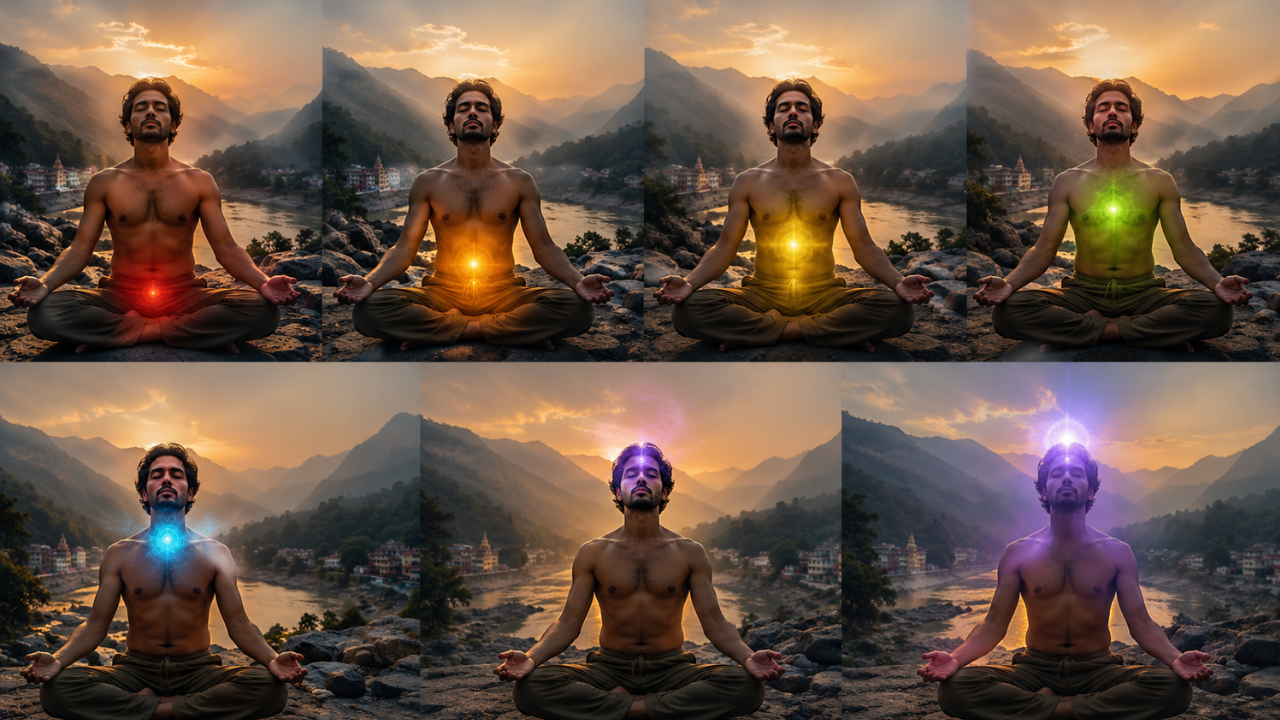
- Stage 1 — Stirring: The energy begins to move. You may feel tingling, warmth in the spine, or unusual sensitivity. Meditation becomes deeper than before.
- Stage 2 — Rising: The energy becomes more active. Physical kriyas, emotional releases, and spontaneous breath changes are common. This can feel exciting or overwhelming depending on the person.
- Stage 3 — Purification: Old patterns, fears, and emotions surface to be cleared. This stage can feel like everything is falling apart — but it is actually the old structure being released. This is where a teacher matters most.
- Stage 4 — Integration: The energy begins to settle. The body adjusts. The mind becomes clearer and more stable. Life starts to reorganize in alignment with the deeper change that has happened.
- Stage 5 — Stabilization: A new baseline of awareness. More peaceful, more present, more alive. The experience does not make life perfect — but it makes it more real and more meaningful.
Not everyone goes through all stages in order. Some people jump stages. Some loop back. The process is not linear — and that is completely normal. Go slow. Be patient with yourself.
When to Be Careful — And Who Needs Extra Support
Kundalini awakening is powerful. For most people it is a beautiful and transformative process. But in some situations — more care, more support, and more grounding are needed.
- If the energy feels too fast or too intense: Stop all advanced practices immediately. Focus only on grounding — walking, eating, rest, time in nature. Speak to a teacher.
- If you have a history of anxiety or mental health challenges: Move very slowly. Work only with gentle, grounding practices. Avoid intense pranayama like Kapalabhati. Have a teacher guide the process carefully.
- If you are experiencing strong kundalini without any preparation: This is called spontaneous awakening. It can be disorienting. A qualified teacher who knows this territory is essential — not optional.
- If sleep becomes severely disrupted or appetite completely disappears: These are signs that the body needs more support. Rest, eat warm simple food, and pause intensive practice until stability returns.
- If the experience feels frightening or unmanageable: Reach out. This is not something to go through alone. Community, a teacher, and grounding practices all make a real difference.
The ancient texts are clear — Kundalini is not something to rush or force. It unfolds on its own timeline. A good teacher does not try to speed the process up. They help you stay safe, grounded, and supported as it unfolds.
Are You Experiencing Kundalini Awakening? — A Simple Checklist
If several of these are true for you right now — Kundalini energy may be active. This is not a diagnosis. It is simply a way to recognize what might be happening.
- Heat or tingling moving up the spine — during or outside of meditation
- Spontaneous deep breathing or breath pauses during stillness
- Sudden emotional releases — crying, laughing, or feeling old grief surface
- Pressure or pulsing at the crown of the head or eyebrow center
- Seeing light or geometric forms behind closed eyes
- Waking at unusual hours feeling wide awake and unusually clear
- A strong pull toward quieter, simpler, more meaningful living
- Sensitivity to noise, crowds, and other people's emotions increasing
- Meditation deepening rapidly without much effort
- A feeling that your life is being reorganized — from the inside out
Navigate Your Kundalini Awakening at Adishesh Yoga, Rishikesh
Kundalini awakening is one of the most profound experiences a human being can go through. And it deserves real guidance — not information from a website alone. At Adishesh Yoga in Rishikesh, we work with students going through active Kundalini experiences and those who want to prepare for the journey safely and with full awareness.
Our teaching is rooted in classical yoga — pranayama, meditation, mantra, and deep understanding of the energy body. Every student gets personal attention. Every practice is matched to where you actually are — not where a curriculum says you should be.
- Pranayama for energy channel purification: Nadi Shodhana, Bhramari, and spinal breath practices taught step by step
- Kundalini meditation and mantra: Traditional practices to support steady, safe awakening
- Chakra and energy body understanding: Learn the system your experience is moving through — clearly, without mystification
- Personal guidance: If Kundalini is already active, we help you work with it — not against it
- Grounding and integration support: Practical tools to stay stable, healthy, and clear through every stage
Come to Rishikesh. Sit with the teachers. Let the process be guided with care, wisdom, and real experience. The energy knows where it wants to go — we help you make the journey safely.
Frequently Asked Questions
Conclusion
Kundalini awakening is one of the most real and most misunderstood experiences in the world of yoga and spirituality. It is not fantasy. It is not for a special few. It is a natural process — built into the human system — that unfolds when the conditions are right.
If you are already in it — breathe. Ground yourself. Find a teacher. Trust the process even when it feels big. If you want to prepare for it wisely — start with pranayama, clean living, and steady practice. Let it come in its own time.
If you want to go deeper with real guidance — come and sit with us at Adishesh Yoga in Rishikesh. The river is here. The teaching is here. The space is ready.
Explore Authentic Yoga in Rishikesh with Adishesh Yoga
Deepen your meditation and breathwork on the sacred banks of Mother Ganga. Study authentic yogic philosophy and traditional Hatha & Vinyasa under lead instructor Vikas Negi.