You picked up your phone 87 times today. Maybe more. You are not alone — most people do. We scroll in the morning before we even get up. We check notifications during meals. We fall asleep watching videos. And somewhere in all of that — we lost something. Our peace. Our focus. Our ability to just sit and breathe.
That is exactly why digital detox at a yoga retreat is becoming one of the most searched and talked about experiences of 2026. People are tired of being tired. Tired of being online all the time. And they are looking for a real way out — even if it is just for a week.
This guide tells you everything. What a digital detox really is. What it does to your brain and body. What to expect day by day. And why a yoga retreat is the best place to do it.
What Is a Digital Detox — And Why Do You Need One?
A digital detox simply means stepping away from all your screens — phone, laptop, tablet, social media — for a set period of time. No Instagram. No WhatsApp. No email. Just you, real life, and real people.
It sounds simple. But for most people, even 2 hours without a phone feels uncomfortable. That discomfort — that itch to check, scroll, and refresh — is actually the clearest sign that you need a detox.
Here is the truth. Our brains were not built for constant digital input. Every notification, every scroll, every like — it gives your brain a tiny hit of dopamine. Over time, your brain starts needing more and more stimulation just to feel normal. The result is anxiety, poor sleep, low focus, and a restless mind that cannot be quiet even when you want it to be.
Quick Facts About Digital Detox
- Average screen time: Most adults spend 6 to 9 hours per day on screens
- What detox means: Intentional break from all digital devices and social media
- Best setting: A structured yoga retreat where offline life has purpose and support
- Minimum duration: 3 days for basic mental reset — 7 days for deep change
- Who needs it: Anyone feeling anxious, overwhelmed, tired, or unable to focus
- Main goal: Allow the brain and nervous system to rest, recover, and reset
What Happens to Your Brain When You Do a Digital Detox
This is where it gets interesting. When you stop feeding your brain constant screen stimulation — real things start to happen. And most of them are surprisingly good.
Day 1 — The Restless Stage
The first day is the hardest. Your brain is looking for its next dopamine hit — but it is not coming. You might feel restless, bored, anxious, or even irritable. You will want to check your phone. This is normal. It is your nervous system adjusting. Push through it.
Day 2 — The Quiet Starts
By day two, something shifts. The constant mental noise starts to get quieter. You begin to notice things you normally miss — the sound of birds, the feeling of wind, the taste of food. Your attention begins to slow down and land. This is your brain starting to breathe.
Day 3 to 5 — The Reset Kicks In
This is the sweet spot. Sleep gets deeper. Morning feels different — lighter. Your thoughts are clearer. You start having actual ideas again, not just reacting to other people's content. Many people describe this phase as feeling like they came back to themselves. Like a fog lifted.
Day 6 and Beyond — Real Presence
By day six or seven, most people feel genuinely calm in a way they have not felt in years. Conversations feel deeper. Meals feel more enjoyable. Yoga and meditation go much deeper because your mind is no longer fighting constant digital noise. This is what presence actually feels like.
Real Benefits of Digital Detox at a Yoga Retreat
The benefits of combining digital detox with a yoga retreat are more powerful than doing either one alone. Here is what actually changes — in your body, your mind, and your life.
Better Sleep — Almost Immediately
Blue light from screens blocks melatonin — the hormone your body needs to sleep well. When you stop using screens, your body's natural sleep cycle starts working again within 2 to 3 days. Most retreat participants say they fall asleep faster and wake up without an alarm by day four. Real, deep sleep — the kind you forgot existed.
Less Anxiety — Noticeably Less
Social media is designed to keep you in a low-grade state of comparison, urgency, and reaction. When that goes away — so does a lot of the anxiety it was creating. Combined with yoga and pranayama at the retreat, your nervous system gets a deep, real rest that most people have not had in years.
Your Focus Comes Back
Constant scrolling destroys your attention span. During a detox, your brain slowly rebuilds its ability to stay with one thing. By the end of a week-long retreat, many people find they can sit in meditation for 30 minutes without their mind running everywhere. That is not magic — that is what a rested brain can do.
Real Human Connection
When everyone at the retreat puts their phone away — something beautiful happens. People actually talk. They look at each other. They laugh, eat, and share things that matter. The connections made at a digital detox retreat are often described as some of the deepest friendships people have ever formed — in just a few days.
Your Yoga Practice Goes Deeper
When your mind is not scattered across 50 open tabs — it can actually be present on the mat. Students at digital detox retreats consistently report that their yoga practice feels completely different — more focused, more felt, more alive. Because they are actually in their body. Not half-somewhere-else thinking about their inbox.
Why a Yoga Retreat Is the Best Place for Digital Detox
You could try a digital detox at home. But most people fail. Why? Because at home — the temptation is everywhere. Your phone is on the table. Your laptop is open. The TV is on. There is no structure. No support. And nothing to fill the space that screens usually take up.
A yoga retreat changes everything. Here is why it works so much better.
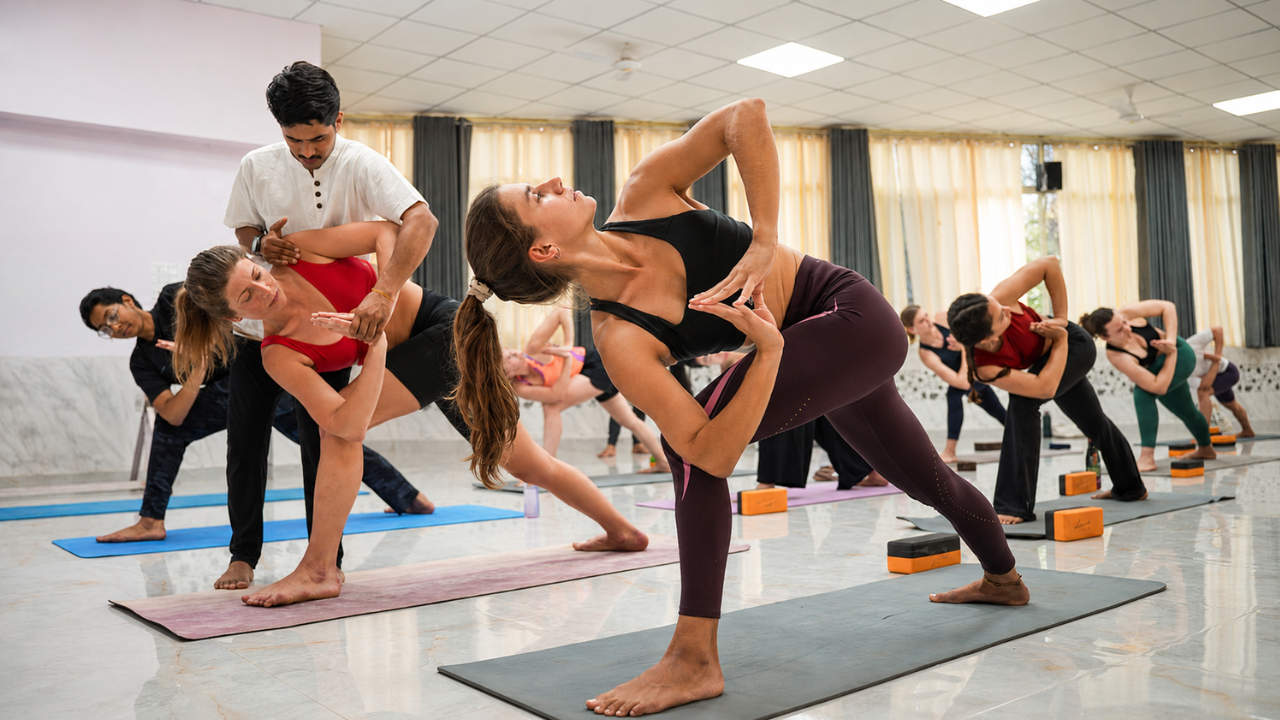
- Structure and schedule: Your day is filled — morning yoga, meditation, meals, nature, rest. There is no empty boredom that sends you reaching for your phone
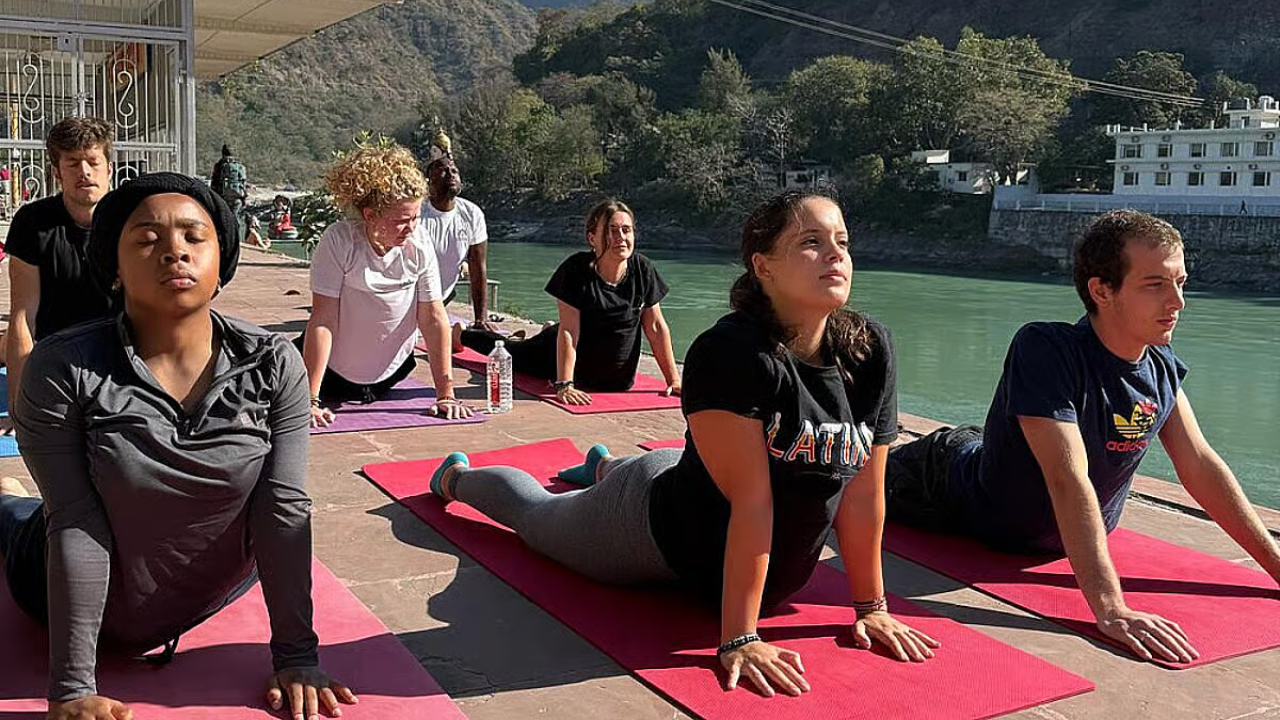
- Community support: Everyone around you is doing the same thing — nobody is scrolling, nobody is on their phone — this makes it much easier to stay offline
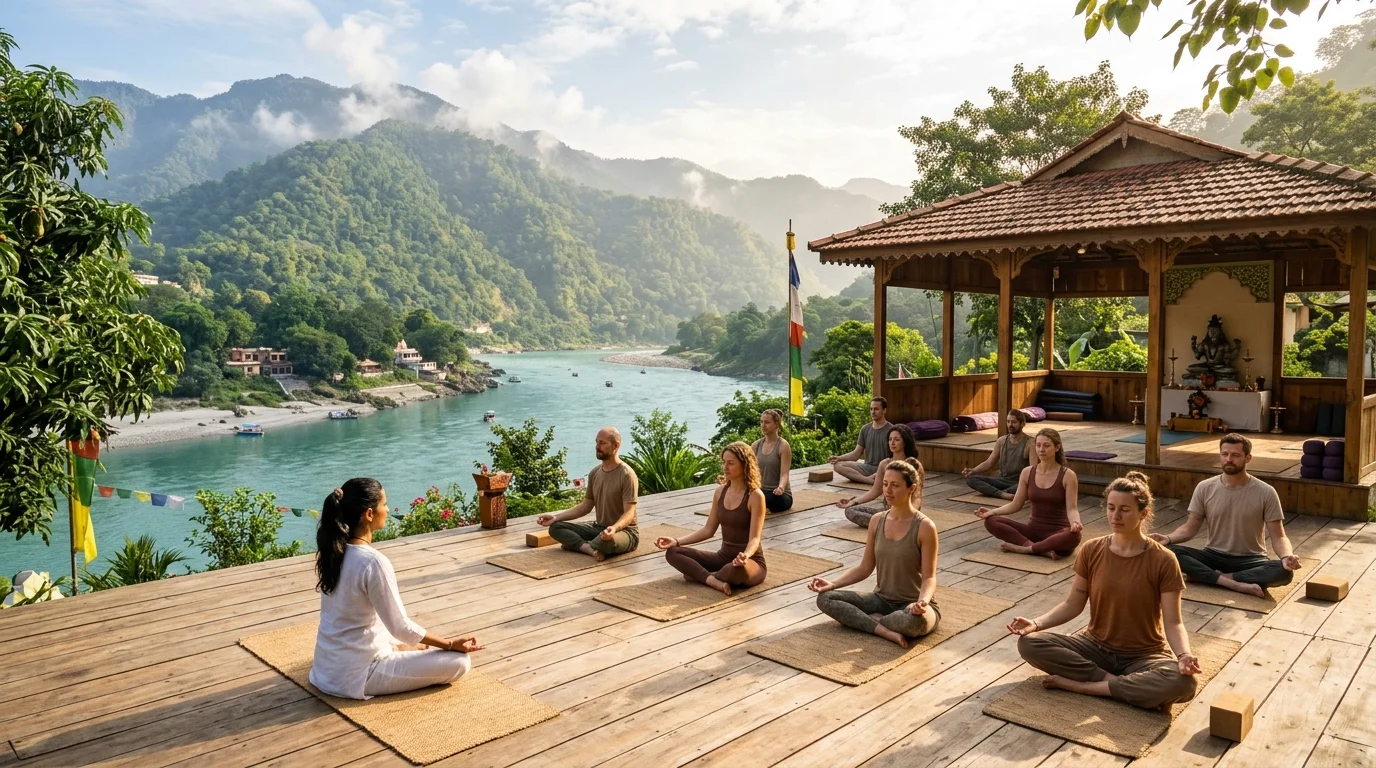
- Nature as a replacement: The Ganga river, the Himalayas, birdsong, sunsets — nature fills your senses in a way no screen ever can. And it is healing, not draining
- Accountability: Most retreats collect phones at check-in — removing the decision entirely so you can just relax into the experience
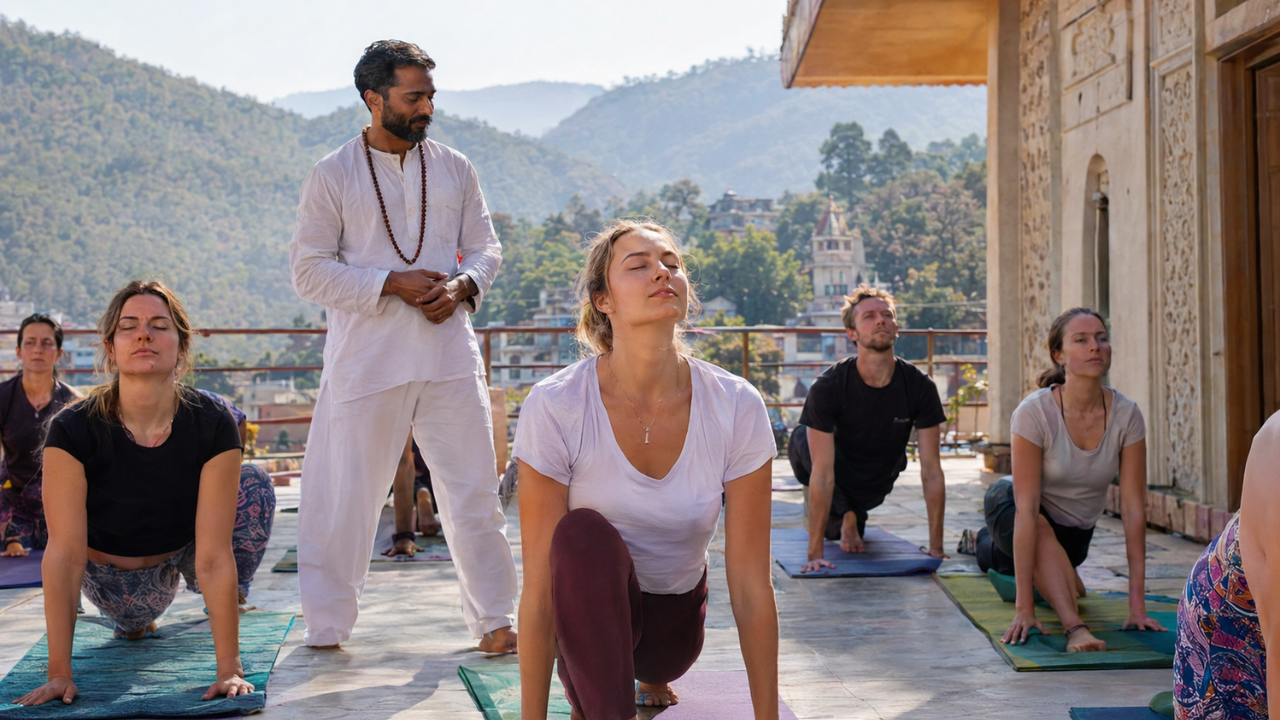
- Yoga and meditation as tools: These practices give your restless mind something real to do — something that builds rather than drains you
- Real rest without guilt: The retreat environment gives you permission to do nothing — to nap, to sit, to stare at the river — without feeling lazy or unproductive
Common Fears About Digital Detox — And the Truth
Almost everyone feels nervous before their first digital detox. The fears are real. But they are also mostly in your head. Here is what people worry about — and what actually happens.
Fear 1 — "What If There Is an Emergency at Home?"
This is the number one fear. And it is fair. But the truth is — real emergencies can always reach you through the retreat centre's landline or reception. You can also set an out-of-office message and let family know the retreat's contact number before you leave. In years of running retreats — true emergencies are extremely rare. And your family will be fine for 7 days.
The truth: Most of what we think of as "urgent" — is not. The world will not collapse without you online.
Fear 2 — "I Will Miss Important Work Emails"
Set your out-of-office reply before you go. Tell your team you are away. Most things can genuinely wait 7 days. And if your job cannot function for one week without you being constantly available — that is worth reflecting on.
The truth: After the retreat, most people come back with more clarity, better ideas, and more energy — which makes them better at work than they were before.
Fear 3 — "I Will Be Bored Without My Phone"
At first — yes, you might feel bored. That boredom is actually your brain trying to detox. And at a yoga retreat, that boredom disappears quickly because your day has real rhythm and purpose. Yoga, walks, meals, meditation, conversations — you will not be staring at walls.
The truth: Most people say by day three they completely forget about their phone. And they cannot remember the last time they felt this alive.
Fear 4 — "I Am Not Disciplined Enough"
You do not need discipline for a digital detox at a retreat. The environment does it for you. When your phone is locked in a box and everyone around you is offline — the decision is already made. You just have to show up.
The truth: Discipline is hard alone. Community makes it easy.
How to Prepare for a Digital Detox Yoga Retreat
A little preparation before you go makes the whole experience much smoother. Here is what to do in the week before your retreat.
- Tell people you are going offline: Message family, close friends, and your work team. Share the retreat contact number for real emergencies
- Set your out-of-office replies: Email and WhatsApp — set auto-replies so people know you are away and when you will be back
- Start reducing screen time now: In the 3 days before the retreat — try to use your phone 50% less. This makes the transition much easier
- Delete social media apps temporarily: You do not need to delete accounts — just remove the apps from your phone before you go
- Pack a journal: Writing by hand is a powerful replacement for the scrolling habit. Bring a notebook — you will thank yourself
- Set a clear intention: Why do you want to do this? Write it down. That intention will carry you through the uncomfortable first day
How to Keep the Digital Detox Going After You Come Home
The hardest part of a digital detox is not the retreat. It is going home. Your phone is back. Wi-Fi is everywhere. Notifications flood in. And within a few days, most people slide right back to where they started.
It does not have to be that way. Here are simple habits that help you keep the clarity you found at the retreat.
- First 30 minutes phone-free: Do not check your phone for the first 30 minutes after waking up — do yoga, breathe, drink tea. Start the day as you, not as a reaction
- Last 60 minutes screen-free: Turn screens off one hour before bed. Your sleep will stay better and your mornings will feel lighter
- One screen-free day per week: Pick one day — Sunday works well — where you stay offline from morning to evening. Treat it like a mini retreat
- Turn off all non-essential notifications: You do not need to know the moment someone likes your photo. Check social media on your terms — not theirs
- Keep your phone out of the bedroom: Charge it in another room. Use an old-fashioned alarm clock if you need one. Your bedroom is for sleep — not screens
- Continue your yoga practice: Even 20 minutes a day of yoga at home will help your nervous system stay regulated and your mind stay calmer between retreats
Frequently Asked Questions — Digital Detox at a Yoga Retreat
Final Thoughts — Put the Phone Down. Come Back to Life.
We are not saying screens are evil. They are useful tools. But when the tool starts using you — that is a problem. When you cannot sit in silence for 5 minutes without reaching for your phone — that is a sign. When you feel more connected online and more lonely in real life — that is a sign. When your sleep is broken, your mind is scattered, and you cannot remember the last time you felt truly rested — that is a sign.
A digital detox at a yoga retreat is not a luxury. In 2026 — it is a necessity. Your nervous system needs this. Your mind needs this. Your life needs this.
Give yourself 7 days. Leave the phone behind. Go somewhere with clean air, real food, a yoga mat, and people who are also choosing to be present. See what happens.
At Adishesh Yoga in Rishikesh, we believe that true yoga is about being fully here — not half-here and half-online. Our retreats are designed to help you disconnect from the noise so you can reconnect with yourself. If you are ready for that — we are ready for you.
Explore Authentic Yoga in Rishikesh with Adishesh Yoga
Deepen your meditation and breathwork on the sacred banks of Mother Ganga. Study authentic yogic philosophy and traditional Hatha & Vinyasa under lead instructor Vikas Negi.