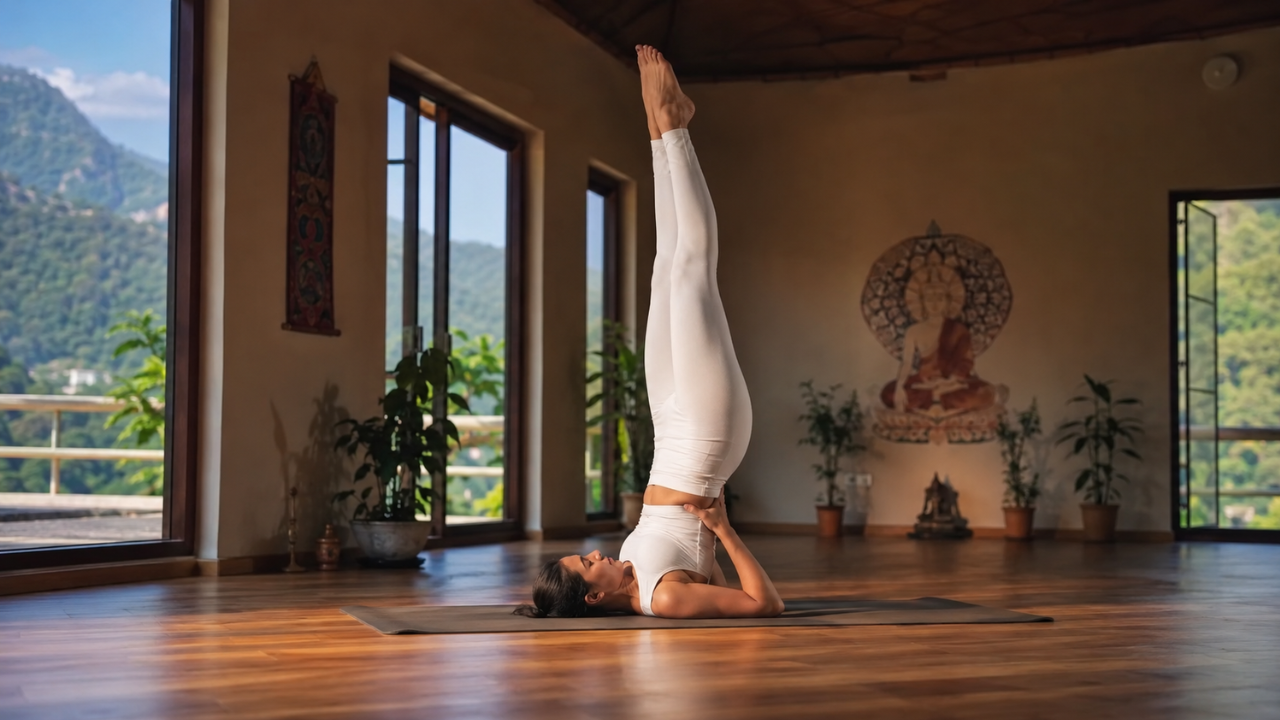
Shoulder Stand is the pose that looks simple from the outside — but feels like a full-body reset from the inside. Legs up. Body straight. Mind quiet.
Yogis call it the Queen of All Asanas. It may not look as dramatic as Headstand — but what it does for your body is just as powerful. Thyroid health. Stronger neck. Calmer mind. All from one pose.
What Is Shoulder Stand (Sarvangasana)?
Shoulder Stand is called Sarvangasana in Sanskrit. "Sarva" means all, "anga" means body parts, and "asana" means pose. So this is literally the pose for the whole body.
In this pose, you lie on your back and lift the legs and hips straight up. The body balances on the back of the shoulders and upper arms. Both hands support the lower back. The chin presses gently into the chest — this is called a chin lock or jalandhara bandha — which directly stimulates the thyroid gland.
- Sanskrit name: Sarvangasana (Salamba Sarvangasana)
- Meaning: All Body Pose / Whole Body Pose
- Pose type: Inversion / Supported balance
- Level: Beginner to intermediate
- Hold time: 15 seconds to 5 minutes (build slowly)
- Also called: Queen of All Asanas
- Part of: Hatha yoga, Ashtanga yoga, Iyengar yoga sequences
Shoulder Stand is easier to learn than Headstand because the body has more surface area on the ground. It is a great first inversion for beginners. If you can do Bridge Pose comfortably — you are ready to start learning Sarvangasana.
Benefits of Shoulder Stand (Sarvangasana)
This pose is called the Queen of Asanas for good reason. It works on your whole body from the inside out. Here is what regular practice gives you.
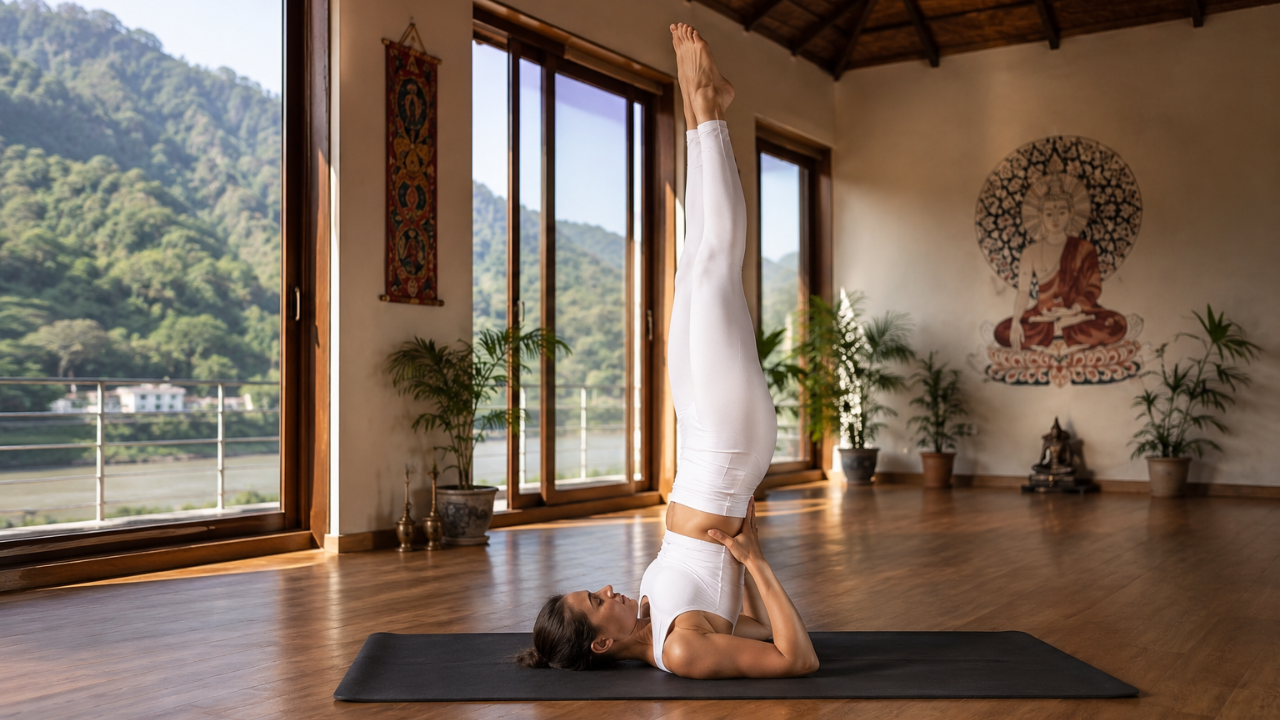
- Thyroid health: The chin lock in this pose directly compresses the thyroid gland. Fresh blood rushes in when you come out. This naturally supports thyroid function and hormonal balance.
- Calmer nervous system: Being upside down activates the rest-and-digest system. Stress and anxiety drop. The mind becomes quiet and steady.
- Better blood flow to the brain: Gravity sends fresh blood toward the head. Memory, focus, and mental clarity all improve with regular practice.
- Stronger neck and shoulders: Holding the pose builds deep strength in the neck muscles and upper back. Over time the shoulders become more stable and open.
- Good for digestion: Reversing gravity helps move things along inside the belly. Constipation and bloating improve with consistent practice.
- Legs feel lighter: Draining blood and fluid from the legs reduces puffiness and heaviness. Great for people who stand or sit for long hours.
- Better sleep: The calming effect of this pose makes it excellent to practice in the evening. Many yogis say they sleep much better after regular Sarvangasana.
- Spine stretch: The upper spine gets a deep stretch in this pose. It releases tension from the back and neck that builds up throughout the day.
- Core strength: Keeping the legs straight and vertical needs a strong belly. The core gets a quiet but deep workout every time you hold the pose.
Yogis who practice Shoulder Stand regularly often say they feel lighter, calmer, and more balanced in daily life. It is one of the most healing poses in all of yoga.
How to Do Shoulder Stand — Step by Step
Read all the steps first. Then go slowly on your mat. Keep a folded blanket nearby for your shoulders. Take it one step at a time.
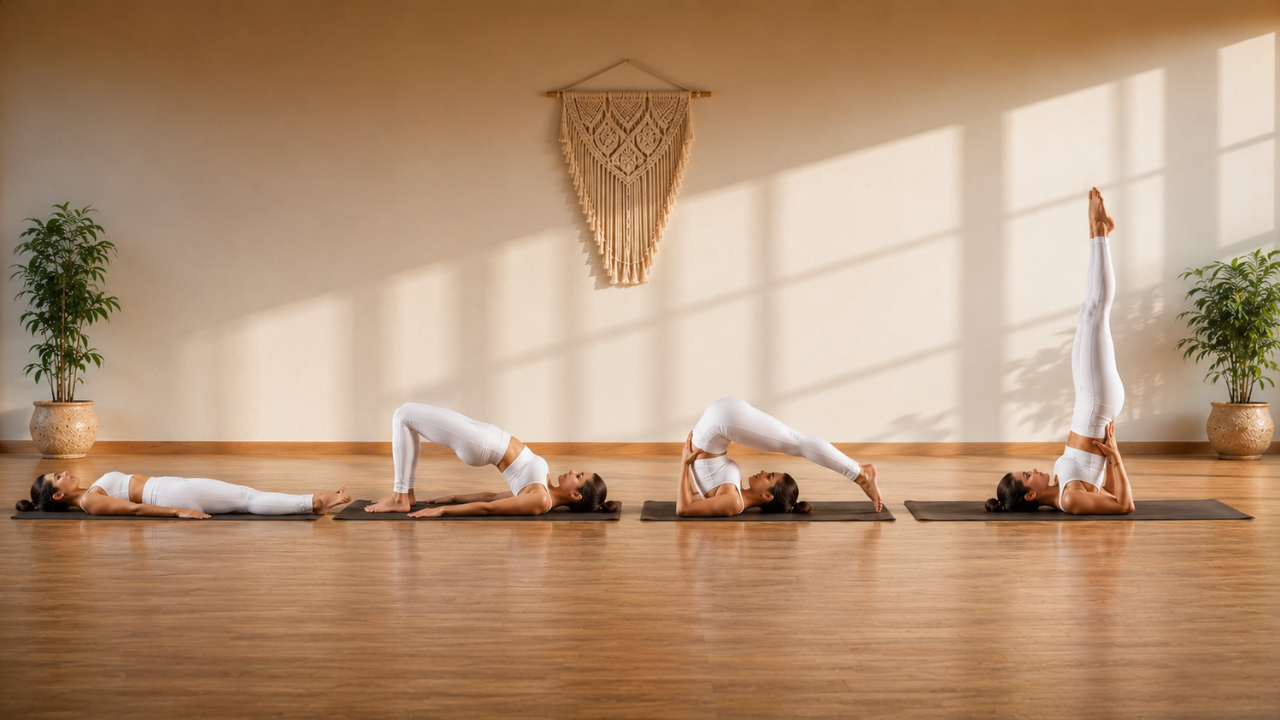
- Step 1 — Set up the blanket: Fold a thick yoga blanket and place it on the mat. Your shoulders will rest on the blanket. Your head stays on the floor below the blanket. This protects your neck.
- Step 2 — Lie down: Lie flat on your back with the shoulders on the blanket and the head on the mat below. Arms are beside the body, palms facing down.
- Step 3 — Lift the legs: Breathe in and slowly raise both legs together to 90 degrees — straight up toward the ceiling. Keep the knees straight.
- Step 4 — Roll the hips up: Press the palms into the floor. Use the belly and the arms to lift the hips and lower back off the mat. Roll the body up onto the back of the shoulders.
- Step 5 — Support the back: Bend the elbows and bring both hands to the lower back — fingers pointing toward the spine. This is your support. Press the elbows firmly into the mat.
- Step 6 — Straighten the body: Walk the hands up the back toward the shoulder blades. Slowly straighten the legs all the way up. The body should form one straight vertical line from shoulder to heel.
- Step 7 — Chin lock: Let the chin gently drop toward the chest. This is jalandhara bandha — the throat lock. It happens naturally in the pose. Do not force it.
- Step 8 — Hold and breathe: Breathe slowly and steadily. Keep the legs firm and together. The core stays gently engaged. The face and throat are relaxed.
- Step 9 — Come down slowly: Lower the knees toward the forehead first. Then slowly roll the spine down — vertebra by vertebra — back to the mat. Keep control all the way. Rest for a moment. Then do Fish Pose (Matsyasana) as a counter stretch.
Always use the blanket under the shoulders. This small step protects your neck and makes the whole pose safer and more comfortable.
Key Alignment Tips for Shoulder Stand
Correct alignment makes Shoulder Stand safe and effective. These are the most important points to remember every time you practice.
- Shoulders — not the neck — take the weight: The body rests on the back of the shoulders and upper arms. The neck should feel long and free — not compressed or crunched.
- Blanket under the shoulders always: A folded blanket lifts the shoulders slightly and creates space at the neck. This is the single most important alignment tool for this pose.
- Elbows shoulder-width apart: Keep the elbows exactly under the body — not wider. Wide elbows collapse the foundation and put pressure on the neck.
- Hands move up toward shoulder blades: The higher the hands climb up the back, the more vertical and stable the pose becomes. Hands low on the lower back means the hips are dropping.
- Straight body line: Hips, torso, and legs should all form one straight line from shoulders to heels. Check that the hips are not dropping behind or pushing too far forward.
- Inner thighs together: Squeeze the inner thighs toward each other. Flex the feet. Reach through the heels. Legs stay active — not hanging loosely up there.
- Throat and face soft: Do not tighten the throat or clench the jaw. The chin drop is gentle. The eyes are soft. The face is completely relaxed.
- Do not turn the head: Looking to the side in Shoulder Stand can injure the neck. Keep the gaze straight up at the ceiling or toward the belly button throughout the pose.
Start with just one or two alignment points per session. Master the blanket and the elbow position first. Everything else will become clearer as you get stronger and more comfortable.
Common Mistakes to Avoid in Shoulder Stand
These are the most common errors. Some of them can lead to neck strain or injury. Read this section before you practice.
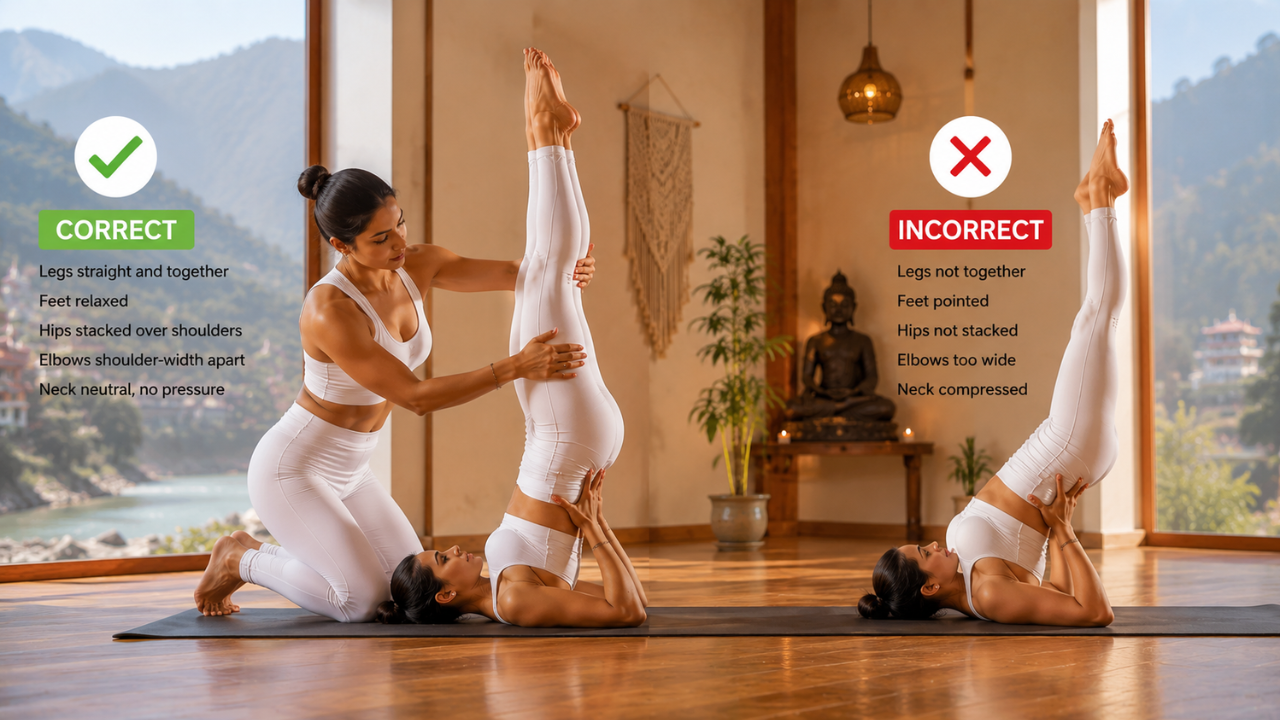
- Skipping the blanket: Practicing without a folded blanket puts the full weight directly on the cervical spine. This is the number one cause of neck pain in this pose. Always use the blanket.
- Weight on the neck: The neck should not touch the floor or bear any weight. If you feel pressure or pinching in the neck — come down immediately and adjust.
- Elbows too wide: Wide elbows give you no stability. The whole pose collapses inward. Keep elbows directly under the body, as close together as comfortable.
- Hips drooping back: Hips behind the vertical line means the pose is more of a half-plough than a shoulder stand. Move the hands higher up the back and press the hips forward and up.
- Turning the head: This is a serious mistake. Turning or rolling the head while in shoulder stand can injure the neck. Keep the head completely still throughout.
- Holding the breath: Breath-holding increases pressure in the neck and head. Keep breathing slowly throughout the hold. If you cannot breathe normally — come down and rest.
- Coming down too fast: Dropping the legs down with a thud puts sudden pressure on the spine. Lower slowly and with full control — vertebra by vertebra — every single time.
Beginner Prep Steps and Modifications
Not ready for the full pose? No problem. These prep poses build the exact strength and body awareness you need for Sarvangasana.
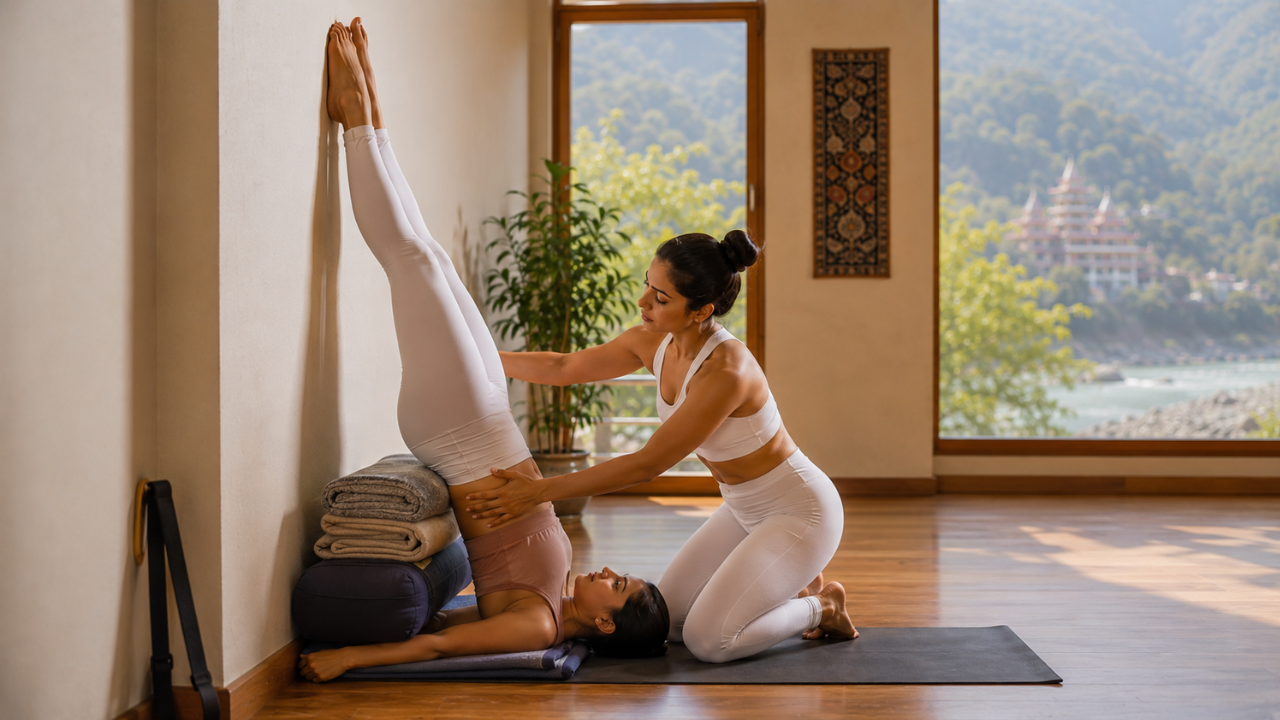
- Legs Up the Wall (Viparita Karani): This is the safest and most gentle inversion. Lie on your back and rest the legs straight up against a wall. Stay for 2 to 5 minutes. It gives many of the same benefits as Shoulder Stand without any weight on the neck at all.
- Bridge Pose (Setu Bandhasana): Bridge Pose is the best prep for Shoulder Stand. It opens the chest, strengthens the neck muscles, and teaches the back and hips how to lift. Hold Bridge for 30 to 60 seconds before attempting Shoulder Stand.
- Half Shoulder Stand: Lift the hips up and support the back with both hands — but keep the legs at a 45-degree angle instead of fully vertical. This is easier to hold and builds the strength and confidence for the full pose.
- Wall support variation: Set up near a wall. Lift into Shoulder Stand and let the feet rest lightly on the wall. The wall removes the fear of falling and lets you focus fully on alignment and breathing.
- Blanket stack for tight shoulders: If your shoulders and neck feel very tight, stack 2 or 3 folded blankets. More height means less strain on the neck and an easier entry into the pose.
There is no rush. Starting with Legs Up the Wall and Bridge Pose is not a shortcut — it is the smart path. Every great yoga practitioner once started exactly where you are right now.
Safety Tips — Practice Shoulder Stand Wisely
Shoulder Stand is one of the safest inversions in yoga — when done correctly. These simple tips will protect you every time.
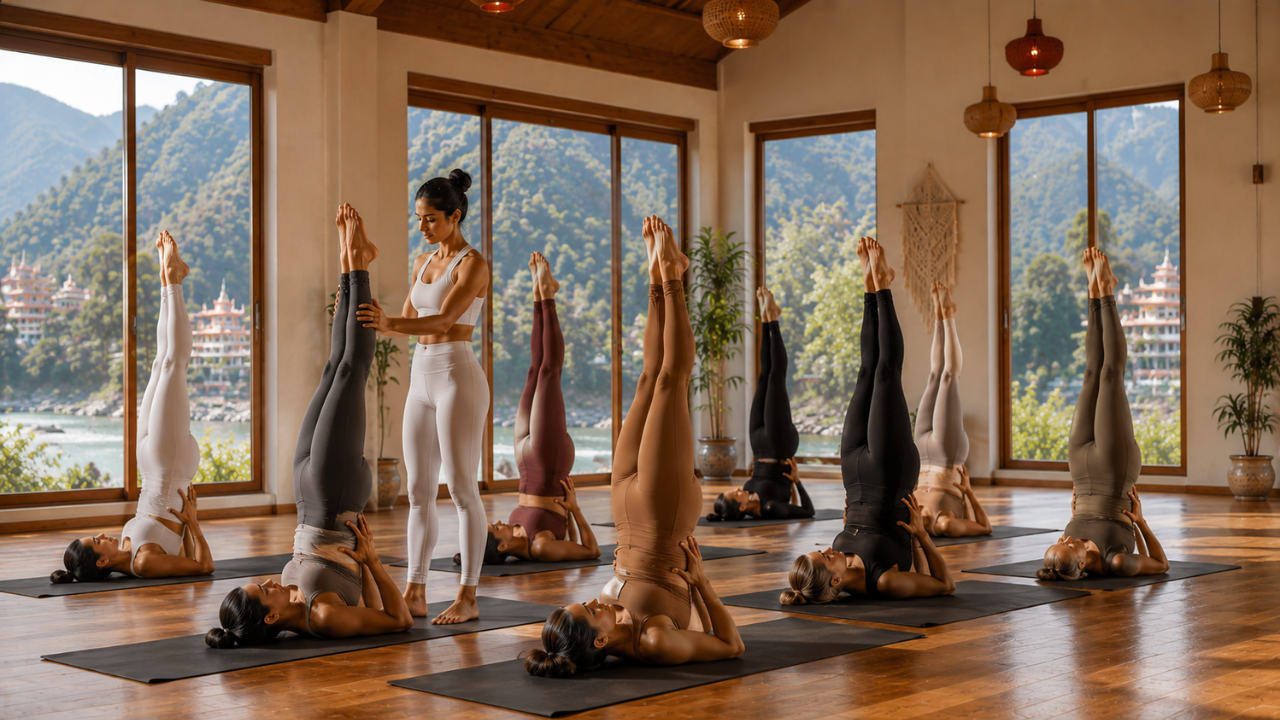
- Always use a folded blanket: This is not optional. Place a thick folded blanket under the shoulders every single time. No exceptions. The blanket keeps the neck free and protected.
- Learn from a teacher first: Shoulder Stand looks simple but has many small details that are hard to self-correct. A qualified yoga teacher spots mistakes in your neck and elbow position that you cannot see yourself.
- Always follow with Fish Pose: Fish Pose (Matsyasana) is the counter pose for Shoulder Stand. It opens the throat and reverses the chin lock. Always spend at least 5 to 10 breaths in Fish Pose after Shoulder Stand.
- Build hold time slowly: Start with 15 to 20 seconds. Add 10 seconds each week. The neck and shoulder muscles need time to build up to longer holds. Rushing leads to strain.
- Stop if you feel neck pressure: Any feeling of compression, pinching, or tingling in the neck means come down right away. Check your blanket height and elbow position before trying again.
- Warm up the spine first: Always warm up with Cat-Cow, Bridge Pose, and a few gentle twists before Shoulder Stand. A cold spine going straight into an inversion is never a good idea.
- Never practice when tired or unwell: Shoulder Stand needs mental presence. If you are sick, very tired, or in pain — rest instead. The pose will be there tomorrow.
Who Should Avoid Shoulder Stand?
Sarvangasana is wonderful for most people — but not for everyone. Please read this carefully before you practice.
- Neck injury or cervical spondylosis: Any existing neck pain or cervical spine problem means Shoulder Stand should be skipped. Legs Up the Wall is a safe alternative.
- High blood pressure: Inversions push more blood toward the head. People with uncontrolled high blood pressure should not practice this pose without medical clearance.
- Glaucoma or eye pressure: Being upside down raises pressure inside the eyes. Anyone with glaucoma or retinal issues should avoid all inversions including this one.
- Heart conditions: People with heart disease or a history of stroke should get doctor's clearance before attempting any inversion including Shoulder Stand.
- Thyroid disorders (consult first): Even though Sarvangasana supports thyroid health — anyone already on thyroid medication or with a diagnosed thyroid condition should consult a doctor before practice.
- During menstruation: Traditional yoga recommends avoiding all inversions during menstruation as they may interfere with the natural downward flow of energy in the body.
- Pregnancy: Shoulder Stand is not recommended during pregnancy, especially for those who did not have an established inversion practice before becoming pregnant. Use Legs Up the Wall instead.
- Shoulder or wrist injury: If the shoulder or arm cannot support the body weight comfortably — do not attempt the full pose. Start with supported variations instead.
When in doubt — always talk to your doctor and your yoga teacher. Skipping or modifying a pose is never failure. It is smart, safe practice.
Quick Checklist — Is Your Shoulder Stand Safe and Correct?
Run through this list every time you hold the pose. If everything checks out — your Shoulder Stand is solid and safe.
- Folded blanket is under the shoulders — not under the head
- Neck is free — not pressing into the floor
- Body weight is on the shoulders and upper arms — not the neck
- Elbows are shoulder-width — not splayed wide
- Hands are supporting the mid-to-upper back — not the lower back
- Hips are directly above the shoulders — not drooping behind
- Legs are straight up — inner thighs together, feet flexed
- Chin is gently dropped toward the chest — not forced
- Head is still — not turning left or right
- Breath is slow, steady, and easy throughout
- Face, jaw, and throat are completely relaxed
Learn Shoulder Stand Safely at Adishesh Yoga, Rishikesh
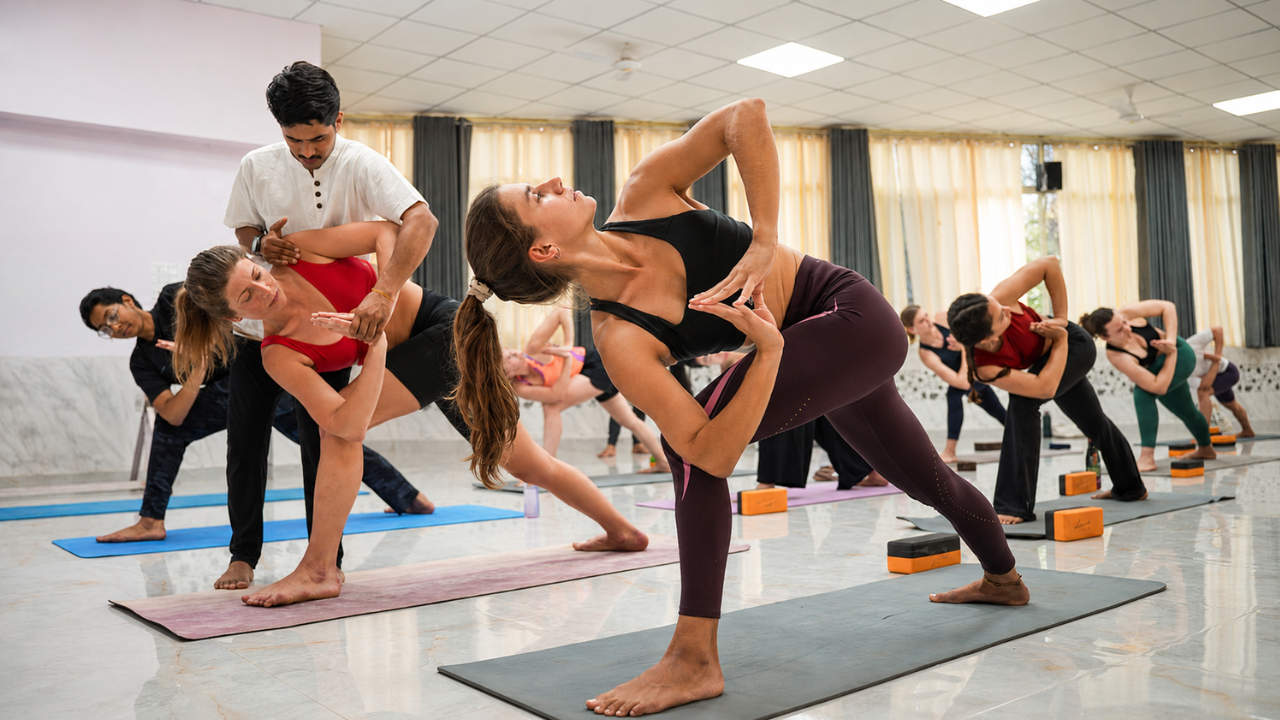
Want to learn Shoulder Stand the right way — safely, comfortably, and with total confidence? Come practice at Adishesh Yoga in Rishikesh. Our teachers give hands-on guidance at every stage. You will not just go up — you will understand exactly how your shoulders, arms, core, and neck work together to make this pose strong and stable.
We teach traditional Hatha yoga in small, focused groups. Every class is personal, calm, and deeply effective. Whether you are brand new to inversions or working to refine your technique — we have the right class for you.
- Inversion workshops: Dedicated sessions on Shoulder Stand, Headstand, Plough Pose, and other inversions — taught step by step with full safety guidance
- Daily prep practice: Bridge Pose, Legs Up the Wall, and spine-opening sequences practiced every morning to build exactly what inversions need
- One-to-one attention: Small class sizes mean your teacher actually sees your pose, corrects your alignment, and supports you personally throughout the class
- Safe, supported environment: Blankets, walls, bolsters, and spotting — everything you need to learn Shoulder Stand safely is ready and waiting
- Experienced teachers: Trained in classical yoga with deep understanding of anatomy, safe alignment, and therapeutic inversion practice
Come to Rishikesh. Lift your legs. Quiet your mind. And feel the Queen of Asanas work its magic from the inside out.
Frequently Asked Questions
Conclusion
Shoulder Stand is not just a yoga pose. It is a full reset for the body and mind. When you hold it steady — legs up, breathing easy, mind completely quiet — you understand why generations of yogis have called it the Queen of Asanas.
Start with Bridge Pose. Get comfortable with Legs Up the Wall. Use your blanket. Be patient. The full pose will come — and when it does, the calm and lightness you feel afterward will keep you coming back every single day.
If you want to learn Shoulder Stand safely and correctly — come practice at Adishesh Yoga in Rishikesh. We will guide you up — one breath, one step, one strong shoulder at a time.
Explore Authentic Yoga in Rishikesh with Adishesh Yoga
Ready to refine your alignment, anatomy, and sequencing under traditional masters? Join our Yoga Alliance certified courses or unwind with restorative retreats in the Himalayan foothills.