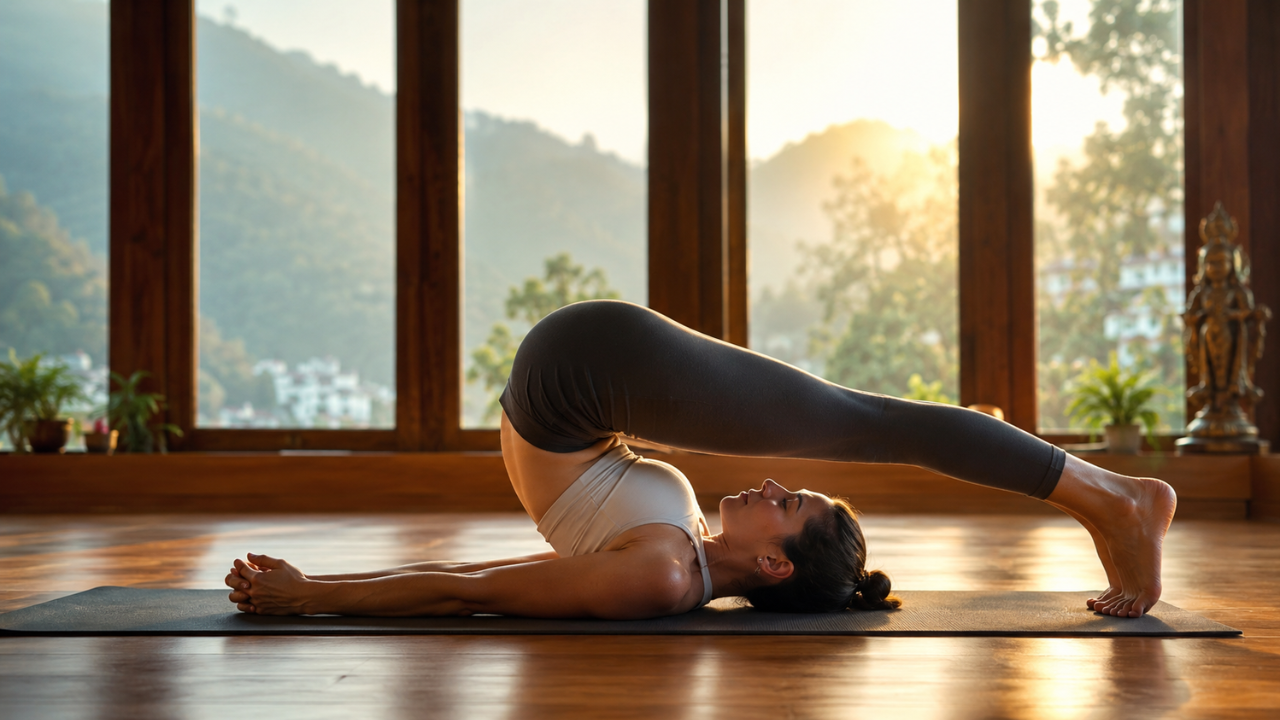
Plow Pose looks like a full fold of the body - legs going over the head, spine curving long, everything quiet and still. It is one of those poses that feels deeply restoring once you are in it.
It stretches the entire back of the body. It calms the mind. And it gives the spine a kind of release that almost nothing else does.
What Is Plow Pose?
Plow Pose is called Halasana in Sanskrit. "Hala" means plow - the farming tool used to turn the soil. The shape of your body in this pose looks just like that - curved and low to the earth.
In this pose, you lie flat on your back. You lift both legs straight up toward the ceiling. Then you slowly lower them over your head until the toes touch the floor behind you. The arms stay on the mat. The spine stretches long from the tailbone to the neck.
- Sanskrit name: Halasana
- Meaning: Plow Pose
- Pose type: Supine inversion
- Level: Beginner to intermediate
- Hold time: 5 to 10 breaths
- Part of: Hatha yoga, Iyengar yoga, restorative yoga sequences
Plow Pose is often practiced right after Shoulder Stand. The two poses go together naturally - Shoulder Stand opens the chest upward, and Plow Pose folds the spine forward into a long, deep release.
Benefits of Plow Pose
This pose works deeply - on the spine, the organs, and the nervous system. Here is what regular practice gives you.
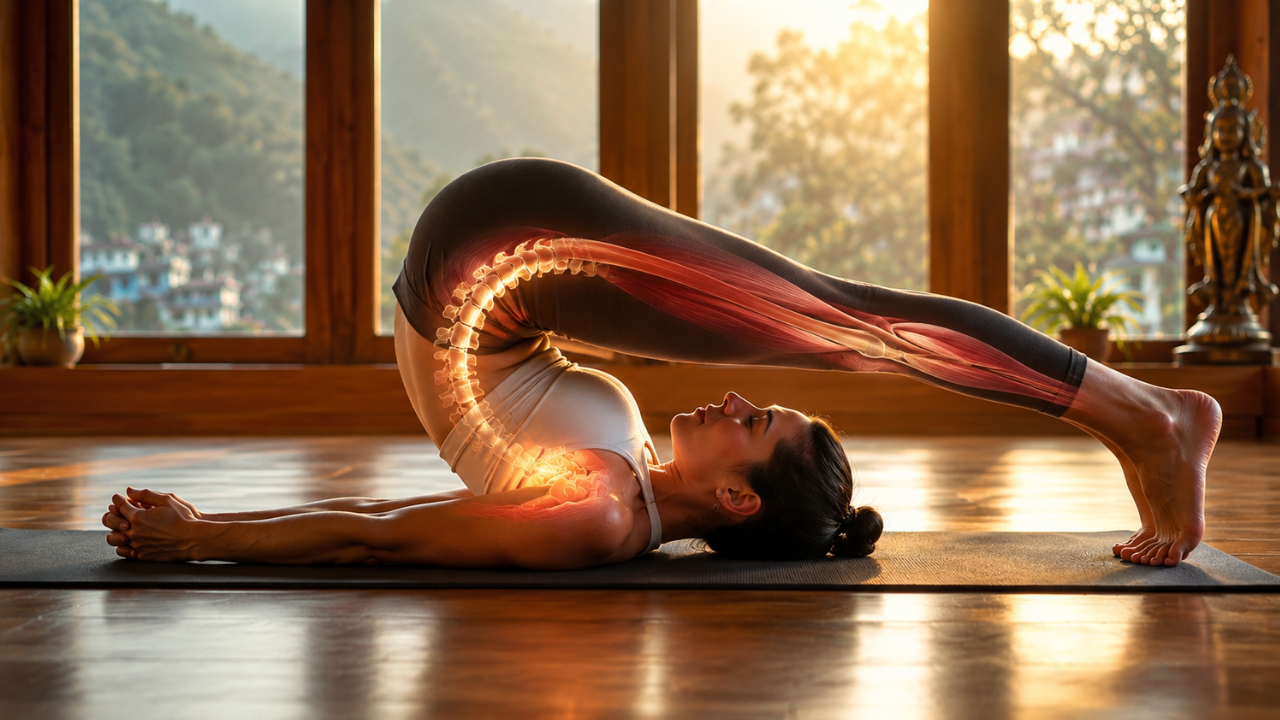
- Deep spinal stretch: The entire spine - from the tailbone to the neck - gets a long, full release.
- Hamstring flexibility: The back of the legs opens up deeply. One of the best poses for tight hamstrings.
- Shoulder and neck relief: Tension stored in the upper back and shoulders melts away with each breath.
- Thyroid stimulation: The chin-to-chest position gently massages the thyroid gland, supporting healthy metabolism.
- Better digestion: The pose compresses the abdominal organs and stimulates digestion and gut health.
- Calms the nervous system: Inversions naturally quiet the mind. Plow Pose is deeply calming after a long day.
- Reduces fatigue: Even 1 minute in this pose can bring a feeling of freshness and mental stillness.
- Improves sleep: Practiced in the evening, Plow Pose helps the body and mind wind down for better sleep.
People who hold desk jobs or sit for long hours find Plow Pose especially helpful. It undoes a lot of the tightness that builds up in the lower back and hips.
How to Do Plow Pose - Step by Step
Move slowly and carefully. The neck is sensitive in this pose. Never rush any step.
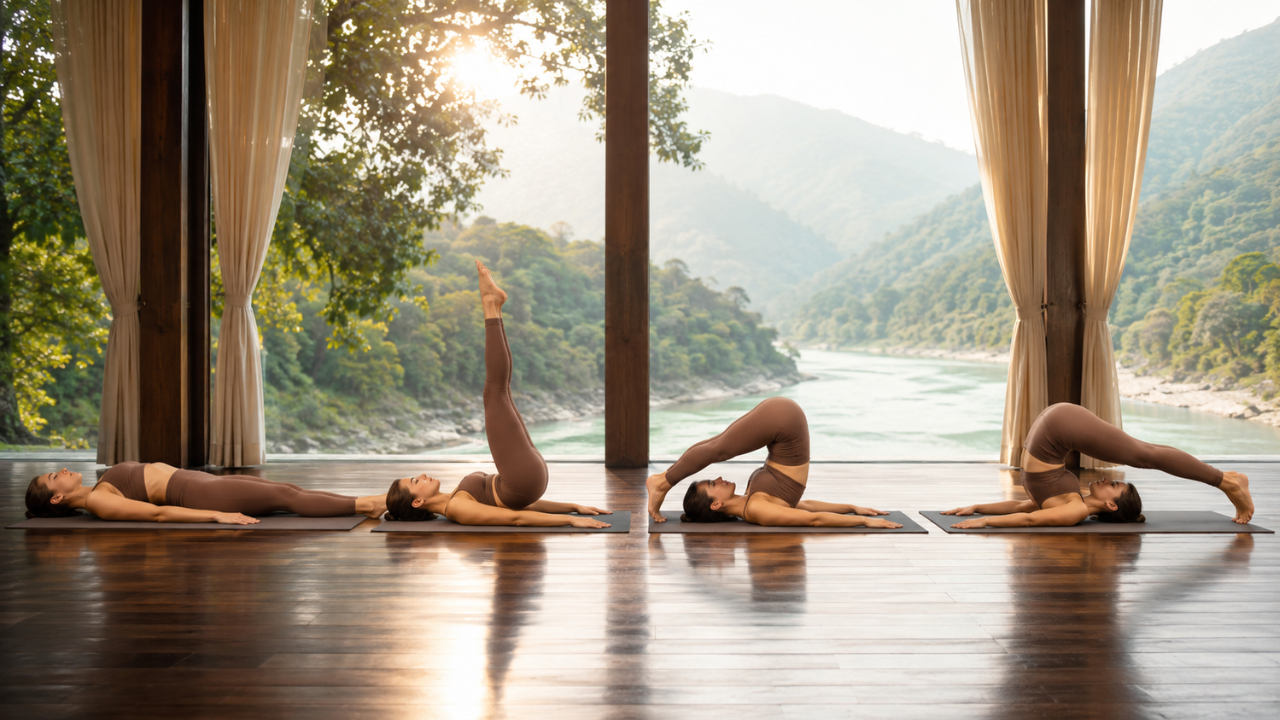
- Step 1: Lie flat on your back. Arms rest beside the body, palms facing down. Legs are together and straight.
- Step 2: On an inhale, press the palms into the mat. Slowly lift both legs up toward the ceiling - bring them to 90 degrees.
- Step 3: Press the palms firmly down. On an exhale, use the core to roll the hips up and begin to take the legs over the head.
- Step 4: Lower the legs slowly behind the head. Try to bring the toes to the floor. If they do not reach - that is fine. Go only as far as is comfortable.
- Step 5: Once the toes touch (or are as low as they go), interlace the fingers behind the back. Press the arms into the mat to lift the chest slightly.
- Step 6: Keep the legs straight and active. Engage the thighs. Flex the feet and reach back through the heels.
- Step 7: Chin gently draws toward the chest. Do not turn the head side to side in this pose.
- Step 8: Hold for 5 to 10 slow, steady breaths. Keep the face and jaw soft.
- Step 9: To come out - unclasp the hands. Place palms flat on the mat. On an inhale, slowly roll the spine back down - one vertebra at a time.
- Step 10: Lower the legs back to the floor with control. Rest in Savasana for a few breaths.
The way you come out of this pose is just as important as going in. Roll down slowly - never drop the legs down with a thud.
Key Alignment Tips for Plow Pose
Good alignment in Plow Pose protects the neck and spine. Keep these points in mind every time you practice.
- Neck stays still: Once you are in the pose, do not move the head. Any rotation can strain the cervical spine.
- Weight on shoulders: The body weight rests on the tops of the shoulders - not on the neck or the head.
- Blanket support: Place a folded blanket under the shoulders. This lifts the shoulders slightly and takes pressure off the neck. Highly recommended for beginners.
- Legs active: Do not let the legs go limp. Keep the thighs engaged and feet flexed. This protects the lower back.
- Arms pressing down: Whether interlaced or flat, press the arms firmly into the mat. This helps lift the chest and open the upper back.
- Spine long: Try to feel length in the spine from the tailbone all the way up. Do not crunch or compress.
- Breath steady: Breathing may feel a little shorter in this pose. That is normal. Keep the breath calm and never hold it.
Using a blanket under the shoulders is not optional for beginners - it is the smartest thing you can do. It makes the pose both safer and more comfortable.
Common Mistakes to Avoid
These are the mistakes most people make in Plow Pose. Avoiding them will keep you safe and help you get more from every practice.
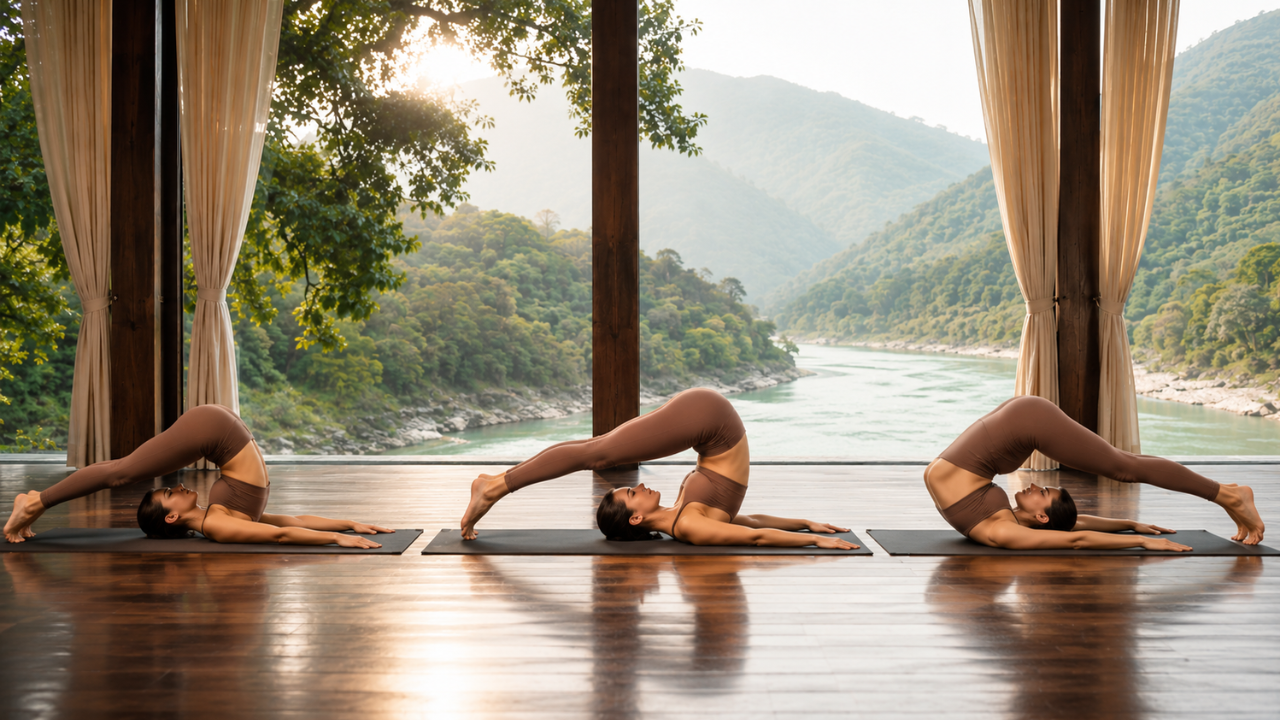
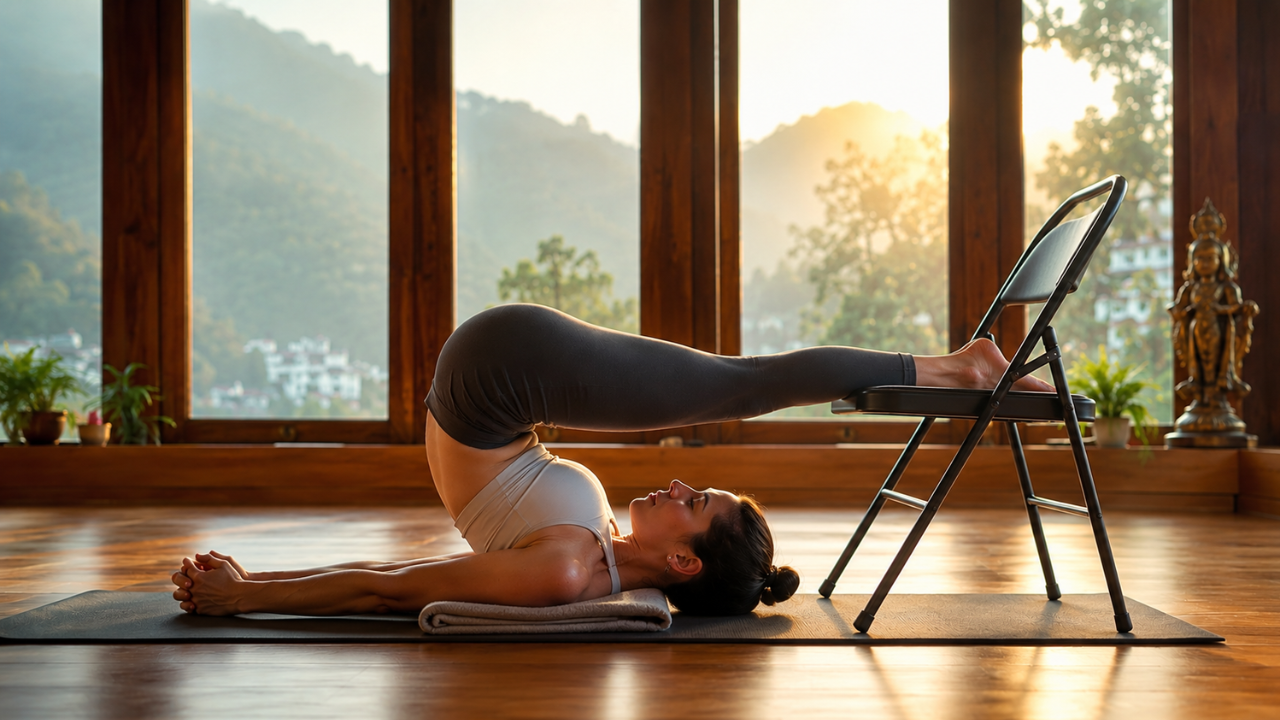
- Forcing the toes to the floor: If the toes do not reach, do not push. The back rounds too much and the neck takes strain. Let them hover - or use a chair.
- Weight on the neck: The most common mistake. The weight should always be on the shoulders. If you feel pressure in the neck, come out of the pose immediately.
- Turning the head: Even a small head turn in Plow Pose can cause neck injury. Keep the gaze fixed upward or close the eyes.
- Dropping the legs fast: The entry and exit must always be slow and controlled. Dropping the legs uses momentum instead of strength - and strains the back.
- Forgetting the core: The belly must stay engaged throughout. A soft core causes the lower back to sag and compress.
- Skipping the warm-up: Coming straight into Plow Pose without warming up the hamstrings and spine is a common cause of strain. Always prepare the body first.
Easy Modifications for Beginners
If you cannot reach the floor with your toes or the neck feels uncomfortable - these simple changes will help you practice safely and still get all the benefits.
- Use a folded blanket: Place 1 to 2 folded blankets under the shoulders. This is the most important modification for neck safety.
- Use a chair: Place a chair just above the head. Rest the tops of the feet on the chair seat instead of reaching all the way to the floor. This reduces strain on the hamstrings and back.
- Keep arms flat: If interlacing the fingers behind the back feels hard, just keep both palms flat on the mat. This is totally fine and gives good support.
- Bend the knees slightly: If the hamstrings are very tight, a soft bend in the knees takes the pressure off and lets you hold the pose longer.
- Hold for fewer breaths: Start with just 3 to 5 breaths. That is enough. Build up the hold time over weeks, not days.
Props are what makes Plow Pose available to everyone. A blanket and a chair cost nothing but they make the pose completely different - safer, deeper, and better.
Tips to Get More from Plow Pose
These small things make a real difference. Try them in your next session.
- Warm up the spine first: Cat-Cow, Bridge Pose, and Seated Forward Bend are great ways to prepare the spine before going into Plow Pose.
- Breathe into the back: In Plow Pose, the front chest is compressed. Try to send the breath into the back of the ribcage - feel it expand with each inhale.
- Close the eyes: Closing the eyes removes distraction and helps you feel the stretch from inside. The pose becomes more calming and meditative.
- Practice in the evening: Plow Pose is a wonderful evening pose. Done 30 minutes before bed, it helps the body relax and supports deep sleep.
- Follow with Fish Pose: After Plow Pose, do Matsyasana (Fish Pose) as a counter-stretch. It opens the chest and neck back in the opposite direction and feels wonderful.
- Never rush the exit: Roll down bone by bone. The slow exit is part of the practice - and one of the best spinal massages you can give yourself.
Who Should Be Careful with This Pose?
Plow Pose is a gentle inversion - but a few conditions need careful attention or full avoidance.
- Neck injury or cervical issues: Avoid Plow Pose completely if you have any cervical spine problems, herniated discs in the neck, or ongoing neck pain.
- High blood pressure: Inversions raise pressure in the head. Check with your doctor before practicing. Keep the hold time very short if you do try it.
- Glaucoma or eye pressure: Avoid all inversions including Plow Pose if you have this condition.
- Pregnancy: Do not practice Plow Pose during pregnancy. The compression on the abdomen and the inversion are not safe.
- Menstruation: Many traditional yoga teachers advise avoiding inversions during menstruation. Listen to your body and rest if needed.
- Tight hamstrings: Not a reason to avoid the pose - but use a chair or bend the knees. Forcing straight legs when hamstrings are very tight puts too much pull on the lower back.
When in doubt, always practice with a qualified yoga teacher. They can check your neck position and make sure the pose is safe for your body.
Quick Checklist - Is Your Plow Pose Correct?
Run through this list while you are in the pose. If all of these feel right - your Halasana is solid and safe.
- Body weight is resting on the tops of the shoulders - not the neck
- Blanket is under the shoulders for neck protection
- Legs are straight and active - thighs engaged, feet flexed
- Toes touching the floor or resting on a chair
- Core is gently engaged - lower back is not sagging
- Arms are pressing into the mat or fingers interlaced
- Chin is drawing gently toward the chest
- Head is completely still - no turning side to side
- Breath is slow and steady throughout
- Face and jaw are soft and relaxed
Learn Plow Pose at Adishesh Yoga, Rishikesh
Want to learn Plow Pose safely and correctly? Come practice at Adishesh Yoga in Rishikesh. Our teachers give clear, hands-on guidance so you understand every part of the pose - from how the neck stays safe to how the spine opens fully.
We teach traditional Hatha yoga in small, focused groups. Every class is calm, personal, and built around you - whether you are just starting out or going deeper into your practice.
- Daily asana classes: Morning and evening sessions covering inversions, forward bends, and full sequences with proper alignment cues
- Inversion sequences: Shoulder Stand, Plow Pose, and Fish Pose taught in the correct order with breath and focus
- Pranayama and meditation: Included in every class and retreat program to calm the mind and deepen the practice
- Small group sizes: Personal attention, real corrections, and a supportive learning environment
- Experienced teachers: Trained in classical yoga with genuine depth of knowledge and years of teaching experience
Come to Rishikesh. Fold inward. Find the stillness that this pose is made of.
Frequently Asked Questions
Conclusion
Plow Pose is a quiet, powerful pose. It asks you to fold inward - and when you do, it gives you something back. A stretched spine. A calm mind. A body that feels lighter and more open than before.
Use a blanket. Use a chair. Take your time. There is no rush in this pose - and that is exactly the point. The stillness is the practice.
If you want a teacher to guide you safely through Plow Pose and inversions - come join us at Adishesh Yoga in Rishikesh. We will help you go deeper - safely, gently, and with full understanding of what your body needs.
Explore Authentic Yoga in Rishikesh with Adishesh Yoga
Ready to refine your alignment, anatomy, and sequencing under traditional masters? Join our Yoga Alliance certified courses or unwind with restorative retreats in the Himalayan foothills.