Forearm Stand Pose looks scary at first. You go upside down. Your legs go up. Everything feels shaky and new.
But with the right steps — it becomes one of the most exciting and rewarding poses in yoga. It builds strong shoulders. It trains a calm and focused mind. And that feeling when you find your balance — nothing like it.
What Is Forearm Stand Pose?
Forearm Stand Pose is called Pincha Mayurasana in Sanskrit. "Pincha" means feathers or chin. "Mayura" means peacock. So this pose is sometimes called the Feathered Peacock Pose — like a peacock spreading its beautiful feathers.
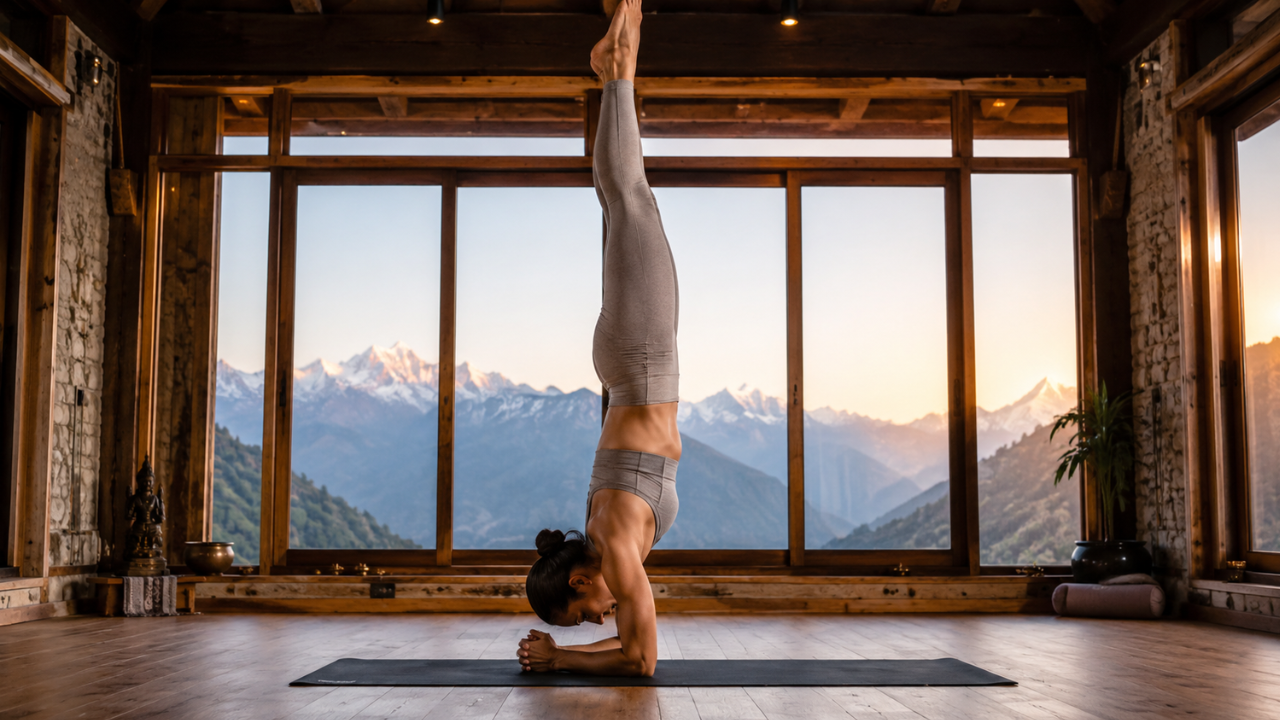
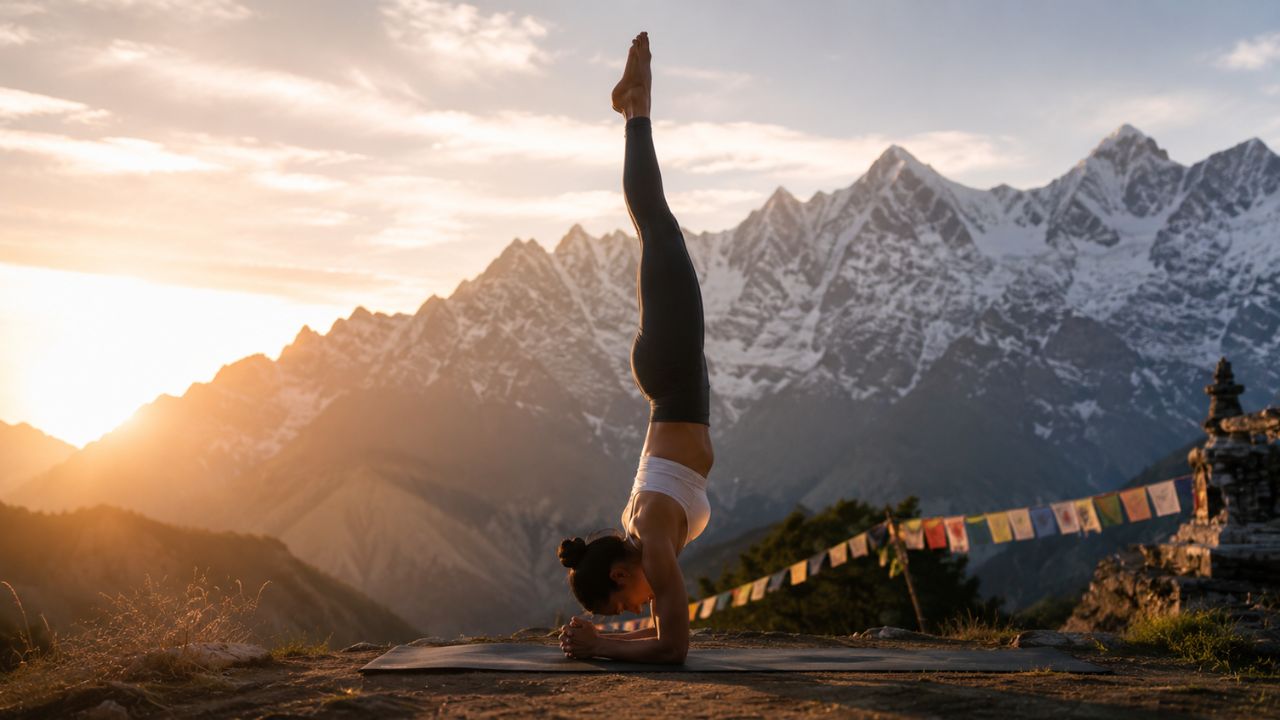
In this pose, you rest both forearms flat on the floor. Your legs go straight up toward the ceiling. Your whole body forms one straight line — from elbows to toes. It is a full inversion — your heart goes above your head — which makes it powerful for both body and mind.
- Sanskrit name: Pincha Mayurasana
- Meaning: Feathered Peacock Pose / Forearm Stand
- Pose type: Inversion and arm balance
- Level: Intermediate to advanced
- Hold time: 3 to 10 breaths per attempt
- Part of: Hatha yoga, Vinyasa yoga, Ashtanga yoga sequences
This pose usually comes after Dolphin Pose and shoulder-opening warm-ups in a yoga sequence. If you can hold Dolphin Pose with ease — Forearm Stand is your next big step forward.
Benefits of Forearm Stand Pose
This pose does so much for your body and mind. Here is what you get from regular practice.
- Stronger shoulders: The deltoids and rotator cuff muscles get a deep workout — building real, stable shoulder strength.
- Powerful core: Your belly and back muscles work together the whole time to keep the body straight and steady.
- Better balance: Balancing upside down trains your body awareness and coordination in a new and deep way.
- Open chest: The front of the chest and shoulders stretch beautifully as you hold the pose.
- Calmer mind: Inversions send fresh blood to the brain and calm the nervous system — you feel refreshed and clear.
- Stronger upper back: The muscles between and around the shoulder blades get toned and more stable.
- More confidence: Facing your fear of going upside down and doing it — builds real inner strength and courage.
- Better posture: A strong upper body and spine means you stand taller and move better in everyday life.
People who practice Forearm Stand regularly often notice their shoulders feel less tight, their mind feels calmer, and their whole posture improves — even outside of yoga class.
How to Do Forearm Stand — Step by Step
Read each step carefully. Do not rush. The slower you go — the safer and steadier you will be.
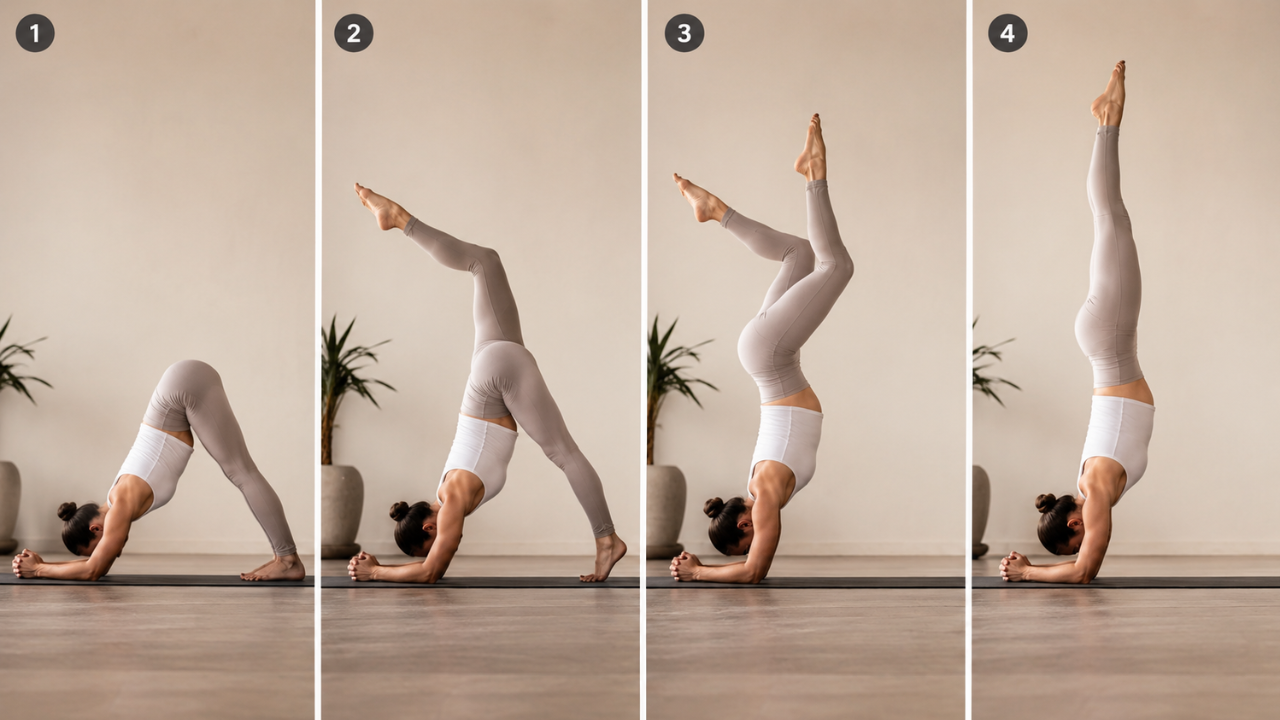
- Step 1: Start on your hands and knees. Lower your forearms to the floor. Place them shoulder-width apart — not wider, not narrower.
- Step 2: Keep your hands flat and fingers spread wide. Press all fingers firmly into the mat. Palms can be flat or interlaced — flat is better for beginners.
- Step 3: Tuck your toes and lift your hips up — like Dolphin Pose. Walk your feet toward your elbows until the hips are above the shoulders.
- Step 4: Look between your forearms at a point on the floor. This is your drishti — your focus point. Keep it steady.
- Step 5: Lift one leg straight up toward the ceiling. Use it to find your balance point. Take a breath here.
- Step 6: On an inhale — gently kick or float the second leg up. Bring both legs together straight up. A wall behind you helps a lot at first.
- Step 7: Once up — squeeze the inner thighs together. Flex both feet and reach up through the heels.
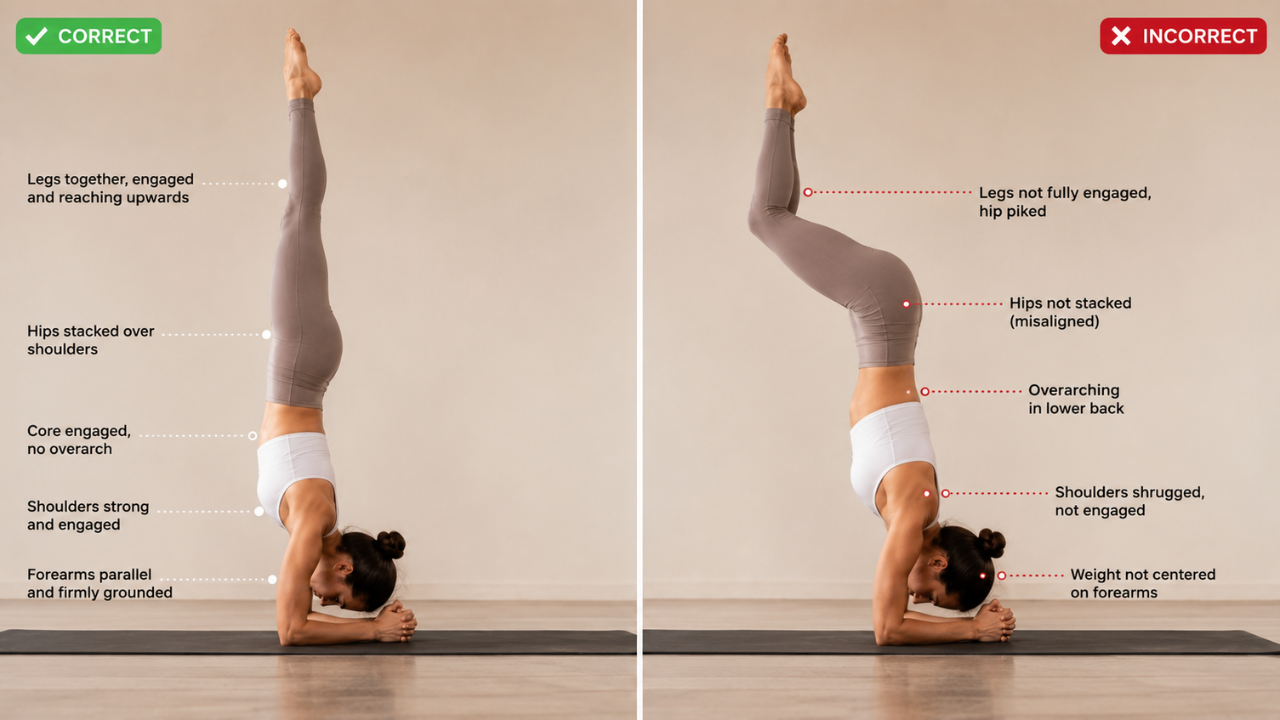
- Step 8: Draw the belly in. Keep the lower back from arching too much. Think — long and straight, not banana-shaped.
- Step 9: Press the forearms firmly into the mat. Push the floor away from you to lift through the shoulders.
- Step 10: Hold for 3 to 5 slow breaths. Come down slowly on an exhale — one leg at a time. Rest in Child's Pose after.
If you fall — that is part of the learning. Come back up and try again. Every attempt — even the wobbly ones — builds strength and confidence.
Key Alignment Tips for Forearm Stand
Good alignment protects your shoulders and makes the pose feel much lighter. Check these points every time you practice.
- Forearm width: Keep both forearms exactly shoulder-width apart — no wider. If they splay out, the shoulders take too much strain.
- Elbow position: Elbows stay directly below the shoulders throughout — not in front, not behind.
- Hands: Press all fingers and knuckles firmly into the mat. The forearms and hands are your foundation — make it solid.
- Shoulders: Push the floor away and lift the shoulders away from the ears. Do not sink or collapse between the shoulder blades.
- Core: Keep the belly gently drawn in. This stops the lower back from over-arching — which is the most common problem in this pose.
- Legs: Squeeze the thighs together. Feet flex and reach up. Think of your legs as one long, strong antenna pointing to the ceiling.
- Head: Keep the head between the arms — not dropped back, not jutting forward. Gaze stays at the floor between the forearms.
- Breathing: Breathe slowly and fully throughout. If the breath stops — that is the first sign the pose is too much for that moment.
Focus on one alignment cue per practice session. Over time, all of these become automatic — and the pose starts to feel natural and even easy.
Common Mistakes to Avoid
These are the mistakes that most beginners make. Knowing them early saves you from injury and makes the pose feel much better.
- Elbows sliding out: When elbows move wider than shoulders — all the shoulder stress goes to the wrong place. Use a strap around the upper arms to keep them in line.
- Banana back: Over-arching the lower back is the most common mistake. It looks pretty but puts too much pressure on the spine. Keep the core switched on and the lower back long.
- Collapsing between shoulder blades: If you sink into the shoulders — the pose falls apart. Push the floor away actively with every breath.
- Kicking too hard: Throwing the legs up with too much force leads to overshooting and falling over. Practice gentle kicks and learn to float up slowly.
- Holding the breath: Many people freeze the breath when going upside down. Keep breathing slowly — it calms the mind and keeps the body steady.
- Head dropping back: The head and neck must stay neutral. Dropping the head back strains the neck and throws off your balance.
- Skipping preparation: Going straight into Forearm Stand without warming up the shoulders is a sure path to injury. Always do Dolphin Pose and shoulder warm-ups first.
Easy Modifications for Beginners
Not ready for the full pose yet? That is completely fine. These changes will help you build up slowly and safely.
- Practice Dolphin Pose first: Dolphin Pose is the best preparation for Forearm Stand. It builds all the shoulder strength and flexibility you need. Do it daily.
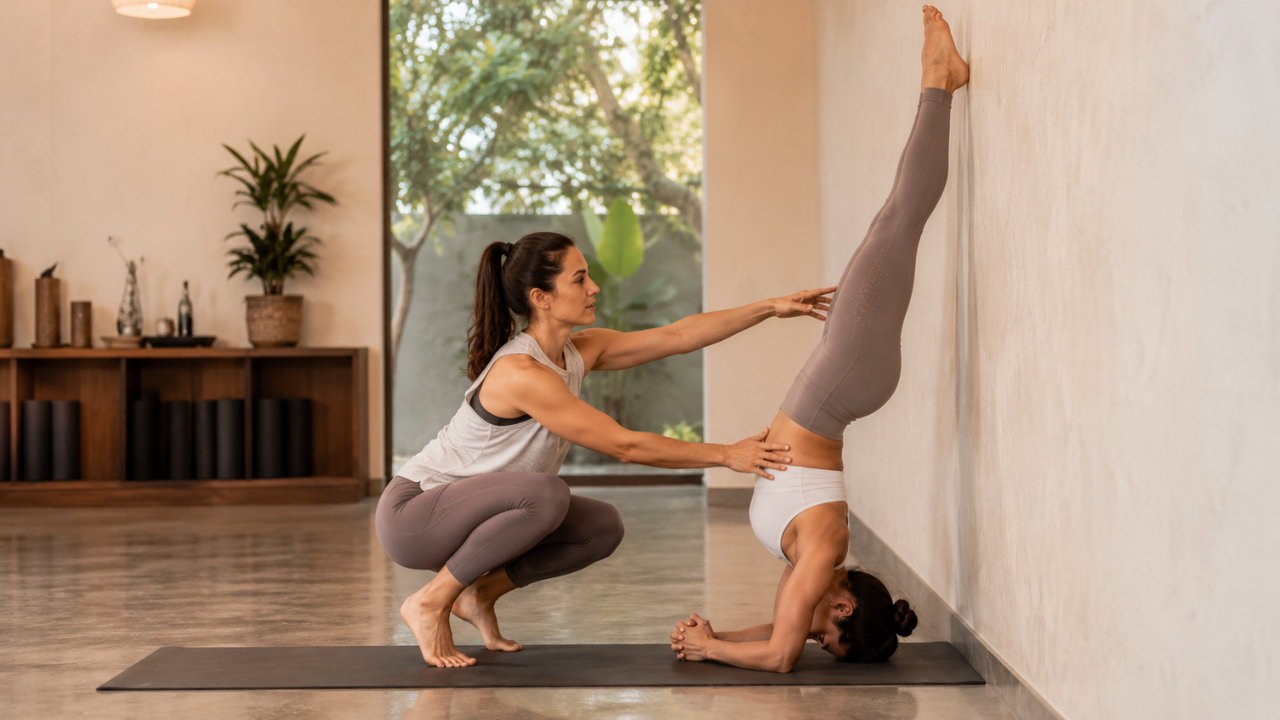
- Use a wall: Set up with your forearms about 30 cm away from a wall. Kick up and let your heels rest lightly against the wall. This lets you feel the pose safely without the fear of falling over.
- Use a strap: Loop a yoga strap around your upper arms — just above the elbows — to stop them sliding wider than your shoulders. This one simple tool changes everything.
- Half lift practice: Kick one leg up and hold it there — do not bring the second leg up yet. This builds strength and helps you understand the balance point.
- Have a spotter: Ask a friend or teacher to stand next to you and guide your legs up. This removes the fear and lets you focus on the alignment and breath.
Using a wall is smart yoga. It does not mean you are not ready — it means you are training safely. Even experienced yogis use a wall when learning new variations.
Tips to Make This Pose Feel Better
Small habits make a big difference with Forearm Stand. Try these every time you practice.
- Always warm up the shoulders: Do Cat-Cow, Thread the Needle, and Dolphin Pose before any attempt at Forearm Stand. Cold shoulders in an inversion is asking for injury.
- Fix your gaze early: Before kicking up — pick one still point on the floor between your forearms and look at it. This drishti point is your anchor for balance.
- Squeeze the thighs together: This single action — bringing the inner thighs to touch — creates surprising stability and helps keep the body straight.
- Start your exhale before kicking up: Exhale first, then kick. This naturally engages the core and makes the lift cleaner and more controlled.
- Rest in Child's Pose after: Always come to Child's Pose after Forearm Stand. It releases the shoulders and lower back and calms the nervous system.
- Practice often — even for 5 minutes: Forearm Stand comes from consistent practice. Even a few minutes every day — Dolphin Pose, half lifts, wall kicks — adds up fast.
- Let go of the result: The pose will come when the body is ready. Keep showing up, keep trying, keep breathing. That is the real yoga practice.
Who Should Be Careful with This Pose?
Forearm Stand is powerful — and because of that, a few conditions need extra care and attention.
- Shoulder injury: Avoid this pose if you have a recent rotator cuff injury, shoulder impingement, or any sharp pain in the shoulder joint. Build strength slowly with Dolphin Pose first.
- Neck injury: The neck must stay completely neutral in this pose. If you have neck problems — skip Forearm Stand until you have healed and been cleared by a doctor.
- High blood pressure: All inversions raise intracranial pressure. People with uncontrolled high blood pressure or serious heart conditions should avoid this pose.
- Glaucoma or eye pressure: Inversions increase pressure in the eyes. Those with glaucoma or eye conditions should consult a doctor before practising any full inversions.
- Pregnancy: Inversions are generally not safe during pregnancy, especially for those new to the practice. Always consult your doctor and a qualified yoga teacher.
When in doubt — always check with a yoga teacher and your doctor. A good teacher will give you modified options that are safe and still deeply beneficial for your body.
Quick Checklist — Is Your Pose Correct?
Run through this list while you are in the pose. If all of these feel right — your Forearm Stand is solid.
- Forearms are shoulder-width apart — not wider
- Elbows are directly below the shoulders
- All fingers are spread and pressing firmly into the mat
- Shoulders are lifting away from the ears — not sinking
- Core is gently engaged and lower back is long
- Both legs are squeezed together and reaching straight up
- Feet are flexed with heels reaching to the ceiling
- Head is between the arms — not dropped back
- Gaze is fixed at one still point on the floor
- Breath is slow, steady, and even throughout
- Face and jaw are soft and relaxed
Learn Forearm Stand at Adishesh Yoga, Rishikesh
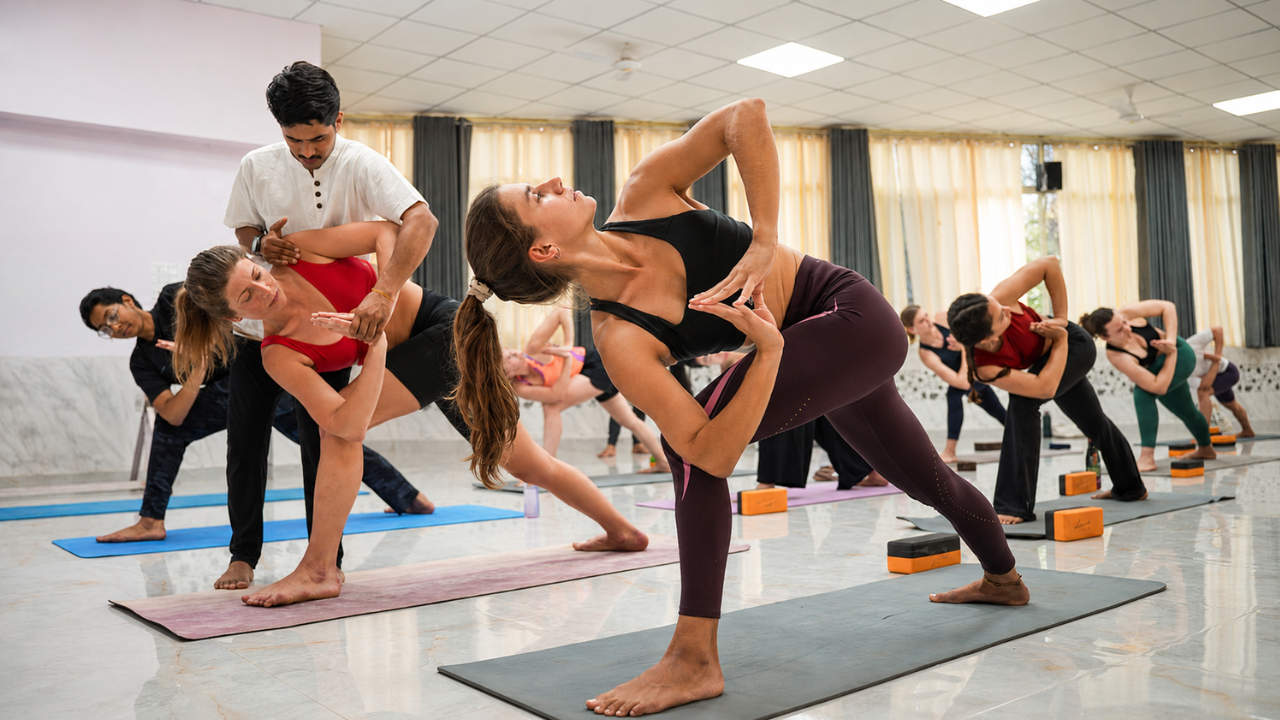
Want to really learn Forearm Stand Pose with proper guidance? Come practice at Adishesh Yoga in Rishikesh. Our teachers give personal hands-on adjustments and clear, simple cues. You will not just try the pose — you will understand it fully and safely from day one.
We teach traditional Hatha yoga in small groups. Every class is calm, focused, and personal. Whether you are a complete beginner or working toward advanced inversions — there is a class and a teacher here that is right for you.
- Daily asana classes: Morning and evening sessions covering standing poses, balance poses, arm balances, and inversions — all with clear alignment guidance
- Inversion sequences: Dolphin Pose, Forearm Stand, Headstand, and Shoulder Stand — all taught in the right order with breath and focus
- Pranayama and meditation: Included in every class and retreat program to deepen your mind-body connection
- Small group sizes: Personal attention, real corrections, and a calm and supportive learning space
- Experienced teachers: Trained in classical yoga with real depth, genuine care, and years of teaching experience in inversions and arm balances
Come to Rishikesh. Go upside down. See the world from a new angle — and feel what yoga really means.
Frequently Asked Questions
Conclusion
Forearm Stand Pose is more than just going upside down. It is a journey — one that builds strong shoulders, trains a steady mind, and teaches you to trust your own body in a completely new way.
Start with Dolphin Pose. Use a wall. Use a strap. Take it one small step at a time. None of that is weakness — it is exactly how every strong yogi learned this pose. The balance comes. The strength follows.
If you want a teacher to watch your alignment and guide you safely into your first Forearm Stand — come practice at Adishesh Yoga in Rishikesh. We will help you go upside down — and find a whole new way to stand tall.
Explore Authentic Yoga in Rishikesh with Adishesh Yoga
Ready to refine your alignment, anatomy, and sequencing under traditional masters? Join our Yoga Alliance certified courses or unwind with restorative retreats in the Himalayan foothills.