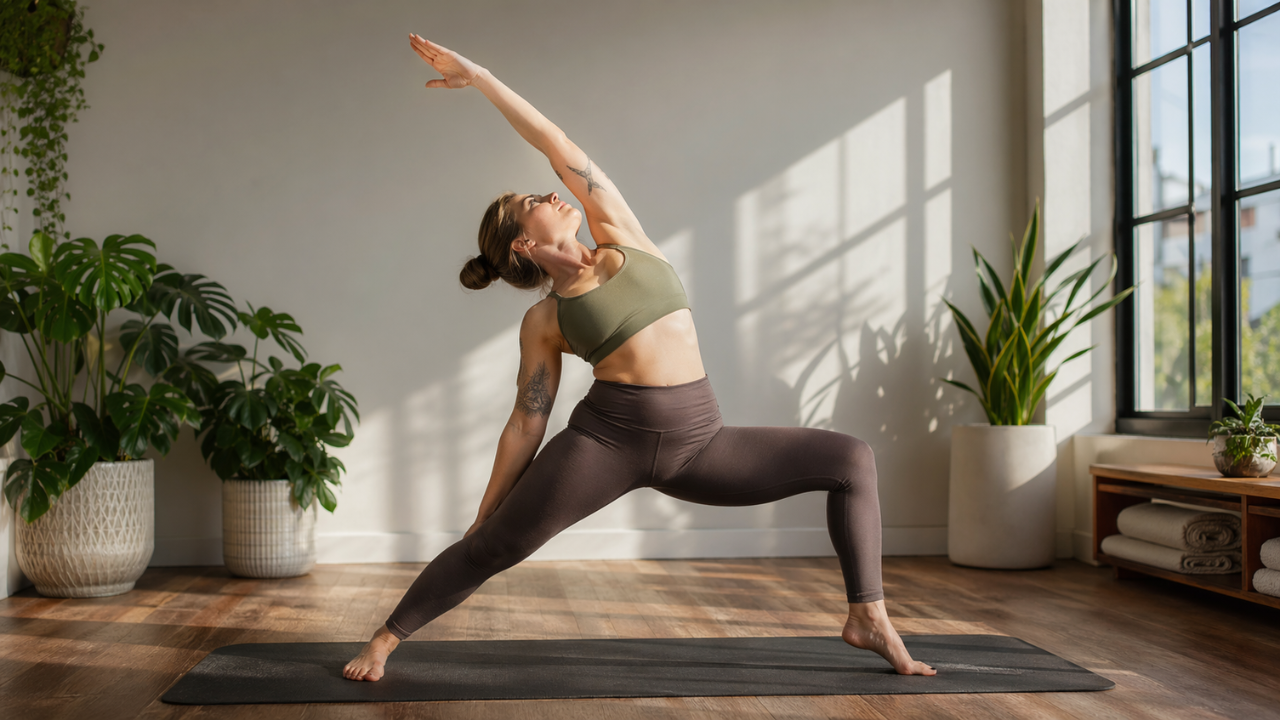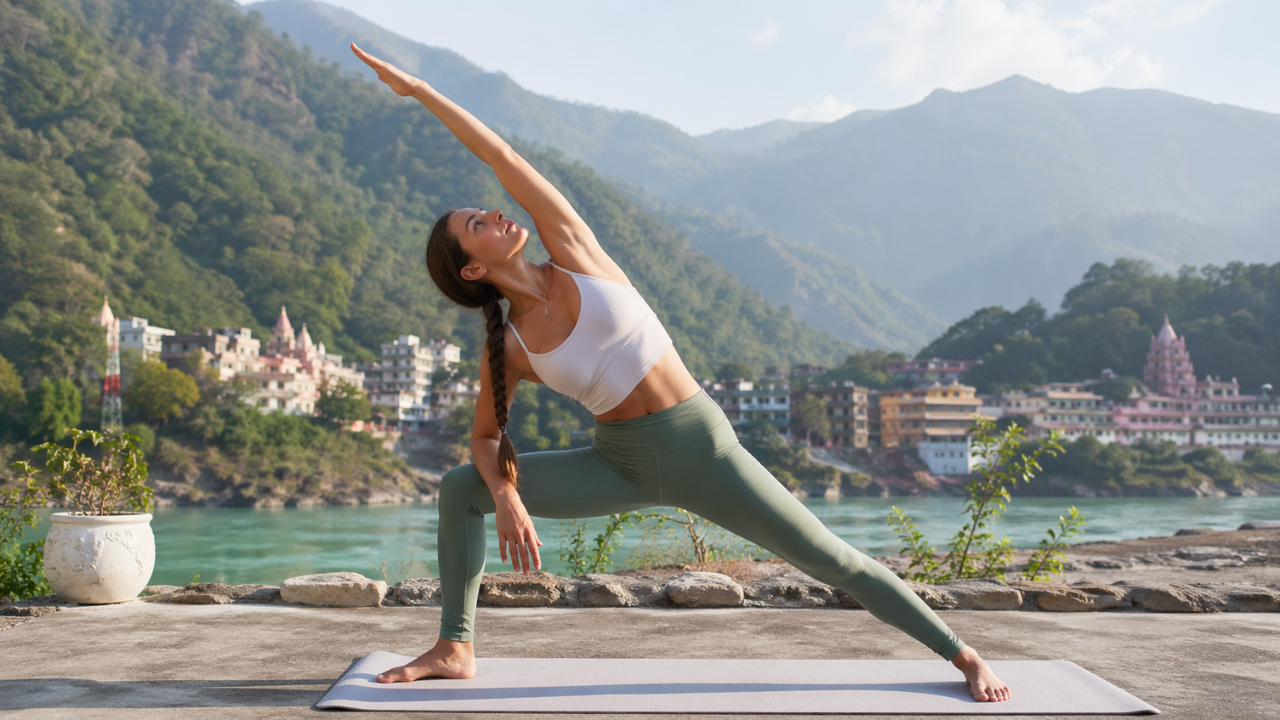
Extended Side Angle Pose is one of the best yoga poses for your whole body. It opens your hips, stretches your sides, and strengthens your legs — all at the same time.
It looks easy from the outside. But when you do it yourself, you feel how much your body actually needs this stretch.
What Is Extended Side Angle Pose?
Extended Side Angle Pose is called Utthita Parsvakonasana in Sanskrit. "Utthita" means extended. "Parsva" means side. "Kona" means angle. So the name simply means — a big stretch on the side of your body.
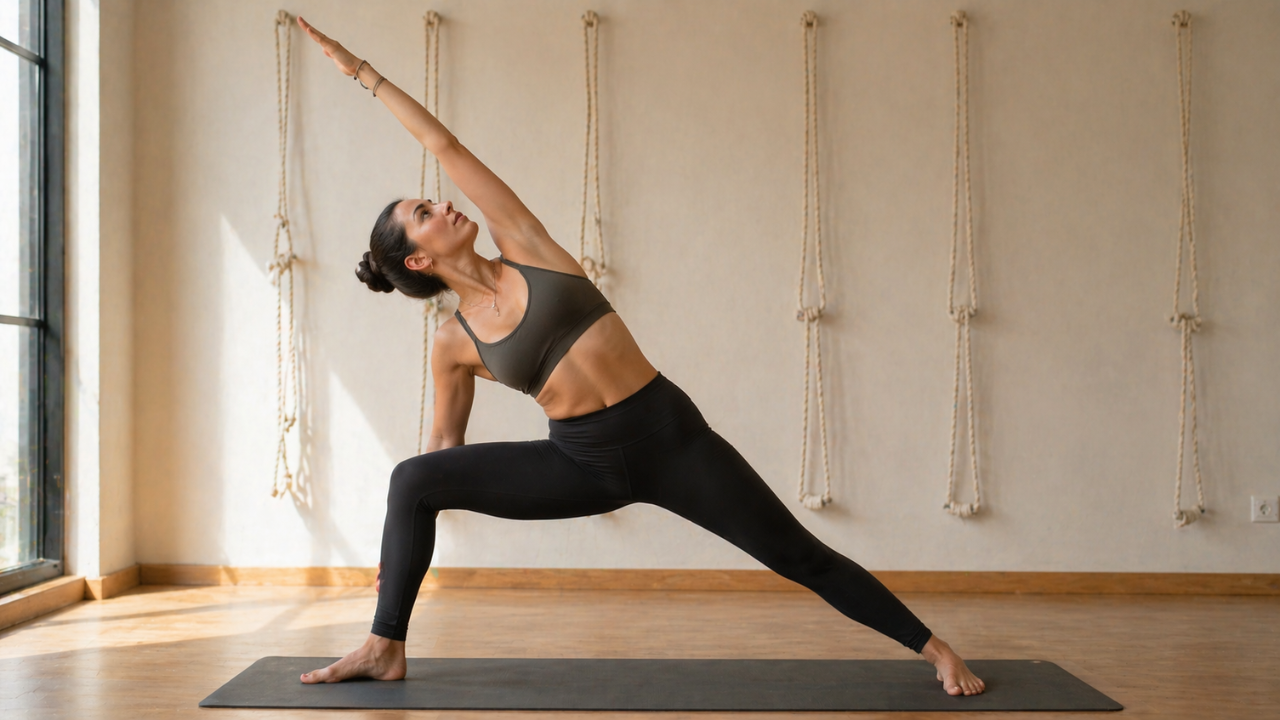
In this pose, you stand with your legs wide apart. You bend the front knee into a lunge. Then you lean your upper body sideways and stretch one arm long over your head. The whole body makes one long straight line — from your back heel all the way to your fingertips.
- Sanskrit name: Utthita Parsvakonasana
- Pose type: Standing stretch pose
- Level: Beginner to intermediate
- Hold time: 3 to 10 breaths per side
- Part of: Hatha yoga, Vinyasa yoga, Ashtanga yoga sequences
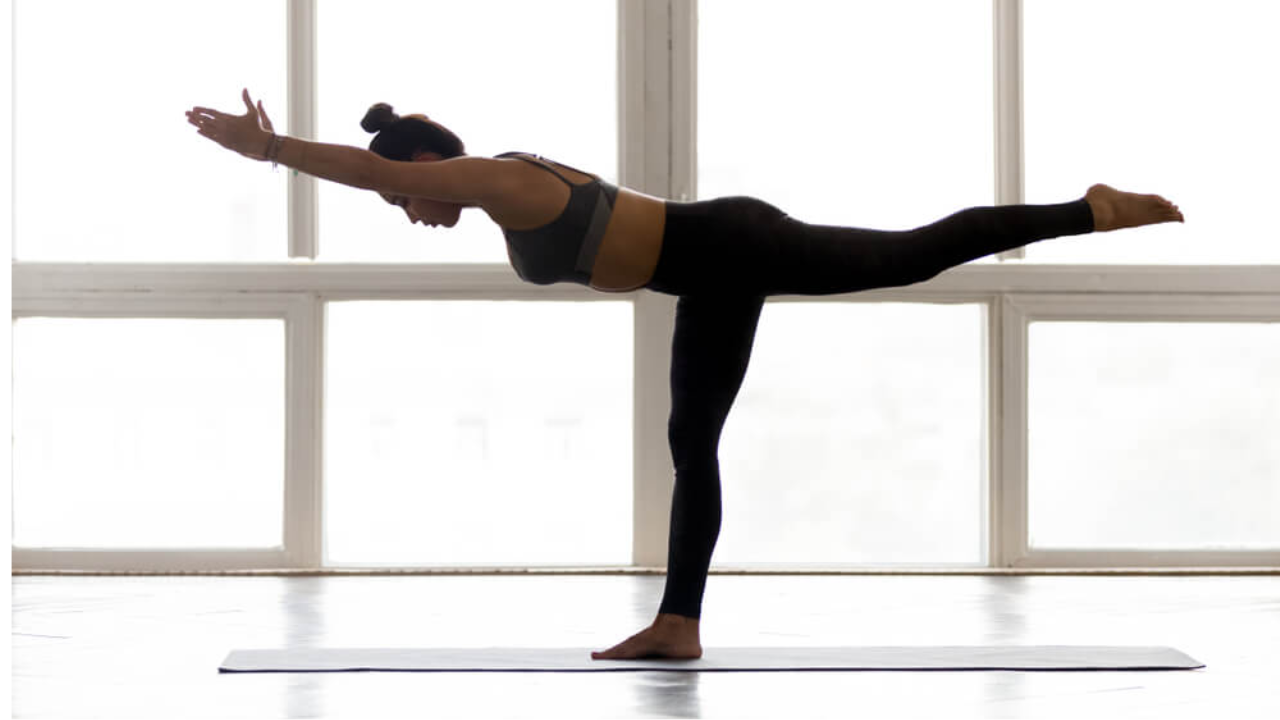
This pose is a classic part of most yoga styles. It comes after Warrior I and Warrior II in many sequences. If you know Warrior II, you are already halfway to Extended Side Angle.
Benefits of Extended Side Angle Pose
Regular practice of this pose supports strength, flexibility, balance, and posture.
- Builds leg strength: Activates thighs, calves, and hips.
- Opens hips: Stretches groin and inner thighs.
- Lengthens side body: Expands ribs and waist muscles.
- Improves stamina: Increases endurance over time.
- Supports digestion: Engages abdominal area gently.
- Opens chest: Helps shoulders and upper body mobility.
- Better posture: Strengthens spine-supporting muscles.
- Calms the mind: Breath focus reduces stress.
Consistent practice can improve mobility, strength, and overall body awareness.
How to Do Extended Side Angle Pose — Step by Step
Follow these simple steps slowly and with control. Focus on balance, alignment, and breathing.
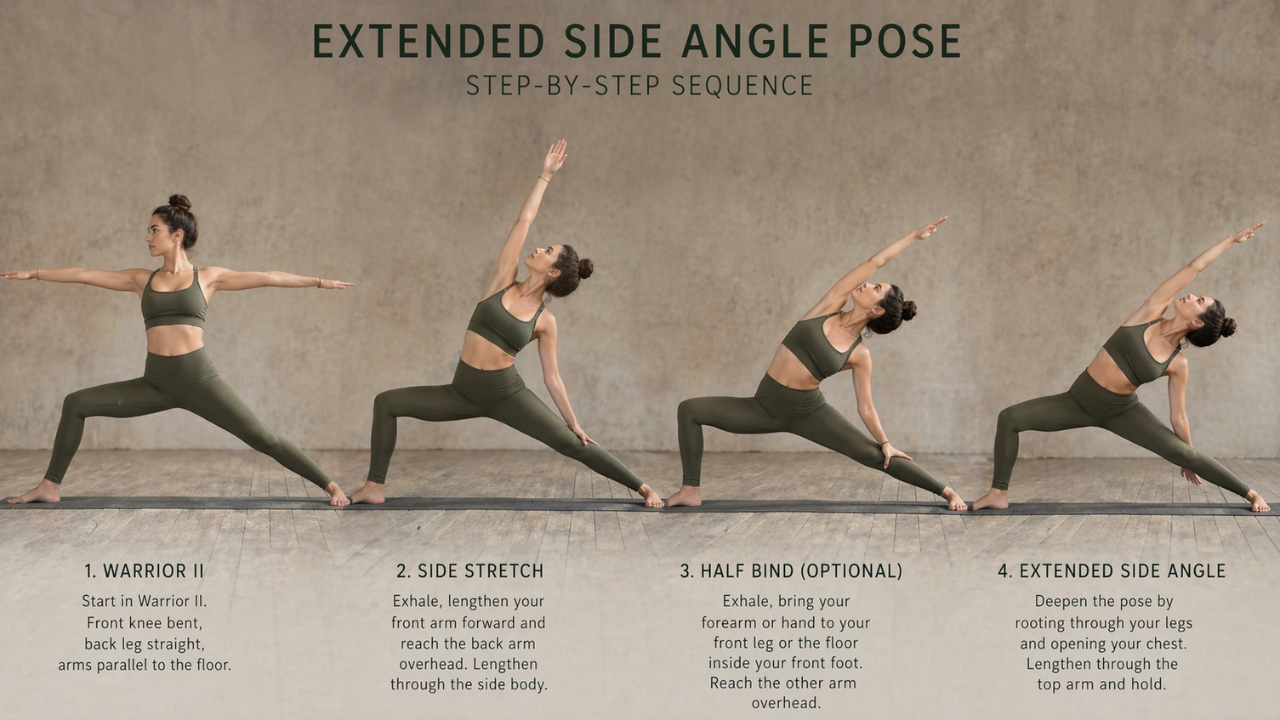
- Step 1: Stand tall in Mountain Pose and relax your breath.
- Step 2: Step feet wide apart. Turn front foot out and back foot slightly in.
- Step 3: Bend the front knee over the ankle and extend arms wide.
- Step 4: Lower front arm to thigh or floor beside the foot.
- Step 5: Stretch top arm overhead beside the ear.
- Step 6: Form one long line from back foot to fingertips.
- Step 7: Rotate chest upward and open shoulders.
- Step 8: Hold for 3–5 breaths while staying steady.
- Step 9: Rise back to Warrior II and repeat on the other side.
Practice both sides evenly. Move gently and never force the stretch.
Common Mistakes to Avoid
Avoid these common mistakes to improve alignment, stability, and safety in Extended Side Angle Pose.
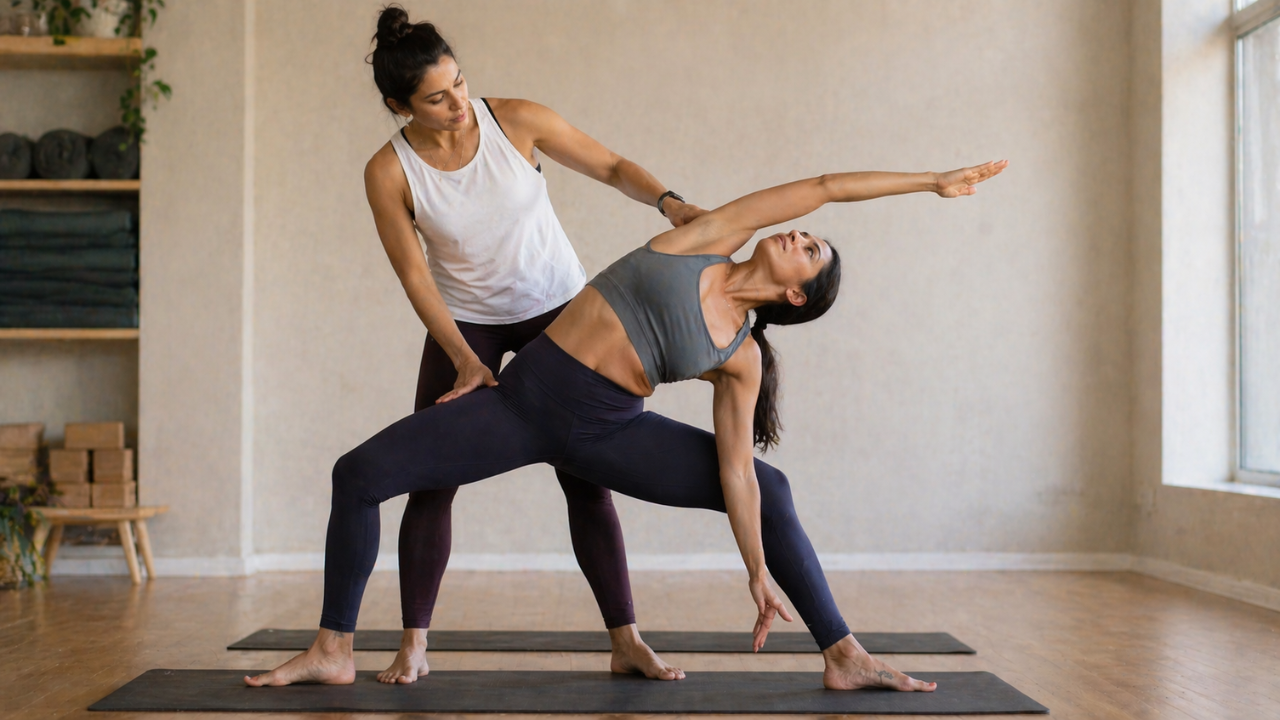
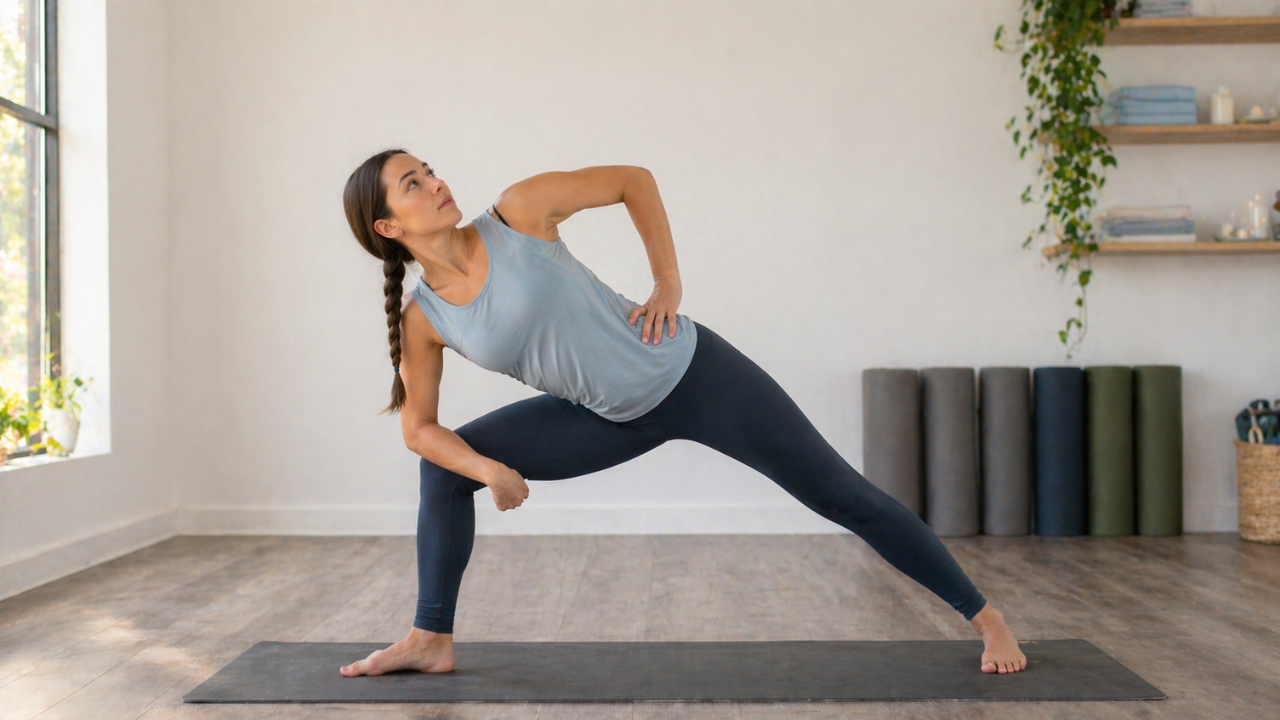
- Knee too far forward: Keep front knee above the ankle.
- Chest dropping down: Rotate chest open toward the side.
- Too much weight on arm: Support the pose with legs and core.
- Back foot lifting: Press outer back foot firmly down.
- Crunching side body: Lengthen through waist and ribs.
- Neck strain: Look where your neck feels comfortable.
- Ignoring back leg: Keep back leg active and straight.
Easy Modifications for Beginners
If the full pose feels difficult, use these beginner-friendly modifications for comfort and support.
- Forearm on thigh: Rest forearm on front thigh for support.
- Top hand on hip: Keep upper hand on hip if shoulder feels tight.
- Use a yoga block: Place bottom hand on a block instead of floor.
- Shorter stance: Bring feet closer for better balance and control.
- Less knee bend: Keep front knee slightly bent if needed.
Modifications help you build strength safely. Progress slowly and respect your body.
Tips to Make This Pose Feel Better
Small adjustments can improve comfort, balance, and alignment in this pose.
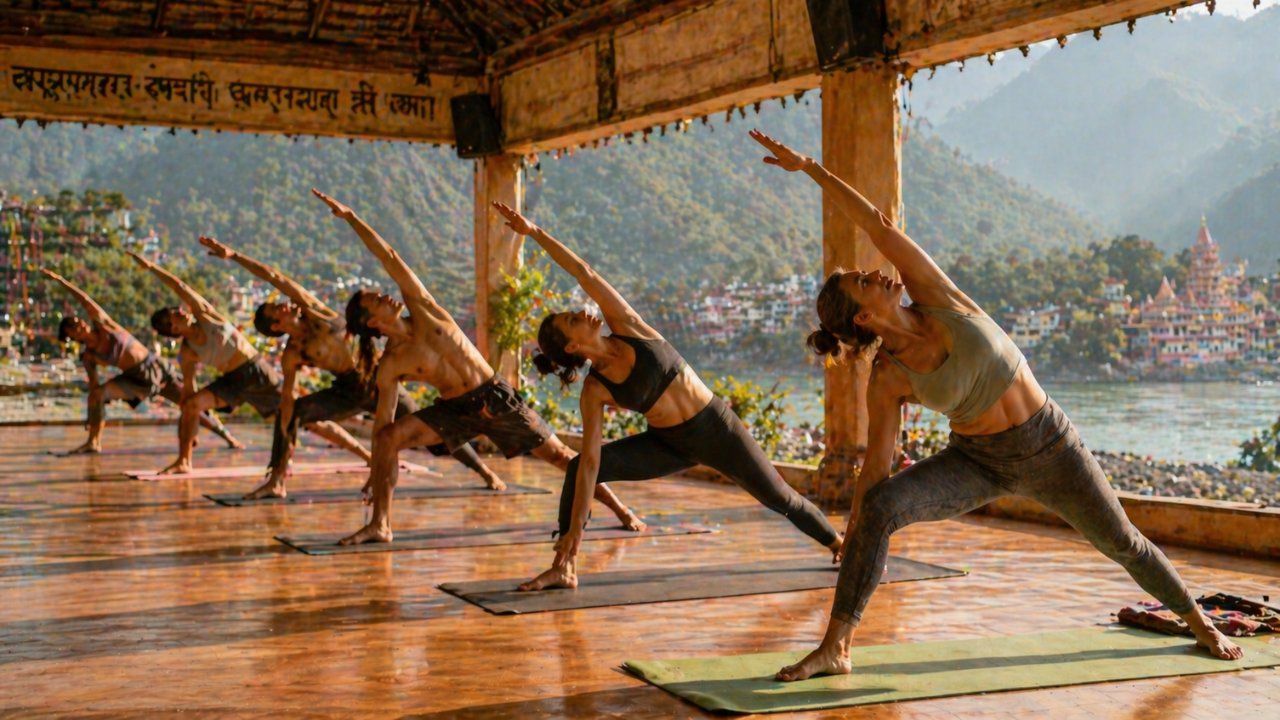
- Warm up first: Practice Warrior II before entering the pose.
- Use your breath: Inhale to lengthen, exhale to deepen gently.
- Press back foot down: Ground the outer edge for stability.
- Create length: Reach through heel and fingertips.
- Align front knee: Keep knee tracking over toes.
- Soft gaze upward: Look up only if neck feels comfortable.
- Practice regularly: Consistency improves strength and flexibility.
Who Should Be Careful with This Pose?
This pose is safe for many people, but some conditions need extra care and proper modification.
- Knee injury: Reduce depth and avoid pain.
- Neck discomfort: Keep gaze forward or downward.
- Lower back pain: Move gently and engage core muscles.
- High blood pressure: Keep top hand on hip if needed.
- Pregnancy: Use support and avoid belly compression.
If unsure, practice under guidance from a qualified yoga teacher or healthcare professional.
Quick Checklist — Is Your Pose Correct?
Use this checklist during your practice. If all of these feel right — your alignment is good.
- Front knee is directly over the front ankle — not past it
- Back leg is straight and strong
- Outer edge of back foot is pressing into the mat
- Chest is open and facing sideways — not the floor
- Bottom arm is light — not taking your body weight
- Top arm is reaching long alongside the ear
- Side body is lengthening — not crunching
- Core is gently engaged
- Breathing is slow, steady, and through the nose
- Gaze is comfortable — looking up, ahead, or down
Learn Extended Side Angle Pose at Adishesh Yoga, Rishikesh
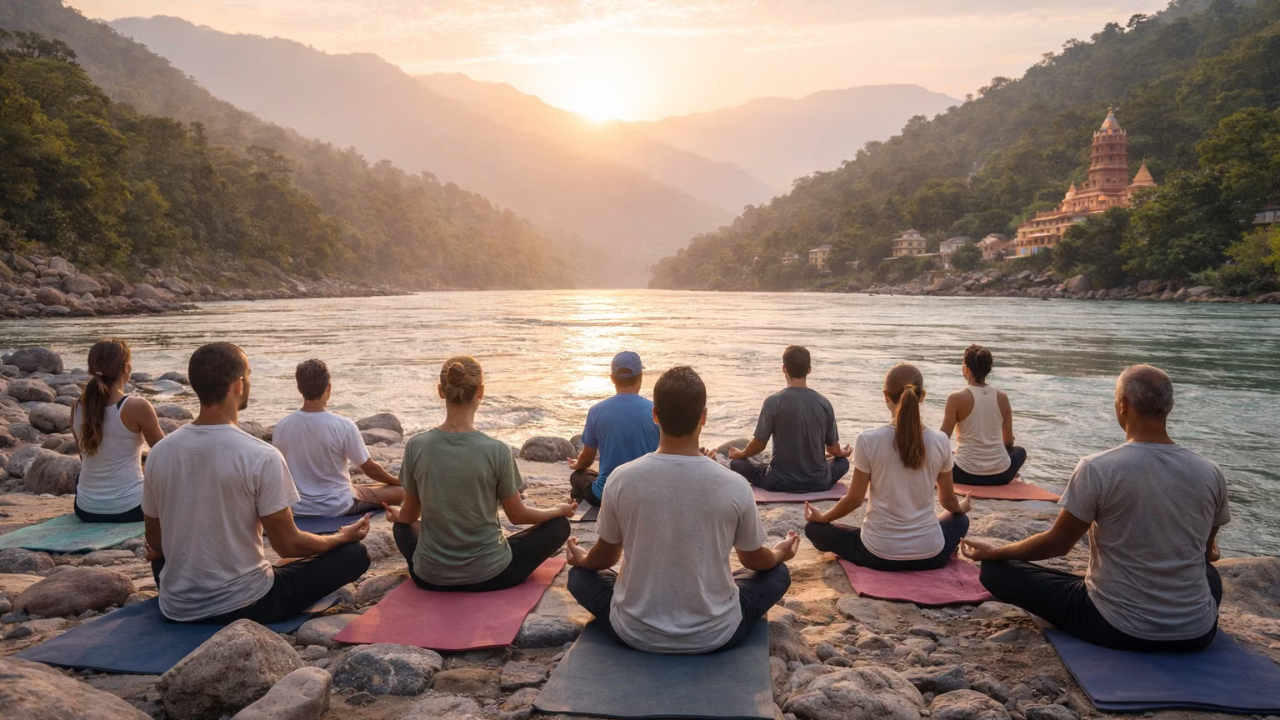
If you want to learn Extended Side Angle Pose properly — come practice at Adishesh Yoga in Rishikesh. Our teachers guide you through each pose with full attention to alignment and breath. You will not just do the pose — you will understand it.
We teach traditional Hatha yoga in small groups. Every student gets personal attention and corrections. Whether you are just starting or want to go deeper — we have a class for you.
- Daily asana classes: Morning and evening sessions with proper alignment guidance for each pose
- Standing pose sequences: Extended Side Angle, Warriors, Triangle — all taught in correct order with breath
- Pranayama and meditation: Included in every class and retreat program
- Small group sizes: You get personal corrections and a calm, focused learning space
- Experienced teachers: Trained in traditional yoga with real depth of knowledge and teaching experience
Come to Rishikesh. Learn yoga the right way. Leave with a practice that truly belongs to you.
Frequently Asked Questions
Conclusion
Extended Side Angle Pose is one of those yoga poses that gives a lot — every single time you do it. It stretches tight hips, opens stiff shoulders, strengthens tired legs, and clears a busy mind. All in one pose.
Start simple. Forearm on thigh. Feet not too wide. Top hand on hip. That is still the pose — and it still works. As your body opens up and gets stronger, the full version will come on its own.
If you want to learn it the right way with a real teacher watching your alignment — come practice with us at Adishesh Yoga in Rishikesh. We will help you build a strong, safe, and joyful yoga practice.