>
Located at 3,680 meters, part of the sacred Panch Kedar
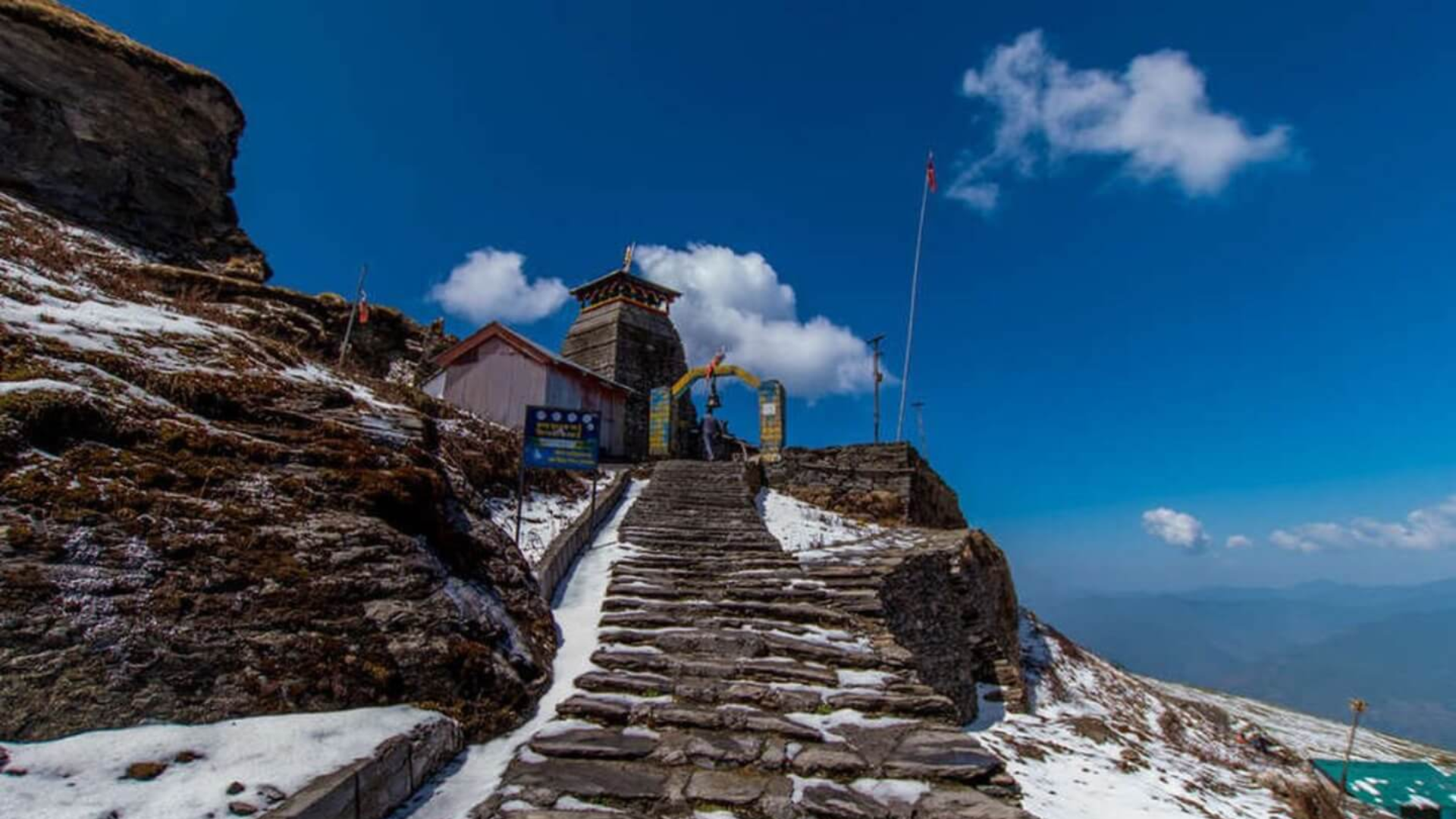
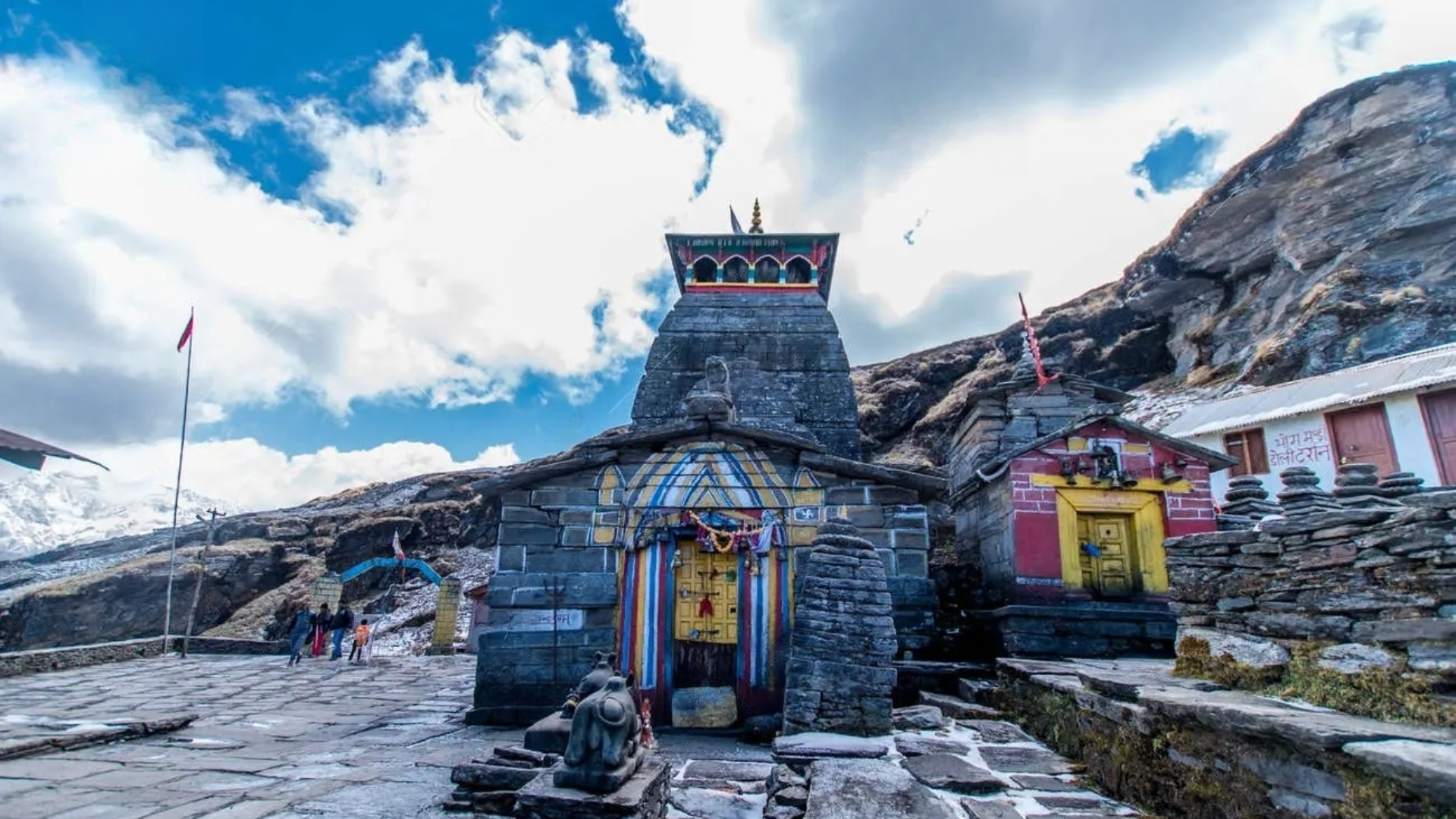
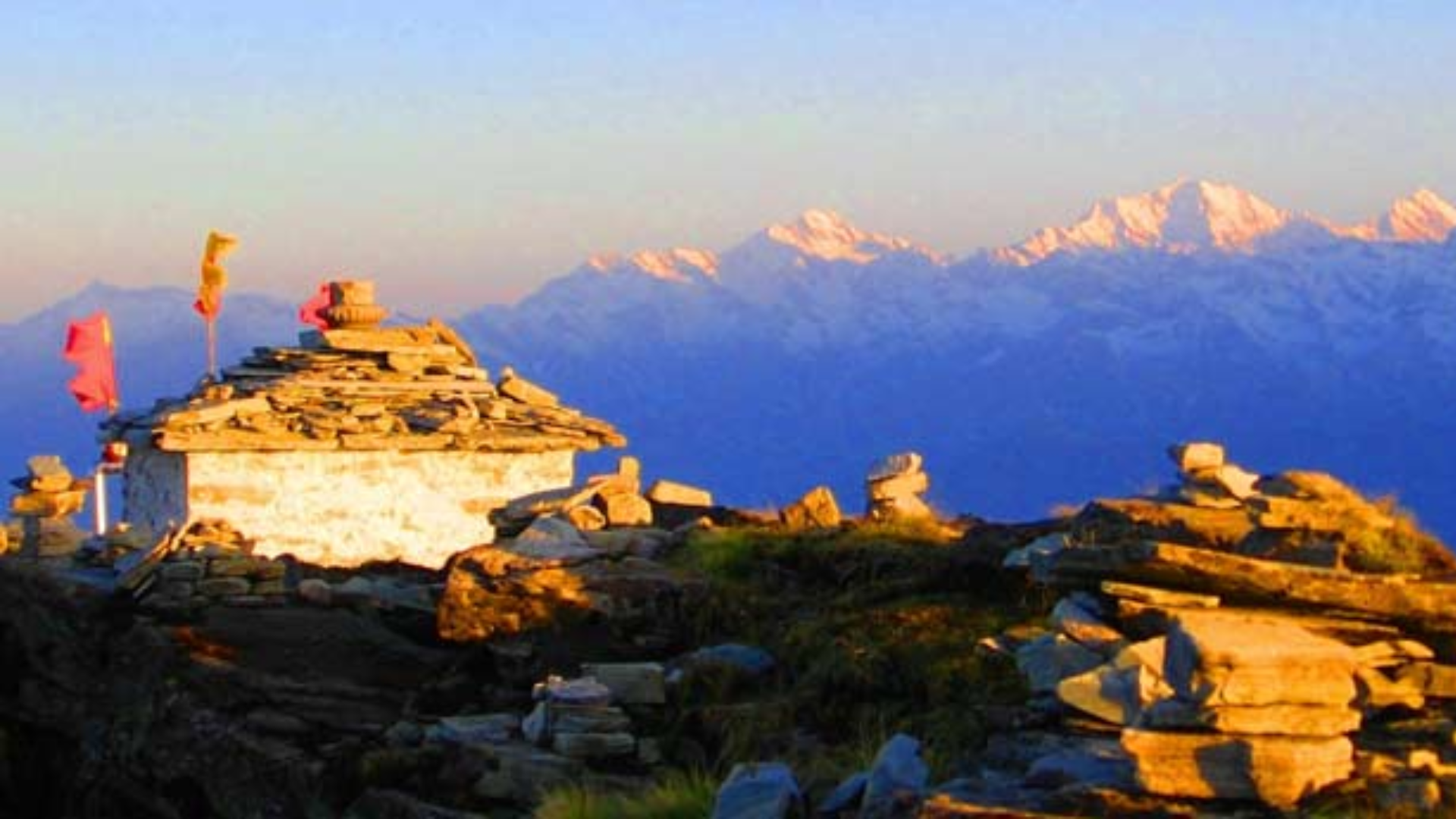
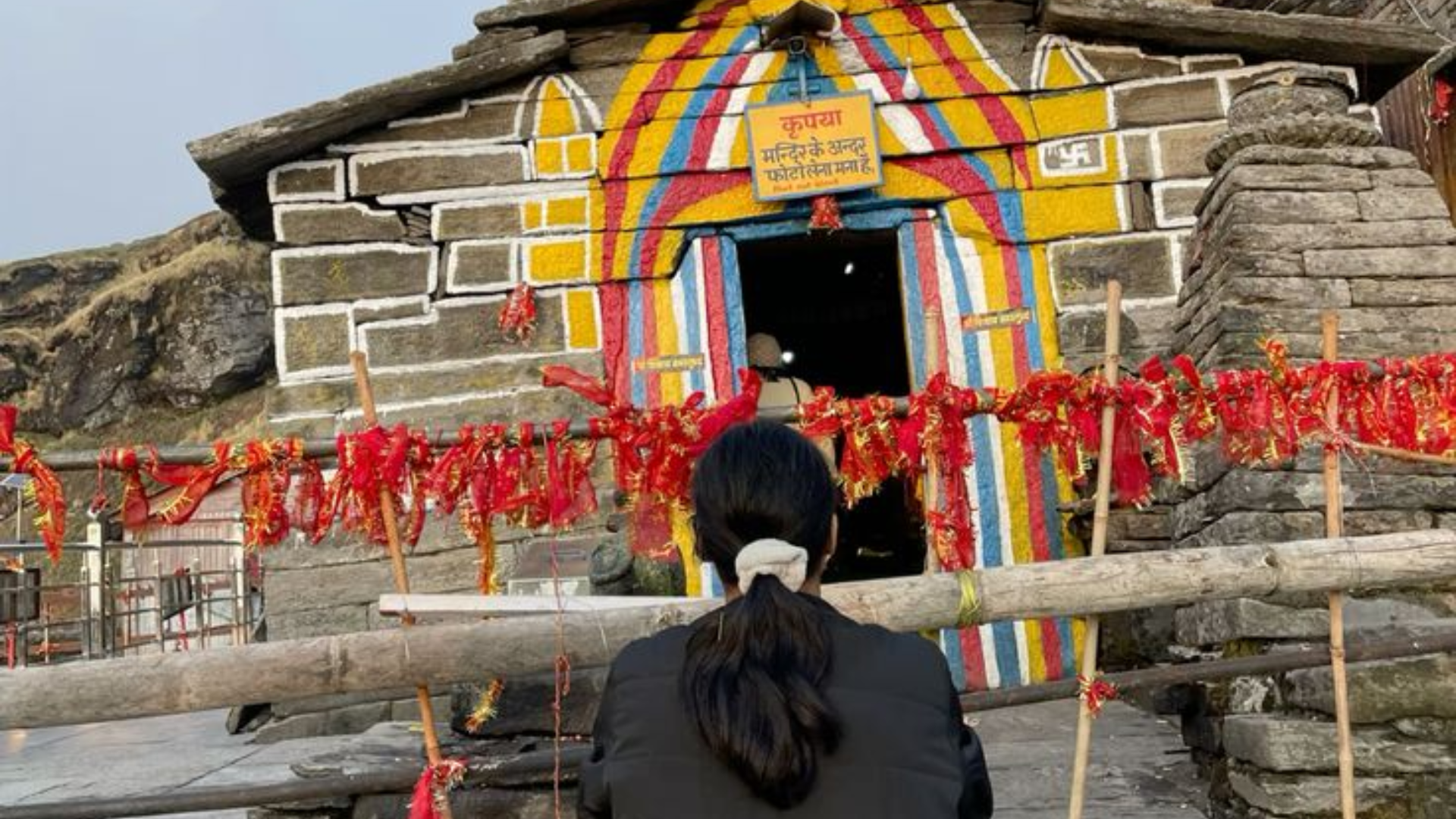
Tungnath Temple is situated at a height of 3,680 meters (12,073 feet) in the Rudraprayag district of Uttarakhand. It is known as the highest Shiva temple in the world and is one of the most important pilgrimage sites in the Garhwal Himalayas.
Tungnath Temple is the second temple in the holy Panch Kedar circuit, which includes Kedarnath, Tungnath, Rudranath, Madhyamaheshwar, and Kalpeshwar. These temples are deeply connected with Lord Shiva and Shaivism.
According to tradition, Tungnath Temple was re-discovered and restored by Adi Shankaracharya in the 8th century. The peaceful Himalayan environment, green alpine meadows, and panoramic mountain views make this temple spiritually and visually special.
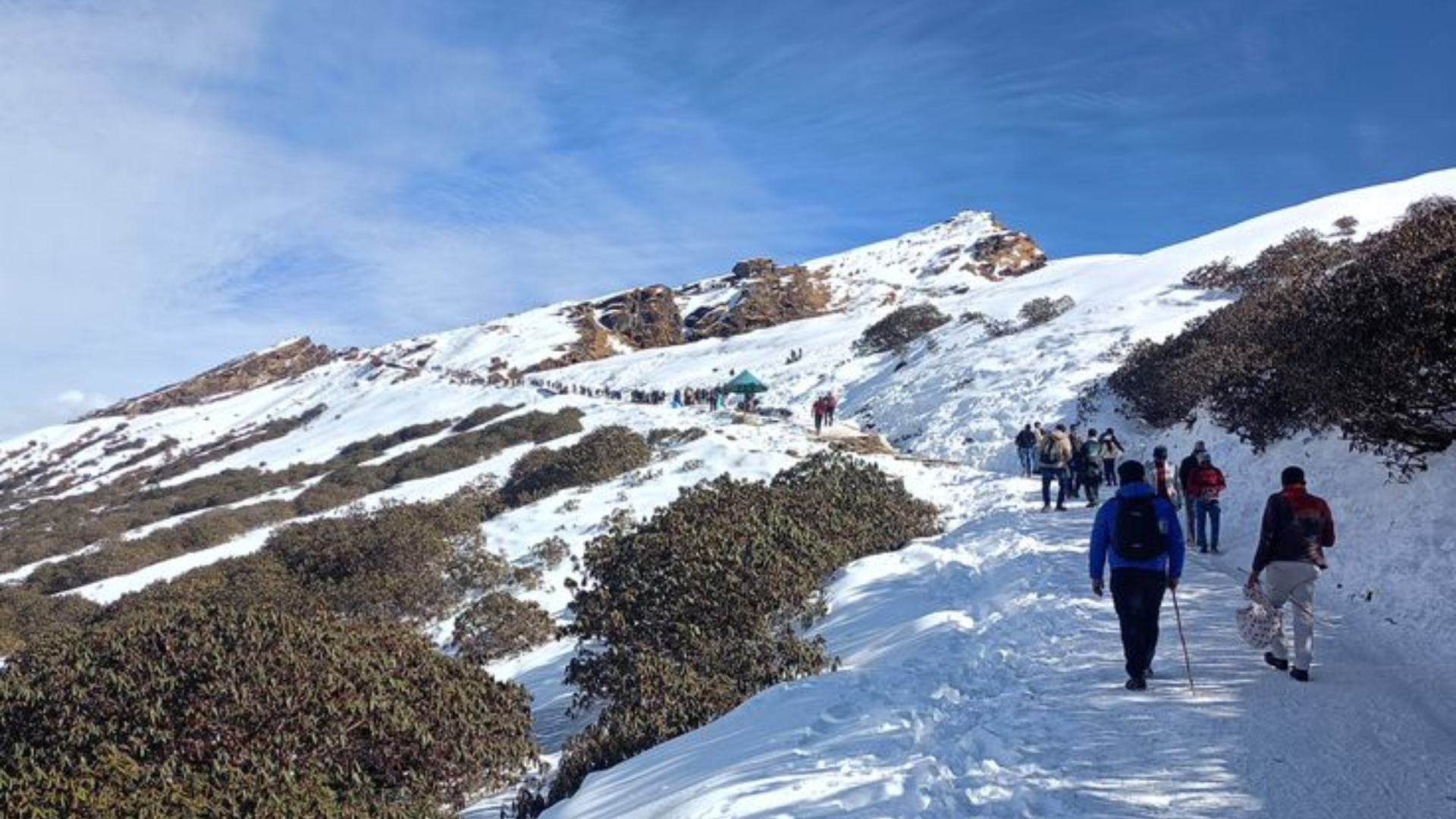
The 3.5 km trek from Chopta, often called the “Mini Switzerland of India,” is one of the most scenic and beginner-friendly treks in Uttarakhand. The path to Tungnath offers fresh air, natural beauty, and a deep sense of calm.
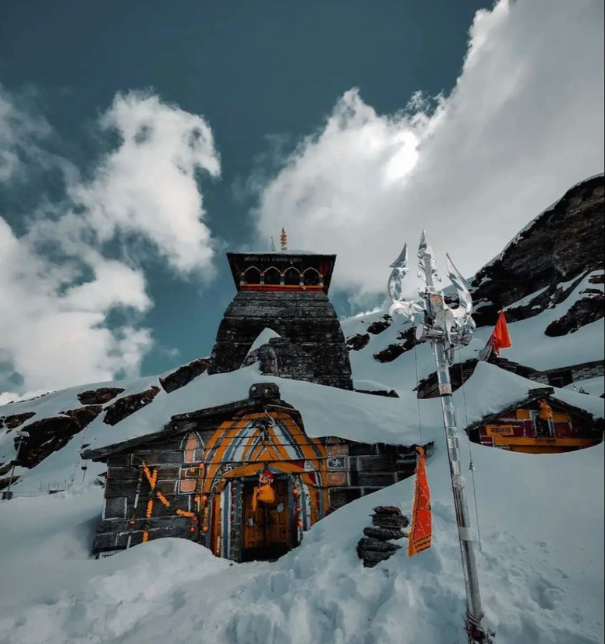
The Tungnath Temple Trek is popular because it leads to the highest Shiva temple in the world, located at an altitude of 3,680 meters in Uttarakhand. This short and scenic trek is suitable for beginners and attracts both pilgrims and nature lovers.
Tungnath Temple is also the second temple of the sacred Panch Kedar Yatra. According to ancient legends, this is the place where the arms (bahu) of Lord Shiva appeared. Because of this spiritual importance, the Tungnath trek is considered both a religious journey and a meaningful Himalayan walk.
The Tungnath Temple trek starts from Chopta and passes through beautiful rhododendron forests and wide alpine meadows called bugyals. Along the way, trekkers enjoy clear views of famous Himalayan peaks like Chaukhamba, Nanda Devi, Trishul, and Kedarnath.
After reaching Tungnath Temple, many trekkers continue for another 1 km to Chandrashila Peak. This short extension makes the Tungnath trek even more special, as Chandrashila offers stunning sunrise and sunset views over the Garhwal Himalayas.
Ideal months for Tungnath Temple trek and darshan
Tungnath Temple usually remains open from April or May to October or November. During winter months, the temple is closed due to heavy snowfall in the Himalayas.
These months are considered the best time to visit Tungnath Temple. The weather is pleasant, the Tungnath trek route is clear, and trekkers enjoy beautiful rhododendron forests and clear views of the Himalayan peaks.
During the monsoon, the Tungnath Temple trek becomes slippery due to rain and fog. Landslides may occur on mountain roads, so this period is generally not recommended for trekking.
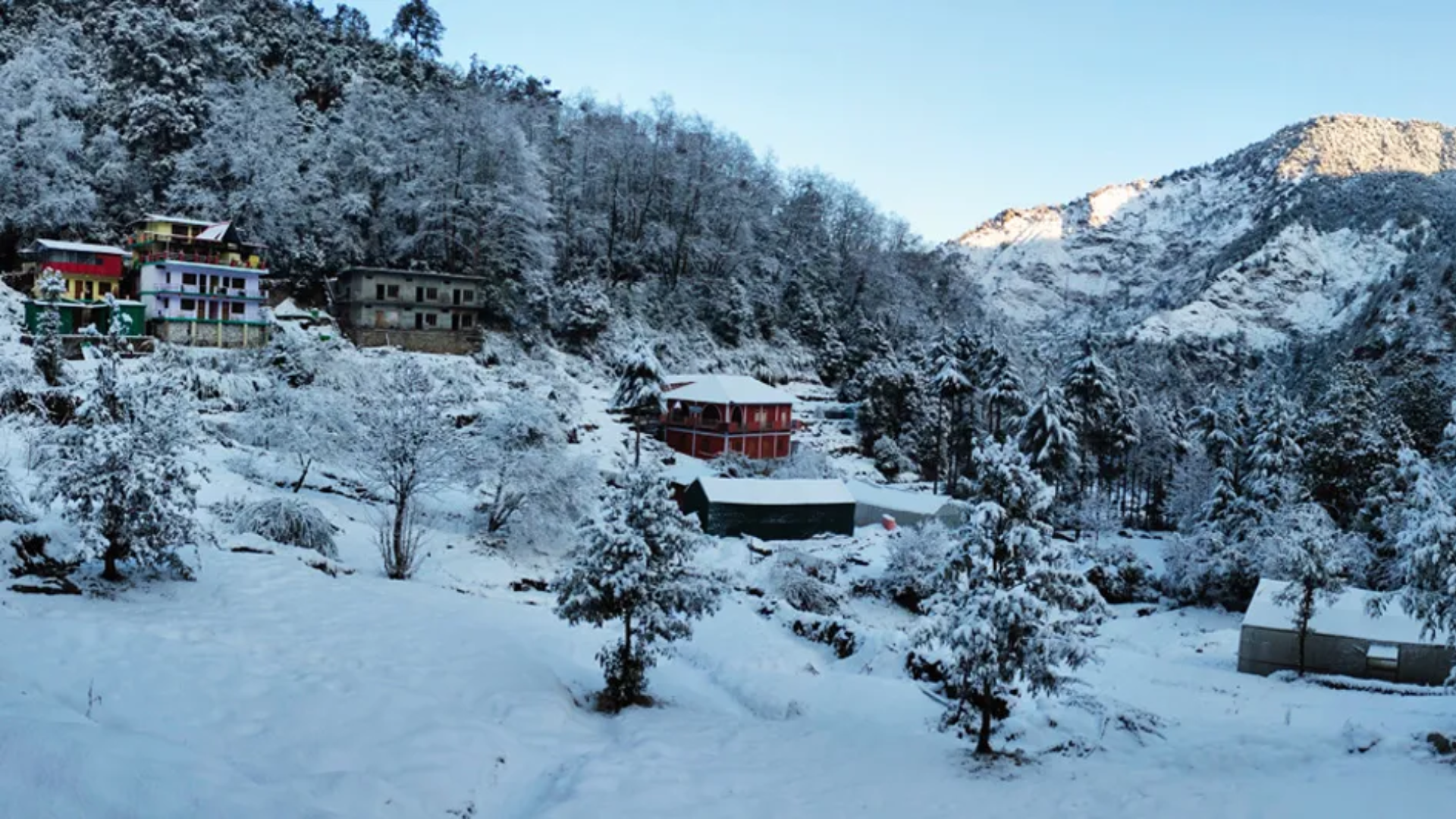
In winter, Tungnath Temple remains closed due to heavy snowfall. The trek route from Chopta is covered with snow and becomes inaccessible for visitors and pilgrims.
Peace, altitude, and divine presence of Lord Shiva
Standing at Tungnath Temple, located at a height of 3,680 meters in the Himalayas, offers a deep spiritual experience for devotees. As the highest Shiva temple in the world, Tungnath brings a feeling of peace, surrender, and divine connection. The ancient stone shrine, surrounded by snow peaks and open skies, helps visitors slow down and turn inward. Many people feel a strong sense of calm and devotion while praying at this sacred place.
The thin mountain air at Tungnath Temple, the deep silence of the Himalayas, and the sacred presence of Lord Shiva together create a naturally meditative environment. Far away from city noise, visitors feel calm and relaxed here. Breathing feels slower, thoughts become quiet, and the mind feels light. Even people new to meditation often experience peace and mental clarity while spending time at this high-altitude Shiva temple.
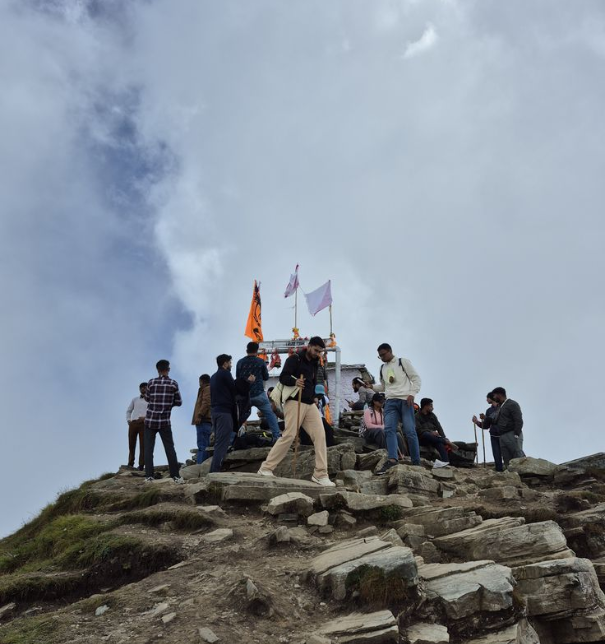
After darshan at Tungnath Temple, many devotees continue walking to Chandrashila Peak, which is located a short distance above the temple. The combined experience of Tungnath and Chandrashila offers quiet time, fresh mountain air, and wide Himalayan views, often bringing deep stillness, inner clarity, and emotional balance to visitors.
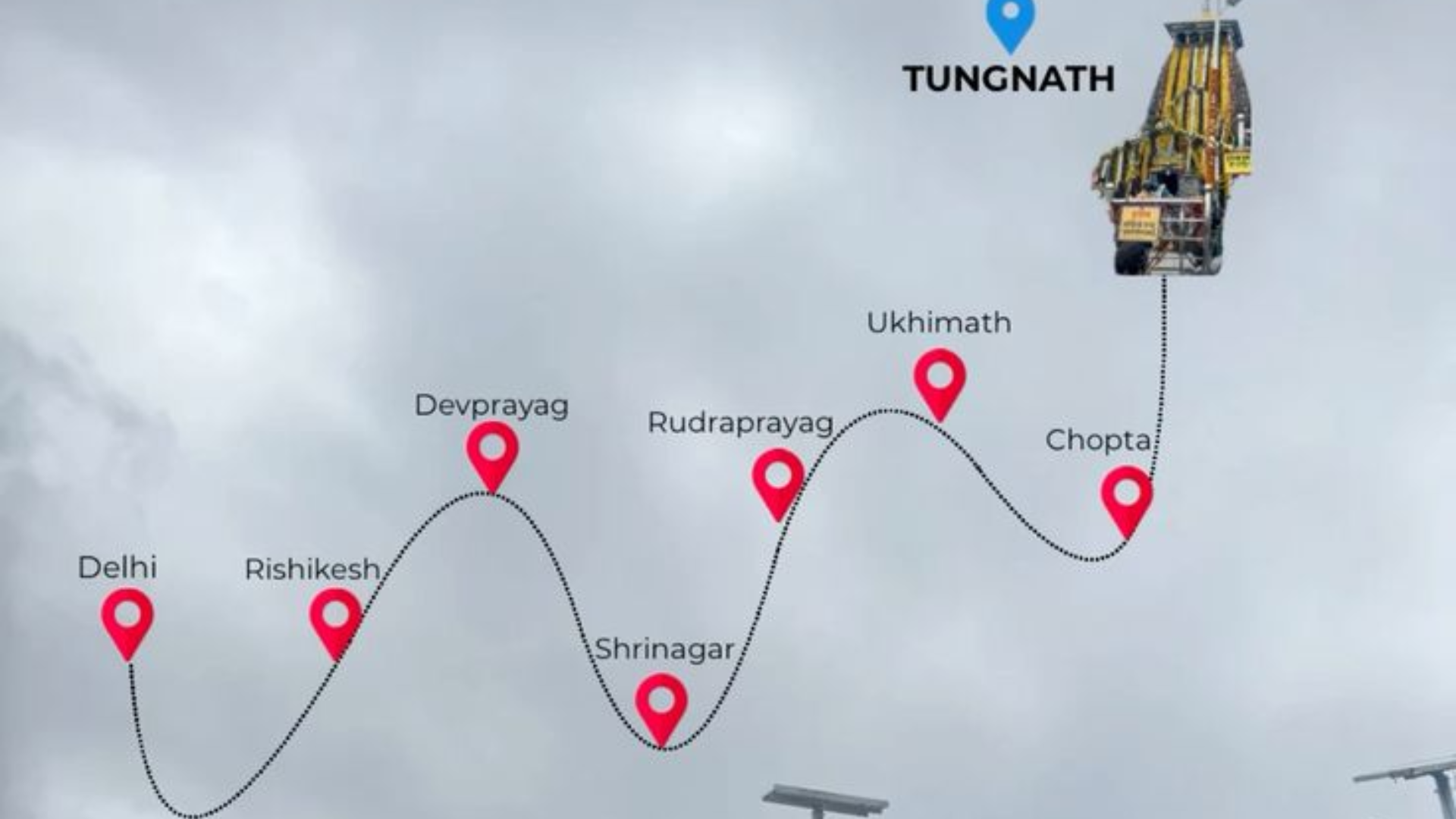
Tungnath Temple is reached through Chopta, which is the nearest motorable point in Uttarakhand. From Chopta, devotees and trekkers walk a scenic 3.5 km trek to Tungnath Temple, one of the easiest and most popular Himalayan temple treks.
By Road: Rishikesh → Devprayag → Rudraprayag →
Ukhimath → Chopta (approx 190–220 km). Chopta is well connected
by road and taxis are easily available.
By Train: The nearest railway stations are
Rishikesh and Haridwar.
By Air: The nearest airport is
Jolly Grant Airport, Dehradun.
The Tungnath Temple trek is about 3.5 km one way from Chopta and takes around 2 to 3 hours to complete. The trail is well-marked and suitable for beginners. Ponies are also available for elderly devotees.
Visitors should wear modest clothing, carry warm layers, and maintain silence inside the temple. Respect the sacred atmosphere and local traditions of Tungnath Temple.
Tungnath Temple is located at an altitude of 3,680 meters. Walk slowly, stay hydrated, and take short breaks during the trek. Altitude sickness is rare but can occur.
Carry a warm jacket, raincoat, water bottle, light snacks, sunscreen, sunglasses, and good trekking shoes. A walking stick can be helpful on steep sections.
The best time for darshan at Tungnath Temple is early morning between 6:00 and 11:00 AM. The temple is peaceful and the weather is usually clear.
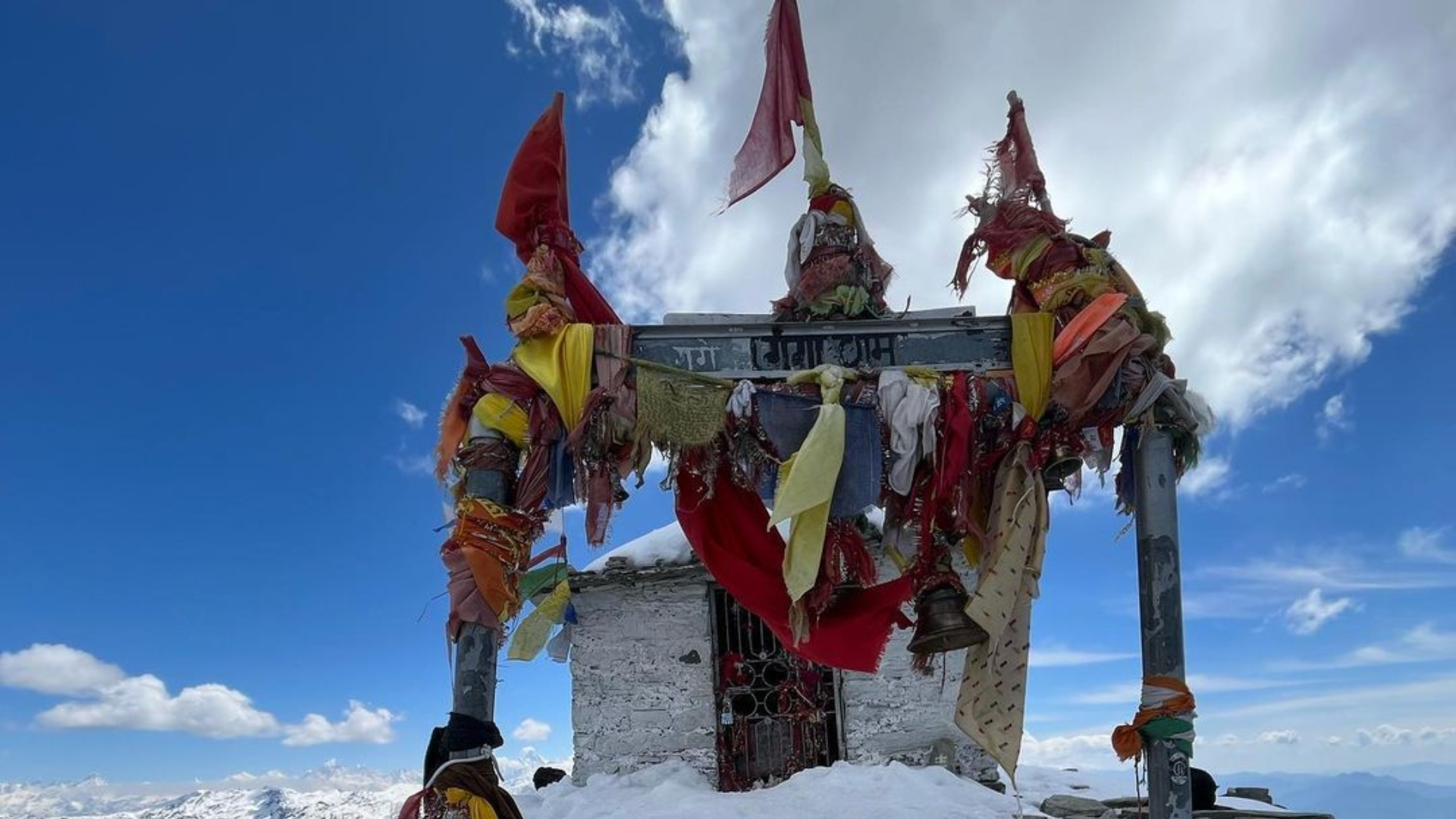
From Tungnath Temple, trekkers can walk an additional 1 km to Chandrashila Peak. This viewpoint offers 360-degree views of the Himalayan ranges and is highly recommended.
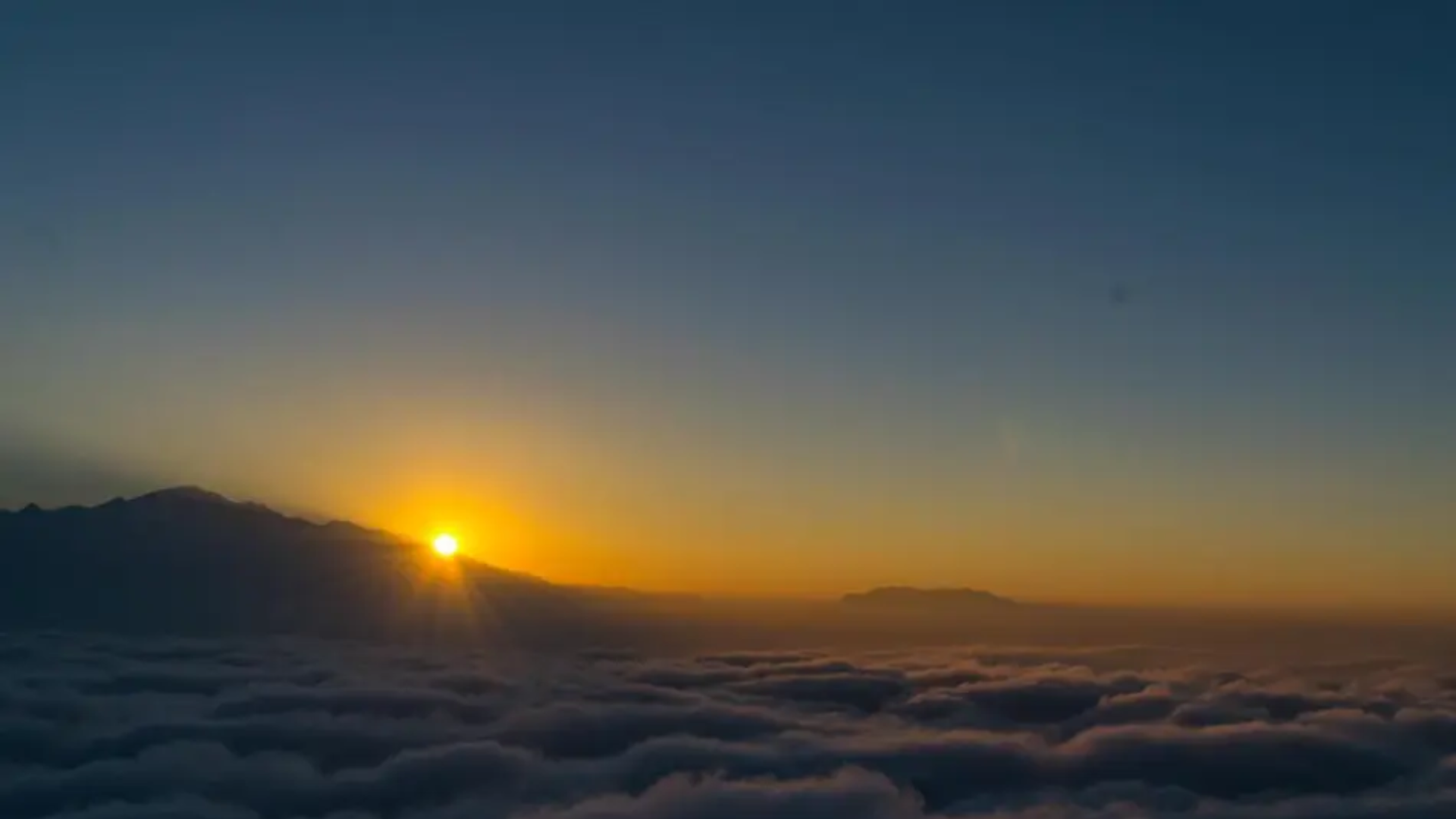
Chandrashila Peak is especially famous for its beautiful sunrise and sunset views. On clear days, visitors can see golden light over major Himalayan peaks, making it one of the most memorable moments of the Tungnath Temple trek.
9 Days Himalayan Hiking Yoga Retreat
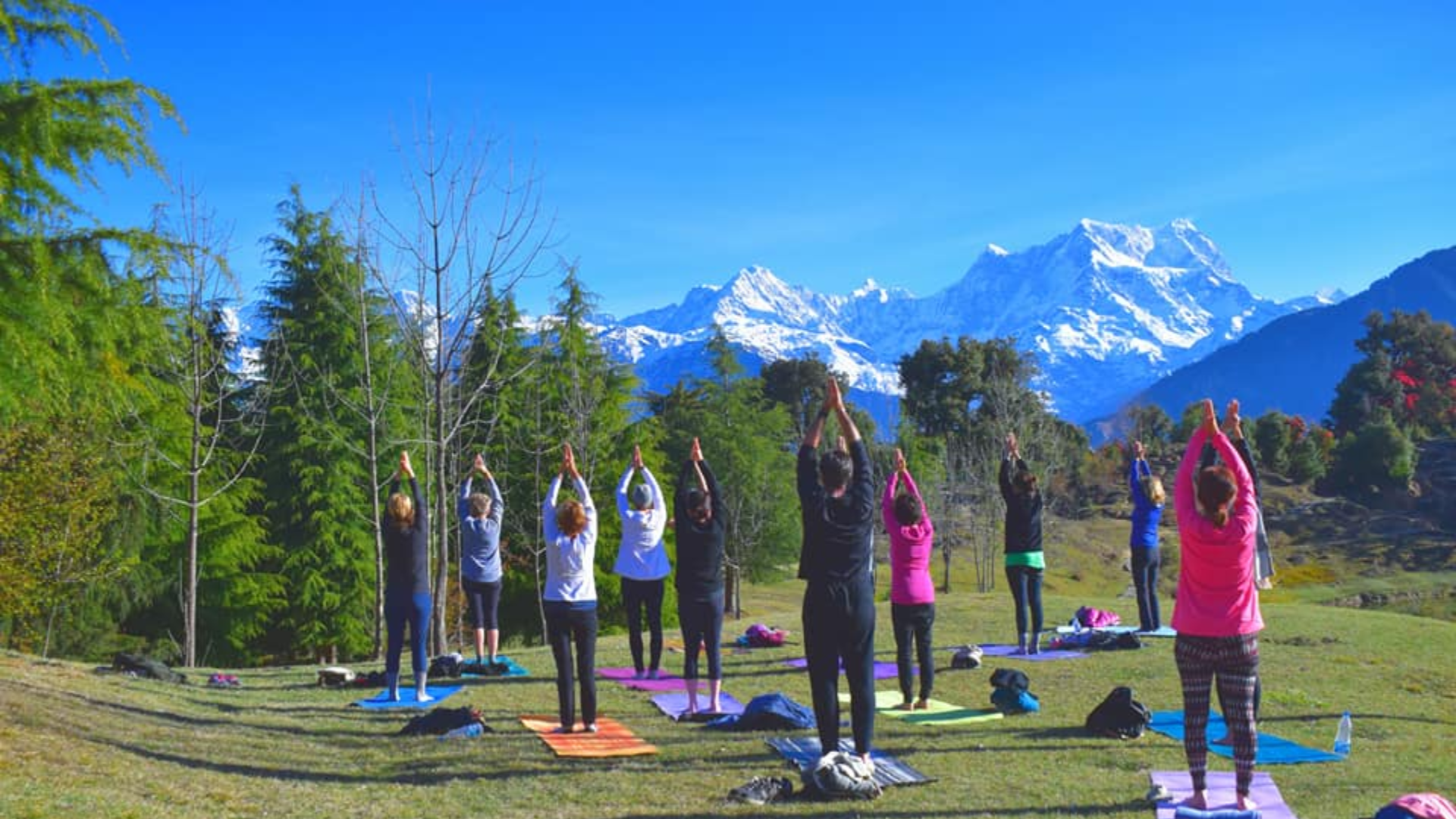
During our 9 Days Himalayan Hiking Yoga Retreat, a guided visit to Tungnath Temple becomes one of the most meaningful and memorable experiences. Tungnath Temple is located at an altitude of 3,680 meters in the Garhwal Himalayas and is known as the highest Shiva temple in the world. After several days of hiking, yoga practice, breathing exercises, and mindful walking in nature, participants reach this sacred place feeling open and present. The calm surroundings and ancient energy help create a deep sense of devotion, silence, and inner grounding.
Daily yoga, pranayama, and meditation during the retreat gently prepare the body and mind for the Tungnath trek. When participants arrive at the temple, darshan feels more powerful and meaningful. Many people feel a sense of protection, emotional balance, and mental clarity. This moment often becomes a turning point in the retreat journey.
The high altitude, fresh Himalayan air, and deep silence around Tungnath Temple create a rare atmosphere for inner reflection. In the presence of Lord Shiva, participants naturally slow down, let go of distractions, and reconnect deeply with themselves, their breath, and their inner awareness.
Tungnath is the highest Lord Shiva temple in the world, situated at an altitude of 3,680 meters (12,073 feet) in the Garhwal Himalayas of Uttarakhand, and is the third temple of the sacred Panch Kedar pilgrimage.
Legend says the Pandavas built Tungnath to seek redemption from Lord Shiva after the Kurukshetra war. The hands (bahu) of Lord Shiva materialized here as a divine bull lingam.
The trek starts from Chopta (known as the Mini Switzerland of Uttarakhand). The paved trail is 3.5 kilometers long and takes 2.5 to 3.5 hours of steady uphill walking.
The trail is paved with stones and has gradual switchbacks, making it an easy-to-moderate high-altitude trek accessible to fit beginners, teenagers, and active seniors.
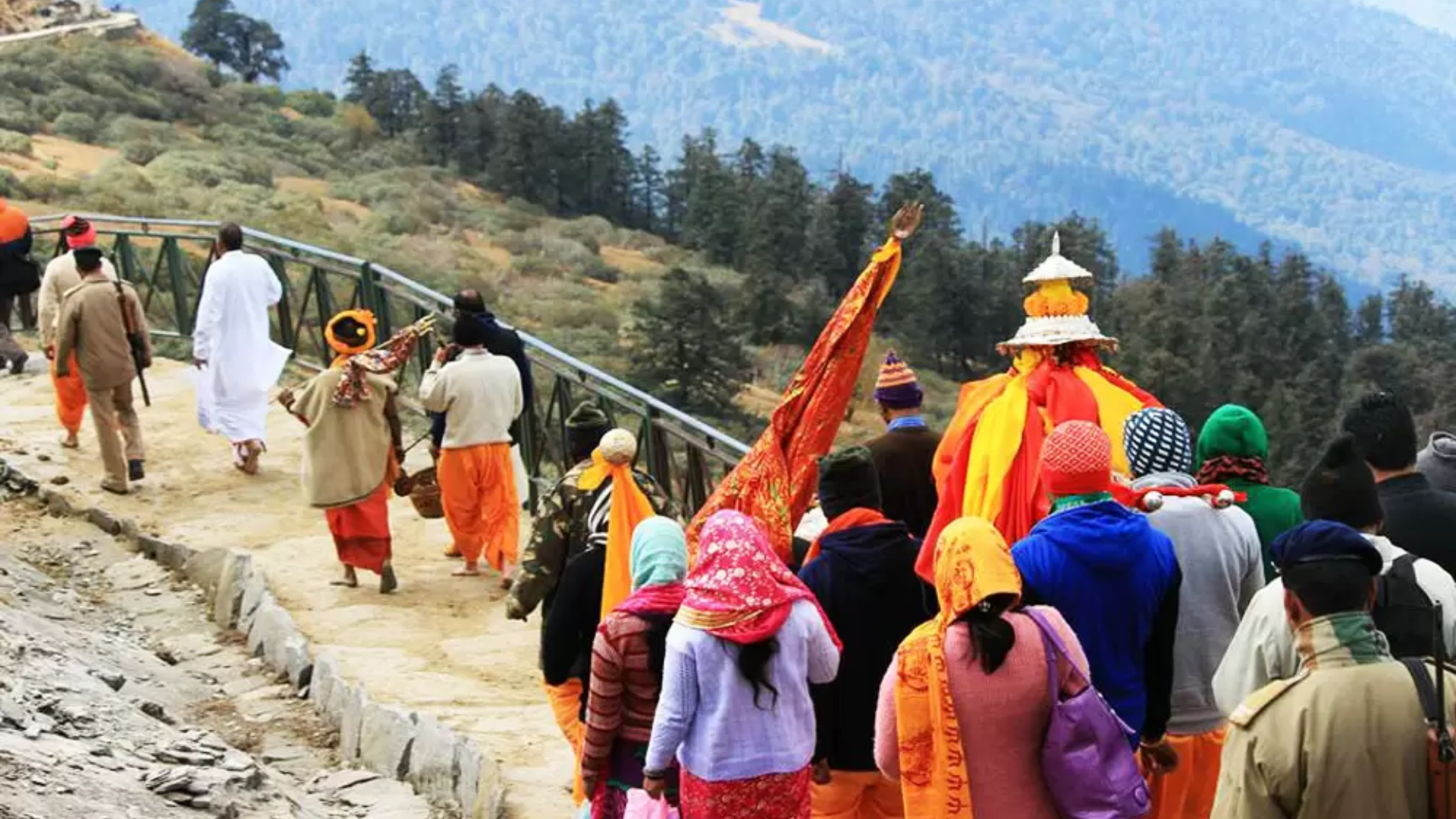
Tungnath opens in early May and closes in early November before heavy winter snowfall. In winter, the deity idol is brought down to Makkumath village for worship.
Yes! An additional 1.5-kilometer climb from Tungnath leads to Chandrashila Peak (4,000 meters / 13,123 feet), offering a stunning 360-degree panorama of Nanda Devi, Trishul, and Chaukhamba.
May to June for lush green meadows (bugyals) and blooming red rhododendrons, or September to November for crystal-clear blue skies and crisp mountain views.
Accommodation is available at Chopta base camp in Swiss cottage tents, eco-lodges, and local homestays. Basic guesthouses operate near Tungnath during summer months.
Pack sturdy trekking shoes with ankle support, warm thermal innerwear, a windproof fleece/jacket, trekking poles, sunglasses, sunscreen, and a reusable water bottle.
Chopta is approximately 200 kilometers from Rishikesh via Devprayag and Rudraprayag (about 7 to 8 hours by private taxi or state transport bus).
Yes, government-regulated ponies and palanquins are available at Chopta for elderly travelers or those unable to walk the steep incline.
The extraordinary high-altitude silence, untainted mountain air, and millennia-old Shiva vibrations make Tungnath a sublime power spot for deep meditation and spiritual breakthrough.