Warrior III is one of the most powerful yoga poses you can practice. It looks simple — but when you try it, you quickly realise how much strength, balance, and focus it actually needs.
The good news? Anyone can learn it. Whether you are a complete beginner or someone who has been practicing for a while — this guide breaks it down step by step.
You will learn what Warrior III Pose is, why it is so good for your body and mind, how to do it correctly, and what mistakes to avoid.
What Is Warrior III Pose?
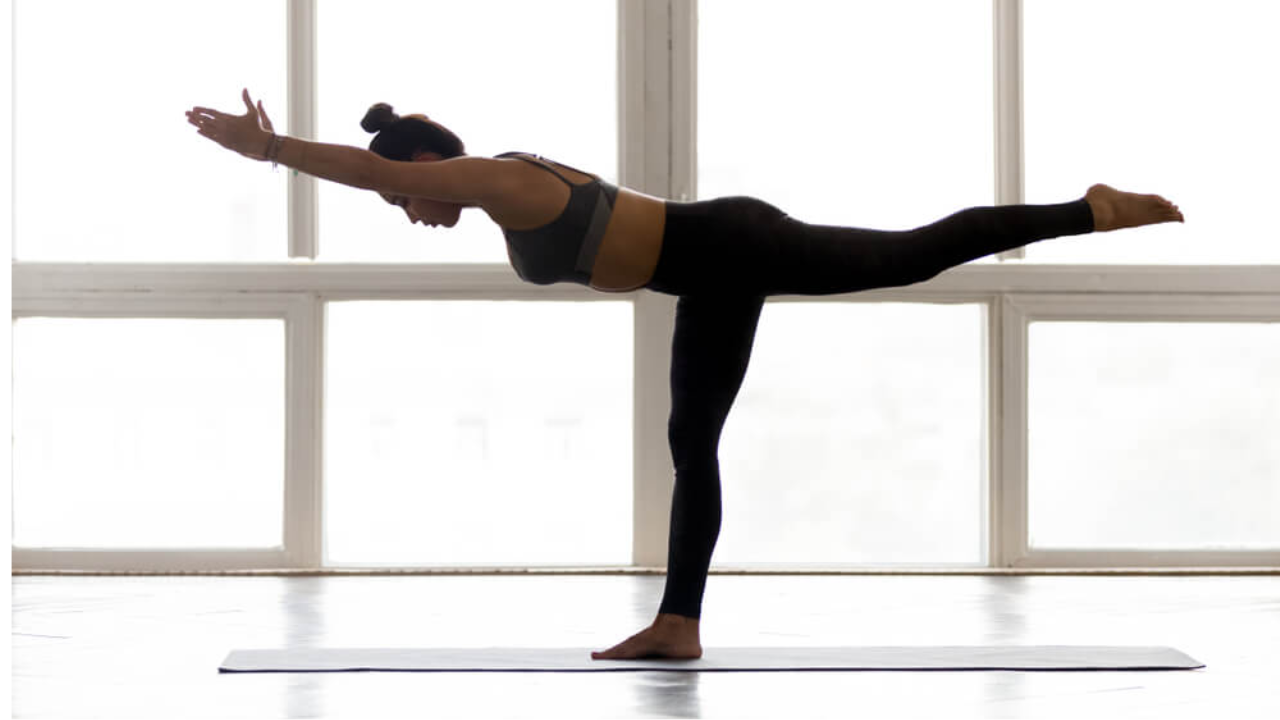
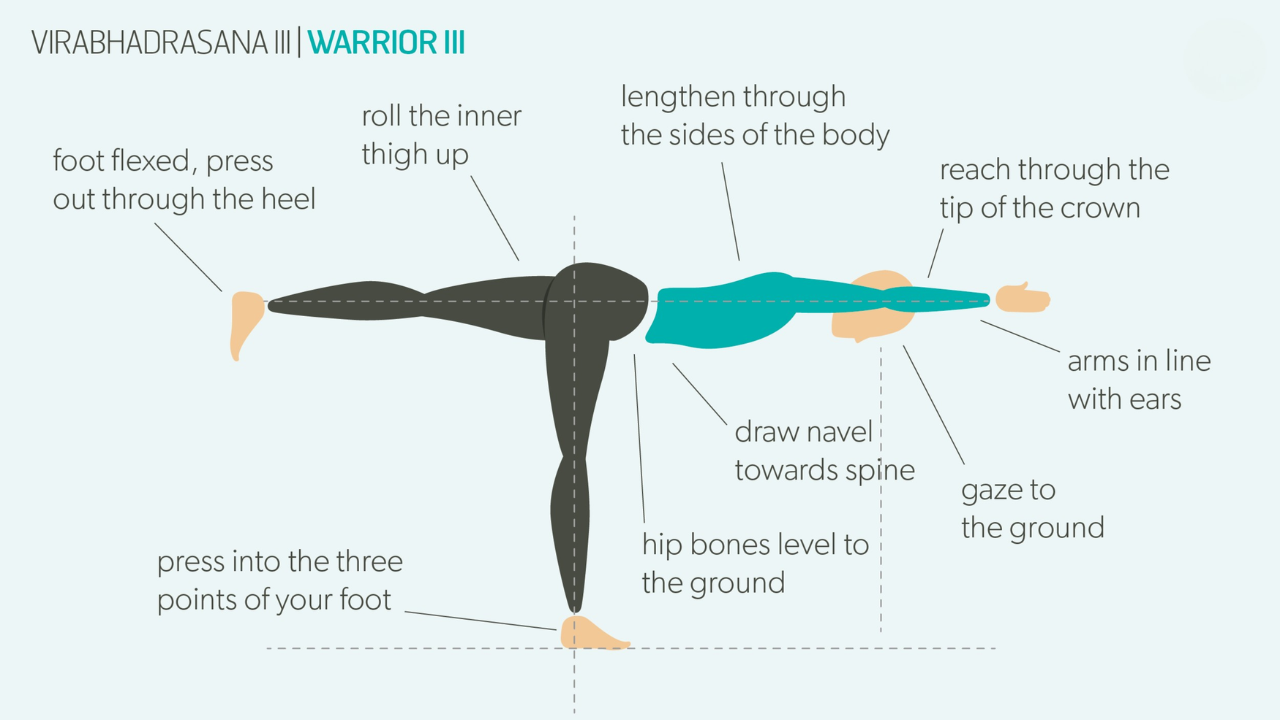
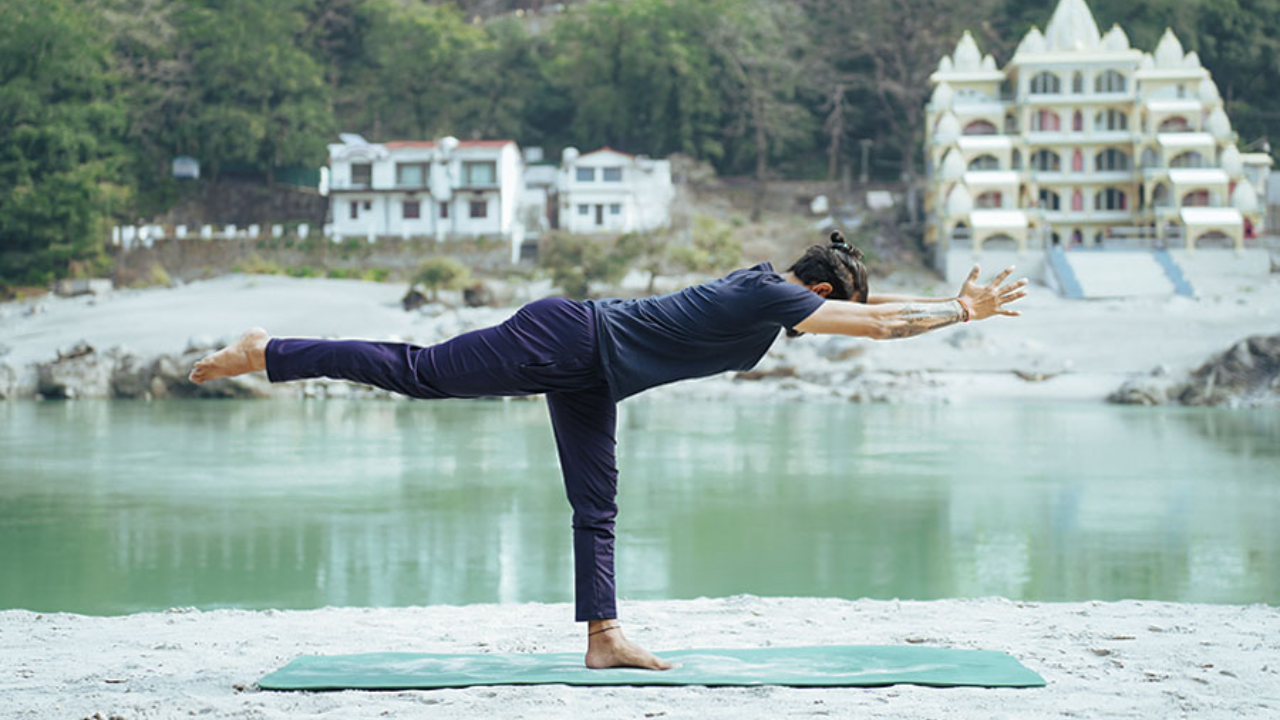
Warrior III is called Virabhadrasana III in Sanskrit. It is the third of the three Warrior poses in yoga. In this pose, you stand on one leg. Your other leg lifts behind you. Your body leans forward. Your arms stretch out in front.
When done correctly, your whole body forms a straight line — like the letter T. From the fingertips to the heel, everything is in one line.
- Sanskrit name: Virabhadrasana III
- Pose type: Standing balance pose
- Level: Beginner to intermediate
- Hold time: 3 to 10 breaths per side
- Named after: Virabhadra — a powerful warrior from Hindu mythology
This pose is part of many yoga styles — Hatha, Vinyasa, Ashtanga, and Power yoga. It is often practiced as part of a standing sequence or Warrior pose flow.
Benefits of Warrior III Pose
Warrior III is not just a balance pose. It is a full-body exercise. Here is what it does for you.
- Builds leg strength: Your standing leg works hard to hold your entire body weight. This strengthens your quadriceps, hamstrings, and calves deeply over time.
- Tones the glutes: The lifted leg is held up using your glutes and hip muscles. This firms and shapes the back of your body.
- Strengthens the core: Your belly muscles work constantly to keep you from falling. This builds real core strength — not just surface-level abs.
- Improves balance: Balancing on one leg trains your nervous system. Over time, your balance in daily life also gets better.
- Fixes posture: Warrior III teaches the spine to stay long and straight. This helps with back pain caused by slouching.
- Sharpens focus: You cannot hold this pose if your mind wanders. It trains concentration — the same way meditation does.
- Stretches the hamstrings: The forward lean gently stretches the back of the standing leg, which is helpful for tight hamstrings.
- Boosts body awareness: You learn where your body is in space — this is called proprioception, and it reduces the risk of injury in everyday life.
Even 5 minutes of Warrior III practice daily will show results in two to three weeks. Your legs will feel stronger. Your balance will improve. And your posture will start to change.
How to Do Warrior III — Step by Step
Follow these steps carefully. Go slow. Do not rush into the full pose.
- Step 1 — Start in Mountain Pose: Stand tall with your feet together. Breathe deeply. Feel the ground under your feet. Let your body settle.
- Step 2 — Shift your weight: Slowly move all your weight onto your right foot. Keep your right knee soft — do not lock it. Press all four corners of your foot into the floor.
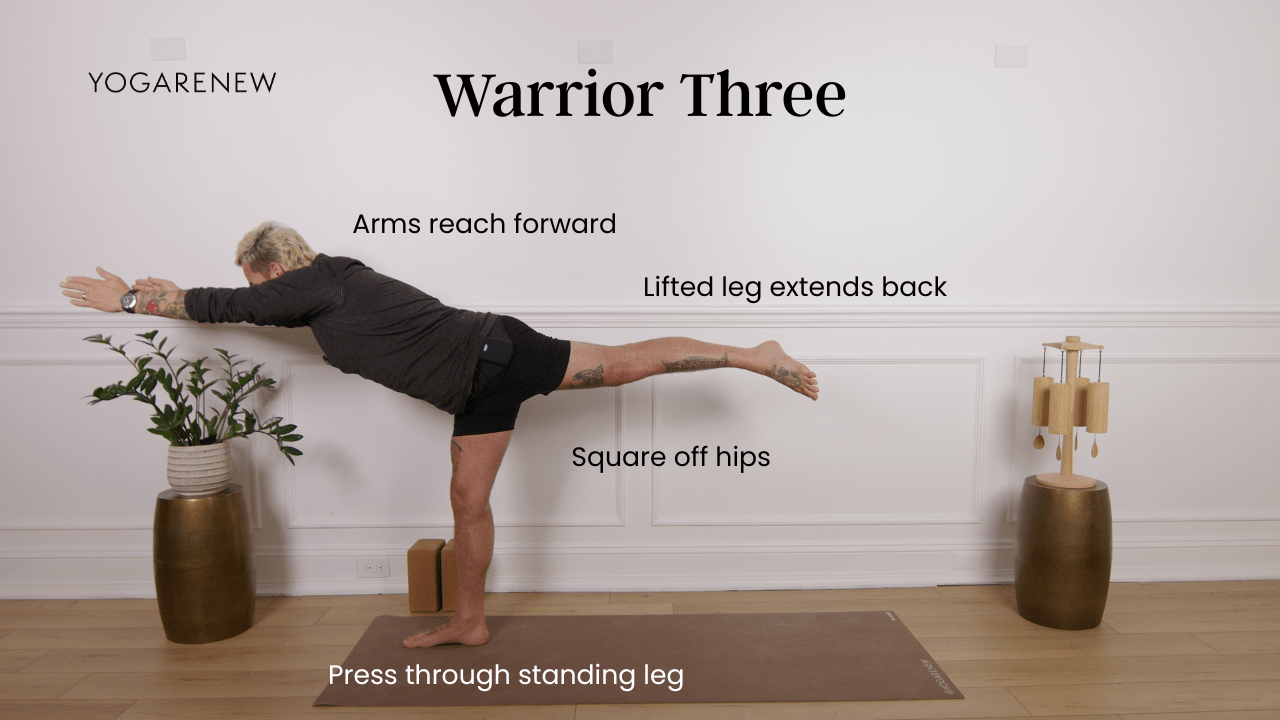
- Step 3 — Lean forward: Slowly tip your upper body forward. At the same time, let your left leg rise behind you. Your body and your left leg should move together as one unit.
- Step 4 — Find your T-shape: Keep going until your body is parallel to the floor — or as close as you can comfortably get. Your left leg stays straight. Your back is flat. Your hips are squared to the floor (do not let the left hip open outward).
- Step 5 — Place your arms: You can keep hands on your hips (easier), press your palms together at your chest, or stretch arms forward alongside your ears (hardest). Choose what works for your level today.
- Step 6 — Look down: Keep your gaze fixed on a still point on the floor, about one metre in front of you. This helps you stay balanced. Do not look up.
- Step 7 — Breathe and hold: Hold for 3 to 5 slow breaths. Keep your core engaged. Keep your lifted leg active — flex the heel and reach through it.
- Step 8 — Come back slowly: To come out, slowly bring your left leg back down. Return to standing. Take one breath, then repeat on the other side.
Do both sides equally. Spend the same time on the right leg and the left leg. Most people have one side that is harder — that is completely normal.
Common Mistakes to Avoid
Most people make the same few mistakes in Warrior III. Knowing them ahead of time will save you a lot of frustration.
- Opening the hip outward: Many people let the lifted leg rotate so the toes point to the side. Keep your toes pointing straight down. Your hips should face the floor — not the wall.
- Locking the standing knee: A locked knee puts too much pressure on the joint. Keep a very small bend in your standing knee always.
- Rounding the back: The spine must stay long and flat. If your back rounds, your core is not engaged enough. Pull your belly button gently in and up.
- Looking up: Looking up breaks your balance. Keep your gaze on the floor in front of you — always.
- Rushing into the full pose: Many beginners try to go to the full T-shape right away. This causes wobbling and frustration. Go only as far as you can hold with control. Even a 45-degree lean is a good Warrior III if it is steady.
- Forgetting to breathe: When we concentrate hard, we often hold our breath. Keep breathing slowly in and out through your nose.
- Ignoring the lifted foot: Your lifted foot should be active — flex the heel, spread the toes, reach the leg back. A floppy foot means a weak pose.
Easy Modifications for Beginners
If the full pose feels too hard right now — that is completely fine. These modifications will help you build up safely.
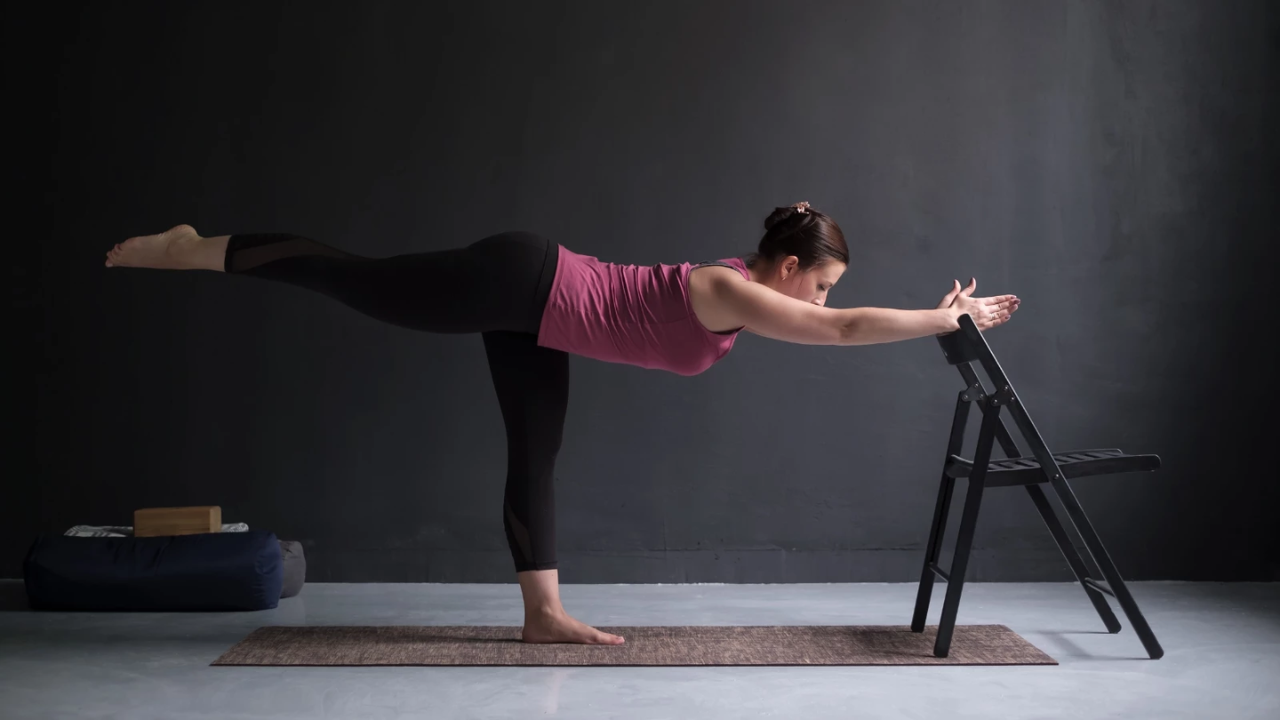
- Use a wall: Place your fingertips on a wall in front of you. This gives you a stable point to balance against while you lift the leg and lean forward. Very helpful when you are just starting.
- Hands on hips: Instead of reaching arms forward, keep your hands on your hips. This lowers the difficulty and makes balancing much easier.
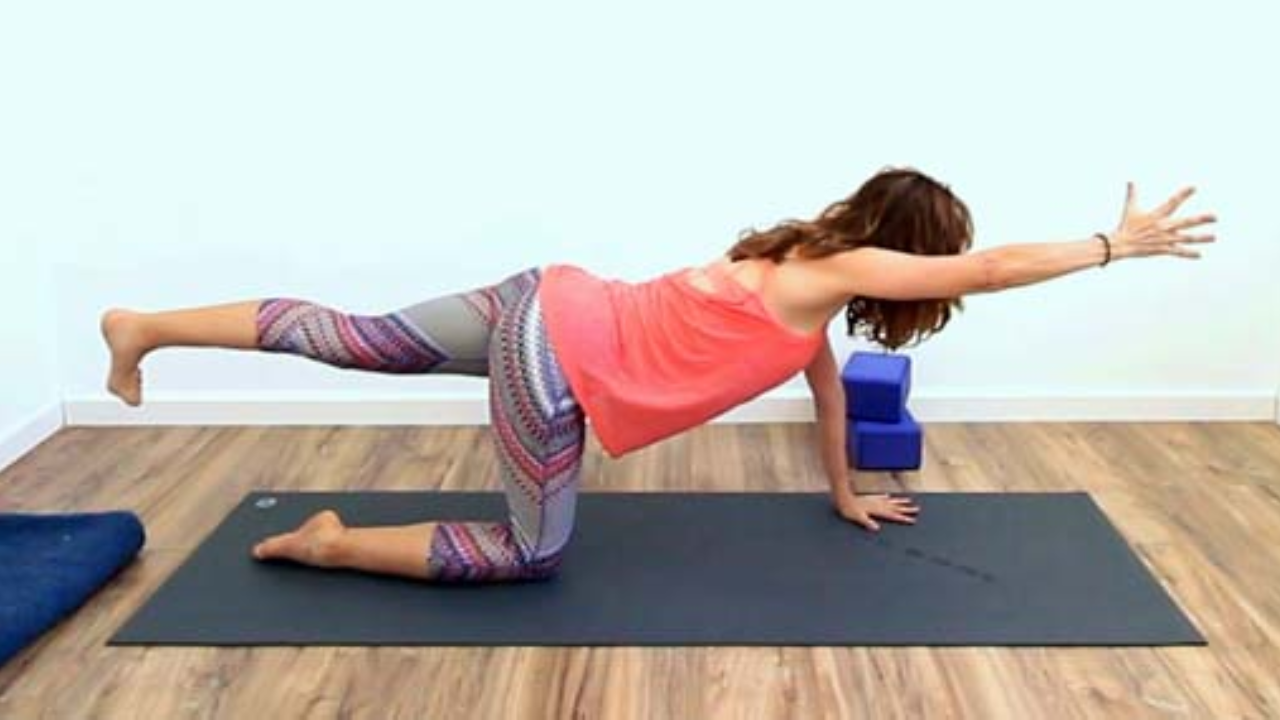
- Half lift only: You do not need to go all the way to a T-shape. Lean forward just 30 to 45 degrees and lift the leg only a little. This is still Warrior III — just a smaller version. It still builds the same muscles.
- Hold a chair back: Place one hand lightly on a chair back beside you. This gives a little support without removing the challenge completely.
- Bend the lifted knee slightly: If your hamstrings are very tight, keep a slight bend in the lifted knee. Over time, straighten it more as flexibility improves.
Modifications are not cheating. They are smart yoga. Every great yogi started with modifications. The goal is to practice safely and build from there.
Tips to Improve Your Warrior III
These small tips make a big difference in how the pose feels and how quickly you improve.
- Warm up the hips and hamstrings first: Do some Warrior I and Warrior II before attempting Warrior III. Warm muscles make balancing much easier and reduce injury risk.
- Squeeze your glutes on the lifted side: This keeps the leg high and the hips level. Think of your glute as the engine that lifts the leg.
- Press the standing foot into the floor: Imagine spreading your foot roots into the earth. The more firmly you press, the more stable you feel above.
- Keep the belly soft but engaged: Do not suck in so hard that you hold your breath. Gently draw the lower belly in. Keep breathing normally.
- Fix your gaze before you move: Pick a spot on the floor and fix your eyes on it before you start to lean. This is called a drishti point. It is one of the best balance tricks in all of yoga.
- Practice daily — even for 2 minutes: Daily short practice beats long occasional practice. Two minutes on each side every day will show visible improvement in just two weeks.
- Do not compare with others: Everyone's body is different. Some people naturally balance more easily. Focus on your own progress — not anyone else's pose.
Who Should Be Careful with This Pose?
Warrior III is safe for most people — but there are some situations where you should go carefully or skip it.
- Ankle or knee injury: If you have a current ankle or knee injury, do not put full weight on that joint yet. Use the wall modification or wait until you recover.
- Lower back pain: If your lower back hurts a lot, go into the pose slowly and only lean forward a little. Stop if there is any sharp pain.
- Pregnancy: Balance poses in pregnancy need extra care. Use a wall or a chair for support and do not go into the full forward lean. Ask your doctor first.
- High blood pressure: If you have high blood pressure, keep your arms by your side or hands on hips rather than extending them forward. This reduces the strain.
- Vertigo or dizziness: If you feel dizzy easily, keep one hand on a wall. Balance poses can sometimes trigger vertigo in people who experience it.
When in doubt — always talk to your yoga teacher first. A qualified teacher can adjust the pose for your specific body and situation.
Quick Checklist — Are You Doing It Right?
Use this checklist while you practice Warrior III. If you can tick all of these — your form is good.
- Standing knee is soft — not locked
- Hips are level and facing the floor
- Lifted foot toes point straight down
- Back is flat — not rounded
- Core is gently engaged
- Gaze is fixed on one still point on the floor
- Breathing is slow and steady — not held
- Lifted heel is reaching back actively
- Arms are in a comfortable position for your level
- Weight is balanced through all four corners of the standing foot
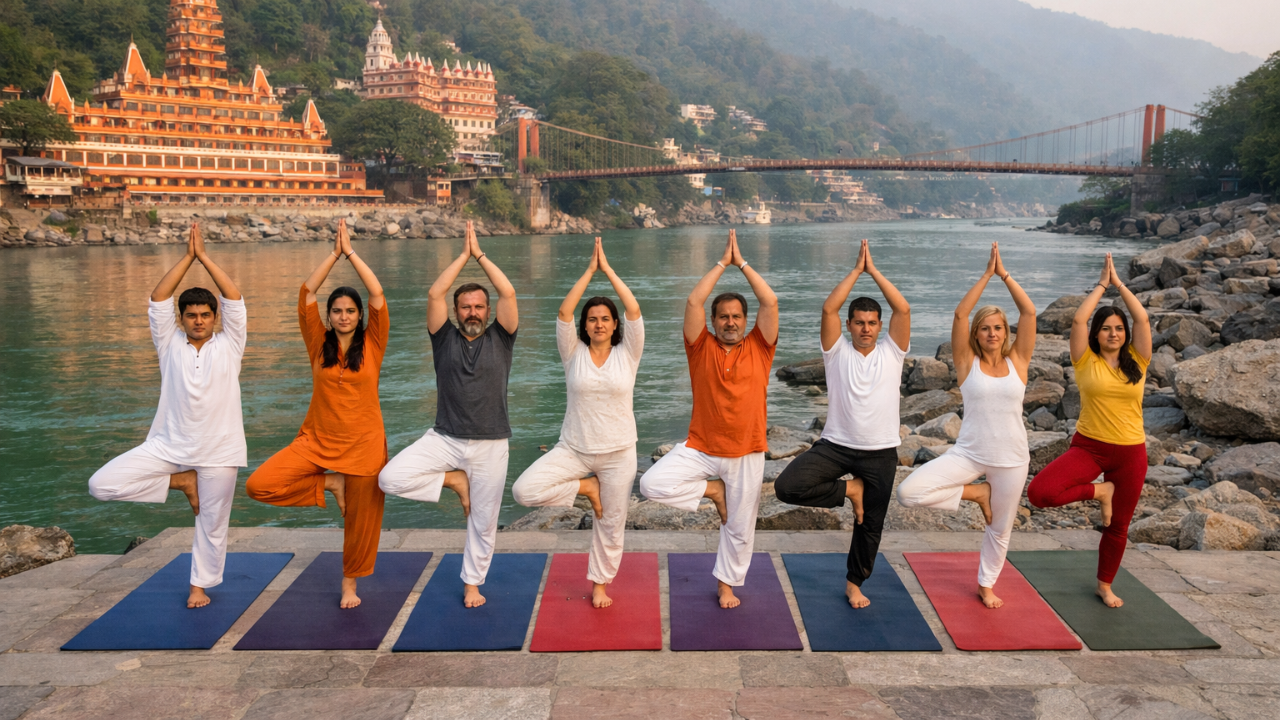
Learn Warrior III at Adishesh Yoga, Rishikesh
If you want to learn Warrior III and other yoga poses properly — come practice at Adishesh Yoga in Rishikesh. Our teachers will guide you step by step, correct your alignment, and help you build a safe and steady practice.
We teach traditional Hatha yoga in small groups. So every student gets personal attention. Whether you are a complete beginner or someone who wants to deepen their practice — we are here for you.
- Daily asana classes: Morning and evening sessions with full alignment guidance
- Balance and standing poses: Taught in proper sequence with breath awareness
- Pranayama and meditation: Included in every class and retreat program
- Small group sizes: Personal corrections and a peaceful learning space
- Experienced teachers: Trained in traditional yoga with years of teaching experience
Come to Rishikesh. Learn yoga the right way. Leave with a practice that stays with you for life.
Frequently Asked Questions
Conclusion
Warrior III Pose is one of those yoga poses that challenges you every time — but rewards you every time too. It builds strength, balance, posture, and focus all at once. And unlike many exercise routines, it also trains your mind.
Start where you are today. Use the wall. Keep hands on your hips. Lean forward just a little. That is still Warrior III — and it is still working. As you keep practicing, the pose will open up naturally.
If you want to learn it properly with expert guidance — come practice with us at Adishesh Yoga in Rishikesh. We will help you build a practice that feels strong, steady, and right for your body.