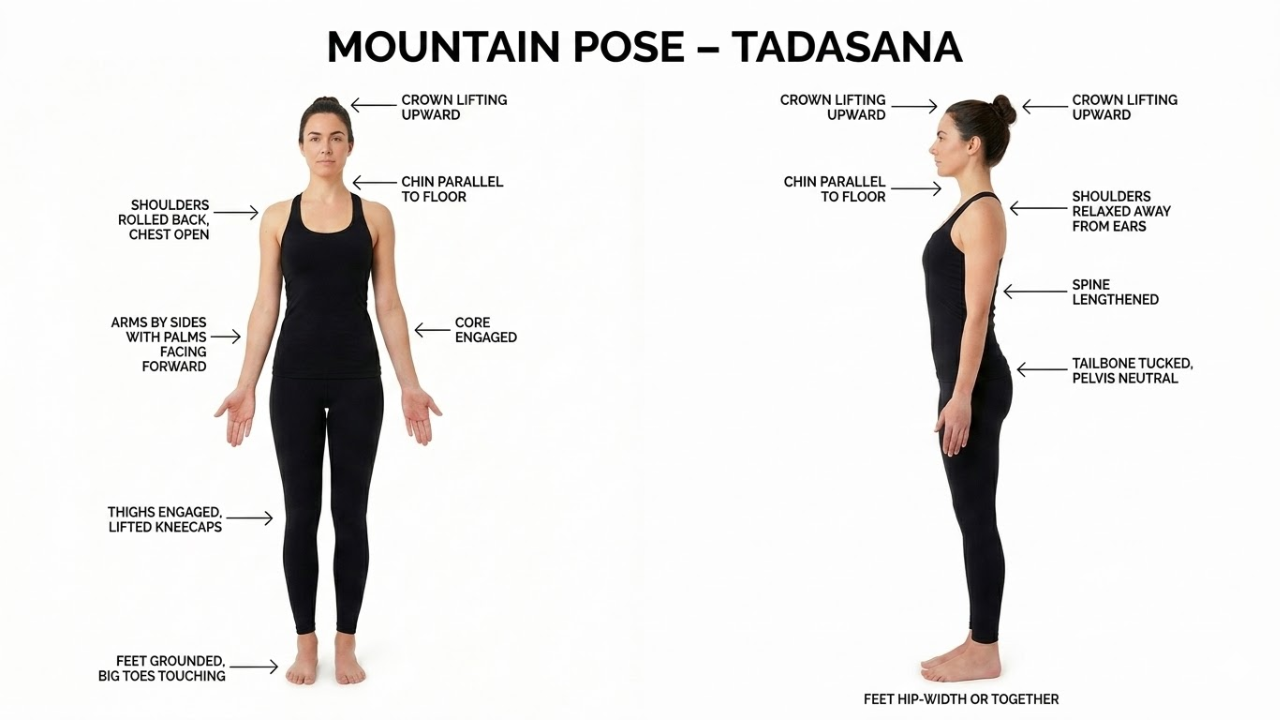
Most people think standing is simple. You just stand — right? But most of us stand with bad posture, uneven weight, tight shoulders, and a distracted mind. We have forgotten how to truly stand. Tadasana — the Mountain Pose — teaches you exactly that. It is just standing. But when you do it with full awareness, it changes your posture, your breathing, and even your confidence. This is the first pose every yoga student learns — and the most important one they forget to practice. This beginner guide will show you exactly how to do Mountain Pose correctly, step by step, in simple easy words.
What Is Tadasana (Mountain Pose)
Tadasana comes from two Sanskrit words: “Tada” means mountain and “Asana” means pose. In this yoga posture, you stand tall and steady like a mountain.
Tadasana is a basic standing yoga pose and the starting point for many other yoga postures. It teaches correct body alignment, balance, and awareness.
Even though it looks simple, Tadasana is a full-body posture. It activates muscles from the feet to the head and helps the mind stay calm and focused.
Why Tadasana Is Important
- Foundation Pose: Many standing yoga poses begin with Tadasana.
- Improves Posture: Helps align the spine, shoulders, and head correctly.
- Builds Body Awareness: Helps you notice how your body stands and moves.
- Calms the Mind: Standing still with slow breathing helps reduce stress.
- Creates Stability: Like a mountain, the pose builds balance and inner strength.
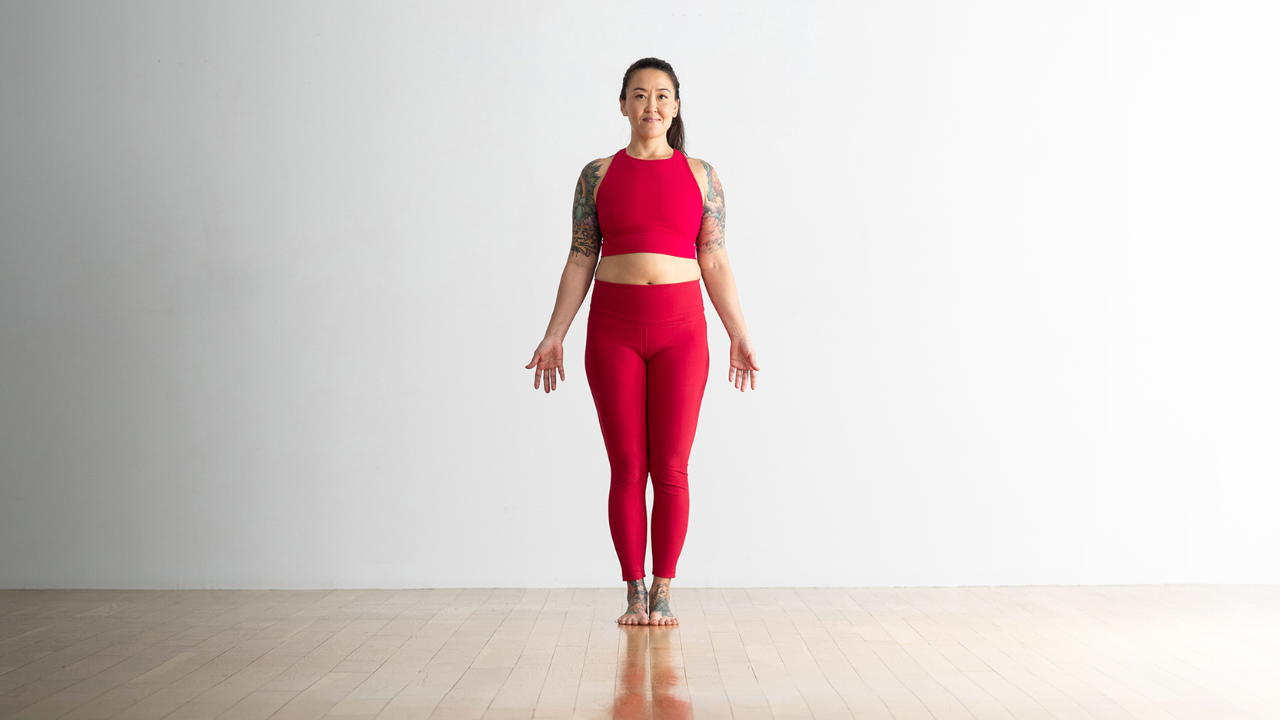
How to Do Mountain Pose (Tadasana) Step by Step
Follow these simple steps to practice Mountain Pose (Tadasana) with proper alignment.
Step-by-Step Instructions
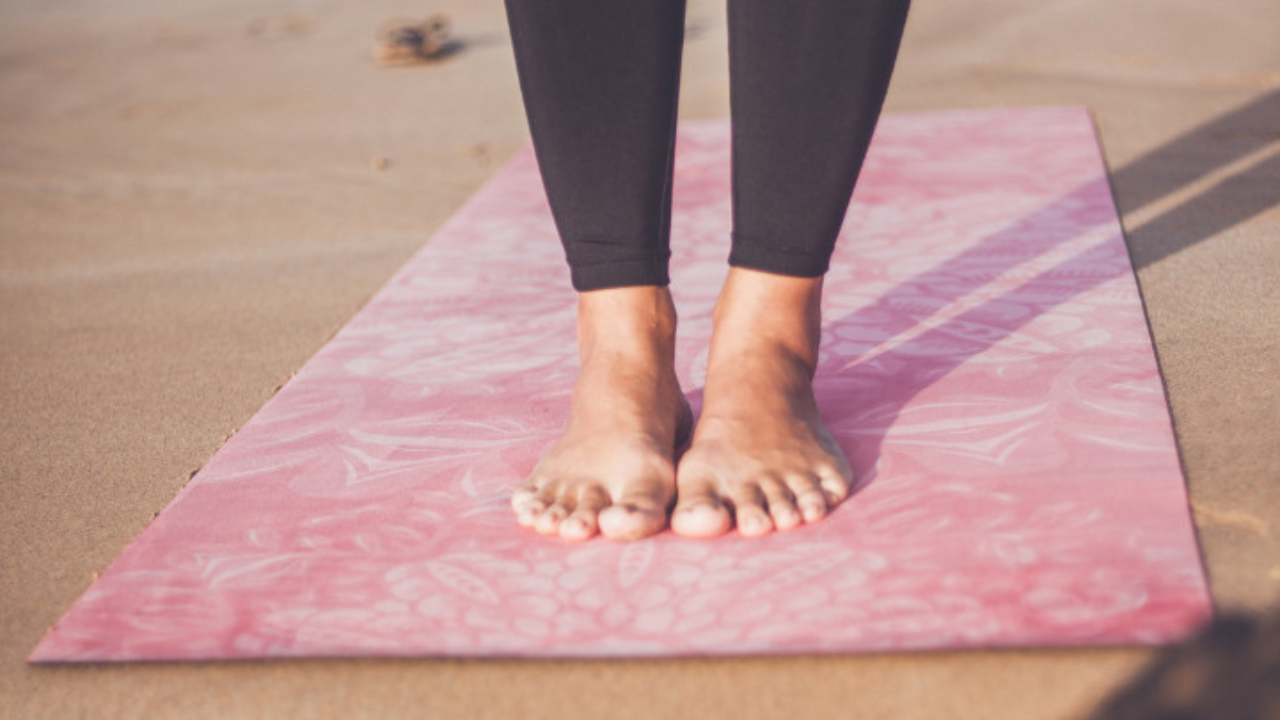
- Step 1 – Feet Position: Stand with big toes touching and heels slightly apart. Spread your toes and press all four corners of the feet into the mat.
- Step 2 – Activate Legs: Lift your kneecaps gently and engage the thighs while keeping the knees soft.
- Step 3 – Neutral Pelvis: Slightly tuck the tailbone and keep the pelvis neutral to maintain a natural lower back curve.
- Step 4 – Lengthen Spine: Stand tall by lifting through the crown of the head. Keep the core lightly engaged.
- Step 5 – Open Chest: Roll the shoulders back and down to open the chest and improve posture.
- Step 6 – Relax Arms: Let arms rest by your sides with palms facing forward and fingers relaxed.
- Step 7 – Head Alignment: Keep the chin parallel to the floor and gaze softly forward.
- Step 8 – Breathe: Take slow deep breaths and hold the pose for 30 seconds to 1 minute.
Benefits of Tadasana (Mountain Pose)
Tadasana (Mountain Pose) looks simple, but it gives many benefits for the body and mind when practiced regularly.
Physical Benefits
- Improves Posture: Helps keep the spine straight and shoulders aligned.
- Strengthens Legs: Activates the thighs, calves, and ankles.
- Supports the Core: Engages abdominal muscles and improves body stability.
- Reduces Back Pain: Correct posture helps reduce mild back discomfort.
- Improves Balance: Standing evenly on both feet increases body balance.
- Opens the Chest: Helps improve breathing and lung capacity.
Mental Benefits
- Calms the Mind: Slow breathing helps reduce anxiety.
- Builds Confidence: Standing tall improves body language and self-confidence.
- Improves Focus: Practicing awareness helps increase concentration.
- Reduces Stress: Even a few minutes of practice can relax the body and mind.
Common Mistakes in Tadasana (And How to Fix Them)
Tadasana looks easy, but beginners often make small mistakes. These mistakes reduce the benefits of the pose. Here are common mistakes and simple ways to fix them.
- Mistake 1 – Locking the Knees: Do not push your knees back too hard. Fix: Keep the knees soft, not locked.
- Mistake 2 – Weight Only on Heels: Many people lean back and lift the toes. Fix: Balance weight on the whole foot.
- Mistake 3 – Too Much Tailbone Tuck: Tucking too hard flattens the lower back. Fix: Keep the pelvis neutral with a natural curve.
- Mistake 4 – Shoulders Near Ears: Tight shoulders create neck tension. Fix: Relax shoulders down and open the chest.
- Mistake 5 – Head Forward: Many people push the head forward. Fix: Keep ears in line with the shoulders.
- Mistake 6 – Holding the Breath: Some beginners forget to breathe. Fix: Keep breathing slow and natural.
- Mistake 7 – Mind Not Focused: Thinking about other things reduces the effect of the pose. Fix: Stay present and focus on your body.
Breathing in Tadasana – The Right Way
In Tadasana (Mountain Pose), breathing is very important. Slow and deep breathing helps the body relax and improves the benefits of the pose.
Instead of shallow chest breathing, practice slow diaphragmatic breathing. This means breathing deeply into the belly and chest.
Simple Breathing Practice
- Inhale Slowly: Breathe in through the nose for about 4 seconds. Let the belly expand and the chest gently rise.
- Small Natural Pause: After inhaling, allow a short natural pause. Do not hold the breath forcefully.
- Exhale Slowly: Breathe out through the nose for about 5–6 seconds. Let the chest relax and the belly fall back.
- Focus on the Breath: If your mind wanders, gently bring attention back to the breath.
Start with 5 slow breaths in Tadasana. As you get comfortable, increase to 15–20 breaths for a deeper calming effect.
Tadasana Variations for Beginners
After learning basic Mountain Pose (Tadasana), you can try these easy variations. They help improve balance, strength, and body awareness.
Easy Tadasana Variations
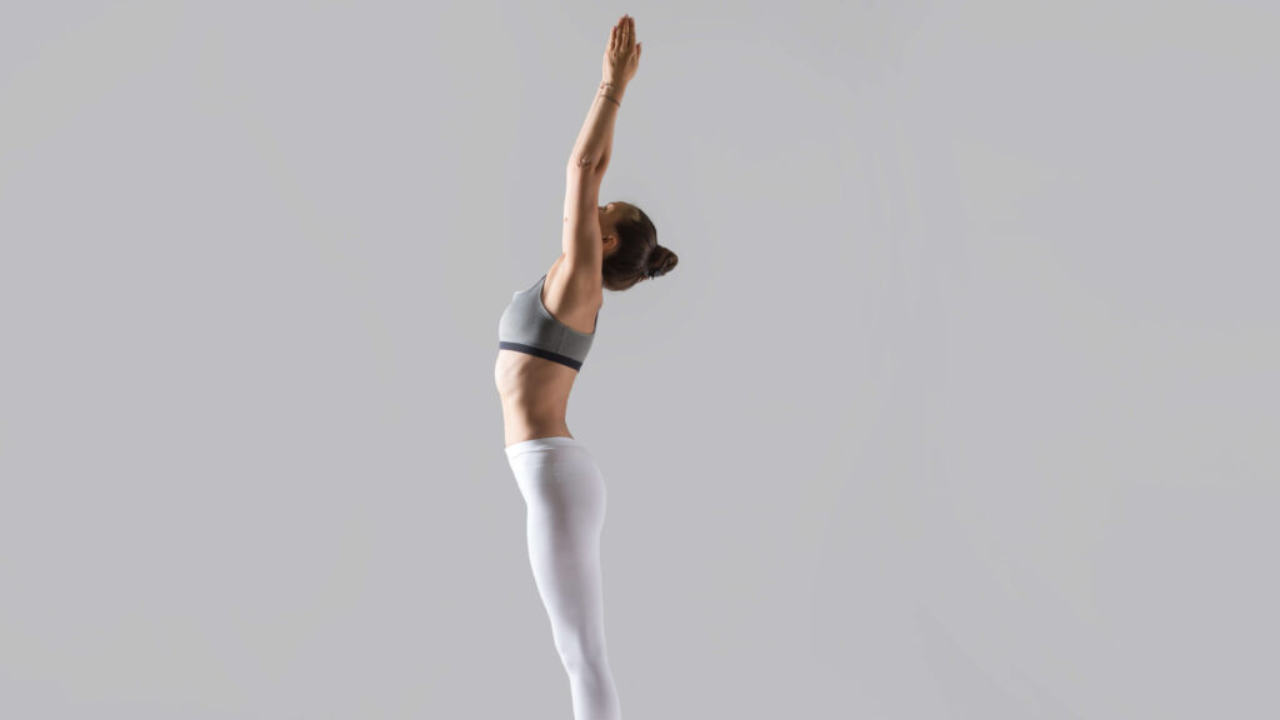
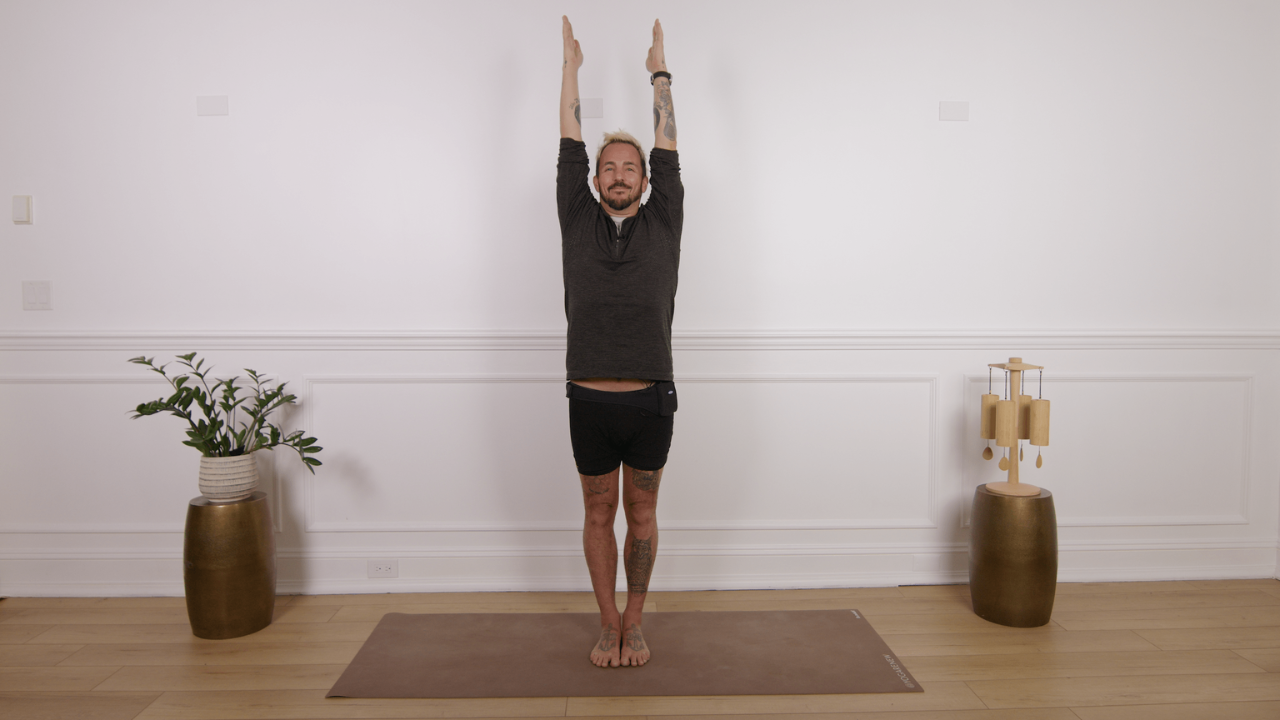
- Urdhva Tadasana (Arms Up): Raise both arms overhead and stretch upward. Hold for 5 breaths. This stretches the body and opens the chest.
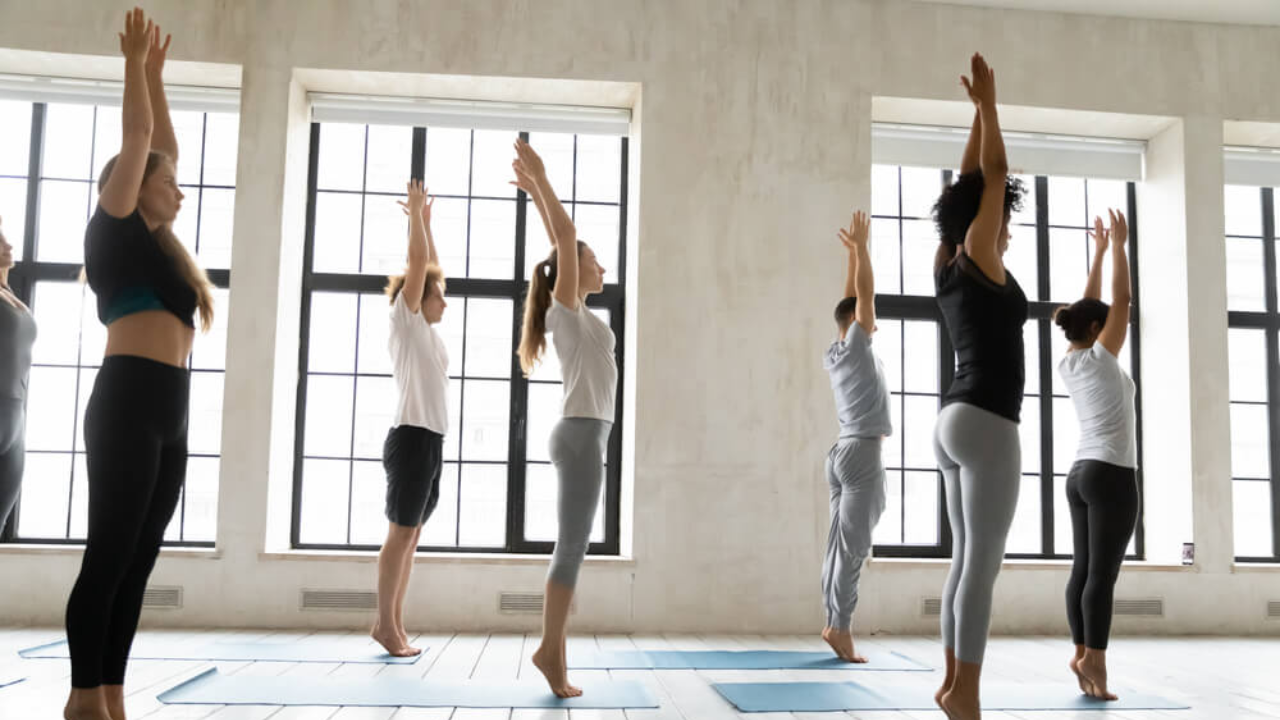
- Tadasana with Toe Raise: Slowly lift your heels and stand on your toes. Hold for a few breaths, then lower down. This improves balance and strengthens ankles.
- Tadasana with Eyes Closed: Stand in the pose and close your eyes. This helps improve focus and inner balance.
- Tadasana with Prayer Hands: Bring palms together at the chest. Breathe slowly for a few breaths. This creates calm and focus.
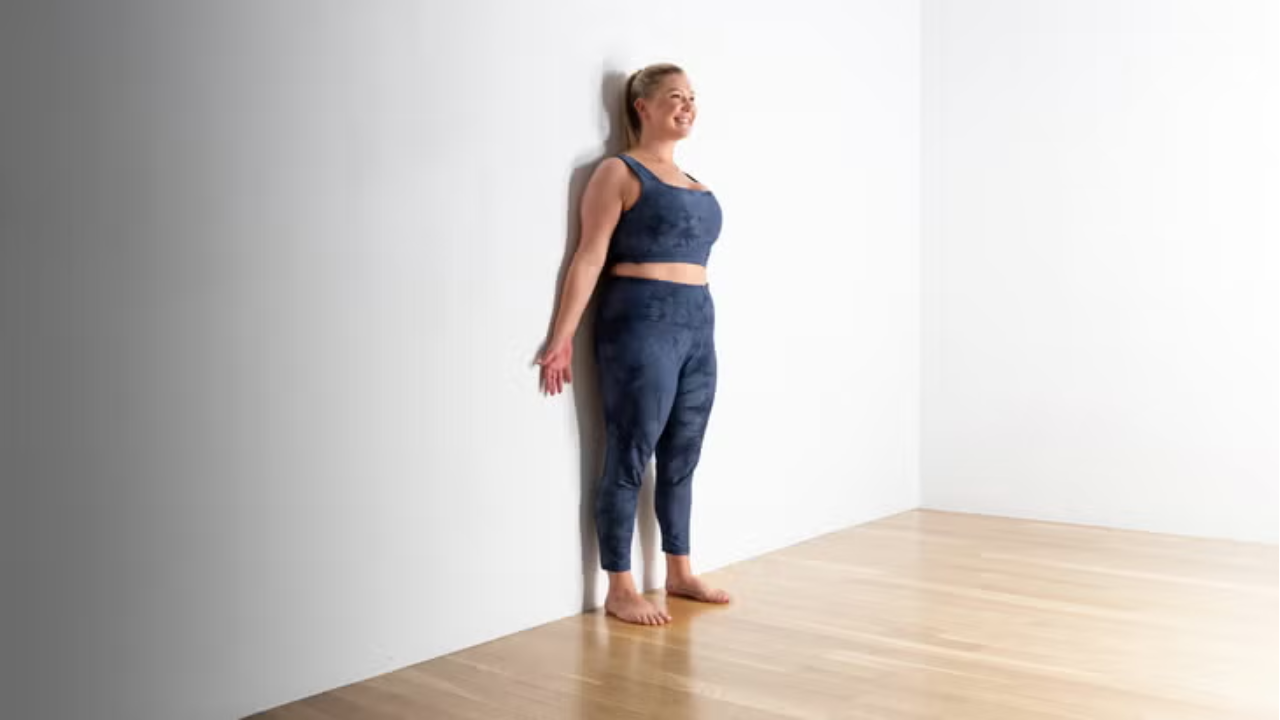
- Wall-Assisted Tadasana: Stand with your back against a wall. Keep heels, hips, shoulders, and head touching the wall for correct alignment.
How to Add Tadasana to Your Daily Yoga Routine
Tadasana (Mountain Pose) is a simple posture you can practice anytime. It improves posture, balance, and breathing. Here are easy ways to include it in your daily routine.
Morning Yoga Routine with Tadasana
- Start with Tadasana: Stand on your mat and take 8–10 slow breaths. This helps your body and mind relax before yoga.
- Between Yoga Poses: After each pose, return to Tadasana for a few breaths. This helps reset balance and posture.
- End Your Practice: After finishing yoga, stand in Tadasana again. Take a few deep breaths and notice how your body feels.
Practice Tadasana During the Day
- While waiting in line, stand tall in Tadasana and breathe slowly.
- If you work at a desk, stand up and check your posture in Tadasana.
- When feeling stressed, stand in Tadasana and take 10 deep breaths.
- Before meetings or presentations, practice Tadasana for 1 minute to feel calm and confident.
Tadasana for Specific Health Goals
Tadasana (Mountain Pose) is a simple yoga posture that helps many people. It improves posture, balance, and body awareness. Here is how it supports different health needs.
For Back Pain
- Poor posture is a common cause of back pain. Tadasana helps correct spinal alignment.
- Practice the pose daily for 2–3 minutes to improve posture.
- Beginners can use a wall to learn proper back and shoulder alignment.
For Flat Feet
- Spread your toes and press all four corners of the feet into the mat.
- This strengthens the foot muscles and supports the arches.
- Regular practice can improve foot strength over time.
For Anxiety and Stress
- Tadasana helps bring attention back to the body and breathing.
- Standing tall with slow breathing calms the nervous system.
- Practice for 1–2 minutes to feel more relaxed and focused.
For Children and Teenagers
- Helps improve posture affected by phones and school bags.
- Builds body awareness and confidence.
- Easy to learn and safe for daily practice.
For Seniors and Older Adults
- Strengthens legs and improves balance.
- Helps reduce the risk of falls.
- Can be practiced near a wall or chair for support.
Tadasana Precautions – Who Should Be Careful
Tadasana (Mountain Pose) is a safe yoga posture. However, some people should practice with extra care.
- Dizziness or Low Blood Pressure: If you feel dizzy while standing, stop the pose and sit down. Practice for short time and keep your eyes open.
- Knee Problems: Do not lock your knees. Keep the knees slightly soft and relaxed.
- Headaches: Keep your gaze slightly downward. Close the eyes only if you feel comfortable.
- Pregnancy: Stand with feet slightly wider for better balance. Practice near a wall or support.
- Insomnia: Tadasana can be slightly energizing. Avoid practicing right before bedtime.
What Happens When You Practice Tadasana Daily
When you practice Tadasana (Mountain Pose) every day, small changes appear in your body and mind. Here is what most beginners notice week by week.
- Days 1–3: The pose may feel strange at first. Your feet and posture start becoming more aware.
- Week 1: Your body feels more balanced. You begin to notice and correct bad posture.
- Week 2: Shoulder and neck tension may reduce. Standing tall starts to feel more natural.
- Week 3: Posture improves during walking and standing. Your body alignment becomes easier to maintain.
- Week 4 and Beyond: Good posture becomes a habit. Balance, confidence, and body awareness improve.
Even a few minutes of daily Tadasana can improve posture, balance, and focus over time.
Frequently Asked Questions (Mountain Pose)
Conclusion
Tadasana (Mountain Pose) is one of the most simple and powerful yoga poses. It teaches you how to stand correctly, breathe deeply, and stay present in the moment.
With regular practice, Tadasana can improve posture, reduce stress, and build confidence. It also creates a strong foundation for many other yoga poses.
The best part is that anyone can practice it. You do not need experience, flexibility, or strength. Just stand tall, keep your body aligned, and breathe slowly.
At Adishesh Yoga in Rishikesh, we teach Tadasana as the foundation of yoga practice. Learning to stand correctly helps create balance, stability, and awareness in daily life.