You have been thinking about going to a yoga retreat. But you are not sure what it is really like. Will it be too hard? Do you need to be flexible? Will you feel out of place? These are normal questions. Every single person who has ever walked into a yoga retreat for the first time felt the same way. This guide is here to answer all of it — simply, honestly, and without any yoga jargon.
What Is a Yoga Retreat, Really?
A yoga retreat is a break from your normal life where you focus fully on yoga, meditation, rest, and yourself. You stay at a peaceful place — usually away from the city — and follow a daily routine built around your wellbeing.
It is not a holiday. It is not a fitness camp. It is somewhere in between — a place where your body, mind, and energy all get time and space to heal and grow.
You eat clean food. You sleep well. You practice yoga every day. You slow down. And slowly, things start to feel different — lighter, clearer, better.
Quick Overview — What to Know Before You Go
- No experience needed: Beginners are welcome everywhere — you do not need to know yoga
- No flexibility needed: Yoga is not about how bendy you are — it is about how present you are
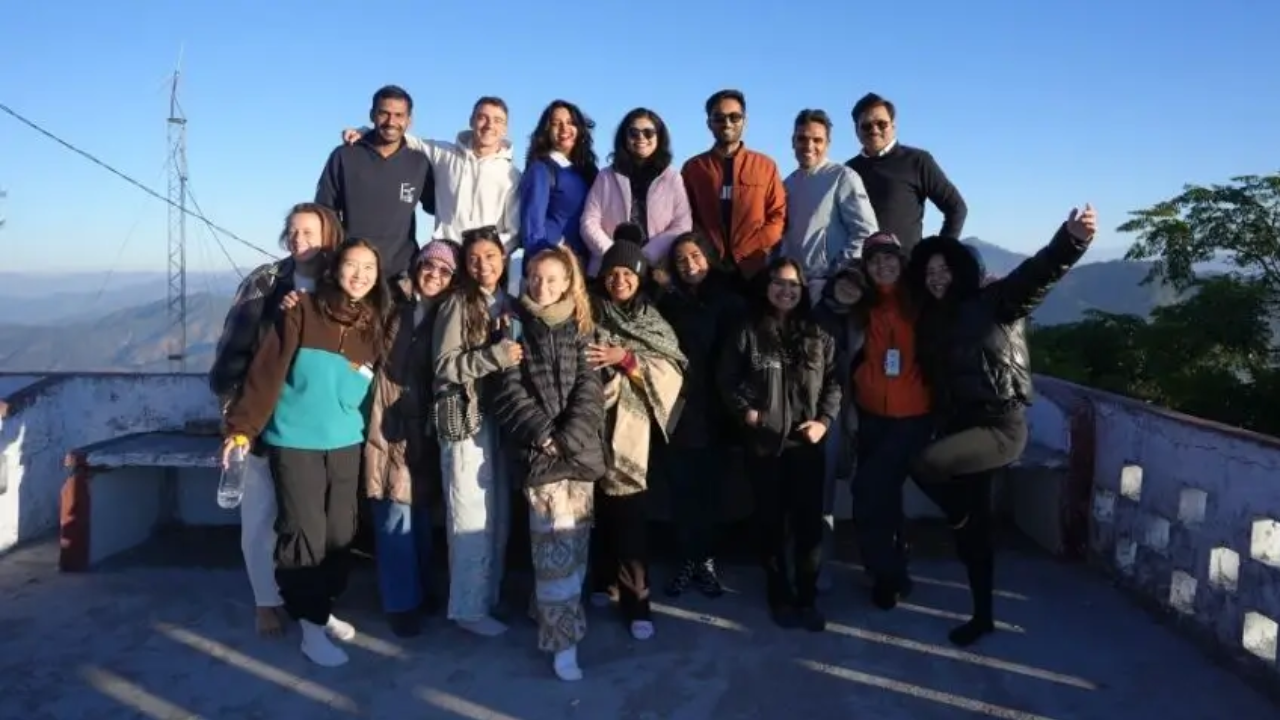
- Going alone is fine: Most people go solo and make real friends by day 2
- First 2 days feel different: Your mind needs time to slow down — this is normal
- By day 3 or 4: You will wonder why you did not do this sooner
- You will leave changed: Not dramatic — just quieter, clearer, and better rested
What Happens Every Day at a Yoga Retreat
Most first-timers are surprised by the retreat daily schedule. It is full — but in a calm, peaceful way. You never feel rushed. But you also never feel bored.
Here is what a typical day looks like at most yoga retreats.
A Typical Retreat Day — Hour by Hour
- 6:00 AM: Wake up — yes, early. But mornings here feel completely different from home
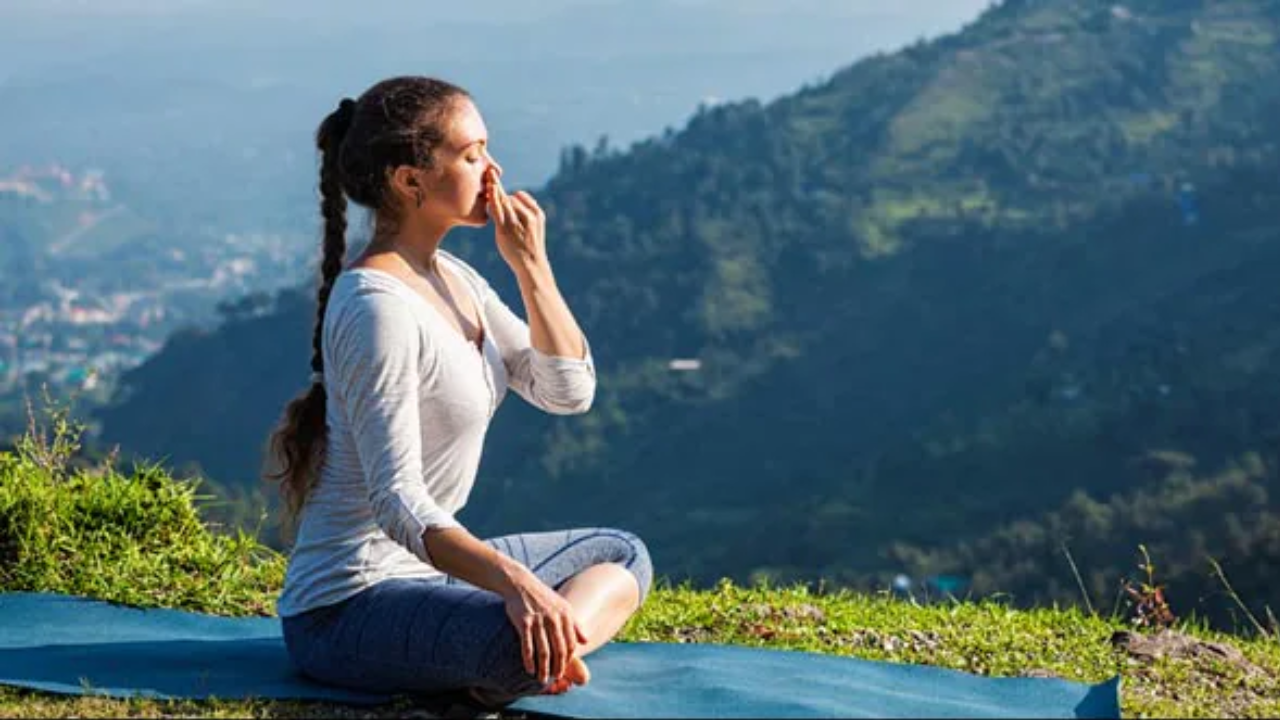
- 6:30 AM: Morning meditation or pranayama (breathing practice)
- 7:00 – 9:00 AM: Morning yoga class — the most important session of the day
- 9:00 AM: Healthy breakfast — fresh, clean, vegetarian food
- 10:30 AM – 12:30 PM: Workshop, philosophy class, or free time to rest and explore
- 1:00 PM: Lunch — the main meal of the day, light and nourishing
- 2:00 – 4:00 PM: Rest time — read, journal, sleep, walk in nature
- 4:00 – 6:00 PM: Afternoon yoga class — usually gentler than the morning
- 6:30 PM: Dinner — light and easy to digest
- 7:30 PM: Evening meditation or satsang (group sharing and chanting)
- 9:00 PM: Sleep — and it is the best sleep you have had in years
Yes — two yoga sessions a day sounds like a lot. But teachers adjust everything to your level. You will never be pushed past your limit. You will always be supported.
What to Honestly Expect as a First-Timer
No one tells you this before your first retreat. But we will. Because it helps to know.
The First Day — Arrival
You arrive. Everything feels a little unfamiliar. You might feel nervous. Or excited. Or both. You meet the other participants. Some people seem more experienced. That is fine — everyone starts somewhere.
Day one is gentle. Orientation, introductions, your first light yoga session, and early sleep. Nothing overwhelming.
Day 2 to 3 — The Adjustment
Your body starts to feel the routine. You might feel a little sore. Your mind might still feel busy. Some people feel emotional — even without knowing why. This is your nervous system releasing stress. It is a good sign, not a bad one.
Day 4 Onwards — The Magic
This is when everything shifts. Sleep becomes deeper. The mind becomes quieter. You start to look forward to your practice. You feel less tired and more alive. This is what people mean when they say a retreat "changed them."
Things No One Warns You About
- You might cry — not from sadness, but from release. Let it happen.
- You might miss your phone for the first day or two. By day 3, you forget it exists.
- The food is different from what you eat at home — but most people love it by day 2
- Waking up early feels hard the first morning. By day 3, you wake up before the alarm.
- You will make real connections with strangers fast. Retreat energy does that.
What to Pack — The Complete First-Timer's List
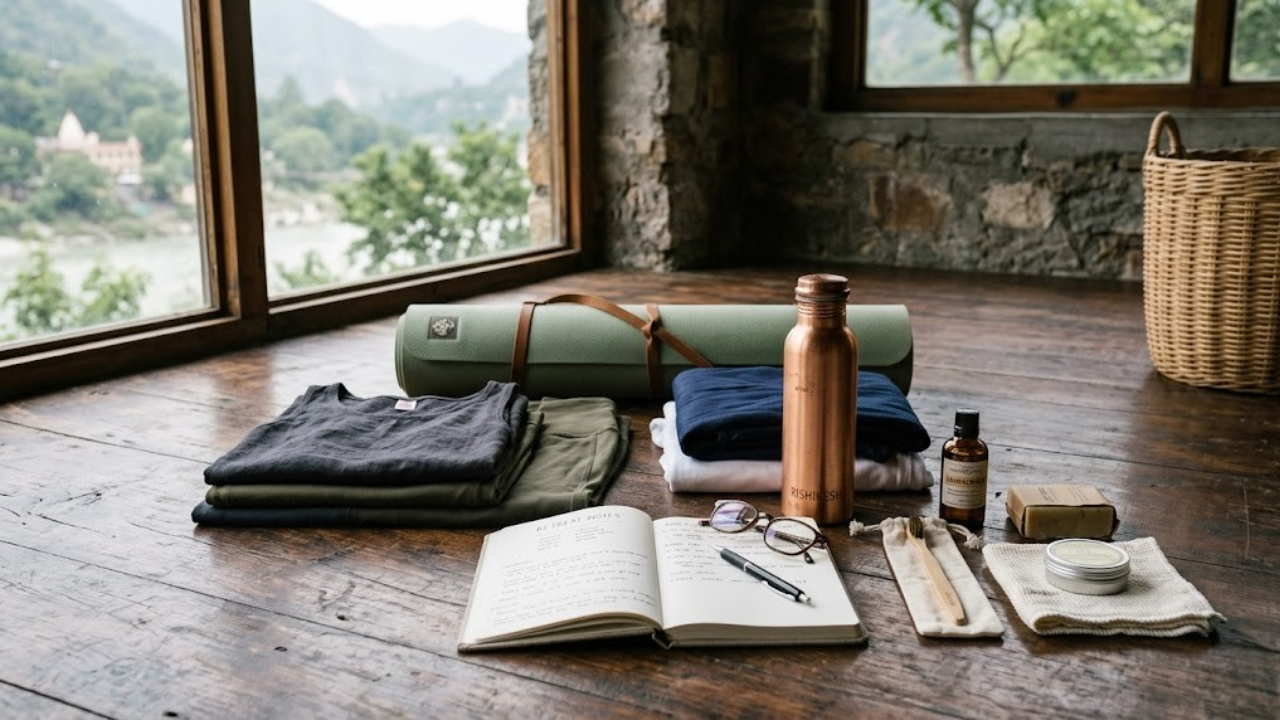
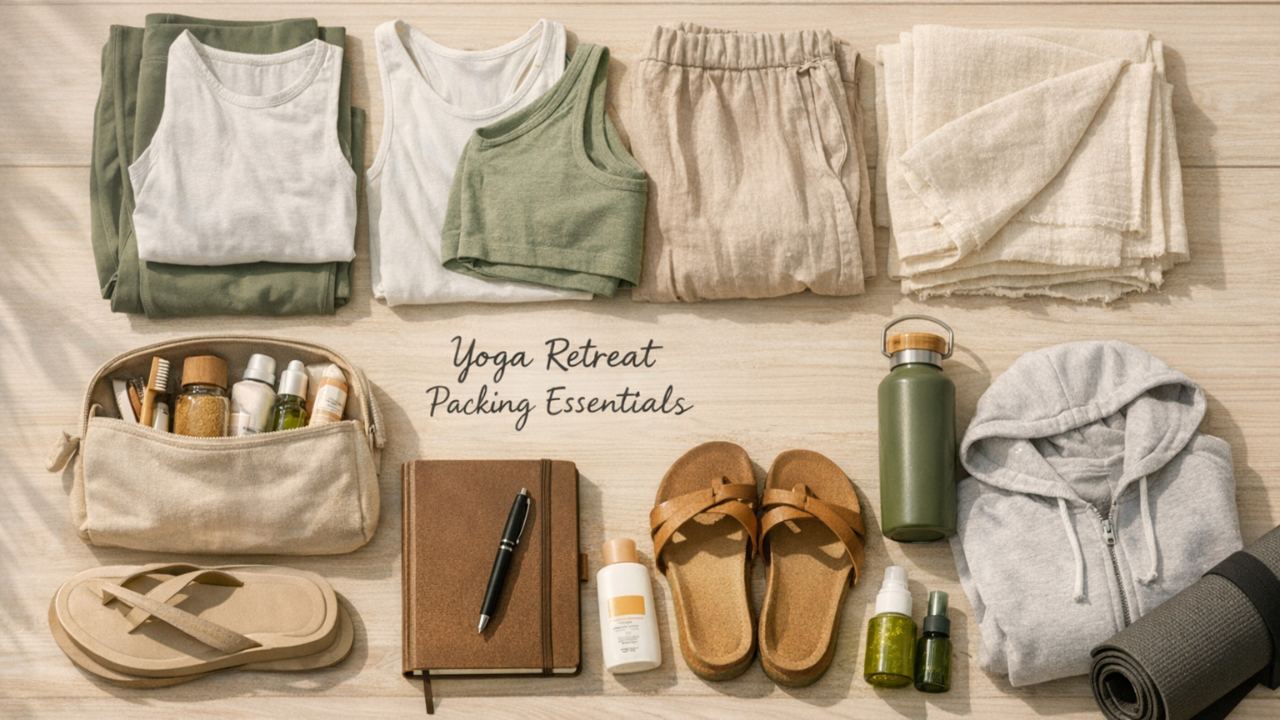
Keep it simple. A yoga retreat is not a fashion show. You need comfort — not a big suitcase. Here is everything you actually need.
Clothes to Bring
- 3 to 4 sets of comfortable, stretchy yoga clothes — loose pants, leggings, light tops
- 1 light shawl or wrap for meditation sessions — it gets cool in early mornings
- Light jacket or hoodie for evenings — especially in Rishikesh where nights are cooler
- Comfortable sandals or flip-flops for walking around the campus
- 1 to 2 casual outfits for afternoons or free time
Essentials to Pack
- Journal and pen: You will have thoughts worth writing down — this is almost guaranteed
- Reusable water bottle: Staying hydrated is important during regular yoga practice
- Personal medicines: Any regular medicines you take — bring enough supply
- Sunscreen and insect repellent: Especially if you are going to Rishikesh or outdoor locations
- Toiletries: Keep it minimal — eco-friendly options are appreciated at most retreat centres
- Small torch or phone flashlight: Useful for early morning walks to the yoga hall
What to Leave Behind
- Work laptop — you are here to disconnect, not work remotely
- Heavy books — you will not have energy or time to read much
- Expensive jewellery — simple and minimal is better here
- Tight, uncomfortable clothing — comfort is everything during yoga
- Expectations of perfection — come open, not prepared with what it "should" look like
How to Choose the Right Retreat for Your First Time
There are thousands of yoga retreats around the world. Choosing the right one for your first time is important. A good first experience will stay with you forever. A bad one can put you off for years.
Here is exactly what to look for.
5 Things to Check Before Booking
- Beginner-Friendly Teachers: Check if the retreat clearly welcomes all levels — especially beginners. The teachers should be certified and experienced.
- Small Group Sizes: Smaller groups mean more personal attention from the teacher. Avoid big crowded yoga retreats for your first time.
- Clear Daily Schedule: A good retreat has a proper structure — not just one class a day and nothing else. Look for retreats that include meditation, pranayama, and philosophy alongside asana.
- Real Reviews From Real People: Read Google and retreat platform reviews carefully. Look for reviews from other first-timers. They will tell you exactly what you need to know.
- The Right Location: For first-timers, Rishikesh in India is one of the best places in the world. The energy, the teachers, the food, and the environment are all naturally aligned with yoga.
Why Rishikesh Is Perfect for a First Yoga Retreat
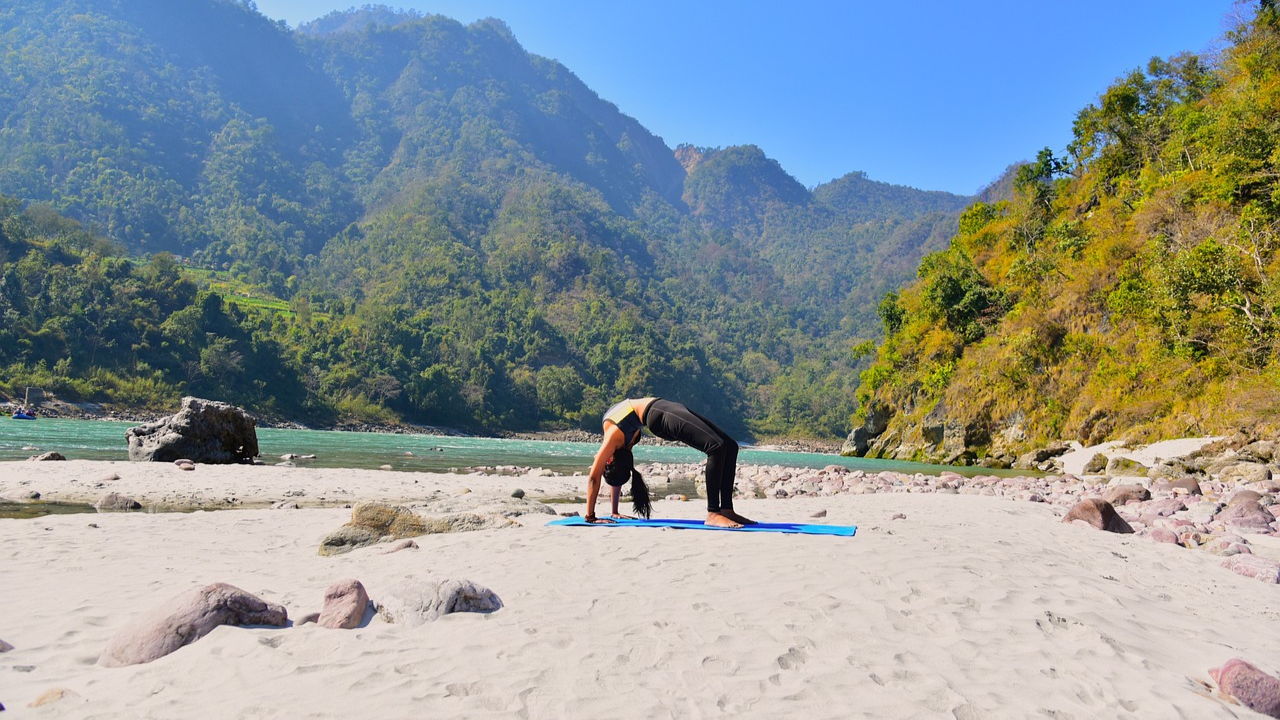
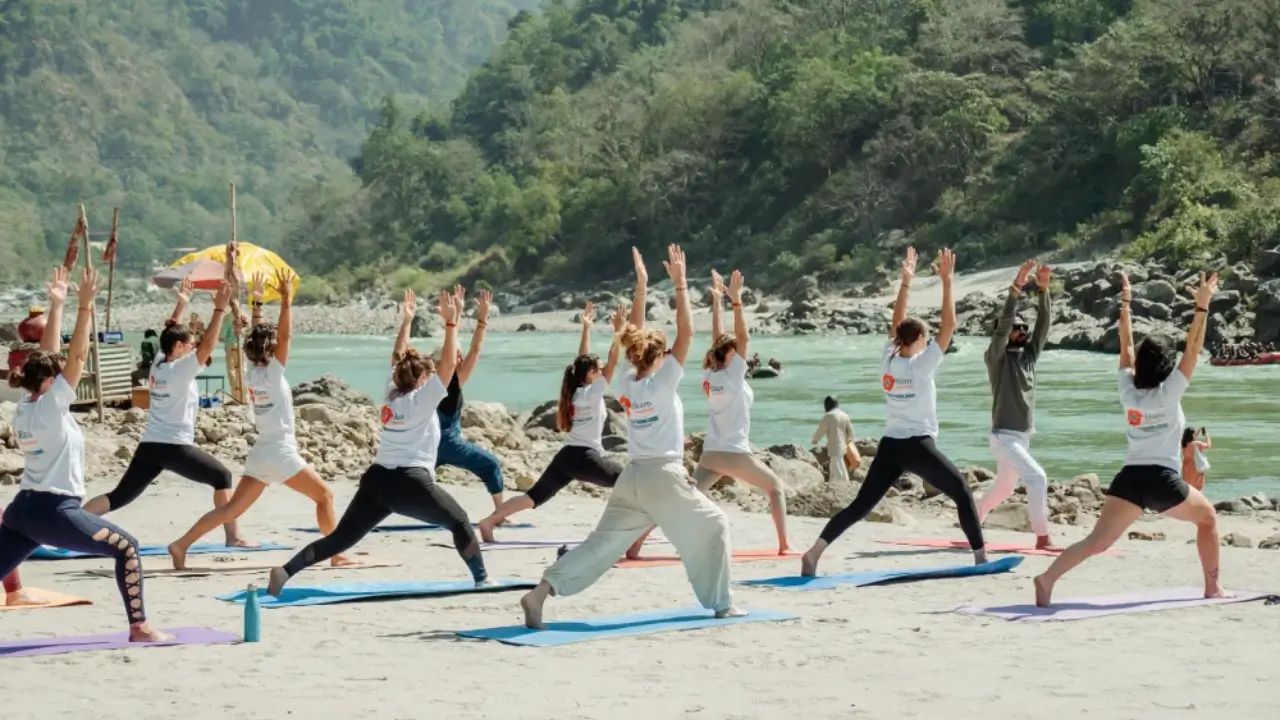
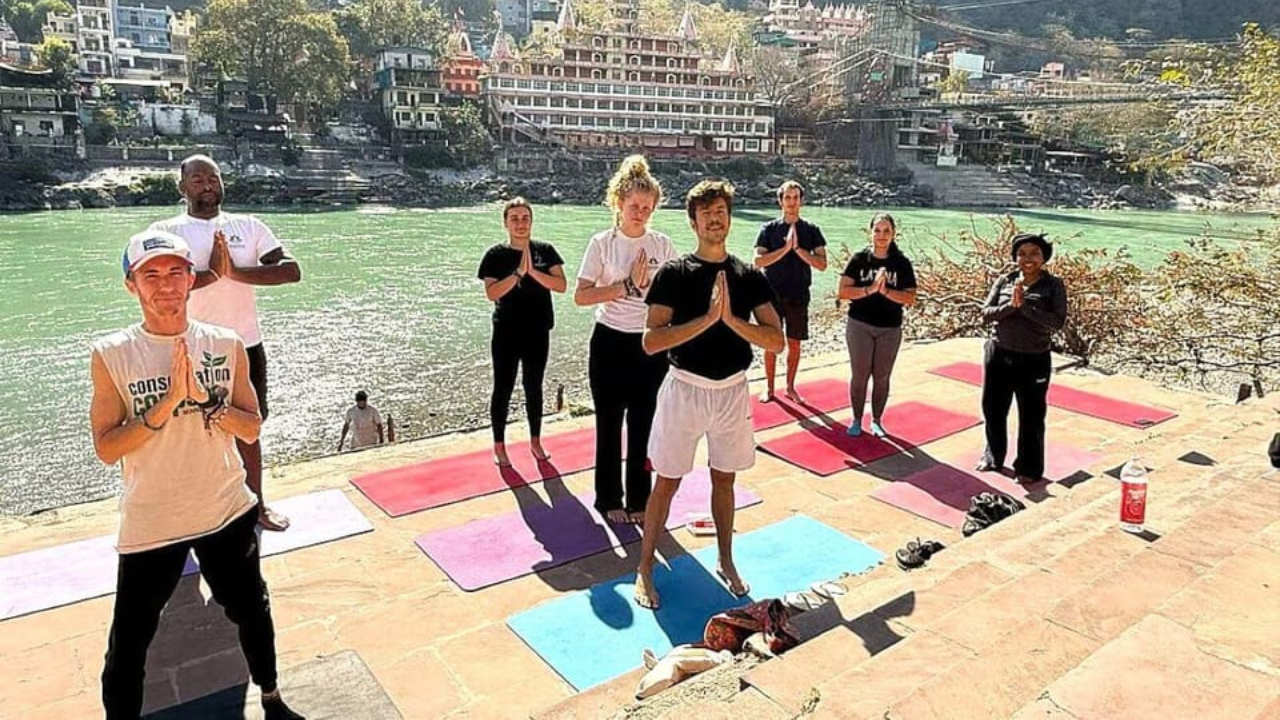
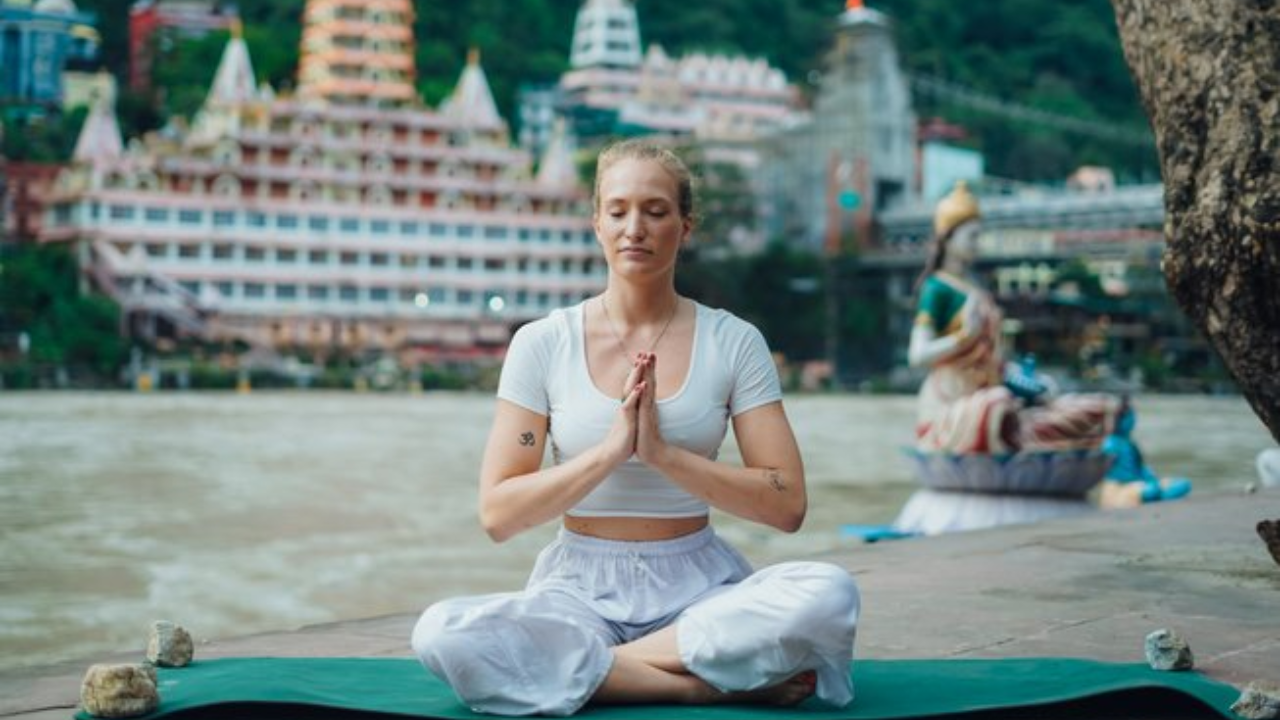
Rishikesh is called the Yoga Capital of the World — and for a good reason. It sits in the foothills of the Himalayas, on the banks of the Ganga river. The air is clean. The energy is calm. And yoga here is not just exercise — it is a whole way of life.
For a first-timer, Rishikesh gives you something no other city can — the feeling that yoga belongs here. That it makes sense here. And that you belong here too.
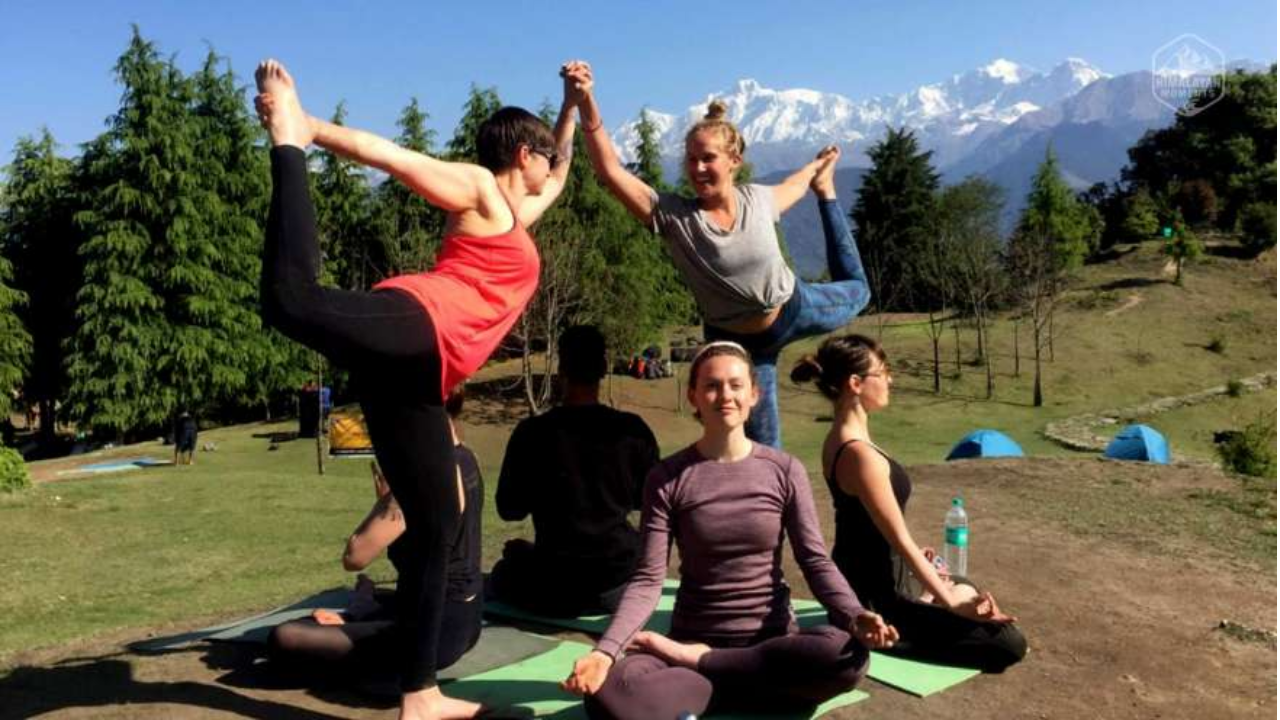
Common First-Timer Worries — Real Answers
These are the questions most first-timers are afraid to ask. Here are honest answers.
"I am not flexible at all. Will I be embarrassed?"
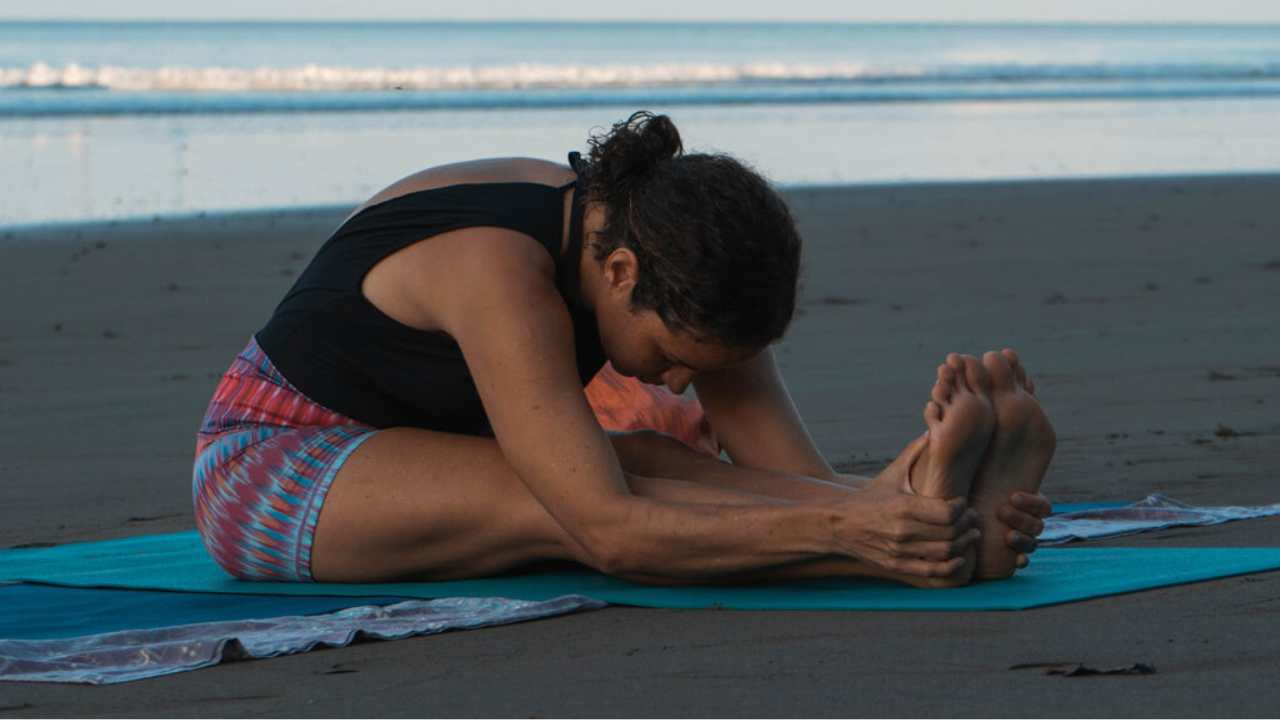
No. Not even a little. Flexibility is the last thing anyone cares about at a yoga retreat. Your teacher will meet you exactly where you are. Everyone is focused on their own practice — not yours.
"I have never meditated. Will I be lost?"
That is fine. Meditation is taught from scratch at retreats. You will not be asked to sit for an hour in silence on day one. It starts gently — 5 minutes, then 10, then more. By the end of the week, you will actually look forward to it.
"What if I am the only one who cannot keep up?"
You will not be. Retreats always have a mix of levels. Teachers give options for every pose — easier and harder. You will never be left behind. You will always be included.
"Is the vegetarian food going to be enough for me?"
Yes. Retreat food is cooked fresh, full of flavour, and surprisingly satisfying. Most people who come as non-vegetarians leave the retreat genuinely enjoying plant-based food. The food is part of the healing — not a sacrifice.
"What if I want to leave and go home?"
This feeling usually comes on day 1 or 2 — and then it completely disappears. Almost everyone who thinks about leaving in the first 48 hours says by day 4 that it is the best thing they ever did. Stick with it. The shift is coming.
Quick Tips to Get the Most From Your First Retreat
These small things make a big difference. Especially for first-timers.
- Arrive a day early if you can: Getting to the location a day before the retreat starts helps your body adjust to the new time zone or environment without missing your first session
- Tell your teacher about injuries or health issues: Do this on day one — not after something hurts. Good teachers always adjust the practice for your needs
- Put your phone away as much as possible: You came here to disconnect. Every hour you spend on your phone is an hour you are not spending on yourself
- Write in your journal every evening: Even just 5 minutes. You will be surprised what comes out when you slow down and write
- Drink water constantly: Yoga and meditation move a lot of energy in your body. Hydration helps everything work better
- Say yes to everything, at least once: The morning walk, the chanting session, the philosophy class — try it all. You can decide what you love after you try it
- Be kind to yourself on hard days: Some days you will feel great. Some days you will feel tired or emotional. Both are part of the process. Both are welcome
Frequently Asked Questions — First-Timer's Yoga Retreat Guide
Conclusion
Your first yoga retreat will probably be one of the best decisions you ever make for yourself. Not because it is glamorous or perfect — but because it gives you something rare. Time. Space. Silence. And a chance to actually feel good again.
You do not need to be ready. You do not need to be flexible. You do not need to know anything about yoga. You just need to show up. Everything else is taken care of.
The only thing you might regret about your first yoga retreat — is not going sooner.
At Adishesh Yoga in Rishikesh, we welcome first-timers with open arms. Our retreats are designed to make beginners feel safe, supported, and truly at home — from the very first day. If you have any questions before booking, just reach out. We are happy to help you find the right retreat for where you are right now.