You go to yoga class. Teacher says — "come into Downward Dog." Everyone moves into the pose. But something feels wrong. Wrists hurt. Back is rounding. Heels are not touching. You wonder — am I doing this right? You are not alone. Adho Mukha Svanasana looks simple from outside. But most people — even those who practice for years — have small alignment mistakes that block the real benefits. This guide fixes all of that. Step by step. Simple words. Real results.
What Is Adho Mukha Svanasana?
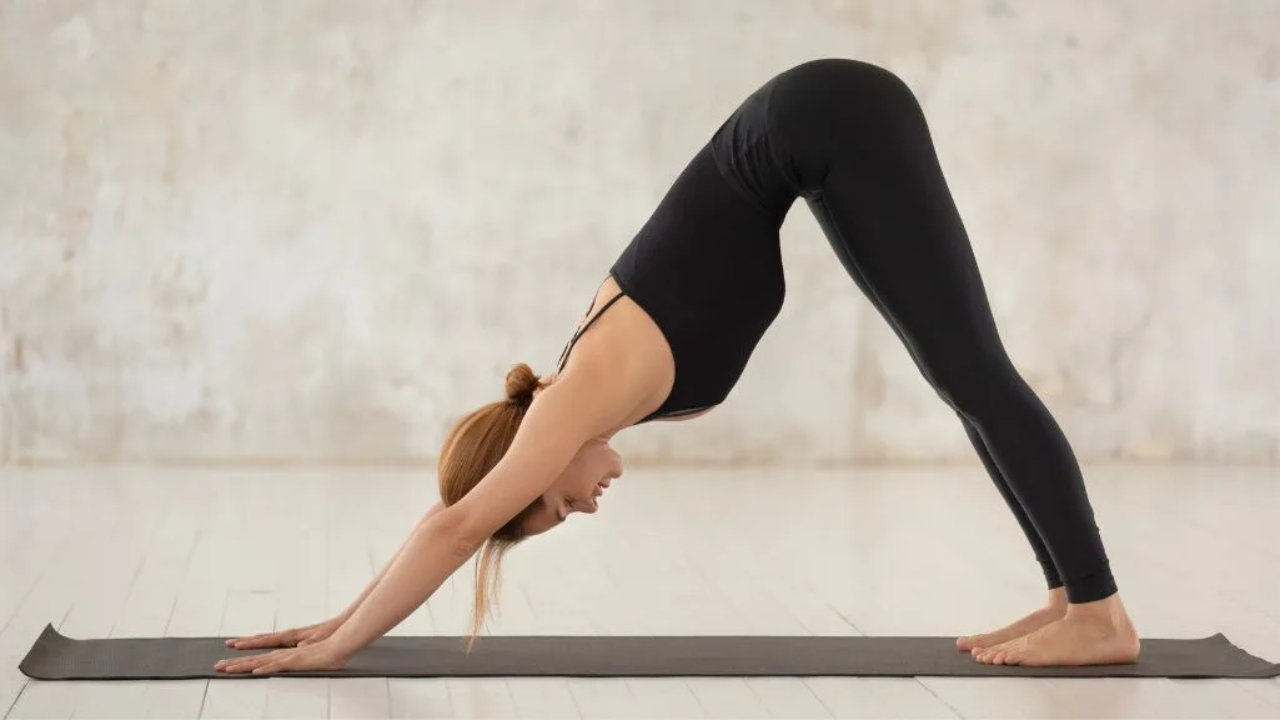
Adho Mukha Svanasana is a Sanskrit name. "Adho" means downward. "Mukha" means face. "Svana" means dog. So the full meaning is — Downward Facing Dog. If you watch a dog stretch after waking up, that is exactly this shape. Body makes a big upside-down V. Hands and feet on the ground. Hips high in the air.
This pose is used in almost every yoga style — Hatha, Vinyasa, Ashtanga, Power Yoga. It is a full body pose. It stretches your hamstrings, calves, and spine. It strengthens your arms, shoulders, and core. And it calms the brain. Yoga teachers call it a "resting pose" — but only when the alignment is correct.
Quick Pose Details
- Sanskrit Name: Adho Mukha Svanasana
- English Name: Downward Facing Dog Pose
- Type: Standing / Inversion / Strengthening
- Level: Beginner to Intermediate
- Hold Time: 5 to 10 breaths (30 to 60 seconds)
- Best Time: Morning on empty stomach
- Body Focus: Full body — spine, shoulders, hamstrings, calves, core
Benefits of Downward Dog Pose
Why do yoga teachers put this pose in every single class? Because Adho Mukha Svanasana does many things at once. It is like a full body reset button. When done correctly, every part of the body benefits.
Top Benefits of Adho Mukha Svanasana
- Relieves Back Pain: The spine gets a full decompression stretch. The space between vertebrae opens. People with desk jobs feel relief within days of regular practice.
- Stretches Hamstrings and Calves: Very good for people who sit all day. Tight hamstrings cause lower back pain. This pose gently opens them without injury.
- Strengthens Arms and Shoulders: Holding your body weight on hands builds real arm and shoulder strength. Good preparation for harder arm balance poses.
- Calms the Mind: Head goes below the heart in this pose. This sends fresh blood to the brain. Stress hormones reduce. Anxiety goes down. You feel calmer within minutes.
- Improves Posture: Most people have rounded shoulders from phone and laptop use. Downward Dog pulls the shoulder blades back and opens the chest. Regular practice corrects posture over time.
- Boosts Digestion: The gentle compression and stretch of the abdominal area stimulates digestive organs. Good for people with slow digestion or bloating.
- Builds Core Strength: To hold the pose properly, the core must be engaged. This builds abdominal and deep core strength without any crunches.
Step by Step: How to Do Downward Dog Correctly
This is the most important part. Read each step slowly. Do not rush. Each point has a reason. When all parts of the body are in the right place — the pose feels amazing. Not painful. Not tiring. Actually restful.
Step 1 — Start on All Fours
- Come to table top position. Hands under shoulders. Knees under hips.
- Spread your fingers wide. Like a starfish. Press all fingers into the mat — especially the index finger and thumb.
- Check that hands are shoulder-width apart. Not too close, not too wide.
Step 2 — Tuck Toes and Lift Hips
- Tuck your toes under. Take a breath in.
- As you breathe out — press the floor away with your hands and lift your hips up and back.
- Your body now makes an upside-down V shape.
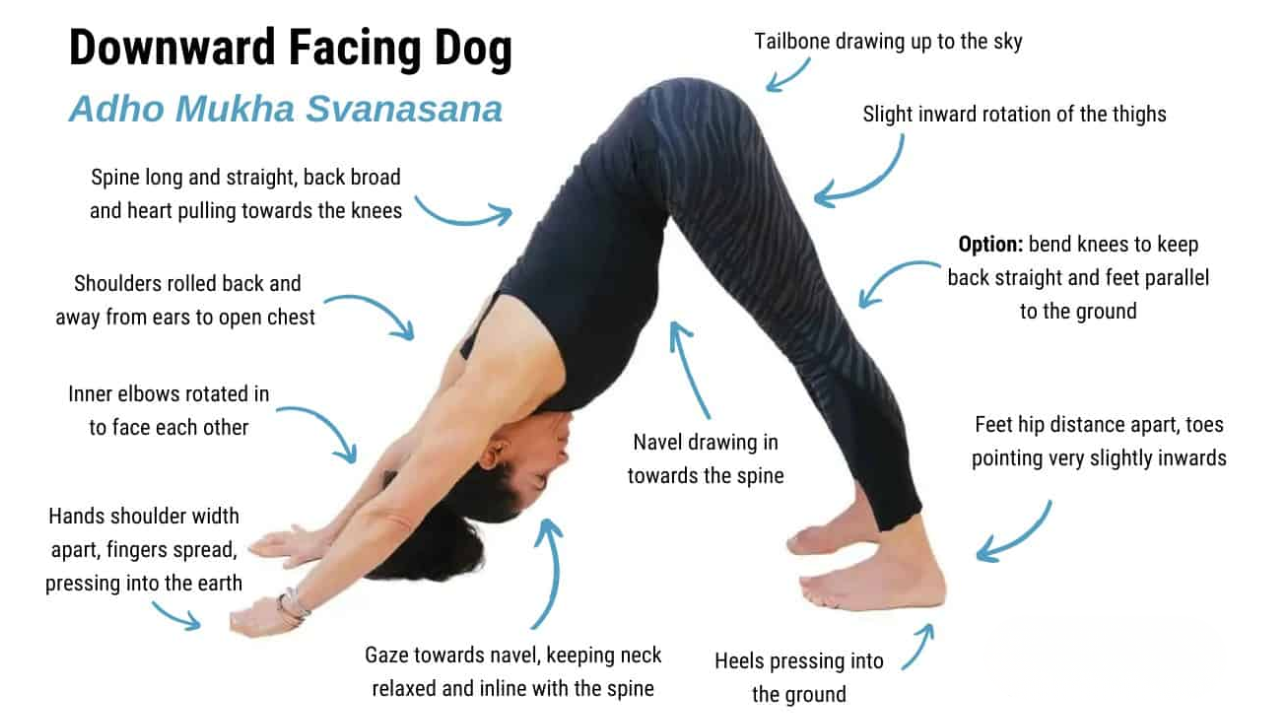
- Feet should be hip-width apart. Toes pointing forward.
Step 3 — Work the Spine First (Most Important)
- Bend your knees. Both knees. A lot. This is okay.
- Now focus only on making your spine long and flat. Like a table top.
- Push your tailbone up toward the ceiling. Hips go high.
- Do NOT worry about heels touching the floor yet. Spine is the priority.
Step 4 — Set Your Shoulders
- Externally rotate your upper arms — turn the inner elbow crease to face forward.
- Shoulder blades should move away from your ears and toward your hips.
- Do not scrunch your shoulders up near your ears. Keep them down and broad.
- The back of your neck stays long. Head hangs naturally. Do not strain to look up or down.
Step 5 — Work the Legs
- Once your spine is long, slowly start to straighten your knees — but not fully locked.
- Press your heels toward the floor. They do not have to touch. The action of pressing down is enough.
- Inner thighs rotate back and up — like you are trying to show the back of your thighs to the sky.
- Quadriceps (front thigh muscles) should be gently engaged.
Step 6 — Breathe and Hold
- Take slow, deep breaths. With each inhale — feel your spine grow longer.
- With each exhale — press the floor away more firmly with your hands.
- Hold for 5 to 10 breaths. Then gently lower knees to floor to rest in Child's Pose.
Most Common Mistakes in Downward Dog
These are the mistakes teachers see every single day in class. If you are doing any of these — your pose is not giving full benefit. It may even be causing injury. Read each one carefully and check yourself.
7 Mistakes That Ruin Your Downward Dog
- Mistake 1 — Rounding the Back: This is the biggest one. Many beginners force straight legs and heels to floor — but the spine rounds completely. A round spine puts stress on lower back discs. Always bend knees and prioritize a long flat spine instead.
- Mistake 2 — Shoulders Crunching Toward Ears: When arms are weak, shoulders come up toward the ears. This compresses the neck and traps the breath. Consciously slide shoulder blades down your back every time you enter the pose.
- Mistake 3 — Fingers Not Spread: If fingers are together, all wrist pressure goes to the heel of the palm. This causes pain. Spread fingers wide. Press through all fingertips. This distributes weight evenly and protects wrists.
- Mistake 4 — Collapsing Into the Wrists: Some people sink into the wrists so much that the wrist bends sharply. This causes tendon strain. Fix: Push the floor away. Press into the mat as if you want to push it down. This lifts weight out of the wrists.
- Mistake 5 — Locking the Knees: Hyper-extending or locking the knees creates pressure on the knee joint and pulls the tailbone down, rounding the back. Keep a micro-bend in the knees always.
- Mistake 6 — Hands Too Close to Feet: When hands are too close, the body weight is unbalanced. Arms carry too much and spine cannot lengthen. Walk hands forward — about shoulder distance ahead of the shoulders when in the pose.
- Mistake 7 — Looking Up or Down Forcefully: Straining the neck to look at feet or at the teacher breaks the natural cervical spine curve. Gaze should fall naturally between the knees or toward the navel. Let the head hang freely.
Detailed Alignment Checklist: Body Part by Body Part
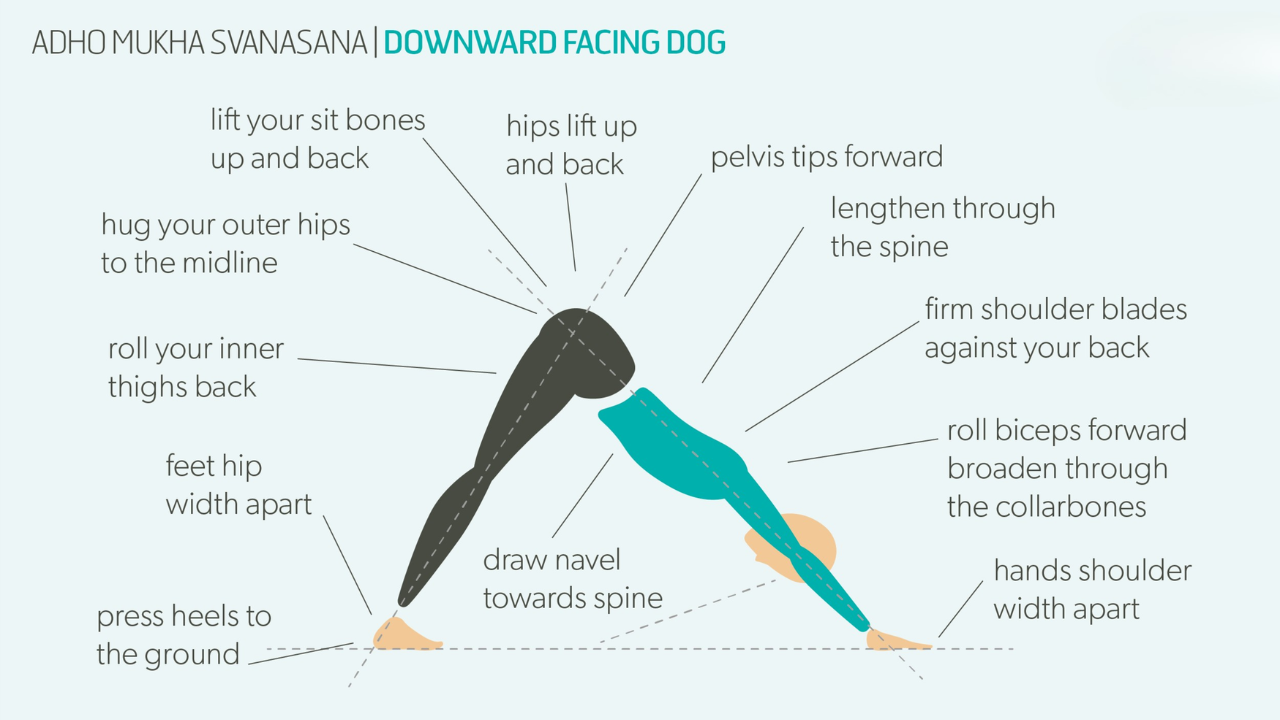
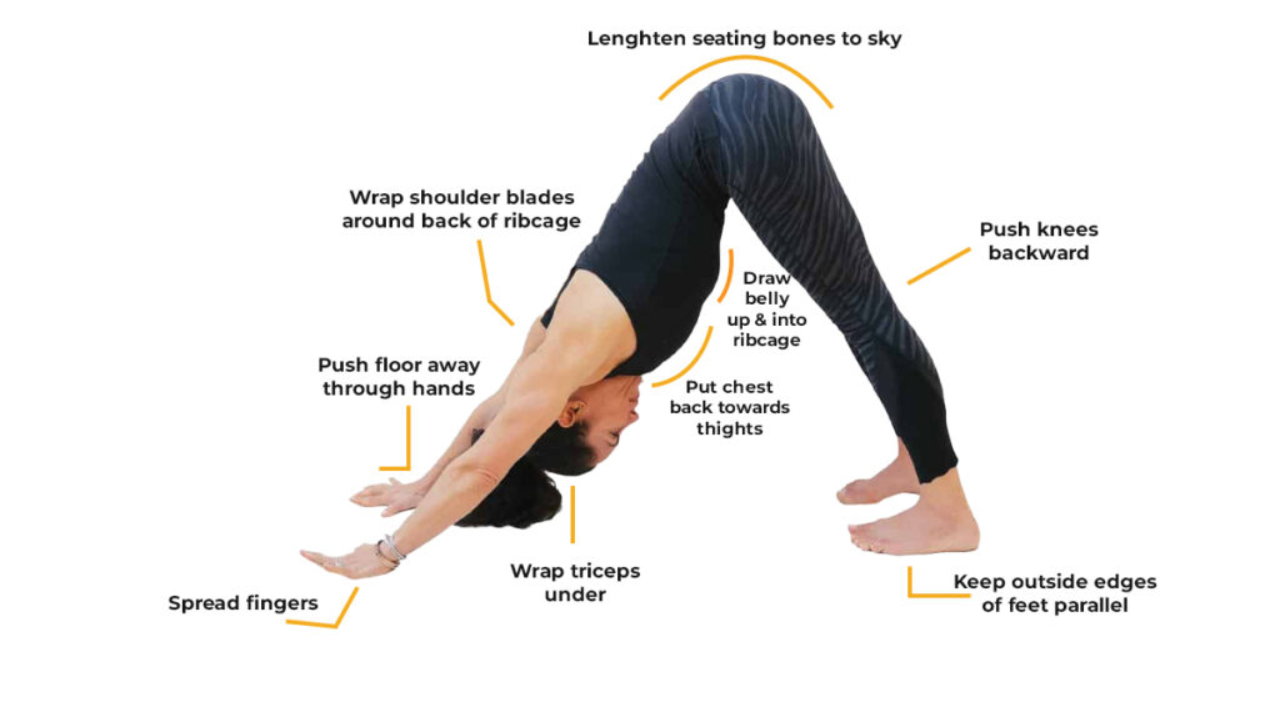
Use this checklist every time you practice Downward Dog. Go through each body part one by one. When all parts are correct at the same time — that is when the pose clicks and feels effortless.
Hands and Wrists
- Fingers spread wide like a fan — all five fingers active.
- Middle finger points straight forward, in line with outer edge of arm.
- Whole palm pressed flat into mat — no gaps under the center of the hand.
- Weight distributed equally between all fingers and the heel of the palm.
- Inner crease of the elbow faces forward — this externally rotates the arms correctly.
Arms and Shoulders
- Arms are straight but elbows are not locked. Soft elbow joint.
- Shoulder blades pull down toward the hips — away from the ears.
- Chest opens broad. Armpits face each other slightly.
- Biceps rotate slightly outward — this is the external rotation that opens shoulders.
Spine and Core
- Spine is long and neutral — not rounded, not over-arched.
- Tailbone lifts up toward the ceiling to create length in the lower back.
- Belly button gently draws in — a soft core engagement that protects the spine.
- Ribs do not splay out forward — keep ribs gently hugged in.
Hips and Legs
- Hips are the highest point of the body — always pushing up and back.
- Feet hip-width apart. Toes pointing straight forward.
- Knees soft — never locked. A micro bend keeps the spine neutral.
- Inner thighs rotate back — this opens the space between the sit bones.
- Heels move toward the floor — they do not have to touch. The direction matters.
Head and Neck
- Head hangs freely in line with the spine — no strain.
- Ears in line with the upper arms — not dropped below or held up.
- Gaze falls naturally toward the navel or between the feet.
- Jaw is relaxed. Forehead is relaxed. Eyes are soft.
Modifications for Beginners
You do not have to do the "perfect" version from day one. Yoga is a practice. Modifications are not weak — they are smart. These variations let you get all the benefits of Downward Dog while your body slowly builds strength and flexibility.
5 Easy Modifications for Downward Dog
- Bent Knees Version: Keep knees bent generously the entire time. This is the most important modification. Bent knees allow the spine to fully lengthen. Much better than straight legs with a rounded back.
- Yoga Blocks Under Hands: Place blocks under palms to reduce wrist angle. This is a great help if you have tight wrists or mild wrist pain. It brings the floor closer to you.
- Dolphin Pose (Forearms Down): Come down onto forearms instead of hands. All fingers interlaced or palms flat. Hips still go up. This removes all wrist pressure and deeply opens shoulders. Perfect for wrist injuries.
- Wall Downward Dog: Stand facing a wall. Place hands on wall at hip height. Walk feet back so body makes an L shape. Spine is horizontal. Hips over heels. This is a fully supported version with zero wrist or hamstring strain.
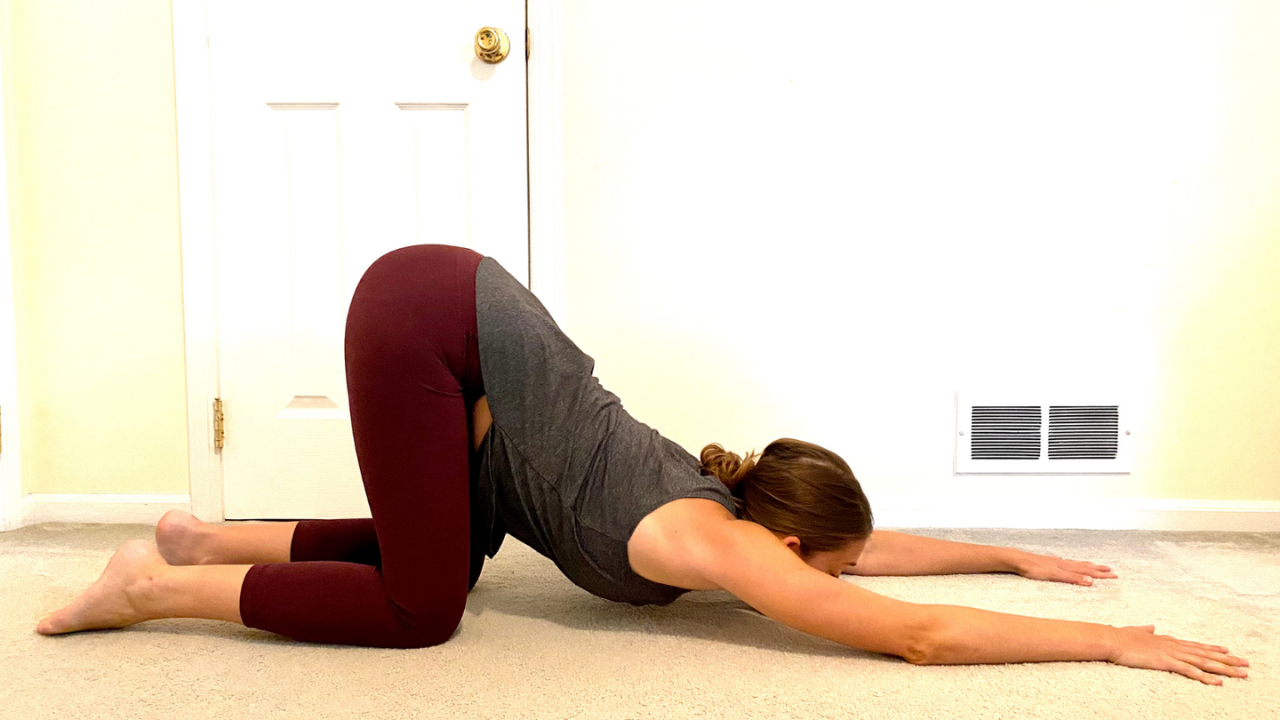
- Puppy Pose (Half Downward Dog on Knees): Keep knees on the floor. Walk hands forward. Lower chest toward the floor. Hips stay over knees. Great spine and shoulder stretch with full support.
How to Prepare for Downward Dog: Warm-Up Poses
Cold muscles should not go straight into Downward Dog. A simple warm-up of 5 minutes makes the pose much easier, safer, and more beneficial. These are the best poses to do before Adho Mukha Svanasana.
Best Warm-Up Poses Before Downward Dog
- Cat-Cow (Marjaryasana-Bitilasana): Start with 5 to 10 rounds. This wakes up the spine, lubricates the wrists, and warms the core. Perfect first pose before Downward Dog.
- Wrist Circles: Spend 1 minute rotating wrists in both directions. Most important warm-up for protecting wrists in Downward Dog. Do not skip this.
- Standing Forward Fold (Uttanasana): Hang forward with bent knees. Let the spine decompress. Slowly straighten legs over 30 seconds. This wakes up hamstrings gently before the full stretch in Downward Dog.
- Child's Pose (Balasana): Sit back on heels and stretch arms forward on the mat. Holds the same shape as the beginning of Downward Dog. Good to do right before coming into the full pose.
- Low Lunge (Anjaneyasana): Opens hip flexors and calves. Very helpful for people who struggle to get heels down in Downward Dog.
Who Should Avoid Downward Dog?
Downward Dog is safe for most healthy people. But some conditions require caution or complete avoidance. Always tell your yoga teacher about any health conditions before class. Safety always comes first.
Contraindications for Adho Mukha Svanasana
- Wrist Injury or Carpal Tunnel: Avoid the full pose. Practice Dolphin Pose or Wall Downward Dog instead. These give the same benefits without wrist pressure.
- Shoulder Injury: Do not practice if there is pain or sharp sensation in the shoulder joint. Rest the shoulder and do restorative poses until fully healed.
- Very High Blood Pressure: The head going below the heart can temporarily increase blood pressure in people with hypertension. Consult a doctor before practicing inversions.
- Late Pregnancy: Avoid this pose in the third trimester. A modified version with hands on a chair is safer. Always practice prenatal yoga only with a qualified prenatal yoga teacher.
- Eye or Ear Infection: Inversions can worsen inner ear pressure and eye pressure. Wait until fully recovered before returning to the pose.
- Acute Herniated Disc: Some disc injuries worsen with forward folds. Always get medical clearance and guidance from an experienced yoga therapist before practicing.
Downward Dog in Surya Namaskar (Sun Salutation)
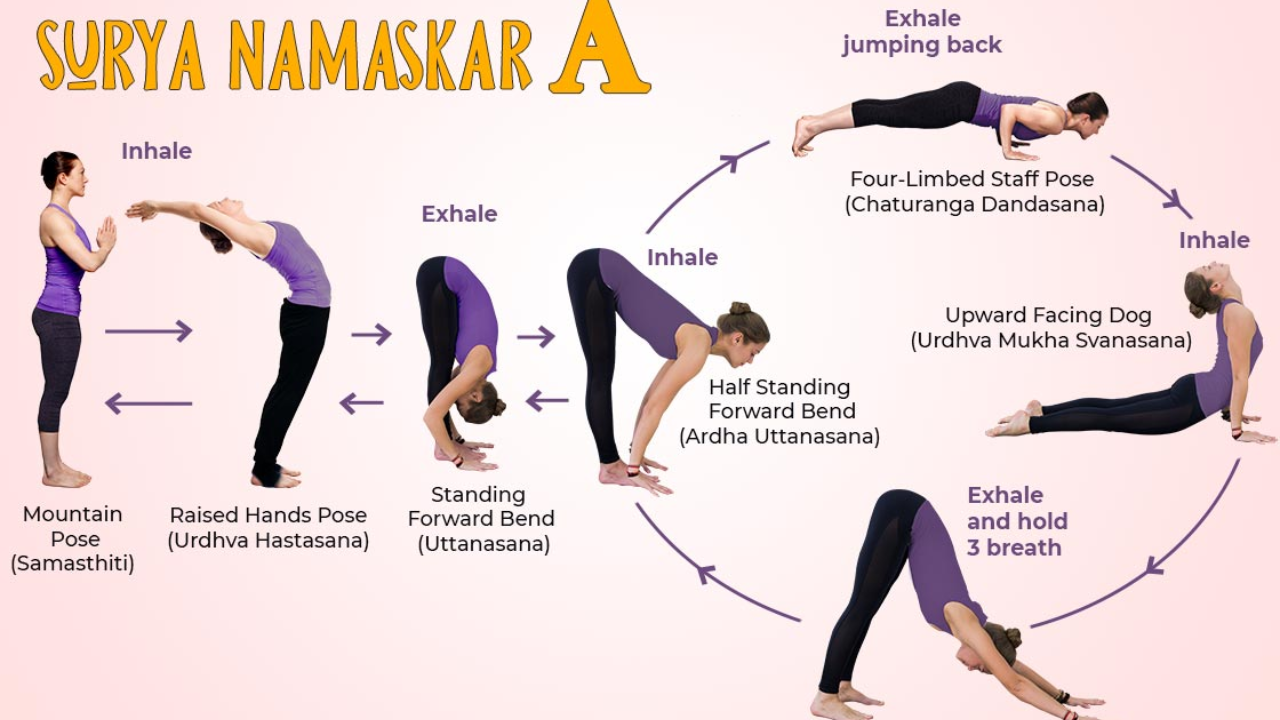
Adho Mukha Svanasana is used in Surya Namaskar — the Sun Salutation. This is the most common yoga sequence in the world. Downward Dog appears twice in each round. Understanding how the pose connects with the sequence helps you flow more smoothly.
Downward Dog Position in Sun Salutation
- In Surya Namaskar A (Ashtanga): After Chaturanga (low plank), you press up into Upward Dog — then push back into Downward Dog. You hold for 5 breaths. Then step forward to Uttanasana.
- In Vinyasa Flow: Downward Dog is used as a transitional resting pose between sequences. After each standing pose sequence, you return to Downward Dog to reset and breathe.
- In Hatha Yoga: Held as a standalone pose for 1 to 3 minutes. Teacher may make individual adjustments during the hold. Focus is on long holds and deep alignment.
- Transition Tip: When moving from Plank to Downward Dog — push hips up and back in one smooth motion. Do not jump the feet. Walk them in slightly if needed. Keep arms straight.
Expert Tips from Rishikesh Yoga Teachers
These are the tips our teachers at Adishesh Yoga in Rishikesh give students every day. The ones that make the biggest difference. Simple words. Deep impact.
10 Tips That Will Change Your Downward Dog
- Tip 1: Think of pushing the floor away from you — not just pressing into it. This activates arms properly and lifts weight from wrists.
- Tip 2: Imagine a string pulling your tailbone up toward the sky. This one image alone fixes 80% of back rounding problems.
- Tip 3: Keep your ears in line with your upper arms. If ears drop below arms — your neck is straining. Lift your head slightly.
- Tip 4: Do a "dog shake" first. Come into the pose and pedal your feet one at a time — left heel down, right heel down. This warms calves and hamstrings quickly.
- Tip 5: Use your breath to deepen the pose. Inhale — feel length. Exhale — press more firmly. Each breath creates more space.
- Tip 6: Do not hold tension in the face. Many people grit their teeth or scrunch their eyes in difficult poses. Relax the face completely — this releases the whole body.
- Tip 7: Check your hand position in a mirror. Hands should not be wider than shoulders. This is a very common mistake that makes shoulder alignment impossible.
- Tip 8: After 30 days of daily practice — your hamstrings will open. Heels will naturally come closer to the floor. No forcing needed. Trust the process.
- Tip 9: If you feel dizzy in Downward Dog — come out slowly. This can happen when blood rushes to the head for beginners. Rest in Child's Pose. Come back slowly over days.
- Tip 10: Downward Dog is a relationship between strength and flexibility. At first it is effort. After weeks of practice — it becomes a rest. That shift is yoga working.
Conclusion
Adho Mukha Svanasana is not just a warm-up pose. It is a complete yoga practice in itself. When done with correct alignment — it strengthens your arms, opens your spine, stretches your whole back body, and calms your nervous system all at once. That is the power of this single pose.
Start with bent knees. Focus on a long spine. Spread your fingers. Let your head hang free. Build from there. Do not compare your pose to anyone else in the room. Your body is different. Your practice is yours.
At Adishesh Yoga in Rishikesh, our teachers personally guide each student into correct alignment from the very first class. We believe small adjustments in foundation poses like Downward Dog create big changes in the entire practice. If you want to learn yoga the right way — from the ground up — we welcome you to Rishikesh. Or start at home with this guide today. The pose is waiting for you.